
We Interrupt This Program to Bring You #BlackJoy
We Black people—Black Americans in this case—know hard times, but our lives also sparkle with joy. Black joy, and not just Black trauma, is our inheritance.

Black life is much more than the sum of its sorrows. That’s why Black joy is the center of Tracey Lewis-Giggetts’ latest work, Black Joy: Stories of Resistance, Resilience, and Restoration. The collection of essays, mostly memoir, is designed to interrupt the popular (read: played-out) narrative of Black people in the larger culture.
I’ll take a moment here to declare that I’m a proud Detroiter, (born and raised in actual Detroit, that is, not one of those towns near the city whose residents leave unnamed on their travels), and people expect tales of gloom. We’re still not a full decade removed from becoming the largest city to ever file for bankruptcy in the United States. There’s this long standing association with Detroit and murder. And a former mayor, Kwame Kilpatrick, is building a new life for himself after serving seven years in federal prison for corruption.
But underneath those devastating headlines, there are hundreds of thousands of beautiful lives growing here. There’s a public school on the city’s eastside where kindergartners call themselves solutionaries, fifth graders create satirical films about water as a human right, and eighth graders successfully submit requests to lead the school’s board through intensive reflective exercises on respecting everyone’s identities. Vacant lots sometimes flash on the TV screen, but we know which ones are really community playspaces, where peacocks gather before people circle up for an evening jazz jam session.
All that’s to say, we Black people – Black Americans in this case – know hard times, but our lives sparkle with joy, too. Songs have been written about it being “unspeakable,” maybe because there’s an innate understanding that after 400 years, Black joy, and not just Black trauma, is our inheritance. In 36 personal essays, Lewis-Giggetts illustrates how Black joy persists. In doing so, she disrupts a trope that says the unrelenting struggle depicted of us in pop culture through shows like Good Times – beloved as James and Florida Evans are – is all we’ve got. She writes:

It was much easier to recognize and to categorize what my pain felt like. To tell that story over and over again. To build a life and a career around my alleged vulnerability because people who are hurt are drawn to people who are hurt. And what a wonderful way to get the attention and validation I so desperately lacked, to use my writing as a way to trauma-bond, right?
But that can only last for so long. Any attempt to grow, to evolve, shined a light on the desperation at the source of my emphasis on pain and struggle. Though never my intention, it started to feel like I was using my trauma to gain validation. Who am I without the trauma identity? Who are we as Black folks, particularly in America, outside of the trauma of our arrival and the continued impact of racism?
Because really, in the dominant narrative about our people, if we aren’t thugs, we’re tragic. It’s a negative consequence we set upon ourselves by ever submitting to a thesis that asserts an entire people, over multiple centuries, should only be considered with fear, disdain, or pity. The sacrifice is our humanity.
To be clear, Black joy is not what you witness in the cacophony of cheers when a Black woman wins an Academy Award; that’s Black delight. If we nested our joy in validation of that kind, it would have been done turned to dust. No, our joy is stitched in our insistence to show up and create anyhow. It’s in our wonder, our imagination, our agency, our knowing that there is no getting rid of us. We’re rooted too deep.
Wrestling us away from the trauma identity, Lewis-Giggetts declares Black joy is already in our possession and advocates the collective performance of it as an act of resistance. (#BlackBoyJoy and #BlackGirlMagic). But importantly, she also argues that Black joy is personal.
“In order for Black joy to have longevity, for it to live alongside and beyond our movements,” she writes, “it must be firmly founded in self-compassion and empathy within each individual.” In this way, we validate our joy, giving it the fortitude to thrive in another generation.

Her musings run the gamut from reflections on bringing her whole self to work and deciding that to grow her life, she had to leave her hometown of Louisville. They include the Black church, music’s ability to help her tap into herself – shout out to E-40 – and the best way to prepare chili (which I must ask, if you put noodles in it, isn’t that just spaghetti?) and more. As a newish parent, I’ve been most struck by her essay titled “The Privilege of Wonder.” For me, it connected to a larger thread of conversations led by Trina Greene Brown (Parenting for Liberation) and Yolanda Williams (the podcast Parenting Decolonized) on the internal work Black parents must do to offer our Black children the freedom to indulge fearlessly in their childhoods.
Somehow, this is only my second encounter with Lewis-Giggetts’ work, though she is a prolific writer, with 18 book credits to date. There is a sense throughout Black Joy that she has done the work she is urging her readers to do, and has found ways to see herself beyond the trauma gaze. Why has she been able to do so? Several passages reference religious faith and personal spirituality. Perhaps due to my own experiences, I sensed those undertones – though they weren’t heavy handed – throughout the book. While I think they add to the collection’s ability to strum a reader’s joy, they may render the book less suitable for strictly non-religious folks. In addition, there were times where I found myself really digging into her perspective, only for it to end. That said, these 36 essays don’t seem intended to be extensive reflections; rather, they are sparks that remind and confirm for us this truth: Though stony the road we trod, joyful is who we be.
The name “MindSite News” is used with the express permission of Mindsight Institute, an educational organization offering online learning and in-person workshops in the field of mental health and wellbeing. MindSite News and Mindsight Institute are separate, unaffiliated entities that are aligned in making science accessible and promoting mental health globally.


Author

Related Articles

Ahead of album release, Ye apologizes for hate speech, blames bipolar 1
Ye (Kanye West) issues a formal apology for 2025’s extremist actions, citing a 2002 brain injury and bipolar mania. Some experts and fans remain skeptical.

From “Girl, Interrupted” to “Girl in Pieces”: What I learned from reading three books about teen mental illness
How books on teens with mental illness help destigmatize and educate us.
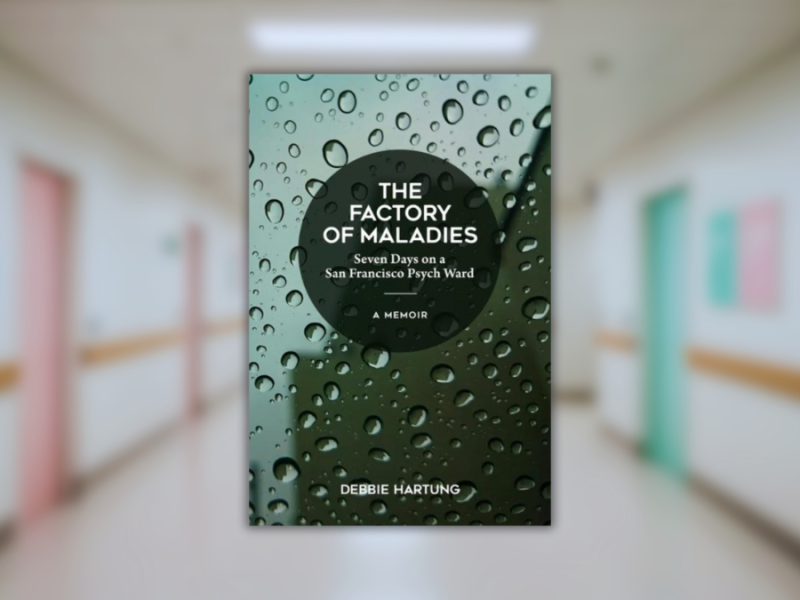
‘The Factory of Maladies’: A Chilling First-Hand Account of Life in a Psych Ward
“The Factory of Maladies,” a memoir by Deborah Hartung, is a gripping account of being locked up in a San Francisco psychiatric ward.
