
Kaiser agrees to $200 million settlement over California mental health delays
Settlement affirms claims by Kaiser therapists and behavioral health clients that the healthcare provider systematically delayed needed care. Gov. Newsom called the agreement a “tectonic shift” to hold providers to account. Kaiser’s CEO acknowledged “shortcomings” and vowed to “build a “stronger mental health foundation.”
This story was originally reported and published by CalMatters and is republished with permission.
Health care giant Kaiser Permanente agreed to a $200 million settlement with the state of California to resolve investigations into its behavioral health system that showed patients experienced delays in care.
The deal announced today includes a $50 million fine and requires Kaiser Permanente to fix major problems in its behavioral health services, such as providing patients with timely access to care. Kaiser Permanente also agreed to invest $150 million over five years to improve its programs.
Gov. Gavin Newsom called the settlement “a tectonic shift in terms of our accountability on the delivery of behavioral health services.” It’s the largest-ever penalty levied by the state department that oversees mental health services.
California’s Department of Managed Health Care announced its investigation into Kaiser in May 2022, when the agency received an unusual number of “complaints received from enrollees, providers, and other stakeholders concerning the plan’s behavioral health operations.”
Just three months later, a union representing 2,000 Kaiser Northern California mental health workers led a 10-week strike over long patient wait times and heavy clinician workloads. The state department opened a second investigation regarding Kaiser’s behavioral health services during the strike.
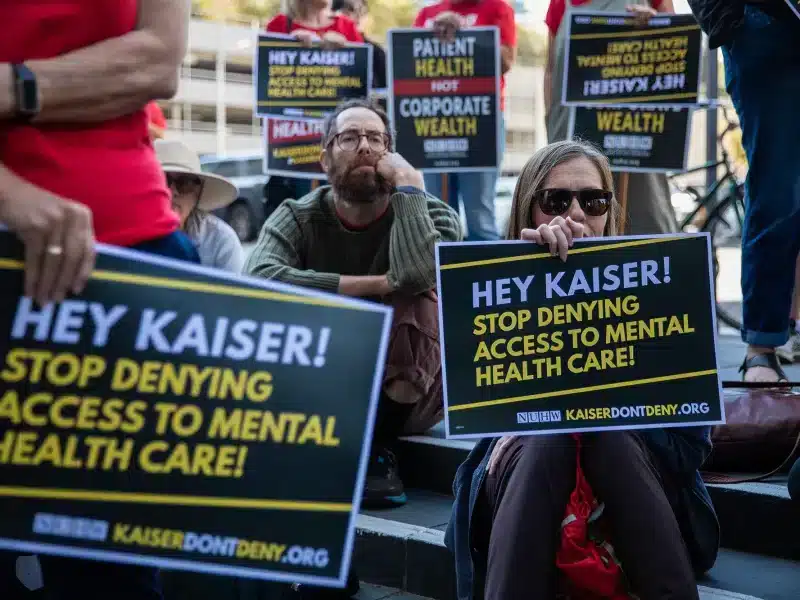
“The (state investigative) report affirms everything that Kaiser therapists have said about their patients’ inability to receive timely, adequate mental health care,” said Sal Rosselli, president of the National Union of Healthcare Workers, which led last year’s strike.
The settlement comes in the midst of another labor dispute for Kaiser. More than 75,000 lower-paid Kaiser employees in five states carried out a three-day walkout as they appealed for better pay. The union coalition representing them has warned that another walkout is possible next month.
The Department of Managed Health Care found that Kaiser’s average wait times for follow-up behavioral health appointments were longer than 10 days, the wait time prescribed by law. In 2021, Kaiser’s average wait time for follow-up therapy appointments was 19 days.
By law, when a health plan cannot offer a timely appointment, it must refer patients to providers out-of-network and cover those services. Regulators found that Kaiser did not consistently arrange for out-of-network care. The investigation also found that Kaiser relied heavily on group behavioral health programs, even when individual therapy would have been more appropriate.
“The DMHC is committed to using its full authority to hold Kaiser accountable and ensure enrollees have access to behavioral health care when they need it,” said Mary Watanabe, director of the department.
Greg Adams, Kaiser Permanente’s chief executive officer, in a statement noted that California is experiencing an unprecedented demand for mental health care. A shortage of mental health providers, clinician burnout and last year’s strike have contributed to Kaiser’s difficulties in meeting the need, he said.
“We saw a 33% increase in need during the pandemic and have seen 20% more people come in for care in 2023 than at this point last year,” Adams said.
“Our agreement with the (state) takes full accountability for our performance during the survey period including our shortcomings, acknowledges our work to improve mental health care, and ensures that our ongoing investments not only help the members of Kaiser Permanente, but also build a stronger mental health foundation in the communities we serve.”
The survey of Kaiser’s mental health and substance use disorder treatment services is ongoing, according to the state department.
Supported by the California Health Care Foundation (CHCF), which works to ensure that people have access to the care they need, when they need it, at a price they can afford. Visit www.chcf.org to learn more.
The name “MindSite News” is used with the express permission of Mindsight Institute, an educational organization offering online learning and in-person workshops in the field of mental health and wellbeing. MindSite News and Mindsight Institute are separate, unaffiliated entities that are aligned in making science accessible and promoting mental health globally.


Author

Related Articles

Ghost Guns, Made at Home on 3-D Printers, Are Linked to an Increase in Suicide Rates
Homemade ghost guns are raising new challenges around mental health, firearm access and suicide risk.
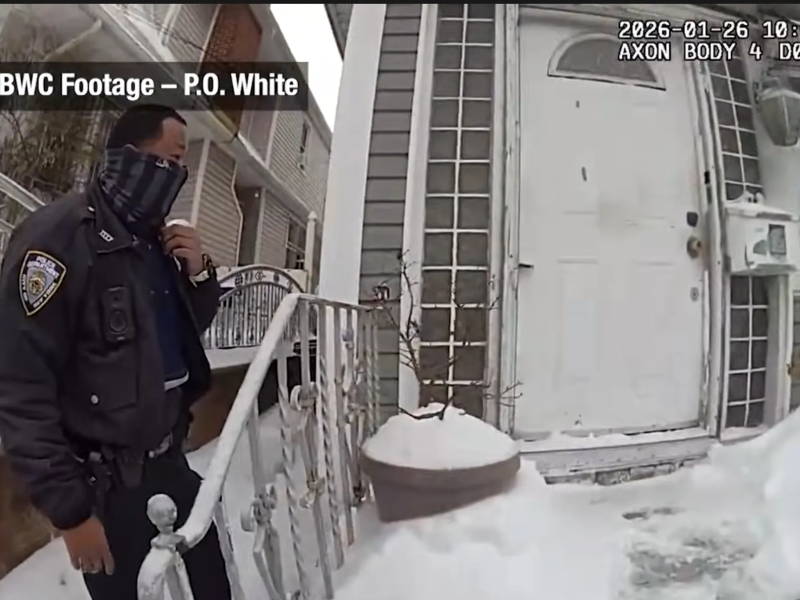
New York City’s Effort to Send Mental Health Workers to Crises Ends in Police Response 86% of the Time
Mayor Mamdani wants to speed up the expansion of community responders, but an analysis by THE CITY of existing efforts found that 911 dispatchers send cops in the vast majority of cases.
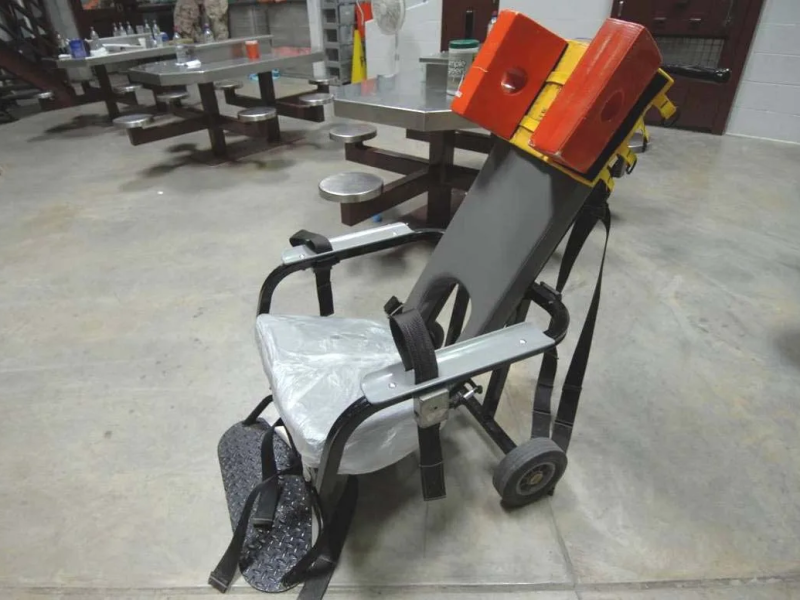
Years After an Infamous Death, a Pennsylvania Jail Ups Use of Restraint Chairs
Prisoners with mental illness are most commonly subjected to use of these devices, which the United Nations calls a form of torture.
