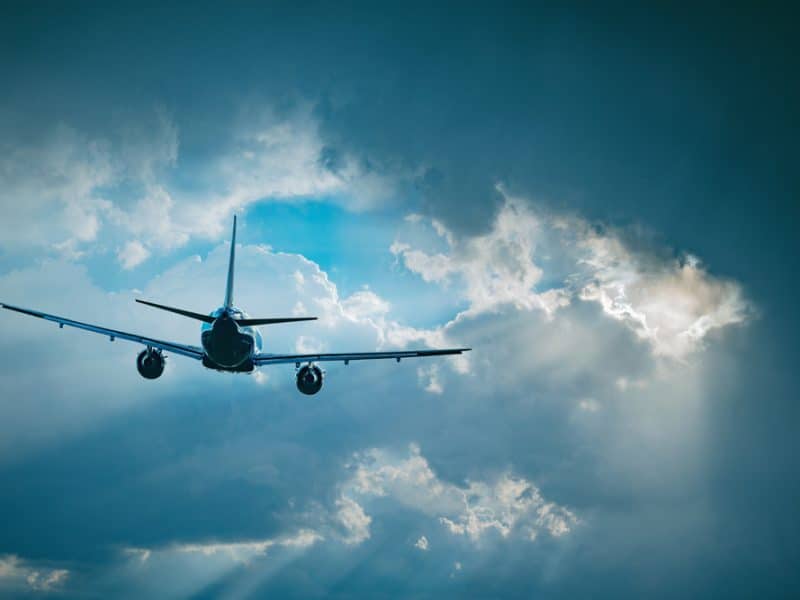
Exhausted, stressed-out air traffic controllers a risk to flight safety
Overworked air traffic controllers say a crash is inevitable unless conditions improve. Black Angelenos organize healing events in LA. Mental health apps risk your privacy. And more.

December 6, 2023
By Courtney Wise

Greetings, MindSite News Readers. In today’s Daily, air traffic controllers say they are so overworked and mentally exhausted that our aviation safety system is at risk. Four Black professionals in Los Angeles have created organizations that promote community and help people heal. And research finds that mental health apps, while helpful, fail to protect user data and privacy.
Plus, the FAA is focusing attention on pilot mental health as the National Transportation Safety Board meets today, a large study from Rome further confirms that overexposure to air pollution undermines mental health, and a new book from licensed therapists Soo Jin Lee and Linda Yoon addresses trauma, healing, and mental health in Asian American communities.
Air traffic controllers are exhausted, overworked and making dangerous mistakes
Air traffic controllers say they’re overworked, demoralized, and mentally exhausted to the point where one told the New York Times, “a deadly crash is inevitable.” They’re concerned that if nothing soon changes, cracks will become holes in a critical component of the nation’s aviation safety system. A primary issue is staffing shortages which are so severe that many controllers are on mandatory six-day, 10-hour work shifts, some which end just eight hours before they are to return to work. In the past two years, air traffic controllers and others have sent hundreds of complaints to the Federal Aviation Administration (FAA), putting unsuitable work conditions and concerns about controllers’ mental health on record. The Times investigative report is based on more than 70 interviews with current and former air traffic controllers, pilots, and federal officials, as well as federal safety reports and FAA records that the paper obtained.
The air safety problem linked to the burnout that controllers are facing cannot be overstated. A database of aviation safety issues shows one controller in Southern California who directed a plane to fly too low and wrote, “If I can make a small mistake like that, I can make a bigger one.” The error was attributed to exhaustion and working continuous overtime. And the controllers’ work is only growing. In the fiscal year that ended September 30, air traffic grew by 4 percent, as controller errors classified as “significant” rose more than 65 percent.
Overwork is also causing mental and physical health issues that some controllers are afraid to report, for fear of not receiving the medical clearances they need to stay on the job. To cope, some say they’ve turned to dangerous levels of caffeine, alcohol, and sleeping pills. Others simply retire, exacerbating the staffing shortage issue. The FAA estimates that roughly 10 percent of all controllers, or 1,400 people, will retire this year, and the National Airspace System Safety Review Team says the agency’s current hiring plan can’t replace them quickly enough. A net increase of fewer than 200 controllers is expected by 2032.
“We have recently had a heart attack, multiple panic attacks (including my own), people losing their medicals due to depression and some that just outright quit the FAA because it has gotten so bad,” one controller wrote in a confidential safety report. “Who knows how many other stress-induced physical and mental issues are happening that we don’t even know about yet. This place is breaking people. We need help. I’ll say it again, SOS!!” In support, Jennifer Homendy, the chairperson of the National Transportation Safety Board, told the Senate last month that the mental and physical pressure put upon controllers puts the nation’s air safety at risk. “We are putting the psychological stress of the entire aviation safety system on the shoulders of our ATC work force,” she said, “and this is unacceptable.”
In a statement to the New York Times, FAA spokesperson Jeannie Shiffer said the agency “maintains the safest, most complex and busiest airspace in the world.” She added, “The nation absolutely needs more air traffic controllers, and growing the work force will result in better working conditions and more flexibility.”
Four Black Los Angelenos organize community healing outdoors, on the yoga mat, and around the dinner table
Four Black professionals in Los Angeles founded three organizations that cover the gamut of some of the best non-pharmaceutical treatments for anxiety and depression: exercise, rest, spending time in nature, a balanced diet, and a supportive community. Though relatively new, each organization has already “affected the cultural DNA” of the city, wrote The Guardian’s Malik Peay, by moving people “towards interconnectedness and finding community through healing.”
Usal Project, or “us all” as the group is affectionately called, was founded by Michael Washington to unite people outdoors. Since their first gatherings in early 2022, Usal has helped people bond and learn about nature in some of the most stunning lands in the state: Joshua Tree, Chocolate Lakes, and Mount Baldy. In addition to regular hikes and camping trips, Usal offers monthly woodworking courses and periodic workshops on fly-fishing, floral design, and even sacred tea ceremonies. “I am aiming to be cognitive about really creating space for people who have felt historically marginalized, whether that is people of color or just women in general,” Washington said. “I try to include certain types of outdoor activities that vary in scale and levels of danger so all of us can have access through where people grew up.”
Etienne Maurice, filmmaker, activist, and son of award-winning actress and singer Sheryl Lee Ralph, founded WalkGood LA weeks after the May 2020 killing of George Floyd to call attention to the deaths of Black and Brown people in police custody. The organization’s first act, a Juneteenth rally, concluded with a yoga flow led by Maurice’s cousin. “She led these beautiful stretches and there was this real moment of tranquility where peace covered the entire park with 400 people,” he said. Since then, WalkGood LA has hosted gatherings explicitly focused on mental wellness, including evening runs, yoga, soundbaths, and a healing circle exclusively for Black men called YouGood? As someone who has recovered from both a traumatic brain injury and gun violence, mental health is central to Maurice.
Ritual Dinners promote healing and communion at the dinner table. Through what they call “philanthropic feasts,” chefs and co-founders Imān Benét and Rachel Bussey provide fine dining experiences for intimate groups and donate the proceeds from each gathering to a local nonprofit. The idea is that dining with others is sacred and all people deserve to eat sophisticated meals in spaces where they feel valued and welcome. “I think that there is such a necessity for us to reconnect back into our bodies and back with our food,” said Benét. “Once we can do that, we’re more equipped to connect to each other and to the world around us.”
Mental health apps make getting help a little easier – while risking your privacy

Mental health apps have quickly exploded in popularity, with their use increasing by nearly 55 percent between 2019 and 2021 alone. That growth has also generated more sensitive user data, which Brookings researchers Eugenie Park and Darrell M. West aruge is at grave risk because developers have failed to prioritize user privacy. In May 2022, Mozilla issued a report on 32 mental health and prayer apps, 28 of which showed radical failures in user security and privacy. Problems included routine sharing of user data, targeting vulnerable users with personalized ads, allowing weak passwords, such as, “1111,” and writing confusing privacy policies. This past March, the Federal Trade Commission filed a complaint against BetterHelp for sharing information about customers with Meta, Snapchat, Criteo, and Pinterest for ad purposes, despite promising to keep user data confidential and safe.
Park and West argue these issues can be solved by requiring app companies to write privacy policies the average user can understand, lawmakers holding mental health apps to the same privacy standards as traditional medical providers, and educating people about the risks associated with digital tools that capture details about the most intimate aspects of their personal lives. Despite the advances made in reducing the stigma around mental health, many people hold serious and valid concerns about their ability to be hired or stay employed if their mental health issues are discovered. App companies being allowed to profit off user data without being held to any standards for safety and privacy puts the lives of real people at risk – without their say-so.
In other news…
Today, a new committee within the National Transportation Safety Board will host a roundtable discussion on the mental health of pilots. The Federal Aviation Administration said the Mental Health Aviation Rulemaking Committee will discuss “ways to identify and break down any remaining barriers that discourage pilots from reporting and seeking care for mental health issues.” One barrier is FAA policy that states the agency will “revoke a pilot’s medical certificate if it becomes aware of significant mental health issues.” Pilots found lying face five years in prison and a $250,000 fine. The FAA says the committee will also consider the mental health needs of air traffic controllers.
Pilot mental health came to the forefront just two months ago, CNN reports. That’s when off-duty pilot Joseph Emerson attempted to crash the plane he was in as a crew passenger seated in the plane’s cockpit. When questioned, Emerson told police he had not slept for almost two days, had been depressed for months or years, and had recently taken “magic mushrooms.” At the time, NTSB Chair Jennifer Homendy said the FAA has “set up a situation where people are ashamed — or silenced — into not seeking help.”
Overexposure to air pollution is harmful to mental health, says new research from the Department of Epidemiology in Rome, Italy. The study, reported in The Guardian, looked at more than 1.7 million adults living in Rome in 2011. Census records were matched with medical and public health insurance records, then scanned for the next 8 years for evidence of mental health problems. Records were then compared with air pollution data, traffic noise, poverty, employment status, education level, and marriage status. Researchers found that people living in areas with higher particle pollution had an increased risk of developing schizophrenia, depression, and anxiety disorders. The good news: Data from the study suggests that slashing Rome’s average particle pollution by 10% could reduce these mental health conditions by 10% to 30%.
In response to the anti-Asian hate that proliferated during the pandemic, licensed therapists Soo Jin Lee and Linda Yoon developed a virtual support group for Asian Americans that eventually inspired them to write the book, WHERE I BELONG: Healing Trauma and Embracing Asian American Identity. The two say the book validates the traumatic experiences of Asian Americans and provides readers a handbook of therapeutic tools, journal prompts, and grounding exercises to tap into their identity, strength, and resilience.
If you or someone you know is in crisis or experiencing suicidal thoughts, call or text 988 to reach the 988 Suicide & Crisis Lifeline and connect in English or Spanish. If you’re a veteran press 1. If you’re deaf or hard of hearing dial 711, then 988. Services are free and available 24/7.
If you’re not subscribed to MindSite News Daily, click here to sign up.
Support our mission to report on the workings and failings of the
mental health system in America and create a sense of national urgency to transform it.
For more frequent updates, follow us on Facebook, Twitter and Instagram:

The name “MindSite News” is used with the express permission of Mindsight Institute, an educational organization offering online learning and in-person workshops in the field of mental health and wellbeing. MindSite News and Mindsight Institute are separate, unaffiliated entities that are aligned in making science accessible and promoting mental health globally.
Copyright © 2021 MindSite News, All rights reserved.
You are receiving this email because you signed up at our website. Thank you for reading MindSite News.
mindsitenews.org

The name “MindSite News” is used with the express permission of Mindsight Institute, an educational organization offering online learning and in-person workshops in the field of mental health and wellbeing. MindSite News and Mindsight Institute are separate, unaffiliated entities that are aligned in making science accessible and promoting mental health globally.


Author

Related Articles

The College Mental Health Crisis
Experts say more preventive care is needed to combat the growing mental health crisis affecting college students.
Trump Administration Breaks its Promises to Veterans with Mental Health Issues
Since Trump’s return to office, the strained staffing situation within the Department of Veterans Affairs is now “at a breaking point.”

College Employment Scams Undermine Students’ Mental Health
At UC Berkeley, students have lost thousands to employment scams. Victims said they now experience shame, fear, anxiety and depression.
