
Revisiting Mass Shootings and Mental Illness
A researcher comments on her team study that found most mass shooters are mentally ill, contrary to popular belief. Holiday suicide myths. And more.

December 11, 2023
By Don Sapatkin

It’s a very stubborn myth: Suicides do not go up around the holidays. November and December in fact have the lowest average daily suicide deaths of all months – despite 40% of news stories last holiday season that said the opposite, according to the University of Pennsylvania’s Annenberg Public Policy Center, which has tracked U.S. news reports for more than two decades.
The Center noted, however, that 60% of the 2022-23 season’s holiday suicide stories are at least now debunking the myth.
In today’s Daily: Most mass shooters are mentally ill, according to a study of 55 perpetrators that concluded they had not been diagnosed or treated (or misdiagnosed and incorrectly treated). That lingering “meh” feeling has a name (and you’ll just have to read on to find out what it is). And stigma can be a powerful social determinant of health.
Most mass shooters had undiagnosed or untreated mental illness, award-winning study found

The vast majority of mass shooters in the United States who survived their rampage over the last four decades had undiagnosed or untreated mental illness – and not a single one was on medication for the disorder, according to a study that got little attention when it was published last year but was recently awarded a psychiatric research prize. The results may surprise you: after every mass shooting, the mental health community forcefully pushes back against the common belief that mentally ill people are dangerous and points out that most mass shooters do not have psychiatric histories. Although the findings were nuanced, the explanation for the seeming contradiction is basically this: records of mental illness in mass shooters, most of whom have died in the attack, usually show no evidence of a proper diagnosis or treatment. That doesn’t mean a serious mental disorder wasn’t present.
Although most mentally ill people are not violent, as the authors note, the findings do suggest the need for better diagnosis and treatment. The lead author of the research paper published in Psychodynamic Psychiatry recently summarized the findings in a December 5 commentary for Clinical Psychiatry News. Much of what’s known about the psychiatric histories of mass shooters is based on news reporters’ digging; the authors of last year’s research article believe that theirs is the first systematic study based on standard definitions and interviews. They used the most complete database (compiled by Mother Jones) of 115 mass shootings* to identify 35 mass shooters who did not die during the event. They interviewed forensic psychiatrists who had assessed the assailants and/or reviewed psychiatric court records, and also delved into their backgrounds screening for histories of isolation, childhood abuse and uprootedness, bullying and other factors.
There was insufficient information to make a retroactive diagnosis in three cases. Of the 32 remaining, 28 (87.5%) had a diagnosable mental illness (18, or 56%, had schizophrenia and 10, or 31%, had other psychiatric diagnoses. All had previously been undiagnosed and untreated or misdiagnosed and incorrectly treated. The remaining four (12.5%) had no diagnosable mental illness that the researchers could discern. Most of the assailants also experienced profound estrangement from families, friends and “most importantly from themselves,” which the authors wrote made them more vulnerable to their untreated psychiatric illness and to radicalization online. A supplemental analysis of 20 of the 80 cases in which the shooters died by suicide or were killed by police resulted in roughly similar findings, although the percentage with insufficient information to make a diagnosis was higher.
”Without losing sight of the larger perspective that most who are violent are not mentally ill, and most of the mentally ill are not violent, our message is that mental health workers, lawyers, and the public must be made aware that some untreated and mistreated psychiatric patients do pose an increased risk of violence,” lead author Nina E. Cerfolio, a psychiatrist and assistant clinical professor at Mount Sinai’s Icahn School of Medicine in New York, wrote in an email to MindSite News (italics in original). She emphasized that the stigma of mental illness often prevents future mass shooters, many of them marginalized, from seeking mental health treatment. She and her co-authors won a prize for the best paper published in Psychodynamic Psychiatry in the last two years. Cerfolio, who also has studied terrorists, has a book coming out this month, “Psychoanalytic and Spiritual Perspectives on Terrorism: Desire for Destruction,” which includes some of her research on American mass shooters.
I asked why she thought the team’s findings about untreated mental illness among American mass shooters were largely ignored by major news organizations (Psychology Today did publish a well-reported blog post). Cerfolio pointed, among other things, to the study’s nuanced results. In addition, news outlets have traditionally stressed the evidence-based research that most mentally ill people are not dangerous. and studies have shown a clear correlation between easy access to firearms and gun deaths in high-income countries internationally, with the U.S. an outlier that ranks first in gun deaths although its rate of mental illness is similar to that of other countries. But the study suggests that in addition to strong gun laws, we ought to redouble our efforts to get mental health help to troubled, isolated people who may have a higher risk of violence.
*As a definition of mass killing, the authors used a government definition of four or more injured or killed between 1982 and 2012 as well as the new U.S. government definition of three or more killed between 2013 and 2019 (excluding the shooter in both definitions).

Persistent depressive disorder: Who knew?
“That Lingering ‘Meh’ Feeling Has a Name,” an exquisite headline in the New York Times reported: persistent depressive disorder. PDD is a chronic depression that lasts for at least two years in adults (one year in children) and has different levels of severity. The term “dysthymia,” a Greek word that can mean “low spirits,” “moodiness” or “dejection,” no longer appears in psychiatry’s official diagnostic manual, but some practitioners still use it to refer to the milder form of PDD. The Times asked experts to share what they know about the disorder.
The less severe version is often diagnosed when people come to therapy for another issue, like job stress or marital difficulties, and reveal their experience of an ongoing, low-level sadness, flatness or emotional numbness with no apparent reason, said Marnie Shanbhag, senior director of independent practice at the American Psychological Association. “You’re just sort of ‘meh,’” she said. “And you get used to being that way.” Those with the more severe form of PDD might be unable to get out of bed after a night of insomnia, lose their appetite, have such difficulty concentrating that they cannot finish their work, or feel too exhausted to clean the house or prepare dinner, said Paul S. Appelbaum, a professor of psychiatry at Columbia University and the leader of the group that oversees revisions to the Diagnostic and Statistical Manual of Mental Disorders, or DSM.
About 2 percent of adults in the U.S. are estimated to have had some form of the condition, thought to be more common among women, in the past year. But the numbers are likely squishy because experts say that persistent depressive disorder, which was added to the DSM’s fifth edition 10 years ago, tends to be underdiagnosed and undertreated. (The most effective treatment is antidepressant medication combined with talk therapy.) Because PDD can be long lasting − and does not necessarily disrupt a patient’s day-to-day life in the way that major depressive disorder does – those who have it may assume that their milder symptoms are simply character traits. “It’s hard to convince people that they’re not just the negative person in their family, or the Debbie Downer,” said Jessi Gold, a psychiatrist in St. Louis.
In other news…
Makes sense, though I never thought of stigma as a social determinant of health. The authors of a study in Jama Pediatrics did, and included it in their analysis of a cohort of 10,504 children aimed at measuring the effects of multifaceted patterns of SDOH, rather than individual variables, on child development and health outcomes. Children in the pattern characterized by the highest socioeconomic deprivation – who also experienced the highest levels of racism and discrimination toward immigrants as well as the most severe lead exposure − had the worst outcomes, including more mental health issues, suicidal behaviors, lower cognitive performance, and poor physical health. The authors wrote that the findings involving children living in highly stigmatizing environments were consistent with the possibility that chronic stress negatively affected brain development and cognitive function.
Big states are funding big mental health programs: New York Gov. Kathy Hochul last week announced $3.5 million in funding over several years for 13 new Certified Community Behavioral Health Clinics, doubling the number statewide, less than a week after she announced $5.1 million to establish 137 school-based mental health clinics. In Texas, which for years has ranked near the bottom of states’ per capita spending on mental health, lawmakers this year earmarked $2.26 billion to aid state hospitals and increase mental health care access in rural areas, including $159 million for construction of three badly needed hospitals in the Panhandle, the Texas Tribune reported.
Reminder: Marriage and family therapists as well as mental health counselors are newly eligible for Medicare reimbursement starting in January but must first enroll through a federal contractor, according to FAQs posted by the Centers for Medicare and Medicaid Services.
If you or someone you know is in crisis or experiencing suicidal thoughts, call or text 988 to reach the 988 Suicide & Crisis Lifeline and connect in English or Spanish. If you’re a veteran press 1. If you’re deaf or hard of hearing dial 711, then 988. Services are free and available 24/7.
Recent MindSite News Stories
The Mind and The Moon: A Review

What role should medications play in the treatment of psychosis and other types of severe mental illness? Continue reading…
Many People of Color Worry Good Health Care Is Tied to Their Appearance

Some report bracing themselves for insults and judgments before medical appointments. Continue reading…
Cards to Cue Your ‘Well Self’ to Leave Breadcrumbs for your ‘Unwell Self’ – and Remind it to Remember the Light

Mental illness is a clever, hard-to-kill beast, and escaping it is akin to defeating a cluster of wild boar. But with proper strategy and weaponry, the invasive species can be taken down. These cue cards may help.
If you’re not subscribed to MindSite News Daily, click here to sign up.
Support our mission to report on the workings and failings of the
mental health system in America and create a sense of national urgency to transform it.
For more frequent updates, follow us on Facebook, Twitter and Instagram:

The name “MindSite News” is used with the express permission of Mindsight Institute, an educational organization offering online learning and in-person workshops in the field of mental health and wellbeing. MindSite News and Mindsight Institute are separate, unaffiliated entities that are aligned in making science accessible and promoting mental health globally.
Copyright © 2021 MindSite News, All rights reserved.
You are receiving this email because you signed up at our website. Thank you for reading MindSite News.
mindsitenews.org

The name “MindSite News” is used with the express permission of Mindsight Institute, an educational organization offering online learning and in-person workshops in the field of mental health and wellbeing. MindSite News and Mindsight Institute are separate, unaffiliated entities that are aligned in making science accessible and promoting mental health globally.


Author

Related Articles
Health Organizations Condemn Traumatic ICE Raids, Family Separation
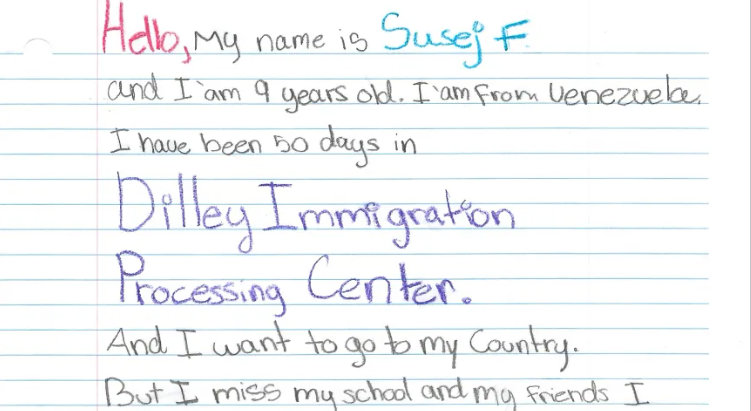
According to letters from children living in an ICE detention facility, living conditions are inhumane and their mental health is suffering.

In Teens, Social Anxiety Often Looks Like Anger
A study finds that some teens’ aggressive behavior may be due to social anxiety, not straightforward reactivity.
Expert Calls for Harm Reduction, Not Punishment, to Resolve Our Overdose Crisis
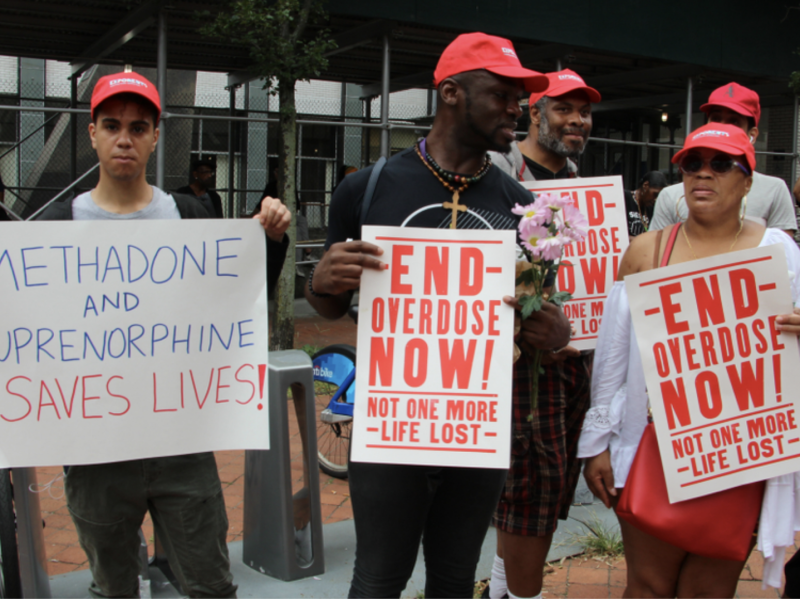
As the Trump administration pulls funding from harm reduction, an expert on the overdose crisis says it’s the best way to save lives.
