
A bold editorial spells out the need to change U.S. approach to addiction
A comprehensive story about what it would take to treat addiction. The nightmare of children traumatized by the Israel-Hamas war has only just begun. Online sports betting is creating a new epidemic of addiction on college campuses.


Tuesday, January 2, 2024
By Don Sapatkin

Welcome to 2024! You already knew this but science didn’t: Female tears soften male aggression – specifically, the urge for revenge was reduced nearly 44%, according to Scientific American’s coverage of a study in PLOS Biology.
In today’s Daily: The most comprehensive story I’ve read about what it would actually take to successfully treat addiction. The nightmare of children traumatized by the Israel-Hamas war has only just begun. Online sports betting is creating a new epidemic of addiction on college campuses. Mental health courts don’t always live up to their billing. Plus: 10 ways to support your mental health in 2024.
A seven-point plan for getting real help to 48 million Americans living with addiction
Jeneen Interlandi is a former scientist and member of the New York Times editorial board who is mastering a journalistic form: in-depth opinion pieces that don’t just pontificate but are based on deeply researched reporting.
She last appeared in this newsletter 10 months ago after spending months observing and tracking outcomes at New York City’s first-in-the-nation supervised injection site for drug users.
Now she’s back with a new story that’s even more ambitious: a report, in seven chapters, about why an estimated 95% of Americans addicted to drugs don’t get the treatment they need – and, more importantly, what can be done to change that grim reality. Her key point: Effective treatments exist but rampant policy failures have crippled their potential for success.
“The moral case for resolving this crisis should be more than enough by itself,” she writes. “Addiction ruins lives, destroys families, devastates entire communities.” Drug overdoses have killed more Americans in the past 24 years than all U.S. wars combined – and the numbers keep rising. Many of these deaths and much of the suffering could be prevented, she argues, and doing so would not just be humane, it would be fiscally responsible since the nation’s opioid addiction and overdose crises “cost upward of a trillion dollars each year in lost productivity, criminal justice, emergency medicine and more.”
From the outset, she notes that drug users are ostracized and kicked out of treatment programs for petty infractions because of lingering beliefs that addiction stems from bad behavior that must be punished, rather than a medical condition. Her prescription: Make treatment as easy and straightforward as possible. Clinics should welcome walk-ins. Medication should be cheap or free. Relapses, common in many medical conditions, should be treated as part of the recovery process, not cause for condemnation.
Other points: Billions of federal dollars invested in research over 50 years has yielded lots of insight about what works. Yet large parts of the addiction treatment industry don’t use evidence-based strategies. Rewarding people for the behaviors you are trying to encourage can help addicted people stay in treatment, yet few programs employ this strategy. Both buprenorphine and methadone are highly effective at reducing opioid fatalities, but only a small minority of addicted people get them. The single most important thing lawmakers and health officials could do, Interlandi writes, is “improve their oversight of the addiction treatment industry.”
The addiction workforce is in crisis, yet very few doctors are trained in addiction treatment. Public funding for medical schools should be contingent on comprehensive training in addiction medicine and tuition reimbursement and loan forgiveness should be given to clinicians who enter this field. Treatment centers often depend on unreliable grants rather than insurance reimbursement. Parity laws requiring insurers to cover addiction medicine as they do cardiology or cancer are still flouted, although federal enforcement has improved of late.
She supports the Modernizing Opioid Treatment Access Act, which would allow board-certified addiction doctors to prescribe methadone and pharmacies to dispense it but is opposed by many clinic operators. The bipartisan bill is just beginning its journey through Congress.
Roughly half of criminal defendants and incarcerated people struggle with a substance use disorder, but the criminal justice system is largely missing a huge opportunity to turn the tide. Few jails or prisons provide medication treatment, and even drug courts often fail to refer people to programs that provide medication, despite its proven effectiveness. That’s starting to change, with a new federal waiver program enabling participating states to cover at least some care through Medicaid.
In a follow-up piece, Interlandi wrote about an outdated crack-era law that barred using property to sell, use or store illegal drugs – making even state-sanctioned supervised consumption sites technically illegal. Then-Senator Joe Biden was chief architect of the 1986 crack-house statute and Interlandi calls on President Biden to spearhead its repeal.
For traumatized Middle East children, surviving the war is just the beginning of a long, painful journey
Israeli children who were kidnapped by Hamas and have been returned will face long-term psychological effects, experts told The Daily Beast. So will a huge number of Palestinian children who have witnessed the deaths of family members and other civilians from Israel’s relentless assault on Gaza.
Some returned Israeli child hostages are showing signs that suggest years of future difficulties, said Adi Shamia-Atzmon, an Israeli clinical psychologist. Withdrawal and disorientation behaviors are common, as is regression to earlier developmental stages. Shamia-Atzmon’s team at Schneider Children’s Medical Center has focused on creating spaces for these children to process their experiences and feelings through play, drawing and inquiry. The goal, she said, is “to reassure them and to help them know and feel that they were now safe, being taken care of, protected.”
In Gaza, most children were already suffering with significant mental trauma long before the war began. Now, “the entire child population is in need of some form of mental health or psychosocial support,” said UNICEF consultant Tess Ingram. Children in Gaza are exhibiting a range of responses, from having nightmares to not speaking at all. “Humans are not built to experience this degree of fear and helplessness, repeatedly,” she said.
Parents and guardians in Gaza, as in Israel, are encouraged to talk with their children about the violence they are witnessing and their emotional reactions to it, rather than avoid these conversations. But Gaza is different. “Children are being repeatedly exposed to traumatic events, and that really wears down the body’s ability to cope,” Ingram said.
Online betting is hooking college students and spreading fast

Gambling on college campuses is growing exponentially, Time reports, mostly via sports betting apps on smart phones. With ubiquitous ads offering promises of “free” bets and easy wins, experts say, the apps reel students in, leading them to spend their financial aid money, lie to their parents and ignore their studies. Low-income students lack the resources to bounce back from losses.
Gambling addiction is often associated with other forms of addiction, as well as depression, anxiety and higher risk of suicide. Problem gamblers who don’t meet the diagnostic criteria for gambling disorder can still struggle. Experts see parallels with opioid addiction because gambling “is legal, because it is aggressively promoted by corporations, because of its capacity for destruction, and because it is spreading so quickly,” the Time story said.
Some statistics: 27 states now allow online sports betting. Use of the most popular betting apps soared more than 600% in the past two years. Calls to a Connecticut gambling hotline have doubled since 2019, and 40% are now from 20-something males or their loved ones. An NCAA survey of 3,527 Americans aged 18 to 22 released in April found that 58% of respondents – mostly college students – have bet on sports and nearly 6% lost more than $500 in a single day. Addiction specialists are worried about how quickly mobile sports betting – which combines the compulsive behavior created by social media with the addictive qualities of gambling – has outpaced public policy prescriptions for addressing young people’s problem gambling. Some are calling for a national response supported by federal regulations.
In other news…
Ten ways to support your mental health in 2024, according to a New York Times article: 1) Try a proven way to sleep better. 2) Learn how to tell whether your anxiety is protective or problematic. 3) Stop the worry cycle. 4) Practice “5 things tidying.” 5) Embrace gratitude. 6) Be optimistic about aging. 7) Participate in the arts. 8) Look for a little bit of awe every day. 9) Take a tech break. 10) Take a deep breath. And how do you do these things? Read the story.
Do mental health courts live up to their promise? They’ve been lauded as ways to get people with serious mental illness into treatment instead of prison. But the nation’s 650 adult and juvenile courts are not all run the same way. Many struggle to achieve their potential, according to NPR’s “Shots” blog, reporting from a mental health court in Georgia. Advocates, clinicians, researchers and attorneys say the programs often are costly, resource-intensive and selective. Detainees can feel pressured to take plea deals to enter them. Evidence on how much they help participants is lacking. Nationwide, mental health courts serve fewer than 1% of the more than 2 million Americans with a serious mental illness who are jailed each year.
Gaslighting, breadcrumbing, gray-rocking – therapy-speak has grown swiftly as stigma has declined. But using such lingo, especially online, is a double-edged sword: “You’re sound-biting things, and you’re throwing out words that are much more complicated and much more nuanced,” clinical psychologist Arianna Brandolini told CNN.
If you or someone you know is in crisis or experiencing suicidal thoughts, call or text 988 to reach the 988 Suicide & Crisis Lifeline and connect in English or Spanish. If you’re a veteran press 1. If you’re deaf or hard of hearing dial 711, then 988. Services are free and available 24/7.
Recent MindSite News Stories
Building Hope in Philadelphia Neighborhoods Under Siege

Teachers and staff at YouthBuild Philly Charter School provide love, support and a safe haven for students in an area with high gun violence.
Latino Next-Gens Face Off With Parents in Cultural Divide Over Mental Health

The Latino community, which faces continual stress and anxiety from racism and immigration issues, is one of the groups least served by mental health professionals.
In Detroit, Arab and Muslim Communities Grapple to Heal from Collective Trauma

Since the war between Israel and Hamas began Oct. 7, Sumayya Cherri, a resident of the Detroit area, has been watching news and scrolling social media almost constantly – and it has taken a toll. She is not alone.
If you’re not subscribed to MindSite News Daily, click here to sign up.
Support our mission to report on the workings and failings of the
mental health system in America and create a sense of national urgency to transform it.
For more frequent updates, follow us on Facebook, Twitter and Instagram:

The name “MindSite News” is used with the express permission of Mindsight Institute, an educational organization offering online learning and in-person workshops in the field of mental health and wellbeing. MindSite News and Mindsight Institute are separate, unaffiliated entities that are aligned in making science accessible and promoting mental health globally.
Copyright © 2021 MindSite News, All rights reserved.
You are receiving this email because you signed up at our website. Thank you for reading MindSite News.
mindsitenews.org

The name “MindSite News” is used with the express permission of Mindsight Institute, an educational organization offering online learning and in-person workshops in the field of mental health and wellbeing. MindSite News and Mindsight Institute are separate, unaffiliated entities that are aligned in making science accessible and promoting mental health globally.


Author

Related Articles

He Almost Killed His Father. Now He Helps Others At Risk.
In today’s newsletter, we explore how one man healed after a dangerous psychotic break that nearly led him to murder.
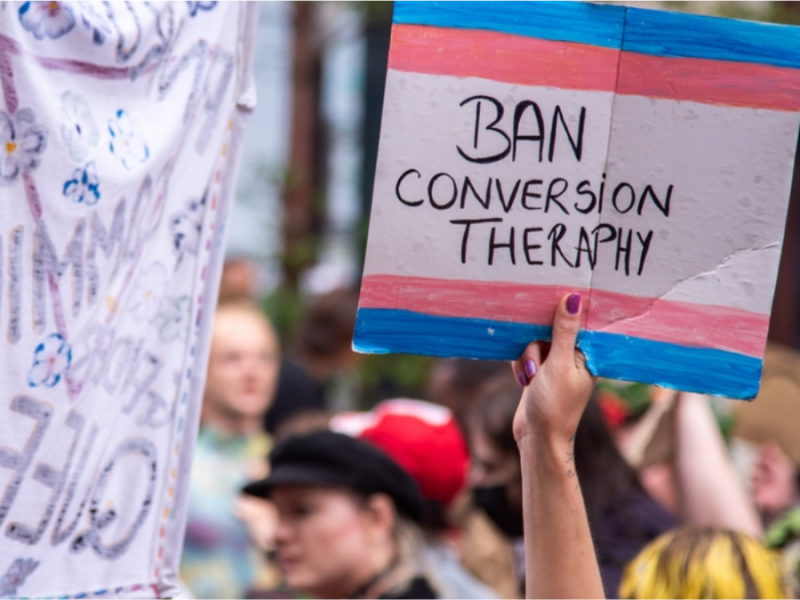
Fallout Over Supreme Court Ruling on Conversion Therapy
Despite the Supreme Court ruling, conversion therapists can still be sued for a practice the United Nations calls “torture.”

On No Kings Day, Millions Rallied to Denounce Trump and “Epstein War”
Anti-Trump protests took place in all 50 states, Puerto Rico and other US territories and in countries around the world.
