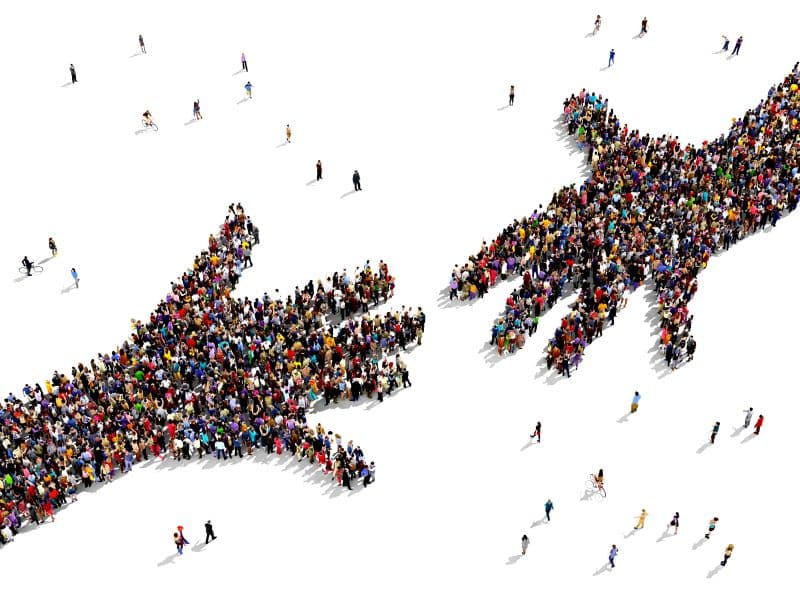
The importance of showing up
A Jewish ritual dating back two millennia teaches us to connect with people in pain, and people in pain to connect to us. And the massive shortage of therapists is stoking interest in alternative approaches.

Monday, January 22, 2024
By Don Sapatkin

Good Monday morning! Young Americans are drinking less, Harvard Public Health reports. Will alcohol-related diseases decline as well? In today’s Daily: A Jewish ritual dating back two millennia teaches us to connect with people in pain, and people in pain to connect to us.
The massive shortage of therapists is stoking interest in alternative approaches. Having siblings: good for your mental health, or bad? Southern states may be softening their opposition to Medicaid expansion. And, in an even bigger reversal, government scientists find potential benefits for medical marijuana and recommend easing the federal ban.
Jewish teachings on mental health – and the deep importance of ‘showing up’

“When your heart is broken, when the specter of death visits your family, when you feel lost and alone and inclined to retreat, you show up. You entrust your pain to the community,” Sharon Brous writes in a New York Times essay that draws from a text in the Mishnah, a Jewish text from around the third century.
The point: Don’t isolate yourself. Seek out others who may hold and help you. And, if you are in good shape, do the same for them. Show up.
Brous is a rabbi, author of “The Amen Effect: Ancient Wisdom to Heal Our Hearts and Mend Our Broken World.” She’s also the founder of a Jewish community in Los Angeles whose mission is to “reinvigorate Jewish practice and inspire people of faith to reclaim a soulful, justice-driven voice.” The text she refers to, Middot 2:2, describes an ancient pilgrimage ritual from the time of the Second Temple, a pivotal symbol of Jewish faith and identity for centuries.
Hundreds of thousands of Jews would climb the steps of the Temple Mount in Jerusalem and enter its enormous plaza. Most would turn to the right and circle counterclockwise. But not everyone, writes Brous:
The brokenhearted, the mourners (and here I would also include the lonely and the sick), would make this same ritual walk but they would turn to the left and circle in the opposite direction: every step against the current. And each person who encountered someone in pain would look into their eyes and inquire: “What happened to you? Why does your heart ache?” And they would offer a blessing. “May the Holy One comfort you,” they would say. “You are not alone.”
The lesson, Brous writes, is that we should “show up” for others in our community by “training ourselves to approach, even when our instinct tells us to withdraw.” Her other lessons are less obvious: that tribalism may seem natural, but it also causes us to be less interested in those who are different, or whose suffering we cannot relate to. Trauma, she adds, reinforces an instinct to turn away.
The Jewish tradition contains many teachings about mental health, Daniel Epstein writes in an opinion piece for The Jerusalem Post.
He refers to Parshat Bo, a Torah portion read this past Saturday in synagogues around the world that contains this passage: “Moses held out his arm toward the sky and thick darkness descended upon all the land of Egypt for three days. People could not see one another, and for three days no one could move about, but all the Israelites enjoyed light in their dwellings” (Exodus 10:22-23).
Epstein, a rabbi in London, writes that “people not seeing one another” connects to a lack of empathy that is heightened when people are in a state of anxiety. The notion of “not being able to move about” because of darkness “is a powerful analogy to the sense of paralysis that is experienced in acute situations of anxiety or depression.” It’s not just fight or flight, he writes, “it’s the ‘freeze’ factor that can be the most debilitating.” Inspired by that reading, Epstein helped organize in the United Kingdom an annual service in the month of Shevat dedicated to good mental health in the Jewish community and to overcoming the stigma of talking about mental health. He also notes a link between traditional Jewish attitudes, beliefs and practices and an openness to psychotherapy among contemporary Jews.
Shortage of mental health professionals boosts interest in alternative approaches
It’s no secret – especially in these pages – that level of depression, anxiety and other mental health concerns are rising in the U.S. and that there is a dire shortage of mental health professionals to help people address them. The shortage is even more pronounced with it comes to therapists and clinical professionals of color. Training and licensing more therapists would take years to implement even if it was feasible: Requirements vary from state to state but candidates generally must earn a master’s degree, work thousands of hours under supervision and pass a standardized clinical exam to work in a profession not known for high pay. Alternative approaches are urgently needed and are developing in locales across the country.
PBS NewsHour looked at a student-run network at Broookfield East High, a suburban Milwaukee school that has a handful of counselors, a school psychologist and a social worker on staff but still can’t met the needs of its 1,400 students.
After a cluster of five students suicides in 2016, the school created a local chapter of the national, student-led mental health support network named the Hope Squad. Members are trained to recognize signs that a peer is struggling and refer him or her to a trusted adult.
Every week, Brookfield East’s 60 student members discuss new strategies to help their classmates stay mentally healthy, from the importance of getting enough sleep and social-emotional learning techniques to recognizing suicide warning signs.
“From a student standpoint, we are like the eyes and the ears of the school,” sophomore Ledra Ashenbrenner told the NewsHour. “We bridge the gap between students and counselors and teachers because students are more likely to go to their peers if they’re having an issue that they need help with.”
STAT News looked at online training led by the Lay Counselor Academy that teaches counseling skills to people who are not therapists but work in human services – at community clinics, public health organizations and substance abuse treatment programs. The academy was co-created four years ago by Elizabeth Morrison, now CEO, a licensed clinical social worker who grew up in Alaska and lives in California’s agricultural Central Valley, two areas where mental health resources are scarce. The goal is not to replace clinicians but to help close the gaps in mental health care.
Numerous studies have demonstrated the value of counseling and support from peers and non-clinicians. In developing countries, where fully trained professionals are in far shorter supply than here, lay counselors have been used for years to expand and extend the reach of services: Treatments for common mental health disorders like depression, anxiety, and posttraumatic stress are successfully delivered by community health workers or peers in community or primary care settings.
Gaurav Mishra, a psychiatrist and chief behavioral health officer at San Ysidro Health, a network of community health centers that serve a diverse population of about 140,000 people in San Diego County, used to believed that therapy was the exclusive domain of licensed clinicians. Then came a crisis in 2021, when his team was tasked with providing mental health care for 3,500 unaccompanied minors who had arrived from Mexico and Central America without their parents. His team quickly trained community health workers, who began leading group sessions at a frenetic pace: four groups per day, 30 kids per group, seven days a week. Their success made Mishra wonder about his own health centers.
He has now sent about a half-dozen staff to the Lay Counselor Academy and intends to eventually send all 20-plus community health workers on his team. Rather than spend months on a wait list for therapy, San Ysidro Health patients with mild to moderate mental health symptoms can now quickly begin group therapy sessions led by a lay counselor that cover how to manage anxiety and depression. “I’ve had patients tell me directly that it’s been really impactful,” Mishra said. “They’ve avoided hospitalization from the skill sets they’re learning.”
Having siblings: good or bad for kids’ mental health?
If you were raised as an only child, you may look wistfully at adults you know who are close and supported by their siblings. And if you grew up with older brothers or sisters who made your life miserable, you make feel jealous about those singleton kids who didn’t feel bullied and didn’t have to compete for their parents’ attention. There are lots of opinions on this issue.
Now a new study attempts to provide an answer. It looked at 18,000 eighth graders in the U.S. and China and concluded that kids from larger families had slightly poorer mental health than those from smaller families. The study, published in the Journal of Family Issues and covered by HuffPost, found that kids in China with no siblings a seemed to have the best mental health, while U.S. kids with no siblings or just one had better mental health than those with multiple sibs.
“If you think of parental resources like a pie, one child means that they get all the pie,” said sociology professor and lead author Doug Downey, in a press release from Ohio State University. “But when you add more siblings, each child gets fewer resources and attention from the parents, and that may have an impact on their mental health.” The study gauged teenagers’ mental health based on their responses to 11 questions about their emotional states, self-worth and control over their lives.
Many factors could confound these findings. For example, small families are more likely to have socioeconomic advantages and better access to mental health care. And other research has found that divorce rates were lower among people who grew up in larger families in China and Europe. Perhaps these kids developed important social skills like sharing dessert and control over the TV remote.
In any case, therapists interviewed by HuffPost suggested that parents of more than one kid can try to mitigate the negative impact of spreading their attention around. “Focus on developing strong communication skills within the family, fostering individualized connections with each sibling, and seeking support from parents or other trusted adults,” said Samantha Quigneaux, national director of family therapy services at Newport Healthcare, a leading for-profit provider of residential and outpatient mental health services for children and adults.
In other news…
Will the federal government reclassify pot?

Since 1970, marijuana has been classified by the Drug Enforcement Administration as a Schedule 1 drug – alongside heroin and LSD – meaning it is considered to have no medical value and a high potential for abuse. But now federal scientists are recommending that pot be reclassified as Schedule III, which would make it available by prescription. The scientists concluded that marijuana is not all that risky or prone to abuse and has potential therapeutic use for conditions like anorexia and pain, the New York Times reported.
The drug is legal in two dozen states and territories and available for medical use in 38 states and the District of Columbia, despite the longtime federal ban. The scientists’ conclusions – contained in a 250-page scientific review – were kept secret for months and apparently led the FDA in August to advise the DEA to recategorize marijuana, an action that could come within months.
The South may be softening its stance on Medicaid expansion, Politico Pulse newsletter reports. Republican House speakers in Alabama, Georgia and Mississippi, as well as Wisconsin, have in the past two weeks voiced at least some openness to expanding Medicaid to cover more low-income adults, a huge change from the years-long opposition of many conservatives. Forty states plus the District of Columbia took advantage of the Affordable Care Act to expand Medicaid, giving millions of residents access to health care services, including mental health and substance abuse treatment. Most of the 10 holdouts are in the South.
Allianz, the world’s largest travel insurance company, has agreed to pay $1.5 million to settle a civil rights lawsuit that alleged discrimination against Washington state residents with mental health conditions, the Seattle Times reports. The company failed to disclose to customers that its policy was to exclude coverage for disorders including dementia, schizophrenia, post-traumatic stress disorder and other mental health conditions, according to Washington Attorney General Bob Ferguson. He said in a press release that “Allianz would accept a claim over a broken foot, but not a life-altering mental health diagnosis — that’s not fair, and it’s not lawful.” Allianz did not admit to any legal violations. The state Insurance Commissioner’s office said it is seeking to ban all mental health exclusions in travel insurance policies.
If you or someone you know is in crisis or experiencing suicidal thoughts, call or text 988 to reach the 988 Suicide & Crisis Lifeline and connect in English or Spanish. If you’re a veteran press 1. If you’re deaf or hard of hearing dial 711, then 988. Services are free and available 24/7.
Recent MindSite News Stories
What Martin Luther King, Jr. Knew But Never Said

The Rev. Dr. Martin Luther King Jr. was known for the soaring oratory he deployed as he led a movement for racial equity and social justice using the power of nonviolent protest. One thing he did not talk about was […]
As ‘Succession’ Heads Toward the Emmys, Our Writer Looks Back at a Master Class in Dysfunctional Family Dynamics

The popular HBO series, which ended in 2023, examined intergenerational trauma along with the worst kind of horrible bosses and conniving colleagues.
Building Hope in Philadelphia Neighborhoods Under Siege

Teachers and staff at YouthBuild Philly Charter School provide love, support and a safe haven for students in an area with high gun violence.
If you’re not subscribed to MindSite News Daily, click here to sign up.
Support our mission to report on the workings and failings of the
mental health system in America and create a sense of national urgency to transform it.
For more frequent updates, follow us on Facebook, Twitter and Instagram:

The name “MindSite News” is used with the express permission of Mindsight Institute, an educational organization offering online learning and in-person workshops in the field of mental health and wellbeing. MindSite News and Mindsight Institute are separate, unaffiliated entities that are aligned in making science accessible and promoting mental health globally.
Copyright © 2021 MindSite News, All rights reserved.
You are receiving this email because you signed up at our website. Thank you for reading MindSite News.
mindsitenews.org

The name “MindSite News” is used with the express permission of Mindsight Institute, an educational organization offering online learning and in-person workshops in the field of mental health and wellbeing. MindSite News and Mindsight Institute are separate, unaffiliated entities that are aligned in making science accessible and promoting mental health globally.


Author

Related Articles
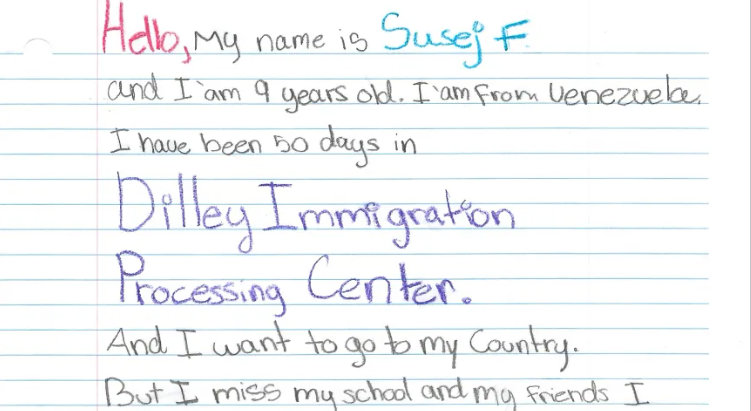
Health Organizations Condemn Traumatic ICE Raids, Family Separation
According to letters from children living in an ICE detention facility, living conditions are inhumane and their mental health is suffering.

In Teens, Social Anxiety Often Looks Like Anger
A study finds that some teens’ aggressive behavior may be due to social anxiety, not straightforward reactivity.
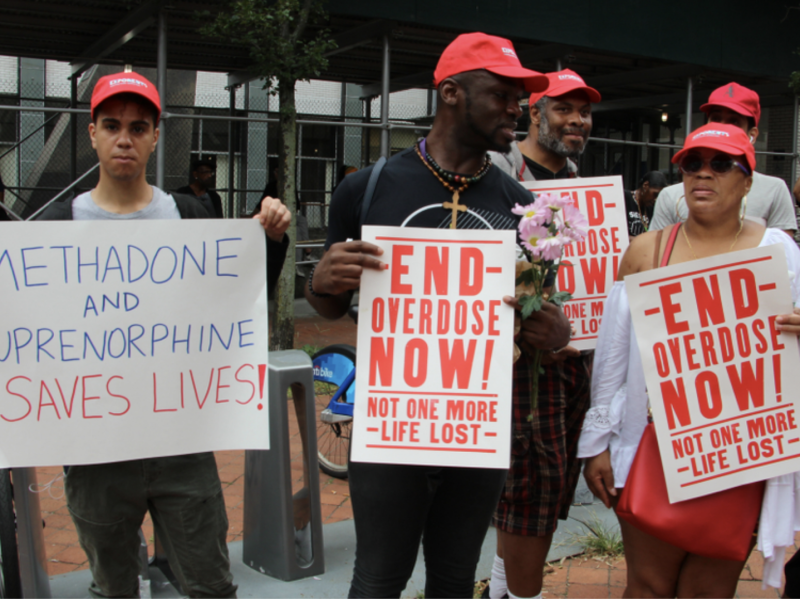
Expert Calls for Harm Reduction, Not Punishment, to Resolve Our Overdose Crisis
As the Trump administration pulls funding from harm reduction, an expert on the overdose crisis says it’s the best way to save lives.
