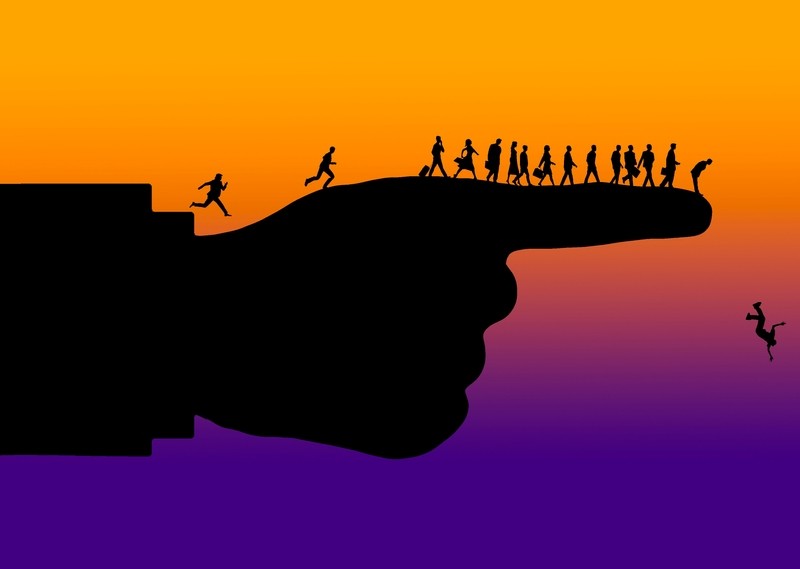
Youth of Color Say Media Coverage Undermines their Mental Health
Youth of color say negative stereotypes in the media threaten their self-worth and safety. Plus, Ask Barbara’s column, teens and lifesaving buprenorphine, and more.

February 22, 2024
By Courtney Wise

Greetings, MindSite News Readers. In today’s Daily, a look at how the media undermines the way Black, Indigenous, and other youth of color see themselves. Pediatricians could become front line fighters in the nation’s opioid crisis, but many don’t feel prepared to do so. And though ADHD is seen as a disadvantage in today’s society, a recent study suggests the condition may sometimes offer a huge advantage.
Also in today’s issue, Dr. Barbara Greenberg counsels a mom worried that her preteen daughter is on the road to an eating disorder. Why teens (and adults) need “mental-health-friendly” cities. How some friends are becoming each other’s caregivers in old age. Plus: Why the term “heroin chic” is so absurd – and dangerous.
How the media portrays BIPOC youth – and its impact on their mental health

Love it or hate it, popular media has an impact on what we think and do. Television, movies, books, social media and news outlets not only provide entertainment, information and a window into the lives of our neighbors, they reflect what our culture deems important. What’s absent from our media sends a message. The ways in which communities are represented also affect the stories we receive about ourselves. Knowing this, the University of North Carolina – Chapel Hill featured a study led by public health researcher Sophie To to share the complex ways in which people engage with media, especially people from historically underrepresented communities.
For the study, To and her team conducted 20 in-depth interviews with Black, Indigenous, and other youth of color (BIPOC) ages 18 to 25 who had been diagnosed with a mental health condition or issue. Interviews revealed that they used media to connect with others sharing their experiences, to promote well-being and to find themselves represented in online, in print and in TV and films. However, they often met with disappointment. A major theme “was that ‘mainstream/big media’ sources aren’t covering some of the issues that really matter to BIPOC people with mental health concerns,” said To.
BIPOC youth also told researchers that negative stereotypes in media influenced their self-worth or threatened their safety by spreading misinformation – a significant discovery. The interviews were conducted between November 2020 and January 2021, at the height of the pandemic and anti-Asian and anti-Black violence. “The way things like that are portrayed or misrepresented in media also has implications for everyday physical safety, especially against people who are oppressed,” To said.
Her hope is that the research will spark public health efforts that build critical media literacy, promote diversity in media and inspire media safeguards to mitigate harm. People who can engage with media that accurately represents their identities and lives can improve their mental health and relationships, said To. “While this might seem obvious to many people, that makes it all the more surprising that there aren’t more studies on this topic,” she added. “It’s important that we get the word out in the academic sphere – in writing and with quotes from people who are affected – to show how young people with mental health concerns are thinking about media and that we really care and want things to be better.”
Ask Barbara: Is My Preteen Daughter Headed Toward an Eating Disorder?

A worried mother wrote teen and parent psychologist Barbara Greenberg after she overheard her 12-year-old daughter telling a friend she felt like her own legs and hips were too big. She wondered why her daughter already disliked her body at her young age and what she could do about it. Find out what Dr. Greenberg had to say.
Buprenorphine can prevent opioid overdose deaths, now on the rise among teens. So why aren’t more pediatricians using it?
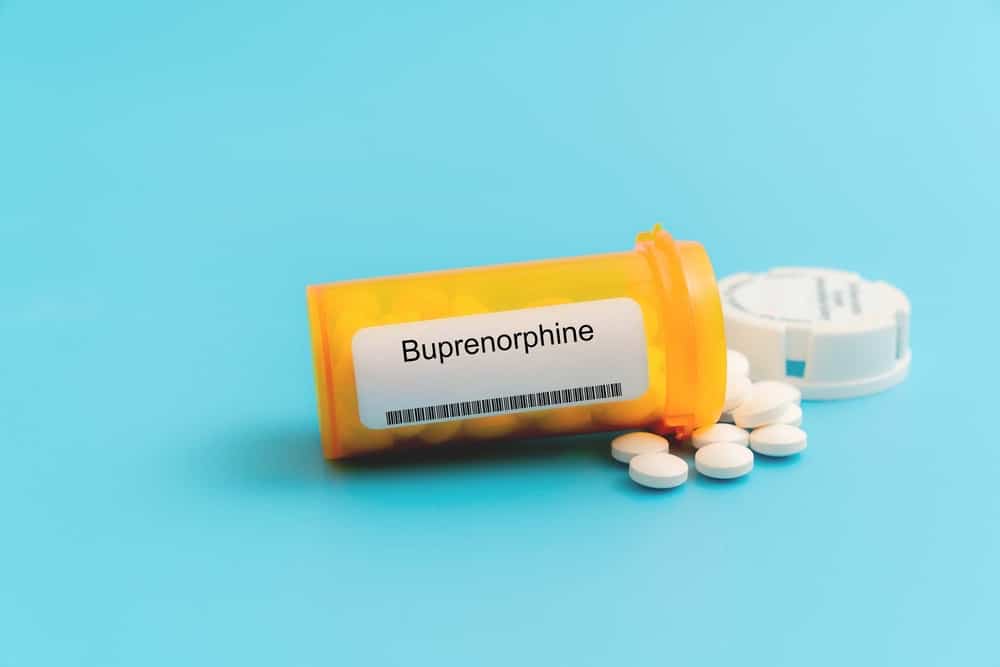
Pediatrician Safdar Medina’s Uxbridge, Massachusetts practice stands out from others in that some of his patients are being treated for opioid addiction – by him. 17-year-old Sam, whose last name is being withheld to protect his privacy, is succeeding in recovery, with the help of buprenorphine. The prescription opioid curbs cravings for the more dangerous and addictive opioid drugs. The day NPR and KFF News accompanied him on his doctor’s visit, Sam’s lab tests showed no evidence of the Percocet or Oxycontin that might’ve eventually killed him. “What makes me really proud of you, Sam, is how committed you are to getting better,” Medina told him.
Interestingly, though the American Academy of Pediatrics recommends buprenorphine as a treatment for teens addicted to opioids, research shows that just 6 percent of pediatricians offer the prescription to patients. Unfortunately, child and adolescent overdose deaths have gone up as buprenorphine prescriptions fall, even though accidental opioid deaths are climbing among teens and young children. “We’re really far from where we need to be and we’re far on a couple of different fronts,” said Scott Hadland, chief of adolescent medicine at Mass General for Children and co-author of a study that surveyed pediatricians about addiction treatment. Medina said he offers addiction treatment and hasn’t had to hire new staff, which is another top concern of pediatricians who don’t treat addiction.
Some pediatricians who do treat addiction say they worry about offering buprenorphine as a treatment option because of one of its side effects: long-term dependence. But experts say saving lives should be the first priority. “In this era, where young people are dying at truly unprecedented rates of opioid overdose, it’s really critical that we save lives,” said Hadland, “And we know that buprenorphine is a medication that saves lives.”
In other news…
Attention Deficit/Hyperactivity Disorder is often characterized by traits like hyperactivity, impulsivity, and distractibility – all of which can cause people with the condition difficulty in everyday social situations. But a new study provides evidence that the condition indicates a different way of thinking, which may helped humans survive in ancient times and is still of use today. In this case, researchers discovered that people with ADHD traits are better at foraging – a necessary skill for our hunter-gatherer forefathers.
“ADHD is not a disorder, it is a variation which gives an advantage in certain environments where a willingness to take risks and having lots of energy are advantageous,” Annie Swanepoel, a child psychiatrist unaffiliated with the study, told the Washington Post. “People often wrongly think that ‘survival of the fittest’ means that those who are strongest or fastest or most intelligent survive. This is not the case — it is not about being “fit” but rather about the “goodness of fit” between the individual and the environment. That is why there are tortoises and slugs as well as cheetahs and elephants.”
When friends, rather than spouses, care for one another in old(er) age: My aunt is a nurse in her 60s who has never been married, but she still holds hope for finding her forever love. (Interestingly though, many of her older women clients tell her that a husband would only hold her back, especially because she’s got a great job.) And though many of us would like a spouse, romantic partner or child by our side if we are lonely or ill, death and distance may make this impossible — and one solid friend can make all the difference, suggests this essay in The Atlantic on the trend toward friends as caregivers. Barb Buettner and her close friend Inez Conrad, who talked with writer Rhaina Cohen, have taken that approach. They’re platonic friends and true partners, acting as confidante, companion, and eventually caregiver. Though reluctant to take on the final role at first, their devotion to one another’s wellness won out. “Our determination then was that we would take care of each other as long as we could,” Buettner said.
“Heroin chic” doesn’t exist: A couple years ago, the New York Post wrote a column called “Bye bye, booty: ‘Heroin chic’ is back” – one blasted by communities affected by heroin use (“OUR BODIES ARE NOT TRENDS. SAY IT WITH ME,” wrote Jameela Jamil in one response.) Now Guillermo A. Santos, a youth from the Kensington neighborhood of Philadelphia, writes in a guest column for NPR that where he’s from, heroin turns people into zombies. “People seem to fall asleep standing up, lingering under bridges and near subway stations, “ he wrote. “They stagger with needles still in their arms or hunch over in the pains of withdrawal, sometimes motionless in the middle of the street trying to keep standing. In those videos, you can see the house where I grew up.” He even lost his father to heroin, by way of an opioid overdose. Nothing about the addiction or death was cool, Santos added. “My father’s overdose wasn’t chic, so why are people trying to look like him?” he asked. “Crushing reality for some can be seen as an aesthetic choice for the privileged.”
Should you disclose an extramarital affair, and if so, when? The inquiry is a departure from our normal parenting newsletter fodder, but the column caught my eye in Psychology Today nonetheless. To answer that question, you have to first determine whose needs will be met by sharing information about the affair, said Ann Gold Busch, author of The Parent’s Guide to Birdnesting: A Child-Centered Solution to Co-Parenting During Separation and Divorce. Then, consider these points: 1) Will the relationship be discovered by someone else? 2) Do you want to stay in your marriage? 3) Will you end the affair? 4) And if you do want to stay married after an affair, are you clear on whether or not infidelity is a deal breaker for your partner? For many marriages, affairs immediately trigger divorce.
A controversial bill in New Jersey would allow youth as young as 14 access mental health services on their own without parental knowledge or consent. Sixteen year olds can already do so in the state. Proponents say the bill would essentially remain the same, with just one change: replacing the figure 16 with 14. The goal is to save lives, bill co-sponsor state Senator Joe Vitale (D-Middlesex) told the New Jersey Monitor. “We’ve heard more stories than we care to hear like this: ‘My son or daughter took their life. If we only knew they were going through some problems, had issues,’” Vitale said. This bill would allow younger teens to get help for the issues they wish to hide from their parents. “It’s only the age,” Vitale said. “There’s no prescriptions. There’s no anything.”
A team of researchers just published a study in Nature about ways to make cities “mental health friendly” for teens and adults. They learned that teens especially yearn for life skills training, having their ideas heard and valued and multiple safe options to spark connection or hang out with friends.
If you or someone you know is in crisis or experiencing suicidal thoughts, call or text 988 to reach the 988 Suicide & Crisis Lifeline and connect in English or Spanish. If you’re a veteran press 1. If you’re deaf or hard of hearing dial 711, then 988. Services are free and available 24/7.
Recent MindSite News Stories
Why does my young daughter dislike her body so much?
In Ask Barbara, a mother worries her preteen daughter may be headed for an eating disorder. Find out what Dr. Barbara Greenberg has to say. Continue reading…
A San Francisco Program Helps Older People Manage Their Hoarding Behavior – and Stay Housed

Every year, 20 or more elderly San Francisco renters are threatened with eviction because of their hoarding disorder. A unique peer-support program helps them make changes – and keep their apartments. Continue reading…
Help! I Don’t Like My Child

A divorced father can’t figure out why he no longer enjoys his teen daughter’s company. Find out what Dr. Barbara Greenberg advises. Continue reading…
If you’re not subscribed to MindSite News Daily, click here to sign up.
Support our mission to report on the workings and failings of the
mental health system in America and create a sense of national urgency to transform it.
For more frequent updates, follow us on Facebook, Twitter and Instagram:

The name “MindSite News” is used with the express permission of Mindsight Institute, an educational organization offering online learning and in-person workshops in the field of mental health and wellbeing. MindSite News and Mindsight Institute are separate, unaffiliated entities that are aligned in making science accessible and promoting mental health globally.
Copyright © 2021 MindSite News, All rights reserved.
You are receiving this email because you signed up at our website. Thank you for reading MindSite News.
mindsitenews.org

Mental health can't wait.
America is in a mental health crisis — but too often, the media overlooks this urgent issue. MindSite News is different. We’re the only national newsroom dedicated exclusively to mental health journalism, exposing systemic failures and spotlighting lifesaving solutions. And as a nonprofit, we depend on reader support to stay independent and focused on the truth.

It takes less than one minute to make a difference. No amount is too small.
The name “MindSite News” is used with the express permission of Mindsight Institute, an educational organization offering online learning and in-person workshops in the field of mental health and wellbeing. MindSite News and Mindsight Institute are separate, unaffiliated entities that are aligned in making science accessible and promoting mental health globally.


Author

Related Articles
A Cat Love Story, and The Battle Over Opioid Settlement Dollars
A major policy shift in Pennsylvania now allows opioid settlement funds for public defenders, a move that could transform how counties address addiction and the legal system.

Generative AI More Harmful Than Helpful in K-12 Classrooms
A new study from the Brookings Institution finds that generative AI does more bad than good in today’s classrooms.