
First Grader Makes Plea for Social Emotional Learning at School
A six-year-old makes the case for keeping social-emotional learning in New Hampshire schools. Over-reporting of child abuse for children of color. Psychologist Barbara Greenberg’s column. And more.

March 7, 2024
By Courtney Wise

Good morning, MindSite News readers! A 6-year-old girl captures everyone’s attention as she testifies in favor of New Hampshire schools keeping social-emotional learning courses in the classroom. In other news: Detroit and Ann Arbor investigate how to stop the disproportionate number of children of color from being referred to child welfare officials. One in three youth in Gen Z report depression or anxiety. And research suggests journaling is good for kids.
Plus: And teen psychologist Dr. Barbara Greenberg advises a distressed mother on how to tell her daughter that she needs to say goodbye to her beloved pet.
Who’s making the case for social-emotional learning in New Hampshire public schools? Meet 6-year-old Cordelia Dubois.
In her testimony before the New Hampshire state legislature, 6-year-old Cordelia Dubois demonstrated the effectiveness of her school’s social-emotional learning (SEL) curriculum. The first grader calmly and confidently read her own statement, noting how the course helped her. “SEL class helps me to stay calm and happier,” Cordelia said. “They taught me what I can do when I am mad at school or at home.” She even demonstrated how that works with the very toolkit teachers use to show students how to regulate their emotions. It’s Cordelia’s hope that her testimony will inspire lawmakers to reject proposed legislation that would end the SEL classes she enjoys so much.
Republican State Rep. John Sellers co-sponsored the bill, telling the Concord Monitor that social and emotional teaching “gets kids worked up” about social and interpersonal issues that ought to be limited to conversations between children and their parents. “It’s going into the psyche of the child and it is teaching the child certain aspects beyond what the family should be teaching the child and I think it’s usurping the family,” he said.
But public response has been overwhelming against the bill. As of Dubois’ in-person testimony last month, the General Court of New Hampshire recorded 3800 testimonies against the bill banning SEL classes in public schools and only 117 in support. Public sentiment aligns with the best available knowledge on SEL, according to mental health experts. The National Alliance on Mental Illness New Hampshire reports that 15,000 of the state’s adolescents have depression. According to the NAMI chapter, social-emotional learning is critical to maintaining sound mental health and preventing future mental health issues. (See our 2022 story ‘What’s Behind The Protests Against School Trying to Boost Kids’ Mental Health?)
Ask Barbara: How do I tell my daughter her beloved dog is dying?

A distressed mother writes parent and teen psychologist Dr. Barbara Greenberg to ask how to break this news to her daughter. She is especially worried because she had assured her daughter, who was away at a sleepaway camp, that everything would be just the same when she got back. Find out what Dr. Greenberg had to say.
Detroit and Ann Arbor: Working to end the over-reporting of children of color to child welfare officials
Child welfare advocates in Southeast Michigan are optimistic about a pilot program intended to reduce erroneous reports of child abuse. Detroit and Ann Arbor will serve as Michigan’s representatives in one of eight pilot projects funded by the American Bar Association’s Center on Children and the Law to investigate race equity in the nation’s child welfare systems. The Detroit Free Press reports that out of the roughly 69,000 reports of child abuse recorded by the state each year, only 25,000 of them are substantiated.
“Sometimes children are not safe, and that is when child protection needs to step in – when children aren’t safe. It is equally important to remember that removing children from their parents is a last resort because of the trauma associated with being removed from one’s family,” said Ann Stacks, director of the Infant Mental Health Program at Merrill Palmer Skillman Institute at Wayne State University. “It is so important to make sure that children aren’t being unnecessarily investigated or removed.” It’s a major concern. Though children of color are just 31 percent of Michigan’s youth population, they represent more than half of Michigan youth in foster care.
This is likely due to the lack of cultural awareness among mandatory reporters, including those from the medical community, schools and the courts. Demetrius Starling of the Michigan Department of Health and Human Services said that some families are reported by doctors for neglect after bringing sick or injured children through emergency rooms or urgent care clinics, rather than through a pediatrician’s office. The reason: Many of these families may simply have no adult who can accompany a child to the doctor’s office during traditional working hours. Small wonder Black children and children from Native American communities are reported most often. “We want to keep children safe by recognizing those biases within our system, and also to really take a larger look about the overrepresentation of children of color in the foster care system that can start with some of these overreporting instances,” Starling said.
With year one dedicated to evaluating the need for change and identifying interventions, the pilot is slated to run for five years total. “When you engage with disenfranchised communities that have been heavily impacted by our policies, our procedures, our statutes, sometimes you can’t just go in like a bull in a china shop and say, ‘This is what we want to do,’” said Starling. “We’re kind of unraveling some of those issues or concerns that have plagued our communities for years.” Other phases of the project will explicitly make racial healing and building community between communities of color and the medical system a goal.
In other news…
When parents are the biggest obstacle to connecting youth to much needed therapy: A few years ago, when 17-year-old Derry Oliver was still in the fifth grade, she asked her mom about seeing a therapist. Her school counselor suggested it: Derry mentioned she’d felt stressed and overwhelmed, living hundreds of miles away from her mom in Georgia, as her mother sought employment and housing for them in New York. But immediately, the idea was rejected. Derry’s mom, also named Derry Oliver, told the Associated Press she didn’t trust the school’s assessment. “You’re so young,” her mom remembered thinking. “There’s nothing wrong with you. These are growing pains.”
Later on, in high school, the issue resurfaced. Derry struggled with her mental health during the isolation of the pandemic and her school’s staff once again suggested to her mother that she seek additional help. When her mother said no this time, Derry pushed back. “It was very emotional for both of us because I understood her frustrations and fears,” the younger Oliver said. “But at the same time it’s sometimes best for your child to be able to access this rather than hold it away from them.”
Teachers and parents, encourage children to journal: It’s an exercise that will help young children connect the dots between reading and writing and help them to express their houghts and feelings. Plus, reports Connie Morris for Edutopia, it’s accessible to the youngest children—even before they can read. In such a case, pictures can be used to convey thoughts on paper.
Recent studies in the United Kingdom found that lots more young adults aged 18 to 25 in Gen Z report mental health concerns. One in three in Gen Z report depression or anxiety, up from one in four millennials a little more than 20 years ago. Why is that? The Guardian asked around and got some surprising answers, including one revealing a sense of despondency from entrepreneur and employment expert Shoshanna Davis. ““Hope – having things to look forward to – definitely helps from a mental health perspective,” she said. “But a lot of people don’t have hope, because what are we working towards if we don’t have money to buy a house, if we don’t even have money to travel, if we’re ultimately not even in a job we enjoy, but in the first job we could find because we needed to pay the bills.”
If you or someone you know is in crisis or experiencing suicidal thoughts, call or text 988 to reach the 988 Suicide & Crisis Lifeline and connect in English or Spanish. If you’re a veteran press 1. If you’re deaf or hard of hearing dial 711, then 988. Services are free and available 24/7.
Recent MindSite News Stories
8 Ways to Deal With the Loss of a Beloved Pet

It’s hard for parents to know what to do when a beloved pet dies — and how to comfort their children. Psychologist Barbara Greenberg has some advice. Continue reading
Can Prop. 1 Address California’s Trifecta of Mental Health Crises? Voters Are About to Decide

As voters prepare to pass judgment on Proposition 1, MindSite News asked six key players in the state’s constellation of mental health services to weigh in on its likely impact. Will it finally succeed in helping the state address mental health, housing and addiction services? Continue reading.
How psychedelic drug therapy became a rare bipartisan issue in California
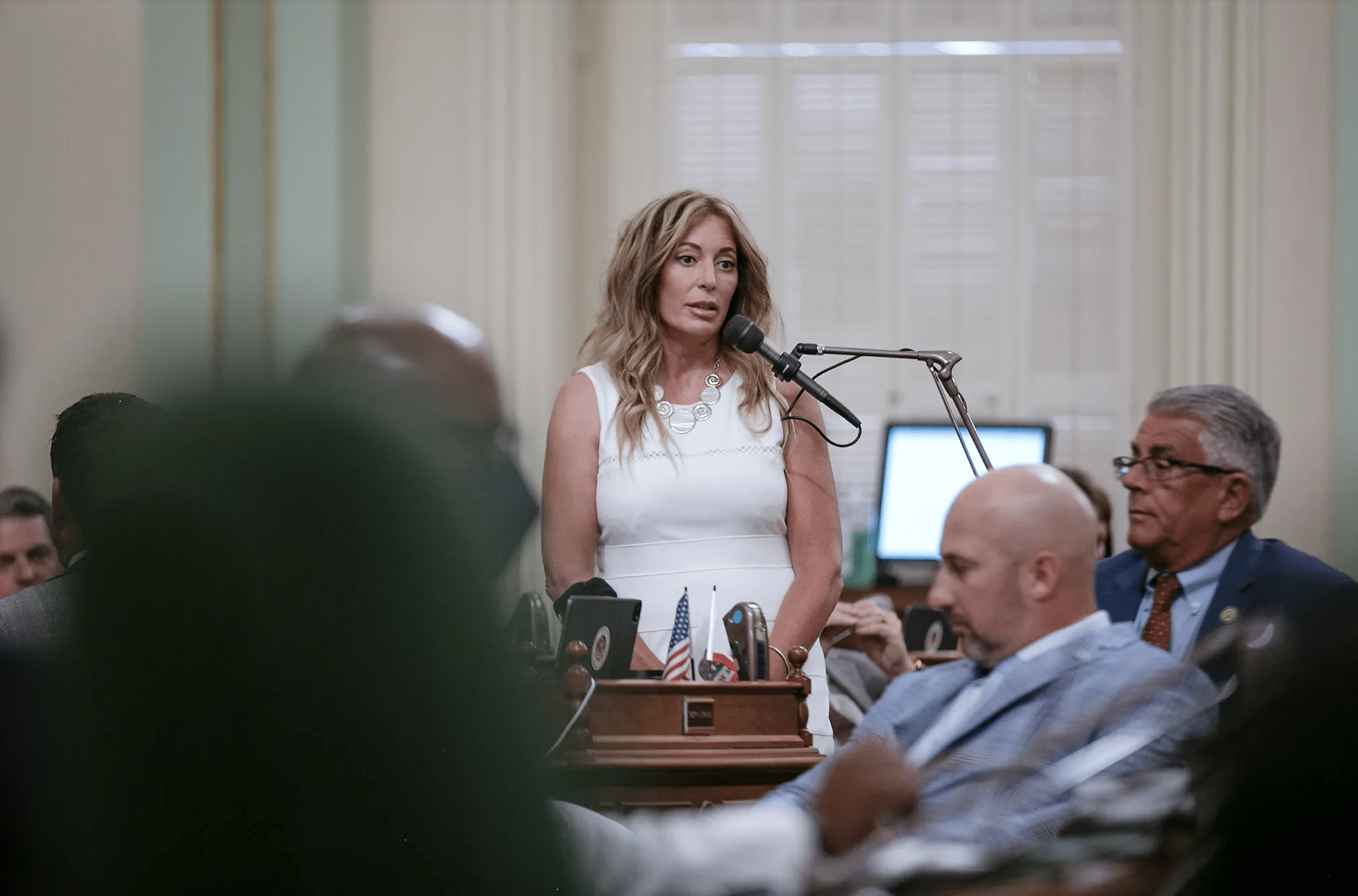
Republican Marie Waldron and Democrat Scott Wiener may seem to have little in common. But they have formed an unlikely partnership on an unusual issue: legalizing psychedelic drugs to treat mental illness. Continue reading…
If you’re not subscribed to MindSite News Daily, click here to sign up.
Support our mission to report on the workings and failings of the
mental health system in America and create a sense of national urgency to transform it.
For more frequent updates, follow us on Facebook, Twitter and Instagram:

The name “MindSite News” is used with the express permission of Mindsight Institute, an educational organization offering online learning and in-person workshops in the field of mental health and wellbeing. MindSite News and Mindsight Institute are separate, unaffiliated entities that are aligned in making science accessible and promoting mental health globally.
Copyright © 2021 MindSite News, All rights reserved.
You are receiving this email because you signed up at our website. Thank you for reading MindSite News.
mindsitenews.org

The name “MindSite News” is used with the express permission of Mindsight Institute, an educational organization offering online learning and in-person workshops in the field of mental health and wellbeing. MindSite News and Mindsight Institute are separate, unaffiliated entities that are aligned in making science accessible and promoting mental health globally.


Author

Related Articles

Generation Cancer: Millennials Struggle With Death at an Early Age
More young adults are being diagnosed with cancer. Even for those who survive, the experience can be destabilizing and isolating.

Millennials Weigh Having Children On Their Own Terms
Not having children is also a valid path, and one that everyone should consider, Merle Bombardieri argues in her 1981 book.

Waiting for Word on Relatives Under Attack in Iran
Iranians in the US are caught between two “unrepentant regimes,” says Iranian-American writer and professor Shervin Malekzadeh.
