
People with Disabilities Abused in Illinois’s Big State-Run Facilities
Illinois wants to end federal oversight for care of its residents with disabilities, but advocates say it’s needed more than ever. Plus, adoptees have a right to their history. And more.


March 12, 2024
By Courtney Wise

Greetings, MindSite News Readers. In today’s Daily, Illinois wants to halt federal oversight of its care of residents with developmental and intellectual disabilities, but opponents say too much work is left undone. Magnesium appears to work for anxiety but it’s no cure-all. And a psychiatrist argues that antidepressants should neither be life-long or long-term for everyone.
Plus, a list of great reads – fiction and nonfiction – about living with bipolar disorder. A story about an adoptee’s battle to see his birth records. And why we shouldn’t underestimate the mental health benefit to hanging out with nothing special to do.
Illinois wants to end federal oversight of its care for residents with developmental and intellectual disabilities. People who languish for years in “short-term” care disagree.
Five years ago, Kaleigh Rogers lived fairly independently. Though cerebral palsy made it such that she needed daily support for her wellbeing, Rogers lived in a small group home with other adults, had an active social life and was taking college courses in an online program. But in the isolation of the pandemic, she experienced a mental health breakdown that required medical care the administrators of her living community felt unequipped to provide. She had to move. The only place available, her mother, Stacey, told ProPublica, was Kiley Developmental Center in Waukegan, Illinois, where Rogers has languished “inside a box” for two years. The state doesn’t have anywhere else for her to go.
Rogers’ stay at Kiley was supposed to be short-term. With her mother’s help, she has applied to dozens of group homes over the past year. Though she’s on the waitlist for a couple of them, most have denied her a room. In a statement, the Illinois Department of Human Services said the state wants to expand its offerings to residents with intellectual and developmental disabilities. But that’s the trouble, said Andrea Rizor, a lawyer with the Chicago nonprofit Equip for Equality, which advocates for the civil rights of people with disabilities. “They just don’t have enough [capacity] to meet the demand,” she said. Since the consent degree requires community capacity, she added, “then the time is not right to terminate this consent decree,” she said. Rizor went on to note there are also serious concerns about resident safety in large state-run facilities. People with disabilities who moved from small community group homes to larger institutional care in crisis have “died, been raped, and been physically and mentally abused,” she said.
For its part, the state argues it has made significant improvements during the 13 years of federal oversight. In 2011, just 13,500 people received home- and community-based services, compared with 23,000 in 2023. The state also says it’s poured funding into wages for the front-line care workers who assist group home residents with daily living needs in the community, such as cooking meals and grooming. In addition, the lead plaintiff in the lawsuit that led to the consent decree, Stanley Ligas, is now living a “very happy” life in a small group home near his family. Ligas’ care is covered by a local nonprofit, he works part-time as an advocate for people with disabilities, and he enjoys a social life with friends and freedom.
But despite the progress, it’s not yet enough to end oversight, say supporters of an ongoing consent decree. Currently 5,000 people are awaiting community services from the state; most people will wait 5 years for support. According to a University of Kansas analysis of states’ spending on services for people with intellectual and developmental disabilities, Illinois is near last for funding community-based services. That could be improved with better money management, according to supporters of the consent decree suggest. Each year, the state spends roughly $347,000 per person in state institutions like Kiley. Comparatively, it costs only $91,000 per person to support people living in small community living.
Magnesium may help ease anxiety. But a “super supplement” it is not.

On a day I was particularly stressed, my uncle suggested I drink a glass of water and magnesium. He said the mineral, as the brand name he purchased suggested, would help relieve my anxiety. My physician later told me it’s true; studies have shown magnesium helps regulate cortisol levels and calm overwhelmed neurotransmitters, soothing anxiety. “Magnesium plays many essential roles in the body,” said Zhaoping Li, director of UCLA’s Center for Human Nutrition. “It’s part of the muscle relaxation process, it’s involved in neurotransmitters. It is an essential part of all cell types. So as you can imagine, lacking it would have wide-spectrum negative impacts on health,” Li told the Los Angeles Times. Still, it’s not a solution to anxiety for everyone.
Though some people do report amazing results, including less anxiety and insomnia, with a magnesium pill or a daily supplement containing magnesium, it’s unlikely to resolve most cases of anxiety because most people aren’t deficient in the mineral. “If anyone has a regular diet, this is not something you would easily lack. The source of magnesium [in food] is pretty wide,” Li said.
That doesn’t mean you shouldn’t give it a try – after speaking with a licensed physician to first confirm its safety for your body – but don’t expect “night and day” results. It’s not a cure-all. And finally, consider the timing when you take it. The right dose can, ahem, clear you out. “Magnesium citrate is used before colonoscopies to really get the bowel going,” Dr. Li said.
Who can safely stop antidepressants?
Okay, I’ll admit: That headline is pure clickbait. No one other than your physician can say when it is safe for you to stop taking any medication – and doctors advise you to never suddenly stop antidepressants without consulting a physician since that can be risky to your mental and physical health. But psychiatrist Richard A. Friedman wants patients to know it’s within our rights to request to stop taking certain psychiatric medications if our issue has been resolved.
“Psychiatrists, like all physicians, are trained to diagnose medical problems and then do everything they can to treat them into remission. We’re experts at prescribing medication but not so good “de-prescribing” drugs,” Friedman writes in the Washington Post. “This is due, in large part, to the fact that many illnesses, like depression, tend to be chronic, so the assumption is that lifelong therapy is required. But that is not always the case.”
He goes on to explain that sometimes, even in a chronic illness like depression, at least half of people who enter remission will remain healthy off medication. Further, a future depressive episode could be years and years away. To him, that means patients in remission for six months or more following a first episode of depression should be able to safely taper off psychiatric medications. As always, there are exceptions to this standard, including those who’ve attempted suicide or were unable to function during the episode.
In addition, Friedman advocates that certain anti-anxiety medications be used for only the limited time they were designed for. For example, benzodiazepines like Ativan are largely safe and effective. But, instead of being prescribed only until the stressor that triggered their use is resolved, many physicians keep issuing patients the drug, he said. “It is often continued simply out of habit or because a patient mistakenly thinks it’s necessary to his well being,” Friedman wrote. “To avoid a conflict, clinicians too often cave in to the demand.”
In other news…
Engrossing reads on bipolar disorder: Leanne Toshiko Simpson, a writer who is diagnosed with bipolar herself, recommends this list of 9 Subversive Books that are Rewriting Bipolar Disorder in Electric Literature. Her own novel tops the list. Now, I can’t vouch for every book on this list, but if they’re all like her 7th pick, Bassey Ikpi’s I’m Telling the Truth, but I’m Lying, I feel confident assuming they’re fantastic.
“You could say I grew up not knowing who I was. I knew that I’d been born in an Indianapolis hospital in 1968, and that my parents had adopted me when I was 10 days old. That was it. I didn’t know who my birth parents were, or why they couldn’t raise me. I had no medical history.” So begins the story No One’s Children: America’s long history of secret adoption by Atlantic writer Steve Inskeep, who tells the story of searching for his birth parents while being denied access to his own history by the state of Indiana. It’s a vivid, engrossing read — and a powerful argument that all adoptees have a right to their own history.
“Productivity” isn’t the only thing worth trading for your time: Sheila Liming is a scholar in literature and culture. More impressively, she’s a millennial who has avoided social media over the past 20 years. Even without the PhD, that makes her an expert in the value of kicking it with real people, in the real world. “Hanging out” is exactly what she talks about, too, in this interview with the New York Times about her latest book. In Hanging Out: The Radical Power of Killing Time, Liming asserts that unstructured time is essential to democracy.
If you or someone you know is in crisis or experiencing suicidal thoughts, call or text 988 to reach the 988 Suicide & Crisis Lifeline and connect in English or Spanish. If you’re a veteran press 1. If you’re deaf or hard of hearing dial 711, then 988. Services are free and available 24/7.
Recent MindSite News Stories
8 Ways to Deal With the Loss of a Beloved Pet

It’s hard for parents to know what to do when a beloved pet dies — and how to comfort their children. Psychologist Barbara Greenberg has some advice. Continue reading…
Can Prop. 1 Address California’s Trifecta of Mental Health Crises? Voters Are About to Decide

As voters prepare to pass judgment on Proposition 1, MindSite News asked six key players in the state’s constellation of mental health services to weigh in on its likely impact. Will it finally succeed in helping the state address its housing, substance use and homelessness crises? Continue reading…
How psychedelic drug therapy became a rare bipartisan issue in California
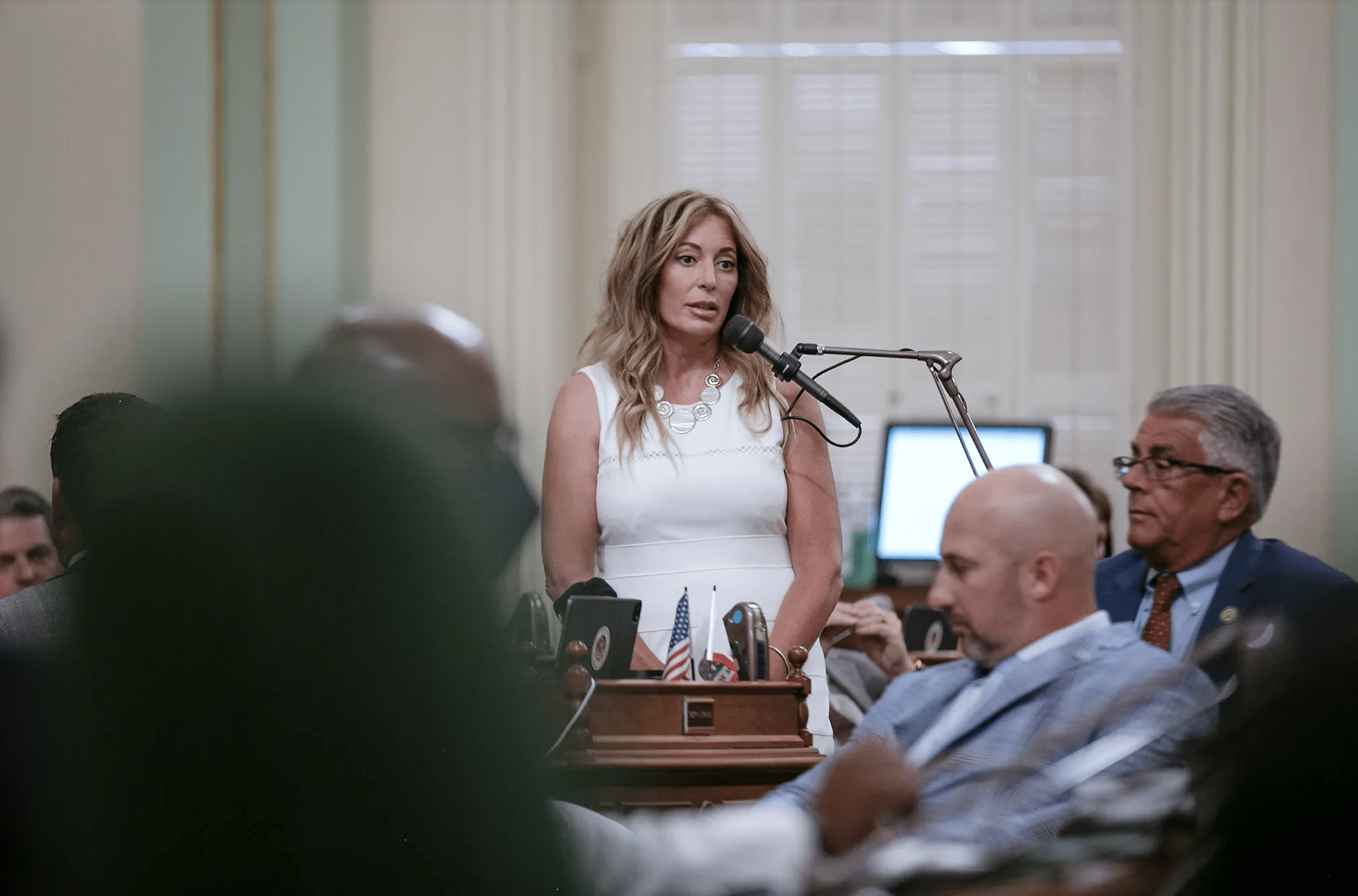
Republican Marie Waldron and Democrat Scott Wiener may seem to have little in common. But they have formed an unlikely partnership on an unusual issue: legalizing psychedelic drugs to treat mental illness. Continue reading…
If you’re not subscribed to MindSite News Daily, click here to sign up.
Support our mission to report on the workings and failings of the
mental health system in America and create a sense of national urgency to transform it.
For more frequent updates, follow us on Facebook, Twitter and Instagram:

The name “MindSite News” is used with the express permission of Mindsight Institute, an educational organization offering online learning and in-person workshops in the field of mental health and wellbeing. MindSite News and Mindsight Institute are separate, unaffiliated entities that are aligned in making science accessible and promoting mental health globally.
Copyright © 2021 MindSite News, All rights reserved.
You are receiving this email because you signed up at our website. Thank you for reading MindSite News.
mindsitenews.org

The name “MindSite News” is used with the express permission of Mindsight Institute, an educational organization offering online learning and in-person workshops in the field of mental health and wellbeing. MindSite News and Mindsight Institute are separate, unaffiliated entities that are aligned in making science accessible and promoting mental health globally.


Author

Related Articles

Family of 6 in ICE Detention for 9 Months ‘Dying on the Inside’
After nine months in Dilley Immigration Processing Center, “we forgot what it feels like to be free,” a recent high school graduate wrote.

Generation Cancer: Millennials Struggle With Death at an Early Age
More young adults are being diagnosed with cancer. Even for those who survive, the experience can be destabilizing and isolating.

Millennials Weigh Having Children On Their Own Terms
Not having children is also a valid path, and one that everyone should consider, Merle Bombardieri argues in her 1981 book.
