
Why Do We Expect People to ‘Stay Clean’ to Get Mental Health Services?
Many mental health programs require people to get and stay clean of drugs and alcohol. A social worker says that’s a bad idea. The federal Medicaid agency is chided for not enforcing parity rules in eight states. And more.

Monday, April 1, 2024
By Don Sapatkin
Good Monday Morning! In today’s Daily, no April Fool’s: Mental health treatment can be hard to get if you have a substance abuse problem, as many mentally ill people do. The federal Medicaid agency is chided for not enforcing parity rules in eight states.
Community health workers are, as the cliche goes, “meeting people where they’re at” by starting conversations with people at a Brooklyn park. More women are drinking themselves to death, worrying public health officials. Plus: Democrats are angering drug policy reformers by supporting drug screening for people on government assistance. And Massachusetts says its prisons no longer use solitary confinement – but prisoners say they’ve simply renamed it.
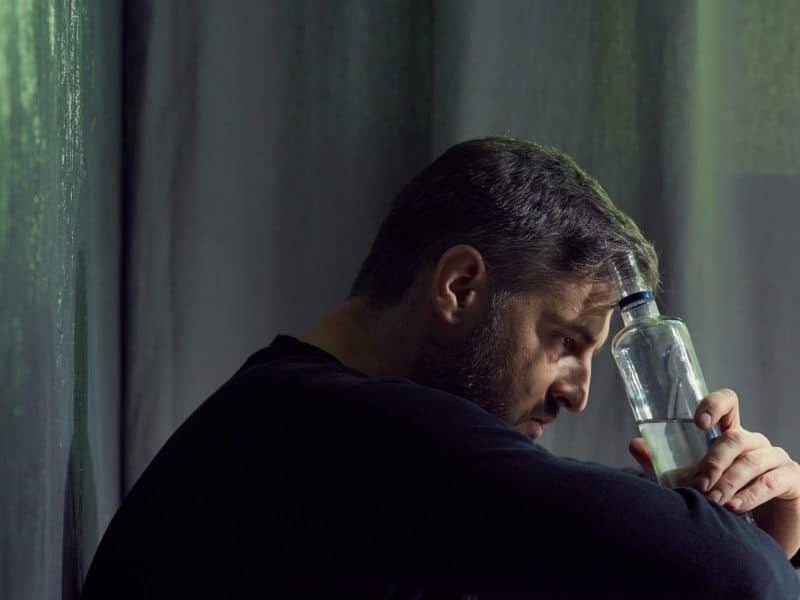
Why do we expect people to “get clean” from addiction in order to get mental health treatment?
“For people with mental illness, drugs and alcohol can be a key survival strategy. I’ve learned they shouldn’t have to ‘get clean’ to get treatment,” Simon Bratt writes in The Conversation. Bratt is a mental health social worker now getting his Ph.D. at Staffordshire University in England.
A few years ago, he was working in a women’s prison when he met a woman who’d been severely abused by men and suffered from anxiety and flashbacks. Only heroin quieted the unending storm of her thoughts, she said, even though it led to her children being removed and her being sent to prison. There, the woman he calls Jenny was prescribed the antipsychotic Seroquel and the opioid addiction medication buprenorphine, which reduces cravings and withdrawal while creating a minimal “high.” But Jenny didn’t use the drugs as prescribed. “The only way they help is if I grind them together and snort them,” she explained. It provided a fleeting, euphoric respite from her psychological torment.
Her use of the medication was labeled substance abuse, and the prison’s mental health service refused to work with her until she “sorted out” her drug issues. She also broke prison rules in an attempt to remain in the prison rather than face life outside. She was released anyway – and died from a heroin overdose a week later.
Bratt later joined a community-based crisis team and began to realize that most of the people he was working with would continue to go through mental healh crises and use drugs or alcohol instead of, or in addition to, their psychiatric medication. He introduces a man he calls John, who tries to “stop the noises” by using whiskey. John says:
“I’ve asked for help so many times, but all I get told is that I need to stop drinking before my mental health can be treated. However, alcohol is the only thing that works for me.”
Professionals Bratt interviewed said the same thing – that people’s use of substances was the biggest barrier to them getting support for their mental health issues, and they wouldn’t receive treatment until they stopped. He also surveyed mental health trusts across England and found that fewer than 30% had programs that accepted dual diagnosis patients.
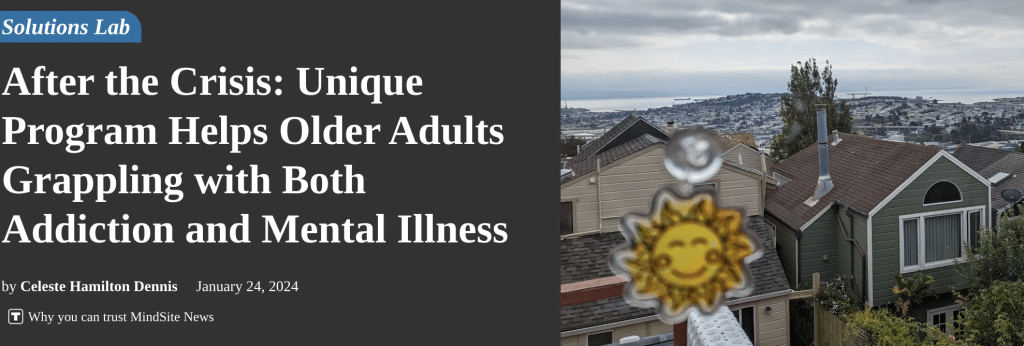
The same is true in the U.S., where MindSite News recently wrote about the barriers facing a pioneering dual-diagnosis program in San Francisco.
Bratt’s most important advice is that “Instead of viewing people through the limiting lens of labels, we should endeavor to see their humanity.” To drive home this point, he gave the last word to John:
“It’s not about the help offered but the meaning behind it. Knowing you’re seen as a person, not just a problem to be solved — that’s what sticks with you.”
Medicaid fails a parity test, and senators target ‘ghost networks’ (again)
The federal Medicaid agency failed to ensure that states complied with mandatory mental health and substance abuse parity provisions in their Medicaid managed care contracts, according to a an inspector general’s audit that was covered by Becker’s Behavioral Health. A 2008 law requires most insurance plans to cover mental health and substance abuse treatment on par with medical and surgical treatment. Ongoing audits of employer-provided and other insurance have found that most do not.
None of the states whose programs were reviewed – Arizona, New Jersey, New York, Texas, Illinois, Kansas, Mississippi and South Carolina – added parity requirements to their contracts with Medicaid managed care organizations by 2017 as they were supposed to, the audit found – although all of them do now. All eight states also imposed other more stringent coverage limits on behavioral health than on medical treatment, the report found. The Center for Medicare and Medicaid Services agreed to improve its oversight of states’ compliance with parity rules and require the states to improve their monitoring of the managed care organizations the contract with.
Meanwhile, senators are taking aim at so-called “ghost networks.” Many insurers give their customers directories of providers who turn out to not accept their insurance, or offer the described services, frustrating members who may spend an enormous amount of time trying to find clinicians. Many end up billed for pricey out-of-network care. Ghost networks are far more common in mental health than in primary care and other specialties, and policymakers have been taking notice and trying hold health plans accountable. Behavioral Health Business reported on legislation recently introduced by Senators Tina Smith of Minnesota and Ron Wyden of Oregon, both Democrats. It seeks to increase the number of in-network providers that insurers offer and crack down on health plans that post inaccurate directories. The Senate and Wyden have tried before, as MindSite News reported two years ago.
Open-air conversations in a Brooklyn park aim to help people deal with mental health needs
“We try to figure out what’s going on in someone’s life,” said Jonathan Timal, half of a team that was working recently in Brooklyn’s Prospect Park, accompanied by a writer for a New York Times newsletter. Their assignment is straightforward: Approach people in the park — anyone, not just those who show signs of stress or instability — and start a conversation. “They have a lot of stuff bottled up, and nobody to talk to,” said Jared Grant, Timal’s teammate from the nonprofit Neighborhood Housing Services of Brooklyn. “It helps just letting people express themselves.”
The team is part of Open Air Connections, a pilot project now in its fifth week, that seeks to lessen the stigma around mental health care through community outreach. Timal and Grant were trained to assess people’s concerns and, if needed, refer them to agencies that can offer help. “You don’t know until you ask,” said Morgan Monaco, president of the nonprofit that runs the park. “This represents a new way of thinking about how parkland contributes to public health outcomes.”
Ashwin Vasan, the city health commissioner, told the Times it was important that the teams worked for community organizations, not the health department, and don’t wear white coats that scream “mental health professionals.” The program reflects “the idea that mental health is not something we can deliver through conventional settings, clinical settings in particular,” he said. “It’s something we need to bring to people.”
Women are drinking more, alarming public health officials
Excessive alcohol use was responsible for about 178,000 deaths in the U.S. in both 2020 and 2021, according to data from the CDC – far more than the highly publicized number of opioid-related deaths. But the number of women drinking excessively – and dying from it – is rising faster among women than men, KFF Health News reports. Alcohol-related deaths historically have been more common among men – and still are, by a factor of two, but the gap is narrowing. One estimate predicts that women will account for nearly half the cost of alcohol-associated liver disease by 2040, about $66 billion.
There are lots of reasons: Women historically drank less when they became mothers, but they’ve increasingly entered the workforce and delayed motherhood. The pandemic increased binge drinking, as people used alcohol to cope with stress, and women are more likely to drink because of stress than men. Advertising for alcoholic beverages frequently targets women, and – perhaps related – sales of rosé and low-calorie wines have soared in recent years. On top of that is the rise of social media posts that make light of drinking to deal with the challenges of motherhood – what some call “mommy wine culture.” All of this, KFF notes, makes excessive drinking difficult to bring up in conversation, and even harder to change.
In other news…
Have you heard of interoception? It’s a quiet “sixth sense” that helps us feel and interpret the internal bodily signals that regulate critical functions such as hunger, thirst, heart rate and temperature. It also is important for our mental health because it plays a role in “many psychological processes — including decision-making, social ability, and emotional wellbeing,” according to a story from the Conversation recently published by ScienceAlert. Disrupted interoception has been linked to mental health conditions ranging from depression to anxiety and eating disorders, and might explain why many of them share symptoms like disturbed sleep or fatigue.
In a stunning reversal, Democrats are embracing the notion that some people on government assistance should be required to submit to drug screenings and mandatory treatment if they show signs of addiction, Politico Pulse newsletter reports. A measure that does just that was approved by San Francisco voters last month, shocking drug-policy reformers who have fought such proposals from Republicans. Public health experts say drug-screening policies have not been effective in reducing addiction and worry that they maintain stereotypes about welfare recipients. But at a time of growing overdose deaths and a resurgence of support for law-and-order measures, Democrats say tough measures can save lives. The San Francisco measure requires people 65 and younger without dependents who receive cash welfare assistance from the city to submit to screening and treatment – if the city “reasonably suspects” they are dependent on illegal drugs. The measure drew more than 60% of the vote and will take effect on Jan. 1.
In Massachusetts, solitary confinement continues, despite a 2018 law. Officials just don’t call it that. The law restricted solitary confinement in state prisons. But according to Bolts, a digital magazine focused on criminal justice and voting rights, the Mass. Dept. of Correction has renamed the units where individual prisoners are held. Out went restrictive housing, as solitary confinement was called and in came new news names and acronyms: Department Disciplinary Units (DDUs), Behavioral Adjustment Units (BAUs) and Secure Adjustment Units (SAUs). All are used to isolate prisoners who are said to threaten security or orderly operations. Bolts reports that as of February, these two units were holding 270 prisoners in isolation, 90 of them for more than 90 days. Prisoners say isolation fuels their anxiety; human rights organizations say it is a form of torture that can severely damage people’s mental health.
If you or someone you know is in crisis or experiencing suicidal thoughts, call or text 988 to reach the 988 Suicide & Crisis Lifeline and connect in English or Spanish. If you’re a veteran press 1. If you’re deaf or hard of hearing dial 711, then 988. Services are free and available 24/7.
Recent MindSite News Stories
Michael Johnson Spent 3 Years in Solitary and Was About to Give Up on Life. Then He Got a Letter from his Daughter

He took his case, arguing that extended solitary confinement was cruel and unusual, all the way to the Supreme Court – and lost. Today he’s out of prison working to rebuild his life.
Booted From the Army, He Spiraled. Now He Works to Solve the Veteran Homelessness Crisis
California has more homeless veterans living on the street than any other state – an estimated 7,400. Dennis Johnson was once one of them. Today, he works to help his fellow vets get into housing – and get the help […]

California’s Prop. 1 Ekes Out a Win as Gavin Newsom Seeks to Change How People with Mental Illness Get Help

Gavin Newsom made mental health a priority when he took office five years ago. This ballot initiative will provide billions of dollars to fund housing and treatment facilities for mentally ill Californians – but will also pull money from community mental health services.
If you’re not subscribed to MindSite News Daily, click here to sign up.
Support our mission to report on the workings and failings of the
mental health system in America and create a sense of national urgency to transform it.
For more frequent updates, follow us on Facebook, Twitter and Instagram:

The name “MindSite News” is used with the express permission of Mindsight Institute, an educational organization offering online learning and in-person workshops in the field of mental health and wellbeing. MindSite News and Mindsight Institute are separate, unaffiliated entities that are aligned in making science accessible and promoting mental health globally.
Copyright © 2021 MindSite News, All rights reserved.
You are receiving this email because you signed up at our website. Thank you for reading MindSite News.
mindsitenews.org
The name “MindSite News” is used with the express permission of Mindsight Institute, an educational organization offering online learning and in-person workshops in the field of mental health and wellbeing. MindSite News and Mindsight Institute are separate, unaffiliated entities that are aligned in making science accessible and promoting mental health globally.


Author

Related Articles

Why Is Georgia Blocking Recovery Homes for Substance Abuse?
Georgia towns are using zoning loopholes to shut recovery homes down, even as addiction and mental illness surge statewide.

Why Are Mothers Punished for Parenting?
Those of us who roamed freely as kids can be arrested for letting our kids do the same.