
Our “Little Brains” Do Big Work
Neuroscientists are learning more about the big jobs of our “little brain.” Volunteers uncover the fate of “The Lost Alaskans” – 5,500 people sent to Oregon to be institutionalized during the first half of the 20th Century.


Wednesday, April 3, 2024
By Courtney Wise

Greetings, MindSite News Readers. In today’s Daily, the field of neuroscience is learning new information about the big jobs of our “little brain.” Volunteers learn the fate of “The Lost Alaskans” – 5,500 people sent to Oregon to be hospitalized during the first half of the 20th Century. A new podcast tells the risks of extreme Vipassana meditation.
Plus, as someone going through the diagnosis process, a list of books to help adults newly diagnosed with ADHD. And dogs who can diagnose by scent.
The cerebellum, or “little brain,” does some big work – and we’re just beginning to understand it
Since the 1800s, scientists have known that our cerebellum, or “little brain,” is responsible for our physical movement, balance, and coordination. It also holds three-quarters of our brain’s neurons in a neat little bun.
But there’s long been suspicion that the cerebellum does far more, neuroscientist R. Douglas Fields writes for Quanta Magazine. A symposium at the 2023 meeting of the Society for Neuroscience provided some new insights about the cerebellum’s role in regulating complex behaviors, emotions, cognition, and social interactions.
Back in 1998, research published in the journal Brain found a wide range of emotional and cognitive issues in people who experienced damage to the cerebellum. But there was no clear understanding of why – and scientists failed to follow the clues, writes Fields, an adjunct professor of neuroscience and cognitive science at the University of Maryland. As a result, progress in learning more was delayed for 20 years, says Diasynou Fioravante, a neurophysiologist who helped organize the cerebellum symposium.
In the past scientists mapping the brain couldn’t find direct connections from the cerebellum to brain regions that control emotion and cognition like the limbic system and prefrontal cortex. Now, new insights suggest the cerebellum’s tiny yet vast system works with the entire brain. Fields quoted this exchange from an interview with neuroscientist Stephanie Rudolph:
“Right now,” Rudolph explained as we talked before the symposium began, “you ask questions, and we give answers. That is a complex behavior.” She needed to comprehend my speech, formulate a response, and then use muscles to produce words. She also had to take in my body language and other subtle signals. “You are nodding right now, for example, so from this I can conclude that you are listening and interested,” she said.
Scientists are now making up for lost time. Studies have shown that female mice will change their maternal behavior based on the ways that hormones act on the cerebellum. Other presentations at the conference found that when certain neurons in the cerebellum of mice are disrupted, it leaves them less interested in interacting with other mice, suggesting a deficit in social-recognition memory, similar to what autistic people experience. In fact, newer research suggests that people with autism typically have smaller cerebellums, said neuroscientist Aleksandra Badura. As a key hub of sensory input, the cerebellum affects how people receive, interpret, and engage in social interactions.
Finding – and honoring – the “Lost Alaskans” who made one-way trips to an Oregon mental hospital
Last fall, native Alaskan Lucy Pitka McCormick was given a traditional burial by her family in a time-honored ceremony. A coffin built by her grandson was filled with gifts and artifacts to accompany her in the afterlife. A traditional final meal was prepared to honor her life.
Salmon, moose, beaver and muskrat were cooked over an earthen fire pit, followed by dessert of whipped whitefish, blueberries and lard. All went according to her family’s long held funerary rituals – with the exception of the timing, that is. She’s been dead since 1931.
As one of 5,500 Alaskans deemed “really and truly insane” by a jury between 1904 and the late 1960s, McCormick was sent to Morningside Hospital in Portland, Oregon for institutionalization. She and others are known as The Lost Alaskans, the Los Angeles Times reports, because after the 2,500 mile trip, many never left the Portland hospital. Their families were given no updates on their status.
Alaskans were sent to Portland because there weren’t any places in their region for residential treatment of people with developmental disabilities or mental illness. In 1904, Morningside entered into a contract with Alaska to care for its mentally ill. The contract lasted until 1959, when Alaska officially gained statehood and began construction of its own mental health facilities. Morningside closed in 1968.
Blessedly, for a little more than 15 years, volunteers in Oregon and Alaska have joined forces to get the Lost Alaskans home. They combed through archival records to reconnect the Lost Alaskans to their families and created a database that went online earlier this year. Now people can use it on their own to gather information about loved ones, including vital records like death certificates and burial location. McCormick’s family is grateful for the efforts. Her spirit finally has peace, said her grandson, Wally Carlo. “It was pretty powerful that we had Lucy back,” he said. “You could feel the energy when she came back to Alaska.”
“Don’t ever give up hope and try to get them back to where they belong,” Carlo added. “Their spirits don’t rest until they’re found and brought back home.”
Podcast investigates risks of extreme Vipassana meditation
Meditation is widely recommended as a tool for improved mental health. Study after study has shown the practice can help people process trauma, reduce anxiety, and even manage chronic pain.
But a type of extreme meditation known as Vipassana, led by the Goenka Network, can have very different – and negative – effects on some participants, according to an investigative podcast from the Financial Times and Goat Rodeo called Untold: The Retreat.
In the Goenka retreats, people meditate silently 10 hours a day for 10 days, eating two vegan meals a day. Madison Marriage, an editor for the Financial Times who reported the podcast, found that some people taking part in the retreats have found themselves in intense psychological distress, even snapping into psychosis. Two participants who took part in retreats in Delaware and British Columbia died by suicide after showing signs of psychological distress.
Though plenty of participants at Goenka retreats say they are grateful for the experience, nearly two dozen people interviewed by Mariage recalled a concerning response from staff after reporting mental distress during the intense retreats. “They’re going to be telling you the same thing, which is keep meditating even if you’re in severe emotional distress,” she told NPR . Some people said they became addicted to meditation itself, falling into a cycle of practice so intense it affected their sleep and damaged their mental health.
So how could meditation do all of this? Too much of a good thing is bad about sums it up, Mariage said. She quoted Willoughby Britton, a neuroscientist at Brown University who explained that one cup of coffee can perk you up, but excessive amounts can become overstimulating and lead to addiction.
How could the retreats be improved? Meditators who had negative experiences had some recommendations that Marriage shared. They suggested that all participants receive warnings about the risks, that mental health practitioners be present at retreats to provide support when it’s needed. And finally, better emergency protocols are needed to help get help for attendees in distress.
In other news…
Navigating an ADHD diagnosis in adulthood can be overwhelming, but it can be done. The New York Times presents this list of 6 books recommended by researchers and therapists alike, including Your Brain’s Not Broken by Tamara Rosier. I haven’t read it yet, but the encouraging title has it at the top of my list.
The canine nose knows … when you’re stressed: A team of Canadian researchers at Dalhousie University found that service dogs trained to recognize signs of a pending episode of post-traumatic stress disorder can be taught to do so by smelling their human’s breath. The study was published last week in Frontiers in Allergy, UPI reports. The study is quite small; of the 25 dogs recruited to participate, only two were skilled enough to complete it. But those two were able to distinguish with 90% accuracy between the scent of facemasks that had been worn by people who were distressed and those who were not. “Dogs can be an incredible support to people with all kinds of mental health diagnoses,” said Alice Connors-Kellgren, a clinical psychologist who wasn’t involved with the study. “Therapy dogs and service dogs are trained from a young age to be on the lookout for signs of distress and to respond to people’s signals that they need help with a task.”
If you or someone you know is in crisis or experiencing suicidal thoughts, call or text 988 to reach the 988 Suicide & Crisis Lifeline and connect in English or Spanish. If you’re a veteran press 1. If you’re deaf or hard of hearing dial 711, then 988. Services are free and available 24/7.
Recent MindSite News Stories
Spending Packages Signed into Law Will Keep Federal Mental Health Funding at Historic Levels

Last month, Congress escaped from gridlock to approve two spending bills that kept the government open while maintaining high levels of mental health funding. The Congressional action shows that mental health continues to command uniquely strong bipartisan support.
Michael Johnson Spent 3 Years in Solitary and Was About to Give Up on Life. Then He Got a Letter from his Daughter

He took his case, arguing that extended solitary confinement was cruel and unusual, all the way to the Supreme Court – and lost. Today he’s out of prison working to rebuild his life.
Booted From the Army, He Spiraled. Now He Works to Solve the Veteran Homelessness Crisis
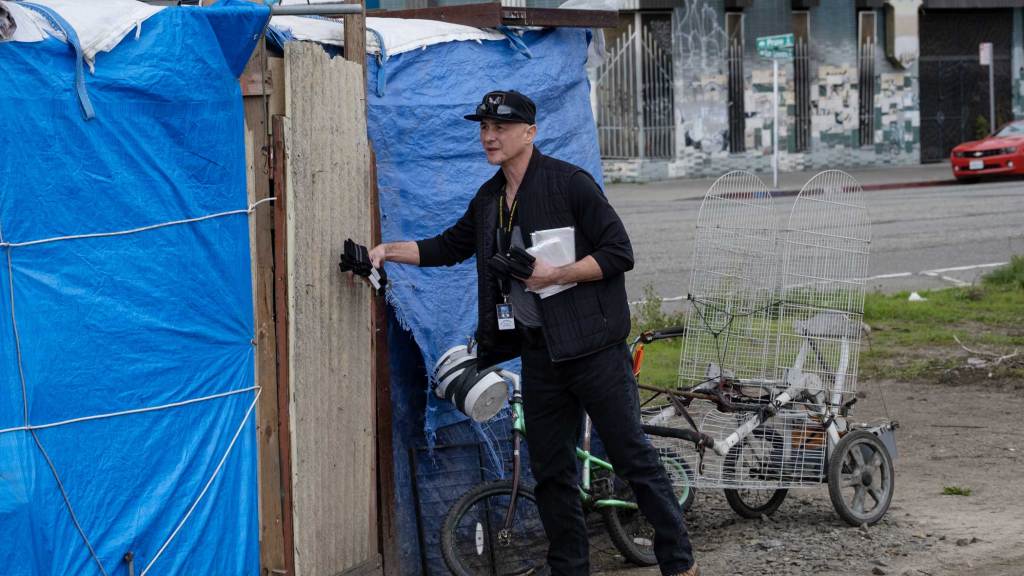
California has more homeless veterans living on the street than any other state – an estimated 7,400. Dennis Johnson was once one of them. Today, he works to help his fellow vets get into housing – and get the help they need.
If you’re not subscribed to MindSite News Daily, click here to sign up.
Support our mission to report on the workings and failings of the
mental health system in America and create a sense of national urgency to transform it.
For more frequent updates, follow us on Facebook, Twitter and Instagram:

The name “MindSite News” is used with the express permission of Mindsight Institute, an educational organization offering online learning and in-person workshops in the field of mental health and wellbeing. MindSite News and Mindsight Institute are separate, unaffiliated entities that are aligned in making science accessible and promoting mental health globally.
Copyright © 2021 MindSite News, All rights reserved.
You are receiving this email because you signed up at our website. Thank you for reading MindSite News.
mindsitenews.org

Mental health can't wait.
America is in a mental health crisis — but too often, the media overlooks this urgent issue. MindSite News is different. We’re the only national newsroom dedicated exclusively to mental health journalism, exposing systemic failures and spotlighting lifesaving solutions. And as a nonprofit, we depend on reader support to stay independent and focused on the truth.

It takes less than one minute to make a difference. No amount is too small.
The name “MindSite News” is used with the express permission of Mindsight Institute, an educational organization offering online learning and in-person workshops in the field of mental health and wellbeing. MindSite News and Mindsight Institute are separate, unaffiliated entities that are aligned in making science accessible and promoting mental health globally.


Author

Related Articles

When Does Love Become Dysfunctional?
Experts are debating love addiction signs and causes that lead to obsessive love seeking and destructive relationship patterns.
‘Brain Rot’ From Social Media May Be More Than Slang
Researchers are looking at the impact of overconsuming short-form videos like TikToks and Instagram reels.
