Identical Twins Help Unravel Autism
How can a highly heritable disorder be so different in siblings with the same genome? Plus: What happens when a 911 dispatcher picks up a crisis call from her own daughter. And more.


April 9, 2024
By Courtney Wise

Greetings, MindSite News Readers! Today’s Daily is about connection and wonder. To start, you’ll meet a pair of identical twins with autism who couldn’t be more different – and through twin studies, scientists work to understand why. Research shows that more (consensual) touch provides a mood and brain boost. How exercise can improve your mind and mental health. And more.
These identical twins may help scientists uncover the greatest mysteries of autism
Sam and John Fetters are identical twins, and they share a lot. Besides forming from the same zygote, they have autism in common, too. Over time, though, the shared autism diagnosis has led the brothers down two distinct paths. At 19 years old, Sam is finishing his sophomore year at Amherst College. He’s also as verbal as most other young adults his age. John, in contrast, doesn’t speak much, attends a special school, and has sustained a passion for Sesame Street that looks a lot like it did when the pair were toddlers. Why are they so different, scientists wonder? With research suggesting that genetics partially influence the development of autism, what has caused such different expressions of the disorder in brothers who share the same genome? “That is one of the greatest mysteries right now in research on autism,” Stephanie Morris, a pediatric neurologist at the Kennedy Krieger Institute in Baltimore, said on NPR’s “Shots” episode on Morning Edition.
It’s also a question the twins’ mom, Kim Leaird, had early on. After noticing that neither boy was speaking by age 2, she enrolled them in an intervention preschool. Sam’s behavior shifted right away; John’s did not. “[Sam] started talking and has never stopped,” Leaird said. “It was only then we were like, ‘Well, what’s going on with John?’” Despite moving him to an even more intensive school, John didn’t use words until age 4. When the twins were 5 years old, Leaird enrolled them in a study of identical twins with autism. Her goal was to help John, or at least get some answers and understanding.
Getting new knowledge about autism has taken a long time and twin studies have helped a great deal. “The earliest twin studies really helped to debunk this theory that autism was caused by parenting,” Morris said. For ages, scientists claimed that mothers who were “cold and distant and detached from their child,” created autism in their children. Just five years ago a study revealed if one twin had autism, there was a 90% chance the other would too. But – as seen in Sam and John – “the level, or the severity in which the twins were manifesting the diagnosis, was incredibly different,” said Morris. It led to the theory that what happens beyond conception – such as mutations in dividing fetal cells or something that happens in the first few months of life – can affect the presentation of autism symptoms, too. Understanding the roles of nature and nurture in the disorder could forever alter the therapies used to help autistic children struggling with language, speech, and other forms of communication, Morris said. In that debate, Sam and John have scientists further bemused.
As infants, the boys underwent surgery. Sam had a hernia repaired and surgeons fixed a hole in John’s heart. Though Sam’s procedure went as planned, John developed an infection from drug-resistant staph bacteria. It meant him staying an extra month in the hospital on a regular stream of powerful antibiotics. It leaves space for wonder, but discovering with certainty whether or not the infection changed the course of John’s autism won’t ever be known.
“We are identical twins in almost every other way — laugh in the same way, cry in the same way, see the day in the same way, love the same way,” Sam told NPR’s Morning Edition. “He should absolutely have that ability to speak. He should have that. And him not having that is so unfair.”
Touch keeps us going
Shortly after birth, humans are encouraged to give their infants an abundance of skin-to-skin contact. Doing so prompts a forever bond between parent and child, and helps the baby to regulate their body temperature. It’s even the way breastfed newborns ensure their very survival, bobbing about instinctively until latching onto milk. Touch is essential for life. It provides connection, comfort, and pleasure. It’s also critical to mental wellbeing, The Guardian reports.
Helena Hartmann, co-author of a research review recently published in Nature Human Behaviour, said it finds that “more consensual touch events throughout our day can help alleviate or potentially buffer against mental and physical complaints.” The review included 212 previously published studies, as well as a statistical analysis of 85 studies involving adults and 52 involving newborns. Their overall analysis concluded that touch is so powerful and necessary, people experience its benefits whether from fellow humans or objects like weighted blankets or robots. “This means we need to undertake more research on the potential of weighted blankets or social robots to improve people’s wellbeing, especially during contact-limiting situations like the recent Covid-19 pandemic,” Hartmann said.
For more on the power of touch and hugs, see our earlier MindSite News parenting newsletter “Calming Kids Without Words.”
Want better mental health? Get moving.
Besides making your body feel better, regular exercise has a powerful influence over sound mental health. Researcher Henriette van Praag has lived a highly active lifestyle for much of her adulthood, but after observing that exercise can spark the growth of new brain cells in older mice, she told the New York Times her approach to exercise changed. “I started to take it more seriously,” she said. But what exactly is at work? How does exercise not only boost our moods, but offer protections against neurodegenerative diseases as well?
Working out releases certain molecules and hormones in the blood, including one called irisin, which is linked to the cognitive health benefits of exercise, said Christiane Wrann, associate professor of medicine at Massachusetts General Hospital and Harvard Medical School. Plus, exercise promotes good blood flow, which scientists have connected to the growth of new blood vessels in the brain.
Michelle Voss, associate professor of psychological and brain sciences at the University of Iowa, told the Times, “It’s not just that there’s increased blood flow. It’s that there’s a greater chance, then, for signaling molecules that are coming from the muscle to get delivered to the brain.” It’s among the reasons that regular exercise can help prevent shrinkage of the hippocampus, which often occurs with age. And if you’re wondering where to begin, start with cardio-focused workouts. “The more you can improve your cardiorespiratory fitness, the better the benefits are,” Wrann said.
In other news…
Lost in my Mind, a short film from the New Yorker, follows the story of Manny Padilla, a 17-year-old musician living with OCD. “People don’t understand OCD completely,” said Padilla’s mother, Lori. “They think it’s something that you can really kind of, well you take the meds and you get over it, and maybe you work on it a bit, but this infiltrates every bit of your life. It gets into every fiber of your being and it doesn’t let go easy,” she said. Over 13 minutes, viewers hear Padilla’s music and listen to him recall the ways intrusive thoughts can consume him. “OCD is like another person living inside me, telling me I have to do stuff,” Padilla said. Sometimes, that means taking a 6-hour shower. Other times, it’s an hour of professional exposure therapy, where he practices how to control his reaction to impulses that might harm himself or others. For relief, he turns to music, his north star.
911 dispatchers are trained to remain calm, and in some ways, disassociate from the callers, in a role that is emotionally taxing and mentally draining. The goal is to keep dispatchers focused on gathering all necessary information to dispense help quickly, without becoming emotionally overwhelmed. But what happens when a dispatcher answers a call, only to hear her daughter’s voice on the line pleading for help? New Orleans dispatcher Teri Clark tells her story on episode #255 of the Criminal podcast.
Thinking about a cruise for your mental health? Read this intriguing Atlantic story first. “Crying Myself to Sleep on the Biggest Cruise Ship Ever” may make you want to stay firmly planted on dry land.
If you or someone you know is in crisis or experiencing suicidal thoughts, call or text 988 to reach the 988 Suicide & Crisis Lifeline and connect in English or Spanish. If you’re a veteran press 1. If you’re deaf or hard of hearing dial 711, then 988. Services are free and available 24/7.
Recent MindSite News Stories
Spending Packages Signed into Law Will Keep Federal Mental Health Funding at Historic Levels

Last month, Congress escaped from gridlock to approve two spending bills that kept the government open while maintaining high levels of mental health funding. The Congressional action shows that mental health continues to command uniquely strong bipartisan support. Continue reading…
Michael Johnson Spent 3 Years in Solitary and Was About to Give Up on Life. Then He Got a Letter from his Daughter
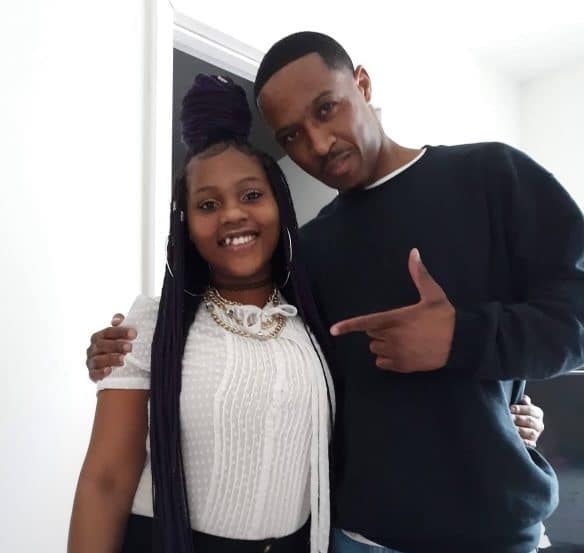
He took his case, arguing that extended solitary confinement was cruel and unusual, all the way to the Supreme Court – and lost. Today he’s out of prison working to rebuild his life. Continue reading…
Booted From the Army, He Spiraled. Now He Works to Solve the Veteran Homelessness Crisis
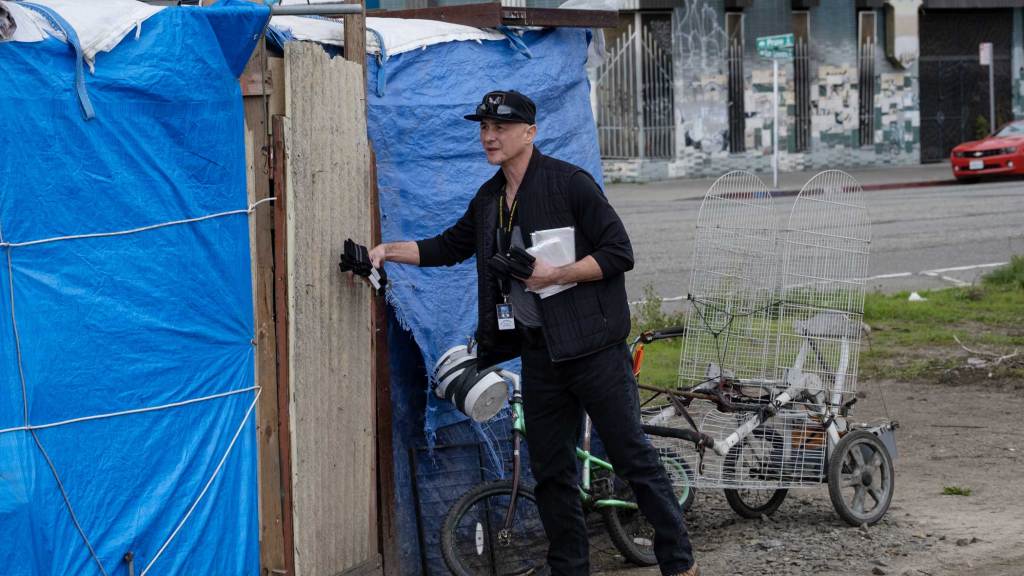
California has more homeless veterans living on the street than any other state – an estimated 7,400. Dennis Johnson was once one of them. Today, he works to help his fellow vets get into housing – and get the help they need. Continue reading…
If you’re not subscribed to MindSite News Daily, click here to sign up.
Support our mission to report on the workings and failings of the
mental health system in America and create a sense of national urgency to transform it.
For more frequent updates, follow us on Facebook, Twitter and Instagram:

The name “MindSite News” is used with the express permission of Mindsight Institute, an educational organization offering online learning and in-person workshops in the field of mental health and wellbeing. MindSite News and Mindsight Institute are separate, unaffiliated entities that are aligned in making science accessible and promoting mental health globally.
Copyright © 2021 MindSite News, All rights reserved.
You are receiving this email because you signed up at our website. Thank you for reading MindSite News.
mindsitenews.org

The name “MindSite News” is used with the express permission of Mindsight Institute, an educational organization offering online learning and in-person workshops in the field of mental health and wellbeing. MindSite News and Mindsight Institute are separate, unaffiliated entities that are aligned in making science accessible and promoting mental health globally.


Author

Related Articles
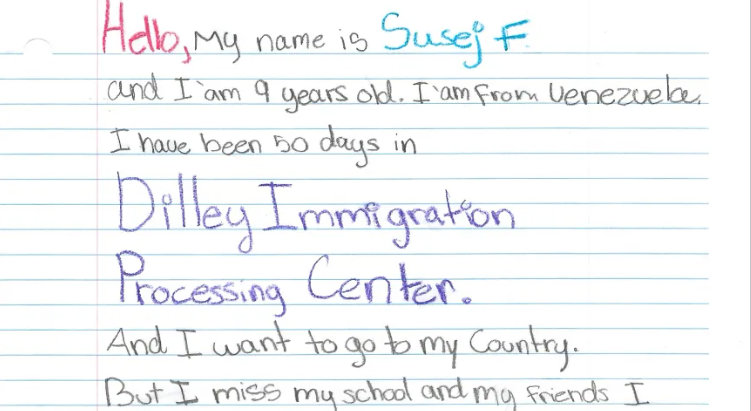
Health Organizations Condemn Traumatic ICE Raids, Family Separation
According to letters from children living in an ICE detention facility, living conditions are inhumane and their mental health is suffering.
In Teens, Social Anxiety Often Looks Like Anger
A study finds that some teens’ aggressive behavior may be due to social anxiety, not straightforward reactivity.
Expert Calls for Harm Reduction, Not Punishment, to Resolve Our Overdose Crisis
As the Trump administration pulls funding from harm reduction, an expert on the overdose crisis says it’s the best way to save lives.
