
Are Our Opioid Settlement Dollars Being Spent Wisely?
Using opioid settlement funds to pay for back expenses or existing programs will not make a dent in the opioid epidemic, critics say.


April 17, 2024
By Courtney Wise

Greetings, MindSite News Readers. In today’s Daily, we look at the controversy around how dollars from the national opioid crisis settlement are being spent. While many expected these funds to go toward ending the ever-rising epidemic of opioid overdose deaths, many state and local governments have decided not to do so.
Nurse practitioner Jordana Latozas, however, has used the resources for treatment. Latozas, the owner of Recovery Mobile Clinic, “an urgent care on wheels,” has benefitted from opioid settlement funds to get addiction treatment and other essential health services to five counties throughout southeast Michigan.
Plus, spend more time with your pets. It’s good for you and them both. And, one writer declares that rest is necessary – but not resistance – especially in times of grief.
Many states are using opioid settlement funds to cover existing programs. Critics say they’ve missed an opportunity to save lives

Is it acceptable for states to apply opioid settlement funds to existing addiction and prevention expenses? Or should all settlement monies be put toward creating new resources and recovery options? The question is fueling controversy as states apply their portion of the multi-billion dollar settlement. It’s certainly legal for states to apply settlement funds to initiatives already funded by other means, KFF News reports. Just 13 states and Washington DC don’t allow agencies to do so. But public health experts, recovery advocates, and families affected by addiction say that not using the money to create new resources for treatment wastes a rare opportunity to direct additional resources toward saving lives. “To think that replacing what you’re already spending with settlement funds is going to make things better — it’s not,” said Robert Kent, former general counsel for the Office of National Drug Control Policy. “Certainly, the spirit of the settlements wasn’t to keep doing what you’re doing. It was to do more.”
Still, plenty of state and local governments continue to use the money for things other than ending the opioid crisis. Scott County, Indiana, for example, used $250,000 of the settlement funds to cover salaries for health and emergency services staff and to purchase an ambulance, as Blair County, Pennsylvania applied $320,000 of its settlement dollars to fund a longstanding drug court. Despite a lack of responses to KFF Health News requests for comment, remarks made in public meetings and private conversations reflect the reason some agencies chose to do so.
Officials in Scott County hoped to replace funds exhausted during an HIV outbreak, while leaders in rural communities across the nation argue that with tight budgets, they need to recoup funds spent to address the opioid crisis with little to no additional support over many years. Besides, said Nick Olek, Scott County’s EMS Chief, “It can be played that it was just money used to buy an ambulance, but there’s a lot more behind the scenes.” The ambulance will help save lives as staff use it to respond to overdose calls, he said. It’s a short-sighted argument, says Marianne Sinisi. Having lost her 26-year-old son to an opioid overdose, she asked, “This is an opioid epidemic, which is not being treated enough as it is now. How do you expect that to change? Isn’t that the definition of insanity?”
Armed with a fleet of RVs, a Michigan nurse practitioner and colleagues travel the state to repair the harm caused by opioids
Jordan Latozas, a nurse practitioner from southeast Michigan, is on the front lines of opioid recovery – literally. She drives her RV, the Recovery Mobile Clinic, directly to people seeking help. Her work is as much about delivering quality patient care to people right where they are, as it is to absolve the self-imposed guilt she carries for what she says is her role in creating the current opioid crisis. Hers is a labor of love and obligation; having over-prescribed pain medication in the past, Latozas has committed her path to healing those battling addiction. “I can hide behind ‘I was brand new’ and ‘I was doing what everybody told me to do,’ and ‘I was following the research…’ But the reality is that the medical system as a whole did a lot of damage,” Latozas told Bridge Michigan.
An urgent care on wheels, the Recovery Mobile Clinic offers essential health services, including monthly injections of Vivitrol, a brand name of naltrexone, one drug used to eliminate the euphoria induced by opioids and alcohol. That it exists is thanks to her husband’s one-off response during a family game night to her lamentations about getting treatment to patients without transportation. People who need pharmaceutical support to overcome addiction struggled to consistently get to the medication that works. “When you’re dealing with someone who’s struggling with mental health and substance abuse, that inconsistency can be very dangerous,” Latozas said. That’s when her husband jokingly replied, “Well, we should just put it in an RV and drive it to them.”
A lightbulb beamed. In 2019, Latozas promptly cleared her 401(k) and also took out a $100,00 loan to purchase the used Fleetwood RV that became the medical clinic it is today. And though it’s now funded partly through a national settlement with opioid manufacturers that’s sent over $1.5 billion to Michigan for opioid recovery, she says local government leaders weren’t always ready to send her support. “People would say ‘That’s great work you’re doing. Now go somewhere else,’” she said. “I think they saw me as a pied piper, like I’d bring the problems with me.” Then, along came COVID-19, presenting an opportunity for Latozas to demonstrate her clinic’s value.
Rather than front substance use treatment, the Recovery Mobile Clinic started off providing COVID tests, then COVID vaccines, and slowly added other services — pregnancy testing and flu shots, testing for hepatitis C, blood pressure assessment, and treatment for sexually-transmitted diseases. COVID made it possible for Latozas to offer addiction treatment as a part of her menu of options for patients, in a way subverting the stigma associated with addiction treatment. “We’re able to move a lot faster, bringing addiction treatment with (the rest of these other services) rather than leading with addiction,” she said.
Today, the Recovery Mobile Clinic employs 14 people and operates a fleet of mobile clinics, including three RVs, a Chevy Equinox and a retrofitted ambulance. They regularly treat patients at 28 sites through five southeast Michigan counties: Wayne, Oakland, Macomb, Monroe and Genesee. Her dream is to franchise her operations model to make it available to patients across the country. “I will retire when I have a mobile recovery unit in every Lower 48″ state, she smiled, adding – “a small goal.”
ADHD is chronically overlooked in women and girls. It’s time to include them in the focus.

Women and girls develop attention-deficit/hyperactivity disorder, but it’s chronically underdiagnosed and undertreated. It’s a serious matter, argue Michael Morse and Kathleen Nadeau in this guest column for STAT News. Research suggests that people with ADHD live shorter lives and are up to three times more likely to experience a nonfatal, negative life event, including challenges with anxiety, depression, and suicide attempts. Medication helps many people mitigate these outcomes, but there first must come a diagnosis, the pair say.
Further research has found the disorder to be highly genetic and associated with consistent abnormalities on brain scans. That’s to say that assertions that ADHD is “not real” are unfounded, the pair say. It’s been “recognized in medical textbooks for hundreds of years,” write Morse and Nadeau. Still, diagnosing women and girls has proven to be a challenge because ADHD manifests so differently in them. Rather than presenting as hyperactivity or disruptiveness, as it often does in boys, ADHD in women and girls shows up as inattention and restlessness. The subtle public presentation of the symptoms leaves people unaware or unbothered by women and girls with ADHD, and thus less likely to encourage them to seek medical support.
These differences compel our society to call for greater parity in ADHD diagnosis and treatment across genders, Morse and Nadeau say. Greater awareness of how the condition affects genders, equitable health care policies, and tailored approaches to treatment can go a long way to improve the lives of people affected by the condition.
In other news…
“They say in Washington, if you want a friend, get a dog.” Now a press release from the American Psychiatric Association’s Healthy Minds Monthly Poll underscores that saying. Pets offer significant mental health benefits, according to the survey, which was released jointly with the American Veterinary Medical Association: Nearly two-thirds of pet owners say that their animals offer companionship (65%), are a true friend (65%) and provide unconditional love and support (64%). And a whopping 84% pet owners say that their pets have a largely positive impact on their mental health.
“It’s easy to overlook the role of pets when we’re talking about mental health,” said APA President Petros Levounis, MD. “But for people who do enjoy the company of animals, they can be a source of companionship, comfort, love, and friendship. I routinely encourage adoption of a pet to my patients who struggle with addiction to alcohol, drugs, or technology. We’re also starting to see more and more research around the role that animals can play in recovery from depression and other psychiatric disorders.”
The US Olympic and Paralympic Committee (USOPC) is supportive of athlete mental health ahead of this year’s Paris games. Inspired by Simone Biles at the Tokyo games three years ago, Jess Bartley of the USOPC told Reuters, “We have just really, really improved, the level of service, the quality of service, that all of these athletes can get when it comes to mental health. And I don’t think we’re done.”
Rest is not resistance, and that is OK, says Trey Washington in Scalawag magazine about the overwhelming grief they felt after their grandmother’s death. “Why don’t you take some time off” people would say…The reality was there was no time off” to take. I had used most of my PTO for emergencies in the months prior. The choice to rest is a luxury few can actually afford, and I want to hold space and discontent for that… Rest gives us space to dream of the future that we deserve. But when we rise, we are met with the responsibility to make it so.”
His words hit home: I’m struggling y’all. Grief and anxiety have had me in total disarray since February 2020, and I am exhausted. I dream of rest and have been deeply drawn to all talk of it, particularly as it feels so elusive. And I know I’m not alone. Even if you don’t feel like you’re drowning now, you’ve probably been there before; if not, keep living. But how does one reconcile grief in this society? Wages are stagnant, if not low, and food, housing, and gasoline cost more than they ever have. Who can afford to take a break? The very thoughts that tumble in are overwhelming. In such a state, rest is necessary…but is it resistance?
If you or someone you know is in crisis or experiencing suicidal thoughts, call or text 988 to reach the 988 Suicide & Crisis Lifeline and connect in English or Spanish. If you’re a veteran press 1. If you’re deaf or hard of hearing dial 711, then 988. Services are free and available 24/7.
Recent MindSite News Stories
Only Two Percent of Psychiatrists are Black, Leading Some to Creative Solutions to Fill the Void

There aren’t enough Black psychiatrists to meet growing demand. Some are finding innovative ways to provide more culturally competent care. Continue reading…
Hidden Deaths in San Francisco: Overdoses Among Mayan Immigrants Highlight Urgent Need for Culturally Competent Services
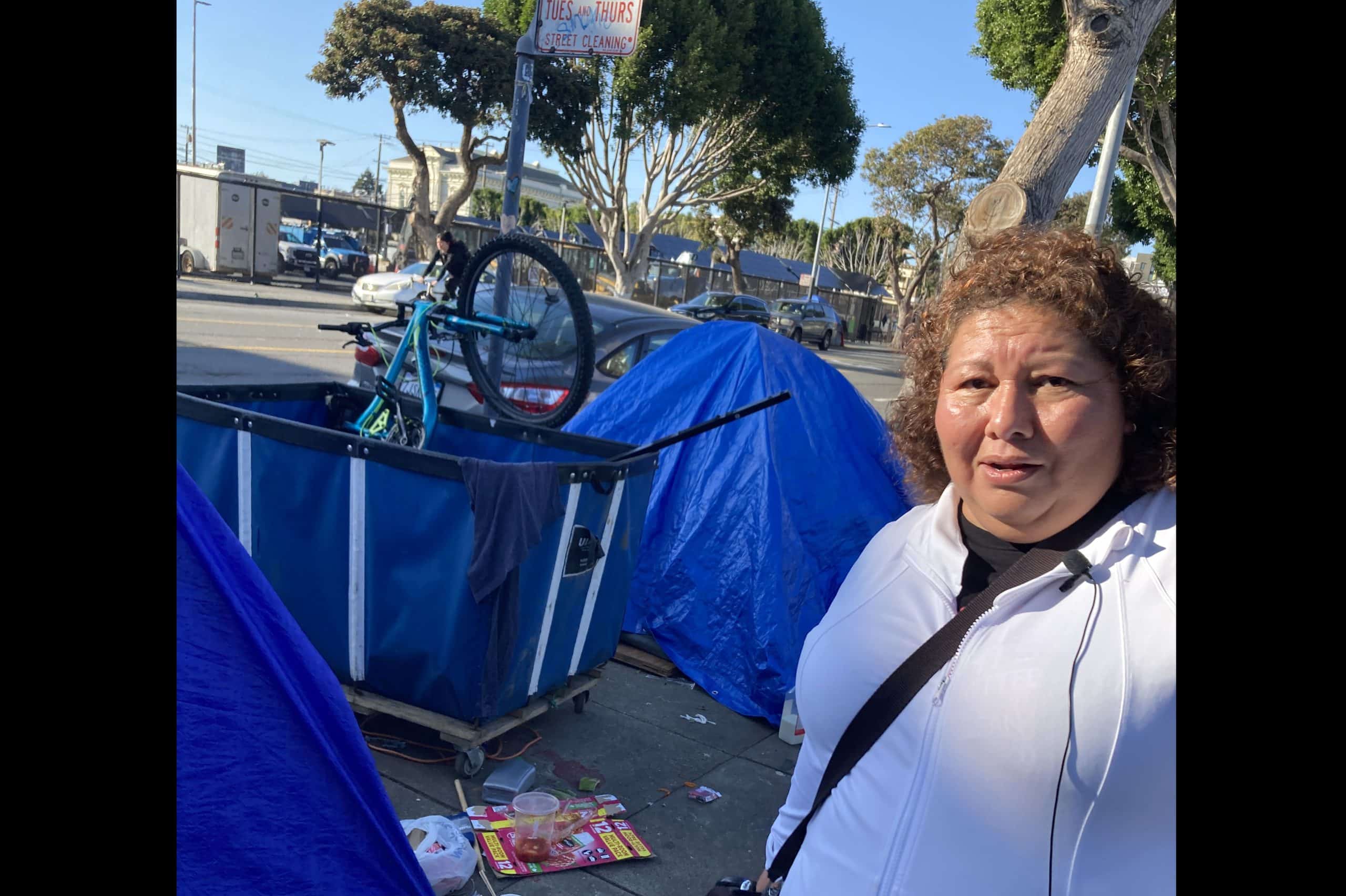
For generations, indigenous Mayans from Mexico’s Yucatan peninsula have been immigrating to San Francisco. Although there has never been an official count, estimates suggest that as many as 70,000 live in the area — some of whom are now overdosing on fentanyl. Continue reading…
Spending Packages Signed into Law Will Keep Federal Mental Health Funding at Historic Levels
Last month, Congress escaped from gridlock to approve two spending bills that kept the government open while maintaining high levels of mental health funding. The Congressional action shows that mental health continues to command uniquely strong bipartisan support.
If you’re not subscribed to MindSite News Daily, click here to sign up.
Support our mission to report on the workings and failings of the
mental health system in America and create a sense of national urgency to transform it.
For more frequent updates, follow us on Facebook, Twitter and Instagram:

The name “MindSite News” is used with the express permission of Mindsight Institute, an educational organization offering online learning and in-person workshops in the field of mental health and wellbeing. MindSite News and Mindsight Institute are separate, unaffiliated entities that are aligned in making science accessible and promoting mental health globally.
Copyright © 2021 MindSite News, All rights reserved.
You are receiving this email because you signed up at our website. Thank you for reading MindSite News.
mindsitenews.org

The name “MindSite News” is used with the express permission of Mindsight Institute, an educational organization offering online learning and in-person workshops in the field of mental health and wellbeing. MindSite News and Mindsight Institute are separate, unaffiliated entities that are aligned in making science accessible and promoting mental health globally.


Author

Related Articles

Health Organizations Condemn Traumatic ICE Raids, Family Separation
According to letters from children living in an ICE detention facility, living conditions are inhumane and their mental health is suffering.

In Teens, Social Anxiety Often Looks Like Anger
A study finds that some teens’ aggressive behavior may be due to social anxiety, not straightforward reactivity.
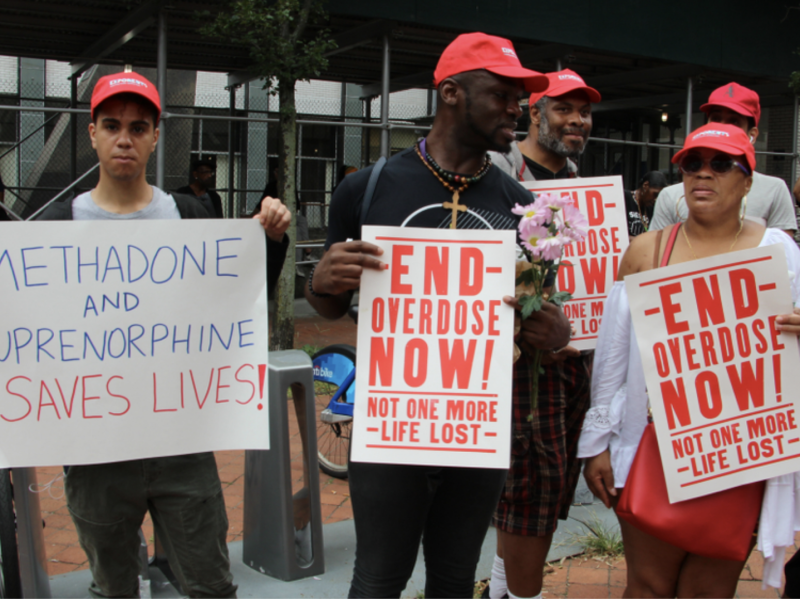
Expert Calls for Harm Reduction, Not Punishment, to Resolve Our Overdose Crisis
As the Trump administration pulls funding from harm reduction, an expert on the overdose crisis says it’s the best way to save lives.
