
A Daniel Tiger Satire About Excruciating Moments for Parents
A warm-hearted satire on the animated baby tiger’s songs. Helping physicians talk about Down syndrome. Dr. Barbara Greenberg on how couples can talk about money. And more.

April 18, 2024
By Courtney Wise

Hello, Neighbor! It’s the greeting Fred Rogers offered to me many mornings as a child. It is still a greeting young children delight in in their living rooms across the nation, as Daniel Tiger – the animated feline puppet Mr. Rogers created – carries on his work of social-emotional education. In today’s Daily, we feature a helpful update to the jingles sung by Daniel Tiger and his preschool friends, all hilariously updated for the sometimes embarrassing antics of older kids.
Plus, a mom creates a curriculum to help doctors deliver the news of a Down syndrome diagnosis to expectant parents with sensitivity for their emotional health. A new study underscores that being outside in nature is good for preschoolers. And more.
Daniel Tiger jingles for the parenting moments that make you want to hide under the bed
For roughly two years, I watched Daniel Tiger without my kid. I’m pretty sure she didn’t even realize it existed for the first year I tuned in. A coworker told me how helpful the jingles were in reinforcing certain behaviors – “Even when friends play with someone new, they will still be friends with you.” I thought I’d train for a possible threenager by memorizing the tunes myself. Though my little one has now grown to prefer other PBS shows over Daniel Tiger, his songs still help us plenty, especially when there’s lots of excitement at a lunchtime playdate. But what’s a parent to do about all the stuff that happens when little kids turn into bigger kids – or when what the little kids do is super embarrassing? Not to worry; Shelly Mazzanoble’s got our back.
Her satire, published on Medium, catapults us from the sweet Land of Make Believe back to reality, where toddlers, newly aware of their bodies, sometimes show off their nether parts in public. Or, where they ask bald people if they just forgot to put their hair on that day. Her lyrics are as straightforward as the ones we hear from our feline buddy – and much appreciated (by me, at least) for the laughter they induce with their honesty.
Feel the breeze, he must be cold!
He’s got no hair, he must be told!
Hey man, you’ve got no hair,
I can see my reflection there!
Stop, little kitty, or you’ll get mauled,
If you keep telling strangers that they’re bald
We get the feeling the animated baby tiger would approve. As Mazzanoble puts it: “Daniel Tiger is one woke ball of fur.” What embarrassing situations would you love to have jingles for in your parenting toolkit? Did any songs come to mind as you read this? I’d love to hear from you and share them with our readers.
Why do couples really fight about money?

Teen and parent psychologist Barbara Greenberg discusses a recent study that examined the root causes of why married couples (and others) argue about spending and finances. Find out her advice in Psychology Today on how to talk about money in a way that doesn’t escalate into a pitched conflict. (Dr. Greenberg is an advisory board member for MindSite News.)
Helping physicians deliver unexpected news on newborns with compassion and hope
A Down syndrome diagnosis shouldn’t be bad news, but it hasn’t always been that way, said Carissa Carroll, mom to 11-year-old Jack, who has the condition. “If I would’ve been born with Down syndrome, my parents could’ve been told, ‘You don’t have to take this child home,’” she said to the MinnPost. “Not that long ago, we physically institutionalized children with Down syndrome.” The practice not only traumatized new parents by discouraging them from bonding with their children, it harmed the children who were relegated to confinement and ripped away from their biological families.
Carroll remembers how insensitively news of Jack’s diagnosis was delivered to her and her husband. While she was in recovery from an emergency cesarean section, a nurse practitioner handed him the newborn and asked, “Are you aware of trisomy 21? It’s also known as Down syndrome.” She then listed why the staff believed Jack had the condition, quipped ‘Just enjoy your baby,’ and left. The pair felt confused and afraid for their newborn’s future and their own. ‘How will this change us?’ Carroll remembered thinking. “I didn’t know how this would impact the two year old I already had at home or how it would affect our marriage. There was also that fear of the unknown, that doubting, thinking, ‘How am I going to do this?’”
That difficult experience sparked her to co-found Jack’s Basket, a nonprofit which provides support to parents of children with the syndrome. She’s also co-written “Communicating Unexpected News,” a curriculum designed and offered by Jack’s Basket to help medical providers share the news of a Down syndrome diagnosis with optimism and support.
Tracy Hafeman, senior director of child and family programs at Down Syndrome Association of Minnesota said that she can make accurate assumptions about how a family was given the news when she first meets them. “In most cases it is fairly easy for me to figure out who received this news in a positive way versus who received it in a negative way,” she said. “The parents who heard positive and uplifting words from their provider tend to have a more optimistic view of the journey ahead of them. Those whose providers shared their diagnosis with a focus on the negative tend to approach their journey with more apprehension or fear.” Hope for the journey is what parents need for their mental wellbeing, Hafeman said.
Besides sharing the diagnosis with optimism, Carroll said medical professionals should also provide families with information about organizations, services, and other resources that can help them and their child. Jack’s Basket does just that, including such materials alongside congratulatory baby gifts and uplifting family testimonials from fellow parents of children with Down syndrome.
“There is a thriving community out there that says, ‘We are the lucky few: Not everyone will have a child with Down syndrome, but we do.’ I can honestly tell you I would not change Jack if I could,” Carroll said. “He’s helped me to be more understanding and empathetic about other people’s experiences. He’s changed my life for the better.”
In other news…
5th Annual United in Empathy Report: Crisis Text Line, a free, 24/7 mental health support text line, recently released its latest United in Empathy report, highlighting the most pressing mental health challenges facing youth today. The analysis includes 1.3 million text conversations with adults, mostly under age 25. Among its findings: Anxiety and stress were the top issues in the crisis line’s conversations last year, closely followed by relationships, depression and sadness, suicide, and isolation and loneliness. In addition, “self-harm and bullying surged for a third consecutive year, and texters found creative ways to deal with their anxiety and stress.” These included talking with friends, family and other loved ones, listening to K-Pop, and playing Roblox and other online games.
Nature Rx for preschoolers: A research study examining data from more than 2,100 children in 199 counties across 41 states found more evidence that being outside is good for preschoolers, and the rest of us too, according to US News & World Report. Published last week in JAMA Network Open, the study found that children with consistent exposure to nature between the ages of 2 and 5 show reduced signs of anxiety and depression, even after accounting for other factors, researchers said. “In the future, researchers could look into what kinds of experiences in nature are connected to kids’ early mental health,” said Nissa Towe-Goodman, a co-author of the study, in an NIH press release. “Also, we should study how creating or preserving natural areas around homes and schools might make a difference in a child’s mental health.”
Grownups, it’s okay to let kids do things on their own: That’s the word from social psychologist Jonathan Haidt. His latest book, The Anxious Generation, covers the mental health crisis among American teenagers. Fault lies with the endless scrolling teens do – and their overly protective guardians (and societal stand-ins) who disavow children doing anything without adult supervision, he says.
NPR’s Michaeleen Doucleff, who interviewed Haidt, recalled the time a police officer escorted her 7 year old home in the back of a police car after witnessing her ride her bike alone in her own neighborhood. To that, Haidt says, parents have to collectively push back. It must become normal to see kids doing things alone or among their own peer group. He even created a nonprofit, Let Grow, that provides educational materials to schools (and parents) to help them help youth develop greater independence. (And in case you missed it, my colleague Don Sapatkin wrote about The Anxious Generation in our Monday newsletter, discussing a Vox piece criticizing the premise that social media is largely to blame for teens’ mental health crisis.)
If you or someone you know is in crisis or experiencing suicidal thoughts, call or text 988 to reach the 988 Suicide & Crisis Lifeline and connect in English or Spanish. If you’re a veteran press 1. If you’re deaf or hard of hearing dial 711, then 988. Services are free and available 24/7.
Recent MindSite News Stories
Only Two Percent of Psychiatrists are Black, Leading Some to Creative Solutions to Fill the Void

There aren’t enough Black psychiatrists to meet growing demand. Some are finding innovative ways to provide more culturally competent care. Continue reading…
Hidden Deaths in San Francisco: Overdoses Among Mayan Immigrants Highlight Urgent Need for Culturally Competent Services

For generations, indigenous Mayans from Mexico’s Yucatan peninsula have been immigrating to San Francisco. Although there has never been an official count, estimates suggest that as many as 70,000 live in the area — and many clinicians are unaware some are overdosing on fentanyl. Continue reading…
Spending Packages Signed into Law Will Keep Federal Mental Health Funding at Historic Levels

Last month, Congress escaped from gridlock to approve two spending bills that kept the government open while maintaining high levels of mental health funding. The Congressional action shows that mental health continues to command uniquely strong bipartisan support.
If you’re not subscribed to MindSite News Daily, click here to sign up.
Support our mission to report on the workings and failings of the
mental health system in America and create a sense of national urgency to transform it.
For more frequent updates, follow us on Facebook, Twitter and Instagram:

The name “MindSite News” is used with the express permission of Mindsight Institute, an educational organization offering online learning and in-person workshops in the field of mental health and wellbeing. MindSite News and Mindsight Institute are separate, unaffiliated entities that are aligned in making science accessible and promoting mental health globally.
Copyright © 2021 MindSite News, All rights reserved.
You are receiving this email because you signed up at our website. Thank you for reading MindSite News.
mindsitenews.org

The name “MindSite News” is used with the express permission of Mindsight Institute, an educational organization offering online learning and in-person workshops in the field of mental health and wellbeing. MindSite News and Mindsight Institute are separate, unaffiliated entities that are aligned in making science accessible and promoting mental health globally.


Author

Related Articles
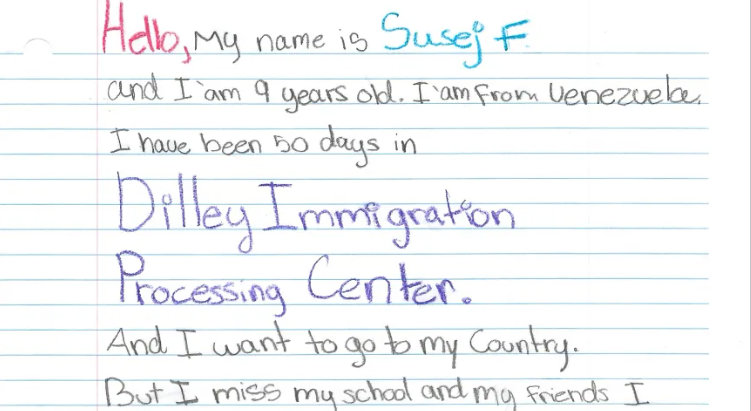
Health Organizations Condemn Traumatic ICE Raids, Family Separation
According to letters from children living in an ICE detention facility, living conditions are inhumane and their mental health is suffering.

In Teens, Social Anxiety Often Looks Like Anger
A study finds that some teens’ aggressive behavior may be due to social anxiety, not straightforward reactivity.
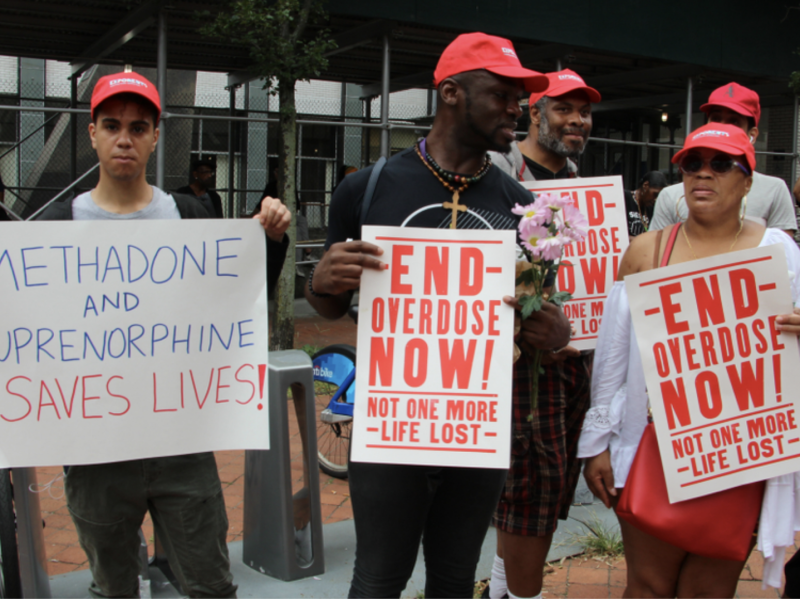
Expert Calls for Harm Reduction, Not Punishment, to Resolve Our Overdose Crisis
As the Trump administration pulls funding from harm reduction, an expert on the overdose crisis says it’s the best way to save lives.
