
Wanted: Californians Who Have Mental Health Care
If you’re a California resident who receives or provides mental health care, CalMatters would love to hear from you. Plus: DBT changes a Minnesota mom’s life. And more.


April 23, 2024
By Courtney Wise

Greetings, MindSite News Readers. If you’re a California resident who receives or provides mental health care, CalMatters seeks your help on its investigation of how well health insurance companies are adhering to 2020 California legislation requiring them to pay for mental health care and addiction services (find out more below). In today’s Daily, one woman shares how a form of therapy called DBT changed her life for the better. And racial diversity in the mental healthcare workforce still has a long way to go.
Plus, an advocate for hybrid work says research shows the model is good for workers’ mental health. And more.
DBT is intense and time consuming. One Minnesota mom also credits it with changing her life.

Abby Kline didn’t seek dialectical behavioral therapy (DBT) until she hit her breaking point. The 36-year-old autistic single mother from Minnesota was in the throes of a mental health crisis. Battling post-traumatic stress disorder, schizoaffective and mixed personality disorders, Kline found herself hospitalized for suicidality and negotiating a plan with child protective services that would allow her to retain care of her 4-year-old son. She felt like DBT required too great a time commitment, but it was the middle ground of her available options. Still, her reluctance to try DBT quickly became apparent. Despite its claims to help participants build a life worth living, Kline told the MinnPost, “It didn’t seem that a life worth living was something obtainable.”
The DBT approach, developed by psychologist Marsha Linehan, teaches people to change their thoughts, feelings and behaviors through a structured program that includes classes, homework, weekly therapy sessions and optional calls to a 24-hour coaching hotline. Though an intense time commitment, the method has proven effective for treating borderline personality disorder, PTSD, eating disorders, and addiction. “It is one of the most evidenced-based treatments in the world,” said Sarah Gross, executive director of the DBT program at Nystrom and Associates, where Kline went for help. “It is this highly effective approach for people for whom treatment as usual doesn’t seem to work. It is structured but it also allows for heavy emphasis on the therapeutic relationship and it is emotion-focused: a lot of the things that I am passionate about.”
Initially, Kline struggled with the time commitment. But more than that, she struggled to accept its validity. That’s where her therapist challenged her to commit to the process. Though patient, she left no room for doubting a process that Kline wouldn’t even try. “She told me that I can either sit at the bottom of the pool or I can swim. It was up to me. She said that she was not going to jump in and save me.” The challenge ultimately left Kline in control of her recovery, which she appreciated. “I chose to swim,” said Kline. “I began DBT with no hope or belief that I would improve. I had struggled with my mental health for 22 years…I just made a decision,” she said. “I said to myself, ‘I am going to do this DBT treatment. I am going in with no hope that I am going to change. If it works, it works.’”
And it did. Kline credits her efforts combined with those of a committed therapeutic team to guiding her back to health. Due to the severity of her condition when she began treatment, Kline started in an adaptive DBT class, eventually growing stable enough for the mainstream sessions. She also switched to part-time hours at work, in order to be fully present for her health and care for her son. It’s a schedule she maintains to this day. There’s no telling where she’d be without DBT, Kline said.
“It was a life-changer for me,” she said. “It really set me on a path that was a deep change and great joy…I specifically recommend it for people who are struggling to identify that they want change in their lives, for people who don’t even know that they can change. Because that was where I was at, and here I am so much healthier today.”
The country is becoming less white, but the mental health workforce still lacks diversity
For now, the chances of a non-white person in the United States securing a therapist from their same racial or ethnic background are abysmal. It’s a startling reality, despite the makeup of the nation’s population. Though the US Census Bureau reports a white population of roughly 58 percent, the American Psychological Association reports that 80 percent of the psychology workforce is white. It’s a reality that Lynette Carrillo, a doctoral student in psychology at Texas Woman’s University understands intimately, as the only Spanish speaker in her class. It’s a fact of the field, she told the Texas Tribune. “For a long time, I didn’t know that there were clinicians who spoke Spanish or who came from diverse backgrounds like me,” Carillo said. “In the Latin culture, community is important, so I had to put in that extra effort to find common ground with my classmates. I had to have that mindset with myself in order not to feel like I was so alone.”
But moving forward, something’s got to shift. Rates of mental health disorders are similar across racial and ethnic groups, but people of color are less likely to seek treatment. The lack of cultural competency among available providers may contribute to the low rates. Patients need professionals who can relate to their needs, said Carillo. “There are diverse needs within this mental health umbrella, and that also lends itself to culturally and linguistically diverse issues,” she said. “We all experience the world differently. We all see it differently. And so, in that same respect, we need people who can understand those differences.”
In Texas, specifically, there is a shortage of mental health professionals in 251 of 254 counties. Officials acknowledge the issue and want to see more people become licensed to work with patients in the field, but the high costs of university tuition and licensing fees are a barrier to entry. In addition to paying for education through a doctoral degree, upcoming psychologists must pass nearly $1,800 worth of exams and pay $340 to begin patient care under supervision. Carrillo herself worked three jobs during her training to stay afloat while completing the required 3,500 hours of supervised work.
Lawmakers are working to address the issue by creating new pathways to licensing. For instance, Darrel Spinks, executive director of the Texas Behavioral Health Executive Council, said their body recently expanded the types of degrees that can be used to apply for psychology licenses to work in K-12 schools. “We know we can’t provide enough providers through training programs within the state or import enough providers outside the state,” Spinks said. They’re also considering adoption of a Texas-specific licensing exam that would cost less than national tests to take. It’s a start, but not the end. “We must address the high cost of education, licensing, and training,” said Jessica Gomez, a bilingual licensed psychologist and executive director of the Momentus Institute. “Providing more funding, scholarships, loan forgiveness, or salary subsidies could help open these doors.”
(In case you missed it, MindSite News recently featured a story about a California program that helps undocumented immigrants become therapists.)
In other news…
Are you a resident of California who receives or provides mental health care? Or, do you work for a health insurance company? CalMatters wants to hear from you. Members of its reporting team are investigating levels of compliance among insurance companies, four years after the state’s legislature passed a law requiring insurance companies to pay for medically necessary mental health and addiction treatment.
In response to an essay by Rose Cartwright which we shared in last Monday’s newsletter, United Kingdom junior doctor Rachel McNulty (whose work is akin to that of a medical resident in the United States), argues that Cartwright’s portrayal of mental health providers as unwilling or unable to treat mental health within the context of a person’s life is categorically wrong. Moreover, McNulty says, suggesting that the unregulated, recreational use of MDMA is a safe and effective way to treat OCD and other mental health conditions is irresponsible. “Please can [Cartwright] be a little careful in what she writes and therefore promotes, and The Guardian in what it publishes,” she concludes.
As CEO of the hybrid work consultancy Disaster Avoidance Experts, Gleb Tsipursky is far from neutral on the matter of hybrid work. But rather than center his argument in favor of hybrid work on his own professional experiences, Tsipursky points to research from the University of Pittsburgh to make his case. After analyzing more than 5 million mental health screens across the country, Pitt researchers found a significant correlation between workplace flexibility and lower rates of depression. Studies conducted between 2020 and today that contradict this finding may not take into account the fact that social isolation was imposed upon us at that time, he says.
If you or someone you know is in crisis or experiencing suicidal thoughts, call or text 988 to reach the 988 Suicide & Crisis Lifeline and connect in English or Spanish. If you’re a veteran press 1. If you’re deaf or hard of hearing dial 711, then 988. Services are free and available 24/7.
Recent MindSite News Stories
Only Two Percent of Psychiatrists are Black, Leading Some to Creative Solutions to Fill the Void

There aren’t enough Black psychiatrists to meet growing demand. Some are finding innovative ways to provide more culturally competent care. Continue reading…
Hidden Deaths in San Francisco: Overdoses Among Mayan Immigrants Highlight Urgent Need for Culturally Competent Services
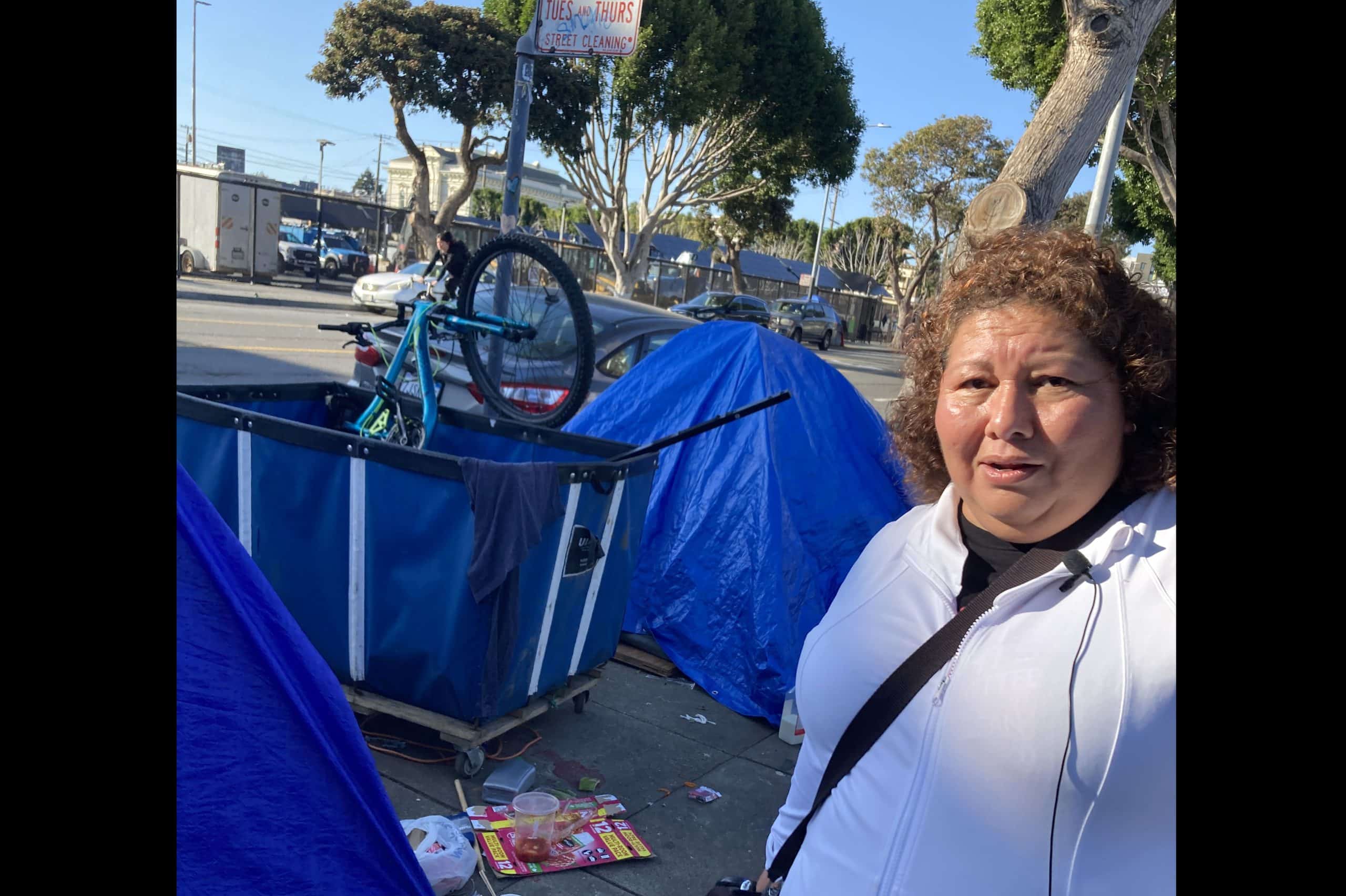
For generations, indigenous Mayans from Mexico’s Yucatan peninsula have been immigrating to San Francisco. Although there has never been an official count, estimates suggest that as many as 70,000 live in the area and many speak indigenous Mayan languages. Now officials are learning that some are dying of overdoses. Continue reading…
Spending Packages Signed into Law Will Keep Federal Mental Health Funding at Historic Levels

Last month, Congress escaped from gridlock to approve two spending bills that kept the government open while maintaining high levels of mental health funding. The Congressional action shows that mental health continues to command uniquely strong bipartisan support. Continue reading…
If you’re not subscribed to MindSite News Daily, click here to sign up.
Support our mission to report on the workings and failings of the
mental health system in America and create a sense of national urgency to transform it.
For more frequent updates, follow us on Facebook, Twitter and Instagram:

The name “MindSite News” is used with the express permission of Mindsight Institute, an educational organization offering online learning and in-person workshops in the field of mental health and wellbeing. MindSite News and Mindsight Institute are separate, unaffiliated entities that are aligned in making science accessible and promoting mental health globally.
Copyright © 2021 MindSite News, All rights reserved.
You are receiving this email because you signed up at our website. Thank you for reading MindSite News.
mindsitenews.org

The name “MindSite News” is used with the express permission of Mindsight Institute, an educational organization offering online learning and in-person workshops in the field of mental health and wellbeing. MindSite News and Mindsight Institute are separate, unaffiliated entities that are aligned in making science accessible and promoting mental health globally.


Author

Related Articles

Family of 6 in ICE Detention for 9 Months ‘Dying on the Inside’
After nine months in Dilley Immigration Processing Center, “we forgot what it feels like to be free,” a recent high school graduate wrote.

Generation Cancer: Millennials Struggle With Death at an Early Age
More young adults are being diagnosed with cancer. Even for those who survive, the experience can be destabilizing and isolating.

Millennials Weigh Having Children On Their Own Terms
Not having children is also a valid path, and one that everyone should consider, Merle Bombardieri argues in her 1981 book.
