
The Real Cause of the Youth Mental Health Crisis? No Free Play
Some experts say decades of helicopter parenting and the lack of free play are to blame for teen depression and anxiety, not cell phones. And more.
April 25, 2024
By Diana Hembree and Courtney Wise

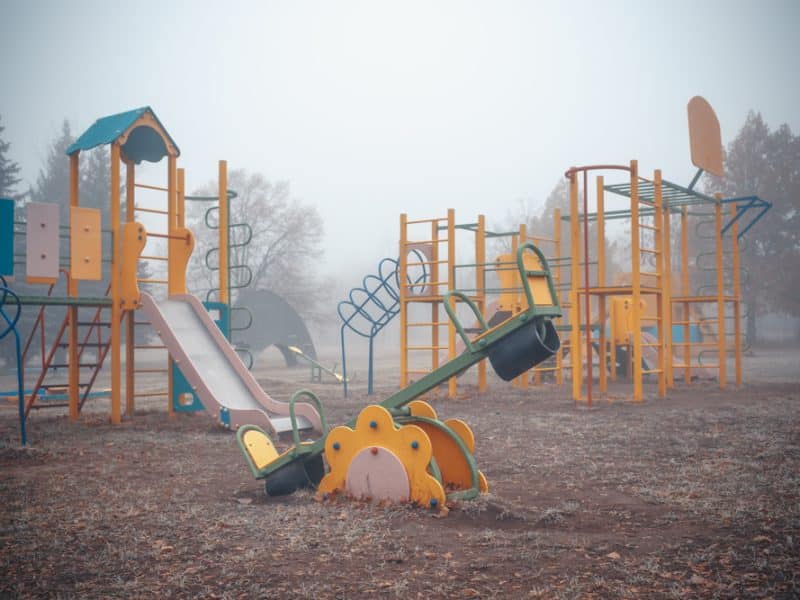
Hello MindSite News readers! Giving your kids lots of free time to play with friends isn’t just something to wish for; it’s something you need to make happen, say experts. In today’s edition, MindSite News co-editor Diana Hembree offers a personal look at recent research suggesting that helicopter parenting and the disappearance of free play – rather than cell phones and social media – are at the root of the teen and youth mental health crisis in the United States.
In other news, why school principals shouldn’t have to shoulder more than their share of the burden of youth mental health problems. UNICEF declares mental health care for kids a universal human right. Good news about girls who play sports. And more.
Youth mental health crisis rooted not in cell phones, but in lack of free play, new research suggests

When my children were in elementary school in Berkeley, California, I gradually became aware of two worrisome trends: hardly any kids on our street played together in the neighborhood after school, and there was an inordinate focus on academics and testing.
The latter was especially evident after my daughter started kindergarten, where she and her classmates were pushed to begin reading as if they were trying out for the kindergarten book Olympics. No show-and-tell, no morning conversation or play – it was straight to books and phonetics. I let the teacher know when my daughter finally managed to read her first Easy Reader book, imagining she might feel equally celebratory. “Well, some children are already reading chapter books,” she sniffed.
This was during the launch of the Common Core public school curriculum, which was designed to help kids learn to think and reason, Unfortunately, the way it was designed and rolled out was at odds with child development. Watching my daughter’s bored classmates struggling miserably through giant books at age 5 was a sight I hope to never see again.
The same push to achieve was also evident after school. Kids didn’t roam or play with other kids on the block, as they did when I was growing up in Georgia. When I asked my (very nice) neighbors if they’d like to get the kids together after school, they all politely declined: soccer club, baseball, gymnastics, swimming lessons, homework, Mathnasium: every hour after school was accounted for. One teacher suggested I help my daughter make a friend in the class by signing both of them up for ballet: “They could take dance classes together!”
Thankfully, the kids still had recess – something that has unfortunately disappeared in far too many schools across the country, along with PE. They also had some great teachers. My children spent endless hours entertaining themselves in nearby parks, the backyard and our living room, where they played cards and board games and put on skits with a couple of friends. Now 16 and 20, they appear to have eluded the youth mental health crisis, knock on wood — even though they got cell phones at an age I considered too early (13). I’d like to think their well-being is in part due to having a lot of time for free play – something that many researchers think is essential for normal child development and happiness.
Of course, smartphones have contributed to the decline in youth mental health health: Researchers have increasingly linked the unprecedented rates of depression, anxiety, and alienation among young people to the surge in social media and smartphones. But Boston College professor Peter Gray is among the experts who believe that the disappearance of free play is the key factor driving the teen mental health crisis. In his 2013 book Free to Learn, he argued that free play is the basis for how kids learn to develop resilience. Now, in a recent interview in the Boston Globe, he said, “Everything that I know about play suggests that if you take play away from children, there’s going to be negative consequences.”
Gray wants to elevate the power of play in part because The Anxious Generation, a recent bestseller by his friend, NYU psychologist Jonathan Haidt, lays the blame for the U.S. youth mental health crisis on social media and cell phones. But some critics have pointed out that other countries with similar cell phone and social media use have not experienced a teen and youth mental health crisis. In an article in the Journal of Pediatrics last year, Gray and colleagues point out that teen and child mental health in the U.S. has been declining for more than 5 decades – a period in which children and teens have been given fewer and fewer opportunities “to play, roam, and engage in other activities independent of direct oversight and control by adults.” As the Globe explains, the research team drew on a “voluminous” body of scientific evidence to make this case for free play and independence for children.
Gray suggests that the alienation, depression, and anxiety evident in the American youth mental health crisis has more to do with helicopter parenting and lack of free play than anything else.
“Play is how children naturally develop,” he said. “It’s how they learn to push the limits and deal with fear, to solve problems, and to deal with anger and get along with playmates. Take it away, and they’re just not going to be prepared for the stresses of life.”
– Diana Hembree
Students’ mental health needs are tremendous – and too much of that burden falls on school principals
As Cherise Ayers sees it, her job as principal of Central Senior High School in St. Paul, Minnesota isn’t much different than being the mayor of a small town. “I would describe a day in the life of a principal as everything everywhere all at once,” Ayers said to MPR News. “There are so many things happening, and Central is actually larger than some small towns.” The comparison acknowledges her gargantuan influence on the school as its primary leader and the overwhelming responsibilities with which she and other principals are laden. A new report from the University of Minnesota on the state’s K-12 school principals found school leaders struggling to juggle instructional leadership and community engagement alongside student mental health.
“The principal really, really matters, and they’re overwhelmed,” said Katie Pekel, a co-author of the report. “If you’ve got a good principal, you get lower student absenteeism rates and you have better student academic outcomes. So we do need to be concerned about our principals.”
They’re navigating teen student populations with few resources and support. Part-time counselors and social workers just aren’t enough to keep up with the growing mental health needs of students, said Emily Casselius, principal of Goodview Elementary. “My day is very unpredictable. I come into my day with kind of a plan of these are the things I need to work on, this is going to be maybe time in my office, this is time I’m going to be in a classroom. But then throughout the day, there might be a student with maybe a behavior that needs support, or we have a (substitute) shortage … and maybe I need to sub instead of do the principal tasks that I had planned for the day.” Then, there’s the avalanche of new laws principals have to familiarize themselves with, covering everything from reading instruction to student discipline. “It’s a lot,” Casselius said. Pushing them further toward the edge of burnout, principals report, are increasing administrative duties that detract from their primary focus on instructional leadership.
And their days don’t end when the school bell rings, either. Participants in the University of Minnesota study said they’re averaging 57 hours per week. “People that choose to go into education, they do it because they want to love and serve kids. No other reason. People are not going into education to indoctrinate kids … to push their political agenda,” said Ben Bakeberg, leader of Jordan Middle School and a Republican representative from Jordan, Minnesota. “We need to get back to respecting educators.”
Youth have a “universal human right” to quality mental health care: UNICEF
Connecting youth to mental health treatment is critically important, argues Zeinab Hijazi, Global Lead on Mental Health at UNICEF, in an interview with McKinsey and Company. While chronic diseases like heart disease and diabetes typically present when a person reaches their 50s or 60s, nearly half of mental health disorders show up by age 14, around the beginning of high school. While it’s hard to pin down which comes first, existing research is clear that untreated mental illness doesn’t just increase the risk of developing serious physical ailments, but also unemployment, substance abuse, homelessness, and other conditions that contribute to a poor quality of life.
In the conversation, Hijazi asserts that policymakers must consider mental health in every area. “Think of it as a thread that runs through the fabric of all our social structures,” she said. “It affects not just [youth] psychological well-being but also their learning, their development, and their capacity to connect and contribute to society.” Governments should integrate mental health services in traditional health settings, schools, criminal justice systems, and social services to create a reinforced ecosystem that supports children.
Reaching adolescents and engaging them in the creation of policy is also vital, Hijazi said. It’s not only when many mental disorders show up, but it’s a time when many young people begin to use mind-altering substances. Connecting with adolescents also provides access to parents, who are pivotal to helping youth maintain wellness and can benefit from mental health training as well.
In other news…
Brian Henson argues that, to resonate through the decades, kid’s stories must balance humor with darkness. He should know: As the son of Jim Henson, famed creator of The Muppets, his career took off after the release of the film Labyrinth, which blended fantasy, animatronics, and celeb cameos. Widely panned by critics, it became a beloved cult classic nearly 40 years later. It would also never be described as a sweet film. But that’s alright, Henson says. Grimm’s Fairy Tales, which his late father loved, really get dark. Kids can handle it. “It’s meant to sort of shock a child into thinking,” Henson said in an interview with Fatherly. “You shouldn’t be scared of telling a kid that there’s scary stuff out there. The scary stuff in movies can make them strong. That’s the idea: You’re going to get strong as you grow up. You’re going to be able to handle that. That’s what we teach kids.”
A recent study from the Women’s Sports Foundation finds that girls who play sports in supportive settings have lowered depression and anxiety, stronger peer relationships, and feel a greater sense of purpose. “The data in this report point to the potential of sport to be a positive influence for girls’ mental health, when it is done well,” principal investigator William Massey said in a press release. “In light of this WSF report, and other research in the field, it is clear that girls need more access and opportunities to participate in sport.” Further, the report finds that coaches are as important as the sports themselves because of their role in nurturing healthy athletic development and sound mental health.
Musical superstar Billie Eilish reveals her struggles with mental health: At just 22 years old, Eilish has racked up hundreds of music honors under her belt, including several Grammys and two Academy Awards. But earlier this month in a profile for Rolling Stone she shared her lifelong struggle with depression. “My whole life, I’ve never been a happy person, really,” Eilish said. “I’ve been a joyous person, but not a happy person. I experience joy and laughter and I can find fun in things, but I’m a depressed person. I’ve suffered with a lot of depression my whole life. When things happen in my soul, or whatever, the thing I’ve always held on to is ‘Well, it’ll pass. It’ll come in waves and it’ll get worse and it’ll get better.’ And that’s always brought me comfort.”
If you or someone you know is in crisis or experiencing suicidal thoughts, call or text 988 to reach the 988 Suicide & Crisis Lifeline and connect in English or Spanish. If you’re a veteran press 1. If you’re deaf or hard of hearing dial 711, then 988. Services are free and available 24/7.
Recent MindSite News Stories
Only Two Percent of Psychiatrists are Black, Leading Some to Creative Solutions to Fill the Void

There aren’t enough Black psychiatrists to meet growing demand. Some are finding innovative ways to provide more culturally competent care. Continue reading…
Hidden Deaths in San Francisco: Overdoses Among Mayan Immigrants Highlight Urgent Need for Culturally Competent Services

For generations, indigenous Mayans from Mexico’s Yucatan peninsula have been immigrating to San Francisco. Although there has never been an official count, estimates suggest that as many as 70,000 live in the area — and some are overdosing on fentanyl. Continue reading…
Spending Packages Signed into Law Will Keep Federal Mental Health Funding at Historic Levels
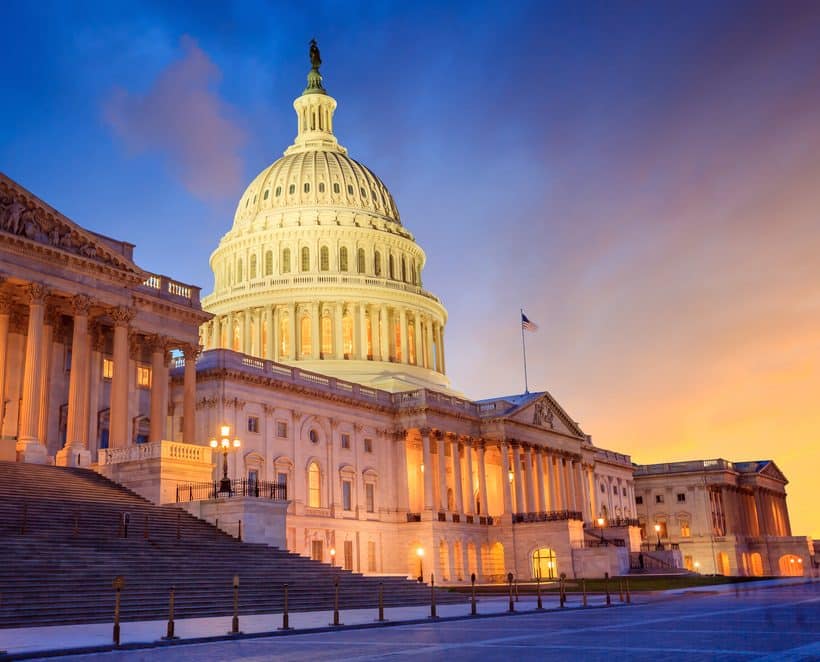
Last month, Congress escaped from gridlock to approve two spending bills that kept the government open while maintaining high levels of mental health funding. The Congressional action shows that mental health continues to command uniquely strong bipartisan support. Continue reading…
If you’re not subscribed to MindSite News Daily, click here to sign up.
Support our mission to report on the workings and failings of the
mental health system in America and create a sense of national urgency to transform it.
For more frequent updates, follow us on Facebook, Twitter and Instagram:

The name “MindSite News” is used with the express permission of Mindsight Institute, an educational organization offering online learning and in-person workshops in the field of mental health and wellbeing. MindSite News and Mindsight Institute are separate, unaffiliated entities that are aligned in making science accessible and promoting mental health globally.
Copyright © 2021 MindSite News, All rights reserved.
You are receiving this email because you signed up at our website. Thank you for reading MindSite News.
mindsitenews.org

The name “MindSite News” is used with the express permission of Mindsight Institute, an educational organization offering online learning and in-person workshops in the field of mental health and wellbeing. MindSite News and Mindsight Institute are separate, unaffiliated entities that are aligned in making science accessible and promoting mental health globally.


Author

Related Articles

Family of 6 in ICE Detention for 9 Months ‘Dying on the Inside’
After nine months in Dilley Immigration Processing Center, “we forgot what it feels like to be free,” a recent high school graduate wrote.
Generation Cancer: Millennials Struggle With Death at an Early Age
More young adults are being diagnosed with cancer. Even for those who survive, the experience can be destabilizing and isolating.

Millennials Weigh Having Children On Their Own Terms
Not having children is also a valid path, and one that everyone should consider, Merle Bombardieri argues in her 1981 book.
