
A West Side Story: How to Traumatize a Community
For residents of Police Beat 1122 on Chicago’s West Side – and for all who watched on TV or social media – the killing of Dexter Reed last month after he was stopped for an alleged seatbelt violation was a vivid reminder: Such violence could happen to them at any time.
In Chicago neighborhood where Dexter Reed was killed, police make thousands of traffic stops targeting Black residents
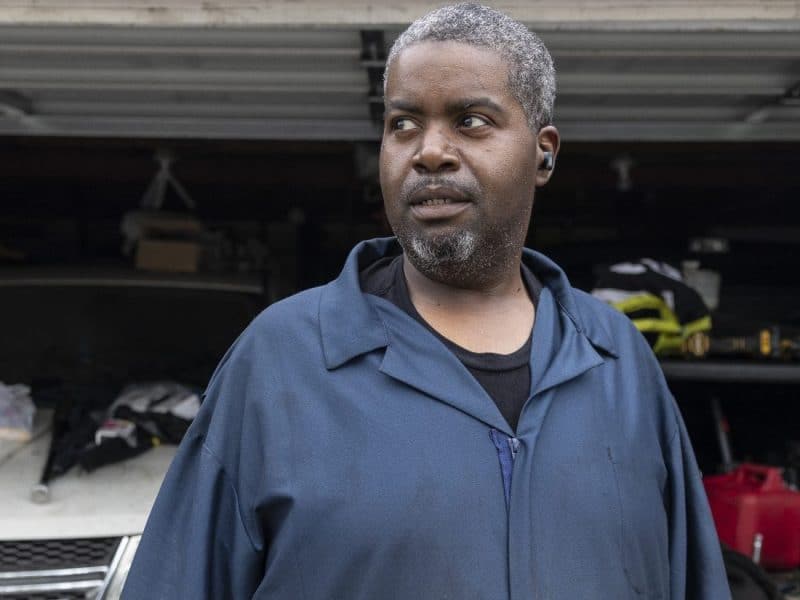
Bruce Davis, an auto mechanic, was repairing a car in his backyard on West Ferdinand Street on Chicago’s West Side when gunshots rang out at around 6 pm on March 21. He ducked into his garage and waited anxiously for the shooting to stop.
The hail of 96 bullets fired by plainclothes Chicago police officers, killing 26-year Dexter Reed, lasted 41 seconds – but seemed to Davis to go on forever.
“It was crazy,” he told MindSite News. “It was like something you would hear in a movie.”

When the shots finally subsided, he ran into his house and watched the footage from the security camera he’d placed in his front window, which caught the shootout in its entirety. His sons, 18 and 24, were inside the house at the time of the shooting, but didn’t react because they were wearing gaming headsets. Davis watched the replay of the video over and over again.
Three weeks later, body-cam footage showing Reed’s killing was released by Chicago’s Civilian Office of Police Accountability (COPA) – and was promptly aired on CNN, CBS News and media outlets across the country. One of his friends sent Davis a link to that footage and he watched it too, though he’s not quite sure why.
“It sounded like they’d never stop shooting.”
—WEST FERDINAND STREET RESIDENT BRUCE DAVIS
The experience left him shaken. “It sounded like they’d never stop shooting,” he told MindSite News.
For Black and Brown people across the country, the videos captured the latest in a seemingly endless stream of police killings of people who look like them, reigniting their fears that such violence could happen to them at any time – including in traffic stops often referred to as “routine.”

‘You’re constantly looking for the next threat’
Orson Morrison, a clinical psychologist and expert in trauma, community violence and the effects of social media on mental health, said both virtual and direct exposure to police shootings are traumatizing and harmful. People who’ve had more exposure to traumatic events have a higher risk of negative mental health outcomes, he said.
“Over time, psychologically there’s a sort of hypervigilance that occurs,” he said in an interview with MindSite News. “You’re constantly looking for the next potential threat. You’re interpreting the environment through that lens of potential threat. You’re in survival mode, where you’re easily triggered, you’re on alert, your physical body is always sort of geared up and ready to either fight or flee.”
This recurrent stress can increase the chances of inflammation, cancer, diabetes, asthma and other chronic health and mental health conditions, which Black people experience at much higher rates than the rest of the population, Morrison said.
The repeated viewing of videos showing people being attacked or killed by police can increase people’s stress and retraumatize them, Morrison said. But their choice to watch them also makes a certain kind of sense.
“With these sorts of trauma, you’re feeling incredibly powerless and incredibly hopeless. You may have a fear of death if you’ve been threatened or somebody has been killed.That leaves us feeling rock bottom,” said Morrison. “So we try to expose ourselves over and over to that situation as a way to get a handle on it. To better understand it. Why did this happen? There’s a compulsion to try to work through and resolve those feelings of hopelessness.”
Another traffic stop in Beat 1122
The stop that led to Reed’s killing began when he was pulled over on the 3800 block of West Ferdinand Street for allegedly not wearing a seatbelt – the kind of interaction that happens to thousands of mostly Black people each year in this heavily policed area of Chicago and in cities across the country.
“You’re in survival mode. You’re easily triggered, you’re on alert. Your body is always geared up and ready to fight or flee.”
—ORSON MORRISON, CLINICAL PSYCHOLOGIST
While such stops frequently trigger fear and anxiety in the drivers pulled over, they almost never lead to citations, according to an analysis of police traffic-stop data by WBEZ, MindSite News and the Investigative Project on Race and Equity.
In 2022, just 3% of all citywide stops – ranging from seatbelt to speeding violations – resulted in a ticket.
More drivers are pulled over in the area where Reed was stopped – Beat 1122 of the 11th police district – than in 95% of other police beats in Chicago. West Ferdinand Street cuts across the northern edge of the beat.
In Beat 1122, the number of police stops increased more than 25-fold over the course of a decade, according to the analysis.
In Reed’s case, officers surrounded his car with their guns drawn. Police contend that Reed fired first, striking an officer in the hand, and that a gun was recovered. Four officers opened fire, firing 96 shots in 41 seconds, according to COPA, which has raised questions about the validity of the stop.
Stop, drop and roll
For Davis and his neighbors, who saw or heard the bullets echoing along West Ferdinand Street, the sounds are now etched in their minds and nervous systems.
One neighbor, who declined to give her name, was interviewed by reporters from MindSite News and the Investigative Project on Race and Equity on her front porch. She said she was eating dinner at the kitchen table with her grandmother when the shots were fired. They both hid under the table and waited for the din to end, the woman said.
“I think everyone on this side of the street stopped, dropped and rolled,” she said. “It’s scary.”
Although she lives on the block, it took a long time for her to get a clear sense of what happened. Police ordered her not to exit through her front door, keeping her barricaded inside her home and leaving social media as her main source of information for the first few hours.

To advocates, Reed’s killing is a textbook example of the risks of overpolicing, especially when it is applied to someone with a history of mental health conditions and trauma.
More than two years before he was killed, Reed threatened his uncle with a knife while in the midst of a mental health crisis, leading his uncle to shoot him. His family declined to press charges and said he needed mental health treatment, according to the Chicago Sun-Times.
The shooting left the former basketball standout in a coma for months, and he filed several lawsuits claiming he was having difficulty walking, was blind in one eye, had short-term memory loss and lived with schizophrenia and post-traumatic stress disorder, the Sun-Times reported.
‘Driving while Black’: a history of danger
The danger of “Driving while Black” – the awareness that Black drivers face uniquely high risks of arrest or violence – goes back decades in America. Twenty-one years ago, an Illinois State Senator named Barack Obama attempted to take on the problem by sponsoring a law – the Illinois Traffic Stop Statistical Study Act – to compile data on racial profiling by police.
The bill became law, and last September, WBEZ and the Investigative Project on Race and Equity marked its anniversary by looking at the data it generated. “Profiled: The State of Traffic Stops in Illinois” showed that the percentage of traffic stops involving Black drivers has continued to rise across the state. The law “has failed to live up to its promise,” the WBEZ report found.
In Chicago, even before the Dexter Reed shooting, West Side residents complained about frequent traffic stops that seemed to come out of nowhere. While many have gotten used to experiencing or witnessing routine and unpleasant interactions with law enforcement, Reed’s death is an example of the worst possible outcome.
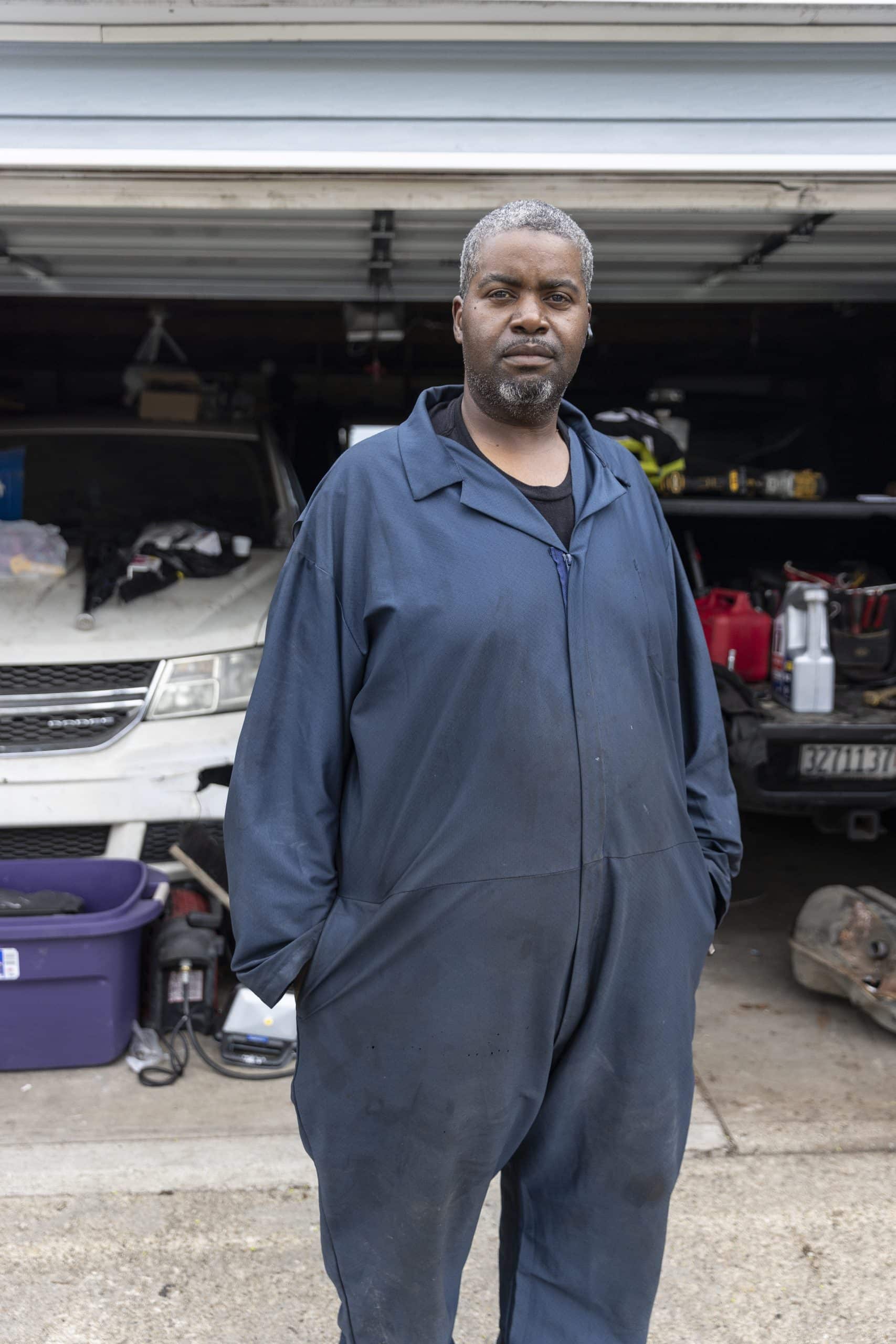
Bruce Davis, the mechanic who hid from the shooting in his garage, can’t remember exactly when he was last pulled over – maybe five or six years ago. But he does remember what it was for: having a clear cover over his license plate. The interaction was brief. He received a verbal warning to remove the cover and was on his way.
Davis said the license plate cover was completely transparent – “crystal clear, like glass” – but he refrained from challenging the officers about it.
“I wanted to question: ‘What’s the law about?’ But I didn’t want to go any further with it because it was my wife’s car,” he said. ”If I went to jail with her car for something stupid, she’d be questioning me.”
But in Chicago, the analysis found that less than a third of stops made in 2022 involved alleged moving violations. Outside of Chicago, the trend was reversed – nearly two-thirds of traffic stops in the rest of the state were attributed to moving violations.
‘Mistrust and fear’
Last June, the American Civil Liberties Union of Illinois filed a class-action lawsuit against the Chicago Police Department (CPD) seeking to stop officers from targeting Black and Latino drivers for minor traffic stops as a pretext to search for contraband, such as guns or drugs. The traffic stop program has “sown mistrust and fear” in these communities, said Alexandra Block, director of the Criminal Legal System and Policing Reform Project.
“Black and brown drivers worry that they can be stopped anytime for the flimsiest of reasons,” she said. “CPD really needs to engage the communities that they police to understand why the mass traffic program has been so damaging, and what kind of policing the communities that are most heavily impacted want instead.”
State Rep. Justin Slaughter (D-Chicago) introduced a bill earlier this year that would have barred police from using non-moving violations such as expired registration stickers, broken tail lights or defective mirrors and windshield wipers to justify stopping drivers. It also included moving violations such as improper lane usage and driving up to 25 miles per hour over the speed limit. Slaughter pointed to the reporting in “Profiled: The State of Traffic Stops in Illinois” as a motivation for the legislation.
That bill, which also would prevent officers from using evidence discovered as a result of such stops, received immediate pushback from law enforcement groups that denounced it as “pro-criminal.” The bill was referred to the House Rules committee, where it remains.
After the Reed shooting, Slaughter told WBEZ that negotiations about the bill are ongoing and that he expects to see the bill advance after amendments are made.
“I don’t drive on the West Side. I come over here to visit my friends – in and out while the sun is still up.”
—FORMER WEST SIDE RESIDENT THEO THOMAS
While current and former residents of the area told reporters that they appreciate and want officers in the neighborhood, they don’t believe these kinds of traffic stops do much to address crime. Instead of pulling people over for petty offenses, they want police to focus on dangerous crime and drug dealing, as well as driving violations that actually threaten public safety.
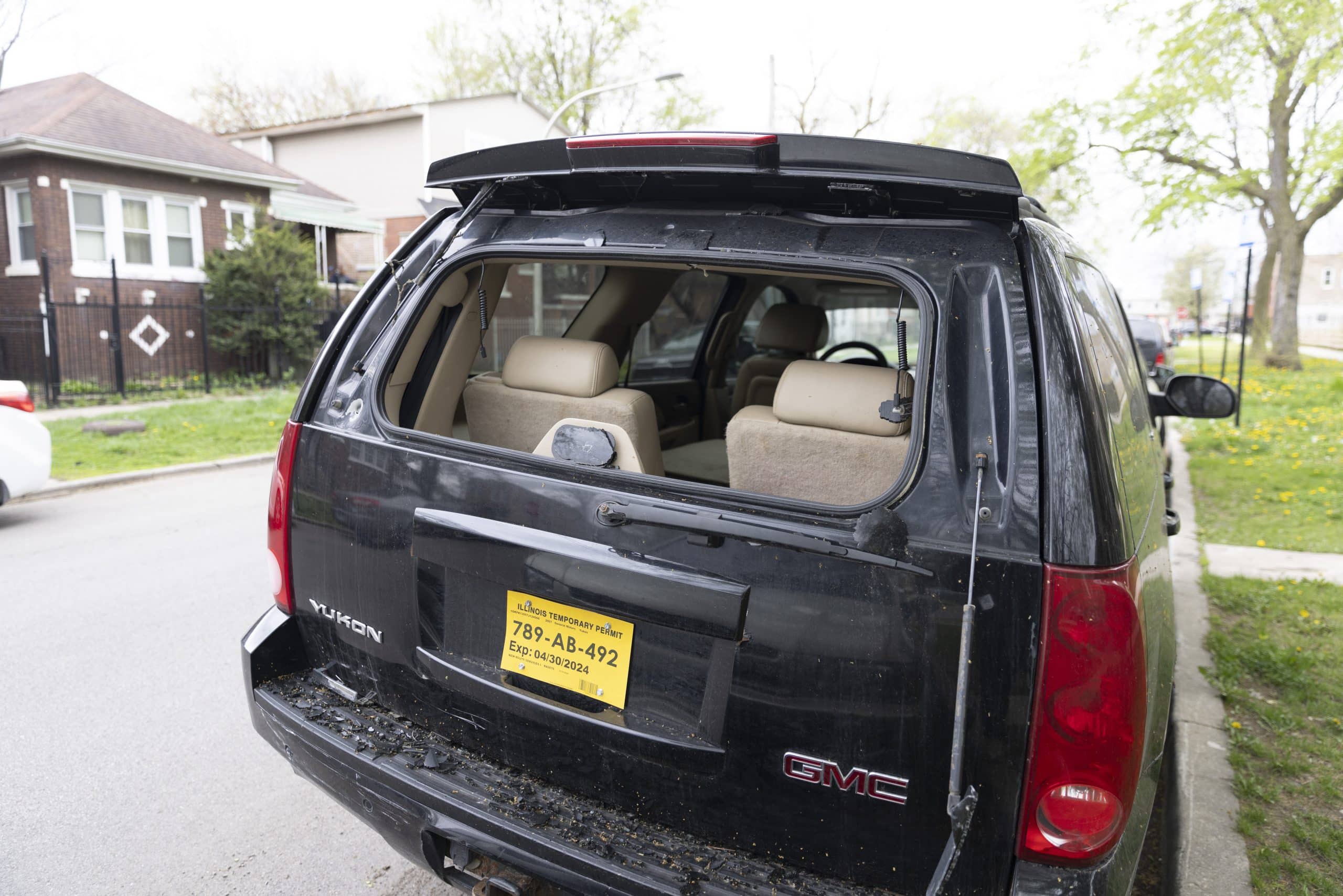
Three weeks after Reed was killed, Theo Thomas was among the people walking down West Ferdinand Street and past a black GMC truck with its windows shot out by the officers who fired at Reed.
Until a few years ago, the 54-year-old would’ve driven through the neighborhood. But that all stopped in 2016, he said, when he was pulled over for a minor traffic violation on his way home from a funeral. The situation escalated. He was arrested. His car was towed to the far South Side. And he was traumatized.
“I don’t drive on the West Side,” said Thomas, who now lives in Evanston, a suburb north of the city. He doesn’t drive through the area, he said, and neither do his friends, who prefer to leave their cars at a nearby park and walk.
“I come over here to visit my friends – in and out while the sun is still up.”
The name “MindSite News” is used with the express permission of Mindsight Institute, an educational organization offering online learning and in-person workshops in the field of mental health and wellbeing. MindSite News and Mindsight Institute are separate, unaffiliated entities that are aligned in making science accessible and promoting mental health globally.


Authors


Related Articles

1 in 8 Youth Turn to AI for Mental Health. ‘It Just Tells Me What I Want to Hear’
Youth with the deepest emotional needs are using chatbots for therapy the most – but many are unhappy with the outcome.

California Tribal Advocate Who Fought to Prevent Suicides Dies in Apparent Murder-Suicide
Celinda Gonzales of the Yurok Tribe worked to prevent suicides among Native Americans after losing a son and a brother. She “was a friend to many,” the tribe said.
Countering the ‘Dark Passions’
Across liberal democracies and nations, like the U.S., that are sliding out of the democratic zone, autocrats are weaponizing our most divisive emotions. In “Anger, Fear, Domination,” William A. Galston offers a guide to how these passions spread and what it takes to keep them from overwhelming us.
