Hotlines Offer Stressed Doctors Anonymous Mental Health Help
Two physicians-only mental health lines are helping stressed-out doctors. New Army program aims to improve mental and physical health.

Wednesday May 1, 2024
By Courtney Wise

Greetings, MindSite News Readers! In today’s Daily, MindSite News is republishing a story from our friends at The War Horse on the rising rate of suicides among female veterans. In a related story, the Army says a new training program focused on physical and mental fitness is improving the wellness of the troops. And two physicians-only mental health lines are helping stressed-out doctors.
In other news, a Jacksonville nonprofit invites local residents to pull out their sidewalk chalk and break down mental health stigma. And North Carolina funds a peer-led warm line.
Suicide rates among female veterans are rising. The VA’s chief says the agency “must be better”
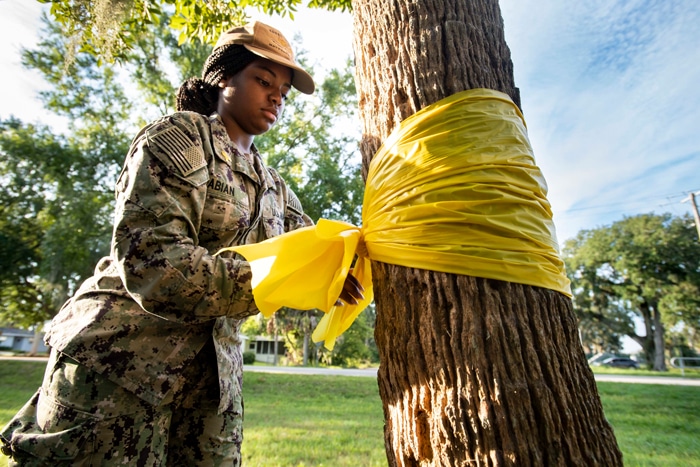
Female veterans are hurting, and their pain is getting worse. Over two decades from 2001 to 2021, the suicide rate for female veterans nearly doubled. And from 2020 to 2021 alone, the rate increased 24% – nearly four times the 6.3% rise in suicides of male veterans. One factor, advocates say, is military sexual trauma.
Jennifer Alvarado left the Navy after her husband assaulted her and the Navy failed to offer her services for post-traumatic stress. She gained weight, battled anger and fatigue and was ultimately pushed out of the service.
The War Horse’s Anne Chalmers took a deeper look in a report that MindSite News just republished. Read the full story here.
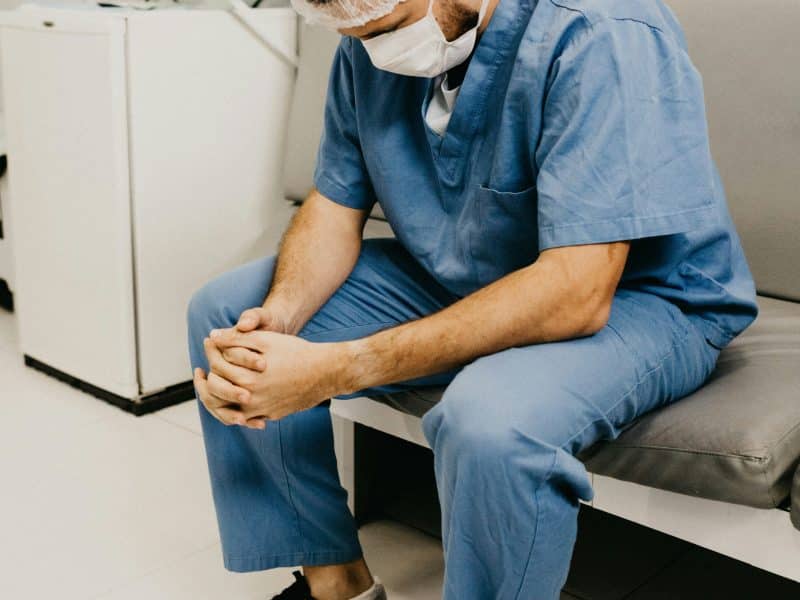
Hotlines offer physicians a shot at anonymous mental health support
Physicians are taught never to make mistakes. But, being human, mistakes are inevitable. Knowing that, it can be hard for some doctors to avoid anxiety – even when everything is fine. Pediatrician Joe Sherman told WHYY that his anxiety loomed so large, he began to have minor car accidents. “The more that I tried to make up for deficiencies within the system I was working, I became more and more anxious,” he said. “The more disconnected I became, the more dissociated I became. And that becomes very distracting.”
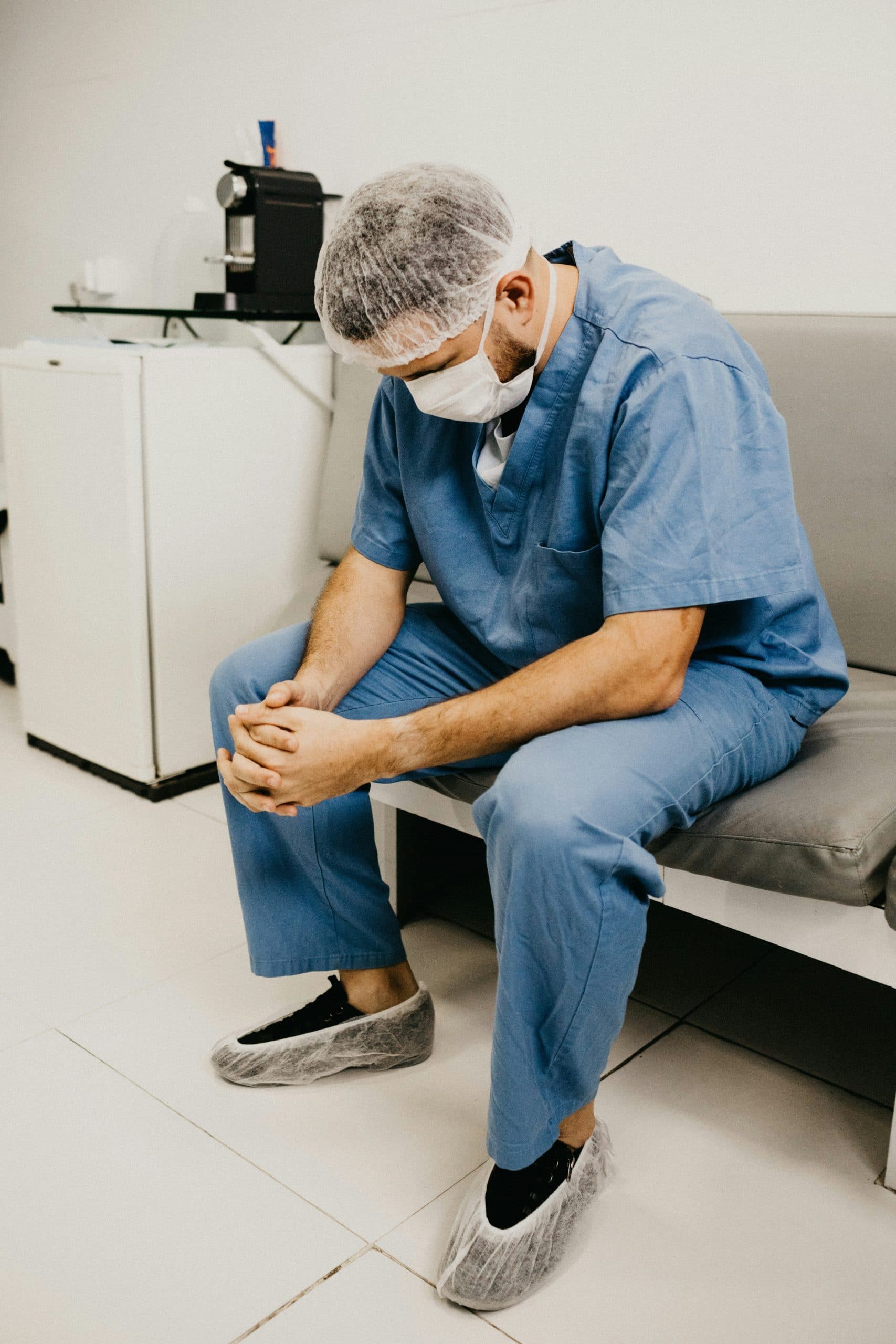
Overwhelmed by the idea of messing up, and lacking adequate support, Sherman began to worry he would slip up at work. His struggle highlights why, at the height of the COVID-19 pandemic, psychiatrist Mona Massood created the Physician Support Line, a doctors-only mental health hotline. In an industry that can ostracize physicians who disclose mental health struggles, she recognized the urgent need for group-specific support.
Massood noticed that when many doctors described the challenges they were having treating COVID, they left hints about their own need for mental and emotional support. An informal invitation for other psychiatrists to join her in creating a space for doctors to vent received 200 volunteers in one week. Together they built the hotline where “physicians listen to physicians anonymously, unapologetically, [and] without fear of being reported,” she said. It runs 24/7 and is always free and anonymous. Anonymity is really important.
Psychologist Amy King helps facilitate sessions for Physicians Anonymous, another group working to reduce burnout, moral injury, and suicide among physicians. “Imagine making some kind of a mistake that is dire or hurts or harms your patient,” King said. “Your ethical heart would like to take responsibility for that. And yet you’re being told by all of your liability and HR and litigation teams that you can’t admit fault. That’s distressing to our nervous system. It feels out of alignment with what we want to be able to do as human beings.”
These support lines provide doctors an anonymous place to talk about their mistakes and their stress – and get support from their peers. “The research is really clear,” King said. “When we provide space for physicians to reflect on what’s gone well, what’s gone right, what’s gone wrong, to have that ability to debrief without condemnation, without shame, without judgment, they feel more capable, more competent, more confident.”
Army rolls out program to support mental health and physical fitness among troops
The US Army says it is accelerating the rollout of its Holistic Health and Fitness (H2F) program, which aims to boost soldiers’ health and reduce risk of physical injuries, mental health episodes, and substance abuse. Originally slated to reach all active-duty, close-combat brigades by 2030, it got a funding boost and is now pushing to meet that goal by 2027.
Next steps include tracking the H2F’s effectiveness, educating new commanders about the program, and ensuring that soldiers in the National Guard and Army Reserve are also enrolled, Maj. Gen. John Kline told the Army Times.
The program enables troops to work with fitness coaches, dietitians, and other health specialists to improve or maintain their health. Early data suggest that where it’s been used, the Army says, the program has been remarkably effective. While brigades throughout the Army showed declines in mental wellness and increases in musculoskeletal injuries and substance abuse during the pandemic year of 2020, units with H2F teams did better across all categories. Those units also recovered faster and returned to duy more quickly following injuries and behavioral health problems. They also performed better on combat fitness tests and had improved rifle marksmanship.
Moving forward, the program is expected to be fully incorporated into training courses, and soldiers in the program will be outfitted with smartwatches, chest straps and sleep rings to monitor their health outcomes. The goal: help troops become healthier people and more effective soldiers.
In other news…
North Carolina invests in peer-led mental health services. To start, they’ve added a statewide Peer Warmline that works in tandem with 988, the mental health and suicide crisis line. The Warmline is a non-crisis mental health support line staffed by peer support specialists – people who are in recovery or have direct experience with substance abuse, mental health conditions, homelessness or incarceration. For callers, the peers add a layer of comfort and trust because they know that the people listening can relate to them, NC Health News reports. Callers can also be confident that call-takers on the warmline won’t call police or EMS unless the caller asks them to. That’s a contrast to many 988 lines that will summon police when counselors think it’s necessary, deterring some people from calling.
In southeast Michigan, where I’m from, you never know what weather April is gonna bring. It could storm one morning, dry up the next with winds cold enough for earmuffs, and then get hot – all in the same week. The NFL draft was held in Detroit this year, and I wore hefty fall gear to the second day, earmuffs included. By Day 3, I was hot enough for shorts and sandals. The unpredictable weather matches my waves of grief, which have been more present than usual as some significant death anniversaries come up. I’m also feeling curious about some of the titles on this list of books about grief from the New York Times. I own two of them – Man’s Search for Meaning by Viktor E. Frankl and Joan Didion’s The Year of Magical Thinking – but I haven’t so much as cracked them open yet. Maybe it’s time. Joanna Luttrell, the bereavement coordinator at St. Jude’s Children’s Hospital in Memphis, says these books can be helpful to people navigating the universal but highly individualized experience of grief.
ATTN: Residents of Jacksonville, Florida (and everywhere else)! Hearts 4 Minds wants you to get on outside and #ChalkItUp4Life. All people of all ages are invited to transform their sidewalks and walkways into canvases that offer encouragement and inspiration to passersby. “The positive messaging is really to start to bridge the gap between people,” Sheryl Johnson, president of Hearts 4 Minds, told News4Jax. “The idea is to just find ways to encourage that connection.” Sidewalk chalk is easy enough to find, and Hearts 4 Minds says the campaign offers a “fun and accessible way to spread awareness, spark open conversations, and break down stigma.” So wherever you live, grab a piece of chalk and jump right in. And if you’re doing any social media, Hearts 4 Minds asks that you include the hashtag #ChalkItUp4Life in.
If you or someone you know is in crisis or experiencing suicidal thoughts, call or text 988 to reach the 988 Suicide & Crisis Lifeline and connect in English or Spanish. If you’re a veteran press 1. If you’re deaf or hard of hearing dial 711, then 988. Services are free and available 24/7.
Recent MindSite News Stories
The ‘Invisible’: As More Female Veterans Die of Suicide, VA Still Lacks Resources
The rate of women veterans dying by suicide nearly doubled from 2001 to 2021, according to a report from the Dept. of Veterans Affairs released in December. Now a new report from Disabled American Veterans offers more evidence that the […]
A West Side Story: How to Traumatize a Community

For residents of Police Beat 1122 on Chicago’s West Side – and for all who watched on TV or social media – the killing of Dexter Reed last month after he was stopped for an alleged seatbelt violation was a deeply traumatizing reminder that they could be next.
Only 2 Percent of Psychiatrists are Black, Leading to Creative Solutions to Fill the Void

There aren’t enough Black psychiatrists to meet growing demand. Some are finding innovative ways to provide more culturally competent care.
If you’re not subscribed to MindSite News Daily, click here to sign up.
Support our mission to report on the workings and failings of the
mental health system in America and create a sense of national urgency to transform it.
For more frequent updates, follow us on Facebook, Twitter and Instagram:

The name “MindSite News” is used with the express permission of Mindsight Institute, an educational organization offering online learning and in-person workshops in the field of mental health and wellbeing. MindSite News and Mindsight Institute are separate, unaffiliated entities that are aligned in making science accessible and promoting mental health globally.
Copyright © 2021 MindSite News, All rights reserved.
You are receiving this email because you signed up at our website. Thank you for reading MindSite News.
mindsitenews.org

Mental health can't wait.
America is in a mental health crisis — but too often, the media overlooks this urgent issue. MindSite News is different. We’re the only national newsroom dedicated exclusively to mental health journalism, exposing systemic failures and spotlighting lifesaving solutions. And as a nonprofit, we depend on reader support to stay independent and focused on the truth.

It takes less than one minute to make a difference. No amount is too small.
The name “MindSite News” is used with the express permission of Mindsight Institute, an educational organization offering online learning and in-person workshops in the field of mental health and wellbeing. MindSite News and Mindsight Institute are separate, unaffiliated entities that are aligned in making science accessible and promoting mental health globally.


Author

Related Articles
A Cat Love Story, and The Battle Over Opioid Settlement Dollars
A major policy shift in Pennsylvania now allows opioid settlement funds for public defenders, a move that could transform how counties address addiction and the legal system.

Generative AI More Harmful Than Helpful in K-12 Classrooms
A new study from the Brookings Institution finds that generative AI does more bad than good in today’s classrooms.