
Are We Overdoing the Mental Health Talk?
Some researchers argue that too much talk about mental health can make it worse. College students’ requests for counseling have increased amidst the deadly conflict in Israel and Gaza – and the contentious campus protests. And more.


Monday, May 12, 2024
By Don Sapatkin

Good Monday morning! May is Mental Health Awareness Month. At MindSite News, we do mental health awareness every day. Subscribe to get our daily newsletter here. If you like what you’re reading, forward this to a friend. And please consider making a donation.
In today’s Daily: Some researchers argue that talking and talking and talking about mental health can make it worse. Philadelphia firefighters created their own mental health program, to good effect. What happens when charity pays off your medical debt? College students’ requests for counseling have increased amidst the deadly conflict in Israel and Gaza – and the contentious campus protests. Analyzing enough tweets can yield estimates of a county’s week-to-week mental health. And two studies show how the burden of the opioid crisis falls heavily on children.
‘Are we talking too much about mental health?’
The answer, the New York Times writes under that headline, is maybe – but it’s complicated. We’ve certainly been talking about mental health a lot in recent years. People broadcast their diagnoses and treatment on TikTok and Instagram. Schools, worried about increasing levels of anxiety and self-harm, are introducing coursework to help students deal with it. Some researchers – a minority, it seems – now argue that it all might be too much. Mental health awareness campaigns help some people identify conditions that need treatment. But they also can cause others to read too much into their symptoms and convince them they’re more troubled than they are.
Some studies have found that teens who take part in school-based mental health interventions came out no better – and perhaps worse – than those who did not, at least for a while. Other research found that young people’s “self-labeling” of depression or anxiety was linked to poor coping skills, like avoidance or rumination. In a paper published last year, two research psychologists at the University of Oxford coined the term “prevalence inflation” – driven by the reporting of mild or transient symptoms as mental health disorders – and suggested that awareness campaigns were contributing to it. “It’s creating this message that teenagers are vulnerable, they’re likely to have problems, and the solution is to outsource them to a professional,” co-author Lucy Foulkes told the Times. She suggested that schools proceed cautiously until high-quality research clarifies the unexpected findings.
Most adolescent mental health specialists continue to believe that a lack of access to services is a more urgent problem. In the U.S., suicide rates among adults and youth have been climbing for decades. Suicidal teens often spend days in emergency rooms until a psychiatric bed opens up. Many experts argue that preventive approaches like teaching schoolchildren basic skills might prevent a later crisis, and studies typically show that students benefit from social and emotional learning courses, like the TRAILS program in Michigan, which MindSite News profiled in 2022:

Ditto for mental health awareness campaigns, admittedly blunt instruments that will be positive for some and potentially negative for others. Specialists generally believe that the public health priority should be reaching the most distressed young people. So Foulkes, who has written two books on mental health and adolescence, expected a backlash when she began presenting her prevalence inflation hypothesis. To her surprise, many educators quietly reached out to express agreement. “There’s definitely a fear about being the one to say it,” she said.
Most of this debate is among academics – far away from classrooms, where mental health curriculums are increasingly common. Allyson Kangisser, an elementary school counselor in West Virginia, said her school focuses on basic coping skills. In the early grades, students are prompted to think about ways they can take care of themselves when they’re having big feelings. Starting in third grade, they take on more complex material, like watching cartoon characters to distinguish transient stress from chronic conditions like depression. At the 6th annual mental health fair last month, kids walked through a giant inflatable brain with neatly labeled lobes. “The mental health fair, everybody does it,” Kangisser said. “It’s not ‘You need it, and you don’t.’ We want everyone to have it, because you just never know.”
Philly firefighters take charge of their mental health
After 16 years fighting fires in Philadelphia, Bill Dischinger was emotionally overwhelmed. “My drinking had gotten out of control because of the trauma,” Dischinger said. “And my marriage was a mess because on the inside I was dying because I didn’t talk about anything.” He was afraid of what his peers would think and what would happen to his reputation if he did. More than 90% of firefighters say stigma is a barrier to seeking behavioral health treatment, according to the International Association of Fire Fighters.
In Philadelphia, at least, things are changing, CBS News reports,. Through their union health plan, members of Local 2 have developed a range of mental health offerings, including peer counseling, for firefighters, paramedics and their families. “I think it’s really necessary,” said Dischinger, who said he finally got the therapy he needed. “We’re not really taught how to deal with our feelings and our emotions when we go through some of these traumatic things.” Societal stigma is also lessening, he said, making it easier to ask for help.
Michael Yeager, a retired battalion chief, played a key role in developing the mental health services. As Local 2’s peer coordinator, he also has a goal: “We don’t want anybody in the department to say, ‘I don’t have anyone to call.’”
Paying off people’s medical debt doesn’t make their stress disappear

Almost 70% of Americans say they receive medical bills they can’t afford, nearly half of patients report having current or past medical debt, and about a third say it causes them depression or anxiety. It also can delay care and increase the risk of bankruptcy.
An increasingly popular solution, adopted by 15 state and local governments (and under consideration by five more) as well as myriad churches, nonprofits and private donors, is to provide debt relief. Sen. Bernie Sanders (I-Vt.) last week introduced legislation that would wipe out all $220 billion in medical debt in the United States.
So it was a shock when a recent study found no improvement in the mental health of patients whose medical debt had been paid off. Even more surprising, it found a 12% worsening in depression among those with the most medical debt compared with a control group that did not receive debt relief. There was no no effect on financial distress or credit scores, credit access, or credit utilization. The experiment provided $19 million in face-value debt relief (paid off at 5.5 cents to the dollar) to more than 14,000 people through a nonprofit that pioneered medical debt relief.
The 126-page study was published by the National Bureau of Economic Research behind a paywall and covered by the New York Times. It was not designed to investigate the cause of the unexpected findings on mental health. But the authors suggest, based on results of a previous study, that transfers that are insufficient to meet overall financial needs may make people’s financial deprivation and feelings of distress more obvious, especially if they have a lot of debt. And the stigma of receiving charity, even if they didn’t ask for it, may exacerbate the negative mental health effects.
Research has found significant mental health and financial improvements for other kinds of debt relief, like paying off mortgages. But that’s more urgent: homeowners who fall behind could quickly lose their homes, whereas a hospital bill can sit unpaid for years with few consequences. If debt relief doesn’t help, what could? The health policy podcast Tradeoffs posed that question to study co-author Neale Mahoney, an economist at Stanford, and Allison Sesso, CEO of Undue Medical Debt, the country’s leading medical debt relief charity. They had three recommendations:
1. Forgive debt sooner, before huge medical bills can swallow savings, delay treatment and damage credit scores.
2. Better understand who benefits most from debt relief (many middle-income patients are struggling), and how.
3. Prioritize policy fixes that protect consumers and keep health care affordable.
In other news…
Campus counseling demand has risen amid tensions stemming from the Israel-Hamas war, according to digital mental health platforms cited by Inside Higher Ed. Uwill, an online mental health services platform, reported a 28% increase in scheduled appointments between September and October, when Hamas killed and kidnapped Israelis and the country mounted a massive military response. Unwill said that more students have been asking for therapists who identify as Muslim or Jewish. BetterMynd, which provides online mental health services to over 100 colleges, noted in a statement “a clear higher need for support” since the Oct. 7 start of the war – especially in recent weeks, as protests paralyzed many campuses. See our interview on how student journalists at Columbia University coped with the stress of covering the unrest.
Analyzing gazillions of tweets can provide a gauge of a county’s mental health, a study in Nature Digital Medicine found.
Population surveys currently capture mental health only broadly, based on responses to questionnaires asking about “mentally unhealthy days” or feelings of “sadness,” the authors noted. The new study relied on an emerging strategy – estimating a population’s mental health by measuring how many times words like “depression” or others that signal a mental outlook appear in social media posts. The study used these “language-based mental health assessments” of roughly 1 billion aggregated tweets from 2 million geo-located users to estimate depression and anxiety at the county level from week to week. The results showed clear absolute increases in depression and anxiety after major societal events in 2020 like the start of the pandemic in March, the murder of George Floyd in May, and Senate confirmation of Amy Coney Barrett to succeed Ruth Bader Ginsburg in October, which gave conservatives control of the Supreme Court.

An estimated 321,566 children in the U.S. lost a parent to drug overdose between 2011 and 2021, a study in JAMA Psychiatry found. American Indian or Alaska Native children experienced twice the rate of loss as white children. Overall, the rate of children experiencing parental loss increased 134% over this period.
Another study shows that the burden of the opioid crisis is falling heavily on kids – and pushing many into the foster care system. This one, in JAMA Network Open, analyzed claims data for nearly 2 million children enrolled in Medicaid who had a parent diagnosed with opioid use disorder. The rate of foster care involvement for children ages 4 to 18 (mean age: 10) more than tripled over seven years, from 1.5% in 2014 to 4.7% in 2020, with the largest increases among the youngest kids. Compared with children who had no foster care involvement, those who spent a month or more in foster care were more likely to experience developmental delays (12% vs. 7%), depression (10% vs. 4%), trauma and stress (35% vs. 7%), and substance use disorders (4% vs. 1%). Physical health outcomes, by contrast, were more or less the same for the two groups.
If you or someone you know is in crisis or experiencing suicidal thoughts, call or text 988 to reach the 988 Suicide & Crisis Lifeline and connect in English or Spanish. If you’re a veteran press 1. If you’re deaf or hard of hearing dial 711, then 988. Services are free and available 24/7.
Recent MindSite News Stories
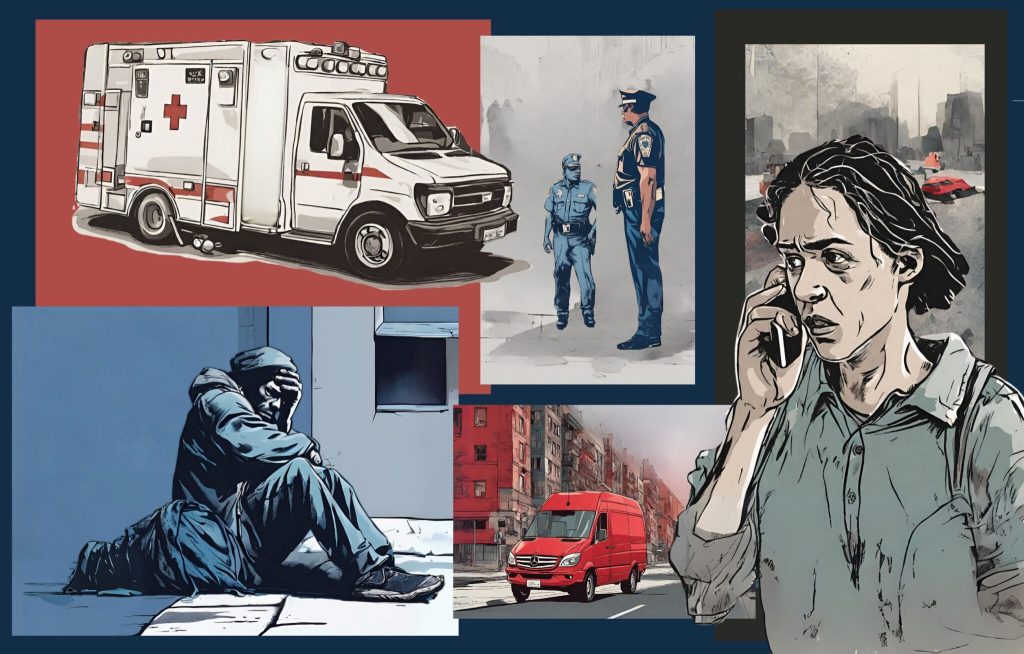
Here’s What Happen If You Report an Unhoused Person in Mental Health Crisis in San Francisco
In San Francisco, as in many cities, it’s not uncommon to cross paths with a person experiencing homelessness in the throes of a mental health crisis. The scene can be tragic, confusing and can feel dangerous.
The Often Vicious Cycle Through San Francisco’s Mental Health Care and Detention System

Last year, thousands of people fell into San Francisco’s badly strained system for treating severe mental health and drug-related crises. Many who enter that system receive temporary care and multiple involuntary psychiatric holds that fail to address long-term needs.
A Student Journalist on How Her Team Coped with Stress of Covering a Campus Under Siege

Isabella Ramírez, editor of the Columbia Daily Spectator, describes the stress experienced by her team of student journalists as they covered occupations and police actions – and coped with accusations of being anti-Semitic and anti-Muslim over the past eight months.
If you’re not subscribed to MindSite News Daily, click here to sign up.
Support our mission to report on the workings and failings of the
mental health system in America and create a sense of national urgency to transform it.
For more frequent updates, follow us on Facebook, Twitter and Instagram:

The name “MindSite News” is used with the express permission of Mindsight Institute, an educational organization offering online learning and in-person workshops in the field of mental health and wellbeing. MindSite News and Mindsight Institute are separate, unaffiliated entities that are aligned in making science accessible and promoting mental health globally.
Copyright © 2021 MindSite News, All rights reserved.
You are receiving this email because you signed up at our website. Thank you for reading MindSite News.
mindsitenews.org

The name “MindSite News” is used with the express permission of Mindsight Institute, an educational organization offering online learning and in-person workshops in the field of mental health and wellbeing. MindSite News and Mindsight Institute are separate, unaffiliated entities that are aligned in making science accessible and promoting mental health globally.


Author

Related Articles
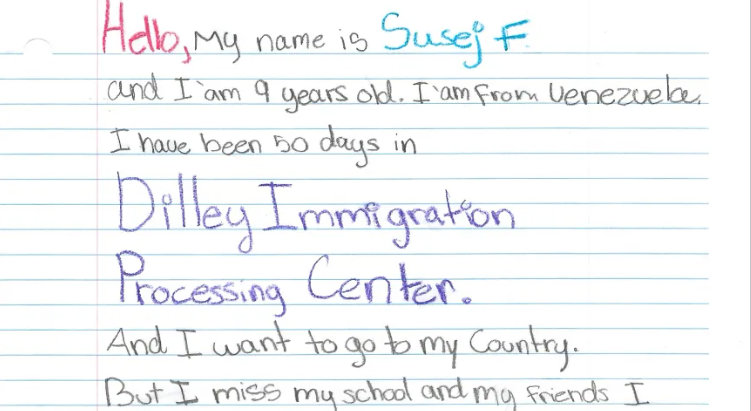
Health Organizations Condemn Traumatic ICE Raids, Family Separation
According to letters from children living in an ICE detention facility, living conditions are inhumane and their mental health is suffering.

In Teens, Social Anxiety Often Looks Like Anger
A study finds that some teens’ aggressive behavior may be due to social anxiety, not straightforward reactivity.
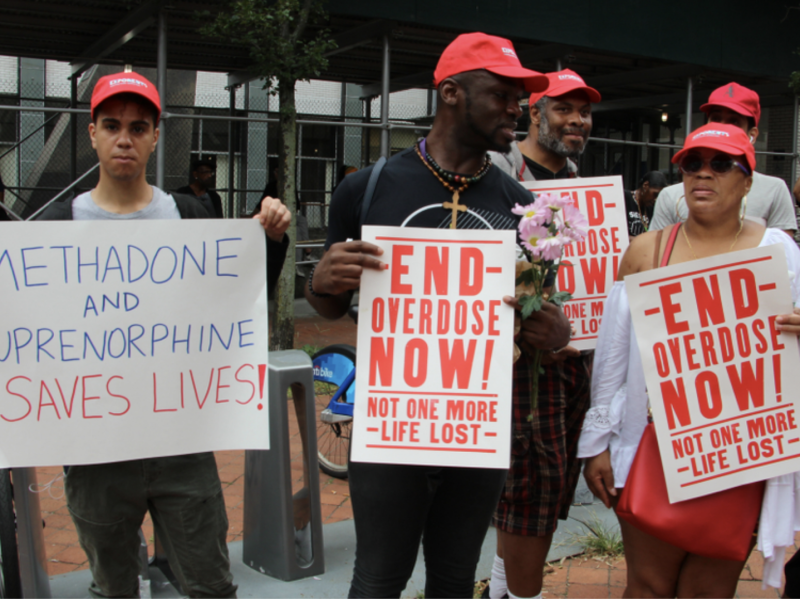
Expert Calls for Harm Reduction, Not Punishment, to Resolve Our Overdose Crisis
As the Trump administration pulls funding from harm reduction, an expert on the overdose crisis says it’s the best way to save lives.
