
How Can We Combat the Rise in Suicides Among Black Youth? An Interview with Dr. Yolanda Lawson
Dr. Yolanda Lawson, president of the National Medical Association, talks with MindSite News about suicide prevention among Black youth.
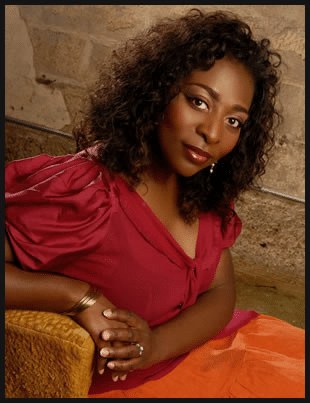
Dr. Yolanda Lawson, president of the National Medical Association, talked with MindSite News about the factors contributing to an increase in suicides among Black youth and what we can do to reduce them.
Lawson, who is an OB-GYN and associate attending at Baylor University Medical Center, received her MD from the University of Arkansas for Medical Sciences and completed her residency at St. John’s Hospital & Medical Center in Detroit. As president of the National Medical Association, a collective of Black physicians committed to equity and justice in medicine and the elimination of disparities in health, youth mental health is one of her strong priorities. The interview has been edited for length and clarity
Courtney Wise Randolph: At the end of last summer, the Johns Hopkins Bloomberg School of Public Health published a report on the continued need to address rising suicide rates among Black youth, ages 10 to 17. Much later in the year, the CDC published their own report to raise awareness about rising suicide rates in general, with a disparate impact on Black youth. In that report, the CDC says that overall suicide rates have reached record levels since 1941.
Dr. Yolanda Lawson: We did see a couple of years of declines in the Black youth suicide rate, but like so many other things, the pandemic had an impact on all of America’s mental health, across all age groups. We definitely saw it aggravated in Black youth, which is unfortunate.
Okay, what public health measures helped contribute to the dip in suicide rates among Black youth? And if you’re able to name those, do you feel like those strategies are applicable to a time now, when we’re still relatively close to the pandemic? The global emergency hasn’t been over that long.
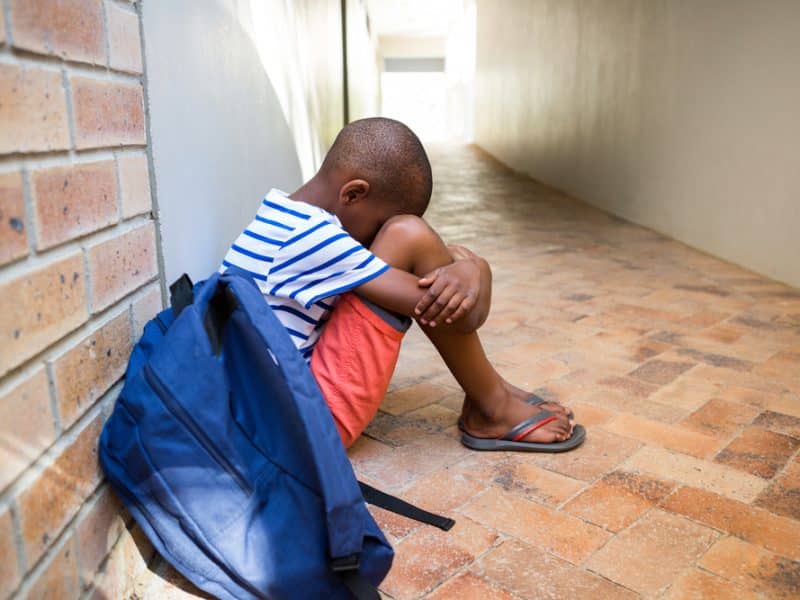
I think some of the dip is due to public awareness measures and campaigns. I saw that schools and communities responded to that. We also know some of the aggravators and the agitators. Being a victim of bullying is one.
Think about the last six or seven years—people have really started talking about bullying. When I went to school, we knew there were bullies in school, but there wasn’t a lot of awareness or response to that issue publicly.
(Lawson also talked about police violence toward the Black community, both historically and in the present.)
When you talk about the Black community, think about the importance now of recording and video.
I have three brothers. I remember my mother at night always being worried about if they’d come home. So we’ve seen these things and we saw images. But think about the power of that young lady who took the video of George Floyd’s death and the response that we saw to that. So I think, even with schools and bullying, just the recognition and awareness of it [is a factor in the dip in rates]. When you are aware of something, you’re able to respond to it.
You mentioned discrimination and trauma as contributing factors to mental distress. I am clear that social inequities contribute to the kinds of mental distress that would prompt somebody to consider suicide. I’m wondering now if you think that a shortage of Black physicians contributes to the issue. If the number of Black physicians or Black mental health professionals were to grow, how could that impact the suicide rate among Black youth? Do you even think that it could?
Yes, I do; I definitely think it could. Anecdotally, many times if I’m seeing patients and I’m trying to refer someone to a behavioral health care or a mental health care provider, one of the questions I’m asked is about culture or race. That’s because people definitely need to feel like the professional working with them is someone that can listen to them, that can understand their concerns. When you’re in that particular state, dealing with mental health, many times people can be agitated and short-tempered already. So to have to constantly explain yourself and what you mean can add to the issue. Having a culturally concordant or culturally competent or culturally similar provider makes it easier to trust. It makes it easier to communicate. So yes, it does matter. The issue we have, of course, is that there aren’t enough.
Can you speak to what level of impact a culturally competent mental health provider might have on young people? Is the positive impact elevated when a child or adolescent receives care from a doctor or therapist who is from their background?
Youth need to trust too, right? This is not just an adult thing. They need to feel comfortable and like they can relate to providers. So that’s very important. Young people are subjected to discrimination just like anyone else of any other age and ethnic group. They definitely need to feel free to communicate and like they can trust their provider.
That kind of opens up some other questions for me that I’m not sure are completely relevant to our talk, but I’ll just say what I’m thinking. I have a very young child. She’s on her way to first grade. Last week, I allowed her to participate in a study with a researcher from Michigan State University about cultural universals, so issues like family, government, and housing. Many of the questions the researcher asked my daughter were about her views on discrimination. They asked her things like, “Have you ever been mistreated or not allowed to play or do something you wanted to because you’re Black, or because you’re a girl?“
Now, I know she’s experienced discrimination for being a girl from her peers; I’ve witnessed it. My daughter didn’t register it. I can’t yet say I’ve noticed her, specifically, being mistreated for her race, but I remember being mistreated at 3 years old because of my race. The teachers at my school told me I was Black in their actions and they let me know that, for them, my blackness was a problem. But I didn’t have the words to articulate what was happening to me and around me. I was practically a baby, for all intents and purposes.
All that’s to say, if research tells us that social inequalities contribute to poor mental health, in what ways do you think adults can help support young people through that? Especially if they lack an awareness about what’s actually happening to them. Or maybe that’s a question I need to be asking a young person.
I absolutely hear you and I think it depends. I think it depends on the community in which you live; there is some contribution to space. I think that there are some Black families that are able to insulate better in the many different types of communities where we live.
I grew up in a community similar to you. I was keenly and acutely aware. So even though we’re talking about desegregated times, I think back now, as an adult, it really was a segregated time that I grew up in. I mean, we went to integrated schools, but when you talked about neighborhoods, Blacks lived on one side of the railroad tracks than the others. When you think about today’s impact and what our youth are having to deal with, even if they’re insulated against some of the impacts of race in their own community, there’s social media that’s accessible to our youth. That’s having an impact because of the imaging. I see so many young women with body image disorders. So, there are all these implications that compound the mental health issue.
The other piece to that is isolation. We’re seeing a lot of times that kids may not have the social exposures we did. We were forced to go outside and play; there really wasn’t anything else to do. And children need to be active, right? But now, whether it’s video games, or other digital violence they encounter, they’re not being exposed to other people if they’re using their iPad in a corner of the house all day, versus going out and meeting their neighbors, interacting and socializing. Among Black families who may have the means to live in the suburbs, or what have you, we still have children who are the one and only [Black child] in their class. We shouldn’t still be seeing that. We should have these culturally-inclusive environments, but not all kids are exposed to that. So we definitely have concerns around that piece.
Your work with the National Medical Association is with an entire community of Black physicians. What has your team determined is a good step for you all to take to address this public health issue?
There are several ways I can speak to some of the work that we’re doing. The National Medical Association has 26 different medical specialties. One of those is psychiatry. It’s composed of Black psychiatrists from around this country and we also partner with the Black Psychiatrists of America. We extend our knowledge, our resources, our campaigns and education to others. We have a stake in the ground around not only public awareness and making communities aware, but also thinking about those things that are aggravating these numbers that speak to the increase in Black youth suicide.
You know, [Black people] used to think that only white folks killed themselves and that Black folks didn’t. Many households were Christian and believed there were going to be implications [for suicide], so we didn’t see this behavior. But I can just tell you, even in my own practice, I have witnessed the number of young Black children coming in [with mental disorders and distress] earlier and earlier.
It’s coming from so many different angles. Think safety. There’s so much anxiety many students have around whether or not they’re safe, not only in their communities as we used to think about, but also in their schools. We used to think children could go to school and be safe, but we don’t have that anymore for our children and our students. I live in a place where there’s open carry for guns, and think about bullying, technology, social media, and the exposure to traumas these children have seen. They’ve come up through COVID and all the death of grandparents and parents and relatives. We think about race. All of these things have an equally-powerful impact on our youth and our children as they have on us as adults. Connecting that to the work of the NMA, it’s focused directly on the psychological impacts and also addressing some of those other social factors that could lead to some of the mental health disorders that we see.
What else is critically important to this issue?
Oh, we have to talk about mental health stigma in the Black community. We still continue to deal with that. It’s very common for people to come in and tell me that their issue isn’t mental health but something else, like their thyroid or their hormones. And you know, it’s unfortunate. Let me tell you the complexity of being a medical provider when dealing with a child or an adolescent: They’re minors.
I once had a young patient to attempt suicide and I wanted to talk to them alone, without their parents, to make sure that I was connecting directly with them to ensure that they felt safe sharing with me about their concerns. Does that make sense?
Absolutely.
Once their parents were out of the room, this young person told me that their parents had stopped the medicines they had been prescribed for mental health. This is a young person who had been hospitalized after a suicide attempt. They stopped the medicines and said that they just needed to pray more. It’s unfortunate because this is a minor. Their parents have authority and autonomy over their bodies. That makes the parent responsible to obtain the medicines and make sure the child takes the medicines. This behavior stems from that stigma piece, and the struggle we have in getting our communities to accept mental health diagnoses. For me, as a Black physician, that’s the plight. It’s the acceptance of a mental health issue in the first place and the adherence to proven therapies.
On the flip side, if this family isn’t seeing me as a Black doctor, I get concerned about if our people will even be diagnosed. Usually for Black folks, there’s a delayed diagnosis of mental health disorders. We’re also usually given treatment at shorter time intervals than our White counterparts. So all of this, from my vantage point, fuels this crisis of mental health in Black youth.
Aren’t you an OB/GYN?
Yes.
I knew that gynecologists see young patients, but I didn’t realize that you were intentionally having conversations with young people coming into your office about their mental health.
I know people figure all we do is deliver babies, but we do a lot of wellness work. My youngest patient is age 3 and my oldest patient is 99. I manage people across the spectrum.
So when it comes to encountering a family like this, do you speak with the parents after that?
Absolutely. Always. The alone time with me and a young patient is just so that the child has space to freely discuss. But I always bring the family back together. And with me, I suggest the employment of a psychologist or psychiatry and therapy support for the child individually, but also family therapy, because if your child is dealing with a mental disorder, there’s usually a change in the family dynamic. So I believe family therapy can be quite helpful in this type of situation.
As we near the end of our time together, I’d like to name the major takeaways I’ve received that people need to hold on to as we work as a public to reduce rates of Black youth suicides.
I’m hearing you say that we need to respect the fact that some social systems work against us. There’s power we have to work to correct those issues, be they in service work in our communities, the voting booth, and so forth. But we just can’t deny that social inequities affect our youth as much as the recent social shifts have impacted them, making their worlds more isolated than in generations past. Even pre-pandemic, youth were more isolated than before because of social media; the COVID-19 pandemic simply exacerbated the issue.
Beyond those matters, in our Black communities, adults continue to struggle with accepting that we can develop mental health disorders and that prevents us from seeking or applying mental health treatment and support. Is that accurate?
Well, additionally if we want to remove stigma around mental health, we need to address the disparities piece of this which is access to mental health services. During my presidency of the NMA, I’ve traveled all over this country and there’s not any place I’ve been where there are enough behavioral health and mental health care providers generally, I’m not even thinking about Black ones. There’s hardly any medical specialty where there are going to be enough Black providers to take care of the Black population. We just don’t have that yet. Less than 6% of doctors in this country are Black, so there aren’t enough to meet the 14% of Black people that live here. We know there are shortages.
Even with that, we’ve got to make sure that when we as Black people have the opportunity to access mental health services, that we use them and complete the prescribed therapy and treatments. Currently, we have low rates of engagement with mental health services as a race, and definitely among Black youth. We also have low rates of completing the necessary treatments because it’s very difficult for some of us to accept a mental health diagnosis. That’s what we’ve got to overcome.
The name “MindSite News” is used with the express permission of Mindsight Institute, an educational organization offering online learning and in-person workshops in the field of mental health and wellbeing. MindSite News and Mindsight Institute are separate, unaffiliated entities that are aligned in making science accessible and promoting mental health globally.


Author

Related Articles

Can ChatGPT Be Your Therapist? This Therapist Found Out for Herself
Can ChatGPT offer a viable alternative to traditional therapy? In this first-person essay, a licensed therapist explores that question.
Brown University Shooting Again Reveals Why Trauma Care Must Begin Before People Seek It
A former Brown student and longtime mental health journalist says that how institutions respond after traumatic events can shape mental health outcomes for years to come.
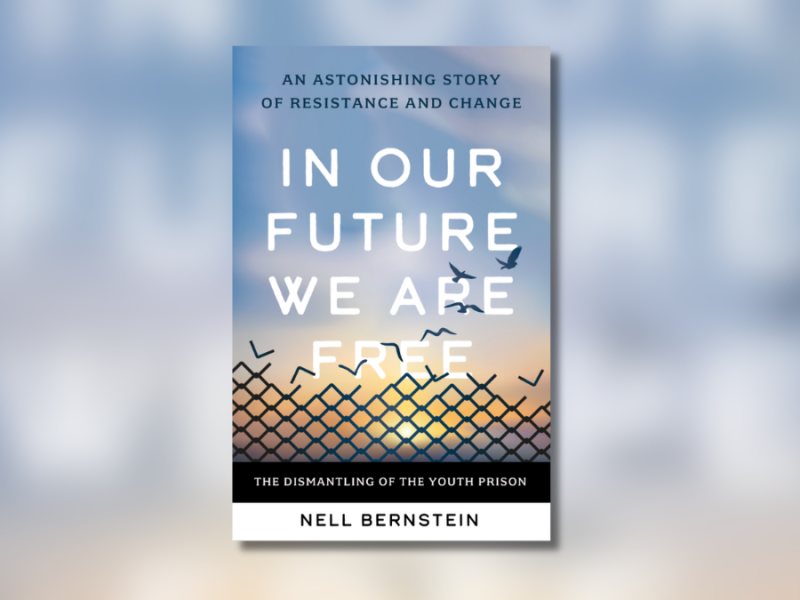
In Our Future, We Are Free: The Movement to Dismantle Youth Prisons in America
Over the past 20 years, one state after another has shuttered its youth prisons and stopped prosecuting kids as adults, slashing the number of children locked in cages by a stunning 75%. This new book tells the story of how a coalition of parents, activists, and prison officials brought a destructive institution to its knees.
