What’s Behind the Rise in Black Youth Suicide?
Find out more about Black youth and suicide in our interview with Dr. Yolanda Lawson, president of the National Medical Association. Also, two Netflix series on mental illness that psychologists love. And more.

May 23, 2024
By Courtney Wise

Greetings, MindSite News Readers. In today’s newsletter, we’re featuring a conversation with Dr. Yolanda Lawson, a Dallas-based obstetrician and gynecologist. It may seem odd to speak with a doctor who isn’t a psychiatrist about mental health – I know I was a little surprised to learn that gynecologists spend a great deal of time talking with young patients about their mental health. But perhaps that points to the larger importance of our conversation.
Mental health is an issue that Black doctors, whatever their specialty, have to consider when working with their patients, and especially those too young to make decisions for themselves.
Also in today’s edition: A story about a San Mateo teen using AI to help connect her peers to mental health resources. Actor Tony Hale on overcoming severe anxiety. And two popular Netflix shows — one an animated dark comedy — praised by psychologists for their authentic portrayals of mental illness.
MindSite News Interview with Dr. Yoland Lawson: How can we combat the rise in suicides among Black youth?
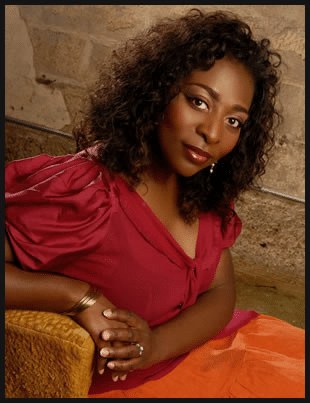
Dr. Yolanda Lawson, president of the National Medical Association, discusses the factors contributing to an increase in suicides among Black youth and what we can do to reduce them.
Lawson, who is an associate attending at Baylor University Medical Center, received her MD from the University of Arkansas for Medical Sciences and completed her residency at St. John’s Hospital & Medical Center in Detroit. As president of the National Medical Association, a collective of Black physicians committed to equity and justice in medicine and the elimination of disparities in healthcare, youth mental health is a key priority.
Courtney Wise Randolph: Hello Dr. Lawson, thank you for speaking with me. I’m reaching out because at the end of last summer, the Johns Hopkins Bloomberg School of Public Health published a report on the continued need to address rising suicide rates among Black youth, ages 10 to 17. Much later in the year, the CDC published their own report to raise awareness about rising suicide rates in general, with a disparate impact on Black youth. In that report, the CDC says that overall suicide rates have reached record levels since 1941.
Dr. Yolanda Lawson: We did see a couple of years of declines in the Black youth suicide rate, but like so many other things, the pandemic had an impact on all of America’s mental health, across all age groups. We definitely saw it aggravated in Black youth, which is unfortunate.
What public health measures helped contribute to the dip in suicide rates among Black youth? And if you’re able to name those, do you feel like those strategies are applicable to a time now, when we’re still relatively close to the pandemic? The global emergency hasn’t been over that long.
I think some of the dip is due to public awareness measures and campaigns. I saw that schools and communities responded to that. We also know some of the aggravators and the agitators. Being a victim of bullying is one. Think about the last six or seven years—people have really started talking about bullying. When I went to school, we knew there were bullies in school, but there wasn’t a lot of awareness or response to that issue publicly.
Lawson also talked about police violence toward the Black community, both historically and in the present.
When you talk about the Black community, think about the importance now of recording and video.
I have three brothers. I remember my mother at night always being worried about if they’d come home. So we’ve seen these things and we saw images. But think about the power of that young lady who took the video of George Floyd’s death and the response that we saw to that. So I think, even with schools and bullying, just the recognition and awareness of it [is a factor in the overall dip in rates of bullying]. When you are aware of something, you’re able to respond to it.
Briefly, you mentioned discrimination and trauma as contributing factors to mental distress. I am clear that social inequities contribute to the kinds of mental distress that would prompt somebody to consider suicide. I’m wondering now if you think that a shortage of Black physicians contributes to the issue.If the number of Black physicians or Black mental health professionals were to grow, how could that impact the suicide rate among Black youth? Do you even think that it could?
Yes, I do; I definitely think it could. Anecdotally, many times if I’m seeing patients and I’m trying to refer someone to a behavioral health care or a mental health care provider, one of the questions I’m asked is about culture or race. That’s because people definitely need to feel like the professional working with them is someone that can listen to them, that can understand their concerns. When you’re in that particular state, dealing with mental health, many times people can be agitated and short-tempered already. So to have to constantly explain yourself and what you mean can add to the issue. Having a culturally concordant or culturally competent or culturally similar provider makes it easier to trust. It makes it easier to communicate. So yes, it does matter. The issue we have, of course, is that there aren’t enough.
Can you speak to what level of impact a culturally competent mental health provider might have on young people? Is the positive impact elevated when a child or adolescent receives care from a doctor or therapist who is from their background?
Youth need to trust too, right? This is not just an adult thing. They need to feel comfortable and like they can relate to providers. So that’s very important. Young people are subjected to discrimination just like anyone else of any other age and ethnic group. They definitely need to feel free to communicate and like they can trust their provider.
That opens up some other questions for me that I’m not sure are completely relevant to our talk, but I’ll just say what I’m thinking. I have a very young child. She’s on her way to first grade. Last week, I allowed her to participate in a study with a researcher from Michigan State University about cultural universals, so issues like family, government, and housing. Many of the questions the researcher asked my daughter were about her views on discrimination. They asked her things like, “Have you ever been mistreated or not allowed to play or do something you wanted to because you’re Black, or because you’re a girl?
Now, I know she’s experienced discrimination for being a girl from her peers; I’ve witnessed it. My daughter didn’t register it. I can’t yet say I’ve noticed her, specifically, being mistreated for her race, but I remember being mistreated at three years old because of my race. The teachers at my school let me know that, for them, my blackness was a problem. But I didn’t have the words to articulate what was happening to me and around me. I was practically a baby, for all intents and purposes.
All that’s to say, if research tells us that social inequalities contribute to poor mental health, in what ways do you think adults can help support young people through that? Especially if they lack an awareness about what’s actually happening to them. Or maybe that’s a question I need to be asking a young person.
I absolutely hear you and I think it depends. I think it depends on what community in which you live. There are some Black families that are able to insulate better in the many different types of communities where we live.
I grew up in a community similar to you. I was keenly and acutely aware. So even though we’re talking about desegregated times, I think back now, as an adult, it really was a segregated time that I grew up in. I mean, we went to integrated schools, but when you talked about neighborhoods, Blacks lived on one side of the railroad tracks than the others. When you think about today’s impact and what our youth are having to deal with, even if they’re insulated against some of the impacts of race in their own community, there’s social media that’s accessible to our youth. That’s having an impact because of the imaging. I see so many young women with body image disorders. So, there are all these implications that compound the mental health issue.
The other piece to that is isolation. We’re seeing a lot of times that kids may not have the social exposures we did. We were forced to go outside and play; there really wasn’t anything else to do. And children need to be active, right? But now, whether it’s video games, or other digital violence they encounter, they’re not being exposed to other people if they’re using their iPad in a corner of the house all day, versus going out and meeting their neighbors, interacting and socializing. Among Black families who may have the means to live in the suburbs, or what have you, we still have children who are the one and only [Black child] in their class. We shouldn’t still be seeing that. We should have these culturally-inclusive environments, but not all kids are exposed to that. So we definitely have concerns around that piece.
Your work with the National Medical Association is with an entire community of Black physicians. What has your team determined is a good step for you all to take to address this public health issue?
There are several ways I can speak to some of the work that we’re doing. The National Medical Association has 26 different medical specialties. One of those is psychiatry. It’s composed of Black psychiatrists from around this country and we also partner with the Black Psychiatrists of America. We extend our knowledge, our resources, our campaigns and education to others. We have a stake in the ground around not only public awareness and making communities aware, but also thinking about those things that are aggravating these numbers that speak to the increase in Black youth suicide.
You know, [Black people] used to think that only White folks killed themselves and that Black folks didn’t. Many households were Christian and believed there were going to be implications [for suicide], so we didn’t see this behavior. But I can just tell you, even in my own practice, I have witnessed the number of young Black children coming in [with mental disorders and distress] earlier and earlier.
It’s coming from so many different angles. Think safety. There’s so much anxiety many students have around whether or not they’re safe, not only in their communities as we used to think about, but also in their schools. We used to think children could go to school and be safe, but we don’t have that anymore for our children and our students. I live in a place where there’s open carry for guns, and think about bullying, technology, social media, and the exposure to traumas these children have seen. They’ve come up through COVID and all the death of grandparents and parents and relatives. We think about race. All of these things have an equally powerful impact on our youth and our children as they have on us as adults. Connecting that to the work of the NMA, it’s focused directly on the psychological impacts and also addressing some of those other social factors that could lead to some of the mental health disorders that we see.
What else is critically important to this issue?
Oh, we have to talk about mental health stigma in the Black community. We still continue to deal with that. It’s very common for people to come in and tell me that their issue isn’t mental health but something else, like their thyroid or their hormones. And you know, it’s unfortunate. Let me tell you the complexity of being a medical provider when dealing with a child or an adolescent: They’re minors.
I once had a young patient to attempt suicide and I wanted to talk to them alone, without their parents, to make sure that I was connecting directly with them to ensure that they felt safe sharing with me about their concerns. Does that make sense?
Absolutely.
Once their parents were out of the room, this young person told me that their parents had stopped the medicines they had been prescribed for mental health. This is a young person who had been hospitalized after a suicide attempt. They stopped the medicines and said that they just needed to pray more. It’s unfortunate because this is a minor. Their parents have authority and autonomy over their bodies. That makes the parent responsible to obtain the medicines and make sure the child takes the medicines. This behavior stems from that stigma piece, and the struggle we have in getting our communities to accept mental health diagnoses. For me, as a Black physician, that’s the plight. It’s the acceptance of a mental health issue in the first place and the adherence to proven therapies.
On the flip side, if this family isn’t seeing me as a Black doctor, I get concerned about if our people will even be diagnosed. Usually for Black folks, there’s a delayed diagnosis of mental health disorders. We’re also usually given treatment at shorter time intervals than our White counterparts. So all of this, from my vantage point, fuels this crisis of mental health in Black youth.
Read the rest of Courtney’s discussion with Dr. Lawson in this MindSite News Interview.
In other news…
Actor Tony Hale knows what a panic attack feels like. He struggled with severe anxiety as a child. “I was an asthmatic kid and I had a lot of anxiety around that. And I think when I was a kid, I just wanted everybody to like me and a lot of people-pleasing stuff,” Hale said in an interview on Fatherly’s Finding Raffi podcast. “ Knowing what that crippling anxiety feels like helps to give life to the characters he’s so well known for playing on our TV and film screens, including Buster Bluth in Arrested Development, Gary Walsh in Veep, and Forky in Toy Story 4. He’s grateful for how it helps him professionally, but hopes his daughter doesn’t have to endure the same paralyzing fears.
He also talks about the challenges of parenting kids through their own struggles. As they grow, more and more of the job is watching them figure challenges out on their own. “I want so bad to fix and be like, ‘OK, this is how you can get around that challenge,’” Hale said. “‘This is how you can take this shortcut.’ But I’ve got to sit and listen and understand and allow her to walk through it. And that is really hard. It’s really hard.” If you’ve got a halfs, this semi-throwback (circa 2022) is a good listen.
Two Netflix series that successfully capture mental health struggles: Writing for Forbes.com, psychologist Mark Travers discusses two shows highly acclaimed by psychologists: BoJack Horseman and The Queen’s Gambit. Travers praises the latter for its gritty portrayal of orphaned chess prodigy Beth Harmon and her struggle with addiction and notes that the animated series BoJack Horseman ”successfully subverts stereotypical portrayals of mental health issues by offering a humorous yet honest depiction of the up-and-down nature of depression and addiction. The show’s creators embrace the messiness and discomfort that come with these struggles, presenting a protagonist who is deeply flawed yet undeniably human. BoJack’s journey is filled with moments of self-awareness and regression, reflecting the non-linear path that many people with mental health issues experience.”
Five years ago, California teenager Charlotte Rosario lost her father to suicide. The experience was devastating, but ultimately inspired her action to help others in despair who believe suicide is their best option. “I remember seeing a girl in the mirror who is scared, ashamed, confused, and lost,” Rosario told CBS News about the aftermath of her father’s death. “I always think about my dad and all the people that I’ve met in my community over the years who I know have struggled with their mental health challenges or suicide loss. And I keep their stories in mind, because that’s really what drives these projects and what has driven SearchMentalHealth” – a platform she helped create that uses artificial intelligence to guide users in California to the available services most relevant to their mental health issue.
If you or someone you know is in crisis or experiencing suicidal thoughts, call or text 988 to reach the 988 Suicide & Crisis Lifeline and connect in English or Spanish. If you’re a veteran press 1. If you’re deaf or hard of hearing dial 711, then 988. Services are free and available 24/7.
Recent MindSite News Stories
How can we combat the rise in suicides among Black youth? An interview with Dr. Yolanda Lawson

Dr. Yolanda Lawson, president of the National Medical Association, talks with MindSite News about suicide prevention among Black youth.
MindSite News Reporters Win Two Awards

MindSite News, the nation’s only national news outlet reporting exclusively on mental health, is pleased to announce that two MindSite News reporters have won awards for excellence in journalism. Continue reading…
Report an Unhoused Person in Mental Health Crisis in San Francisco and Here’s What Happens Next
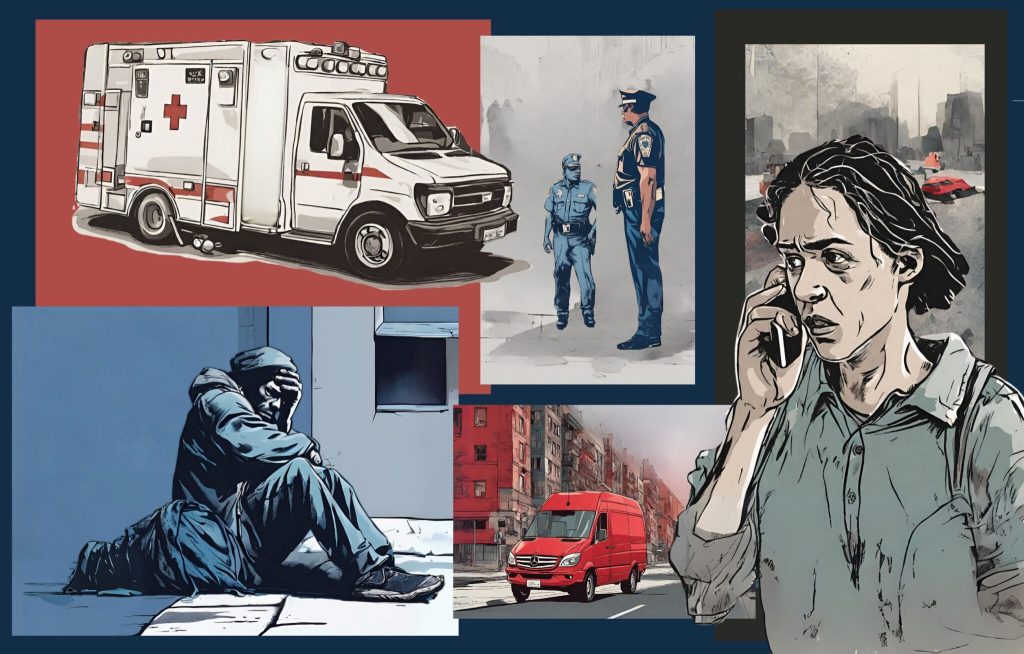
In San Francisco, as in many cities, it’s not uncommon to cross paths with a person experiencing homelessness in the throes of a mental health crisis. The scene can be tragic, confusing and can feel dangerous. Here’s what to do.
If you’re not subscribed to MindSite News Daily, click here to sign up.
Support our mission to report on the workings and failings of the
mental health system in America and create a sense of national urgency to transform it.
For more frequent updates, follow us on Facebook, Twitter and Instagram:

The name “MindSite News” is used with the express permission of Mindsight Institute, an educational organization offering online learning and in-person workshops in the field of mental health and wellbeing. MindSite News and Mindsight Institute are separate, unaffiliated entities that are aligned in making science accessible and promoting mental health globally.
Copyright © 2021 MindSite News, All rights reserved.
You are receiving this email because you signed up at our website. Thank you for reading MindSite News.
mindsitenews.org

The name “MindSite News” is used with the express permission of Mindsight Institute, an educational organization offering online learning and in-person workshops in the field of mental health and wellbeing. MindSite News and Mindsight Institute are separate, unaffiliated entities that are aligned in making science accessible and promoting mental health globally.


Author
Related Articles
He Almost Killed His Father. Now He Helps Others At Risk.
In today’s newsletter, we explore how one man healed after a dangerous psychotic break that nearly led him to murder.
Fallout Over Supreme Court Ruling on Conversion Therapy
Despite the Supreme Court ruling, conversion therapists can still be sued for a practice the United Nations calls “torture.”

On No Kings Day, Millions Rallied to Denounce Trump and “Epstein War”
Anti-Trump protests took place in all 50 states, Puerto Rico and other US territories and in countries around the world.
