
Mourning the Loss of a Pet
Society often ignores the deep grief caused by the loss of a companion animal. Tell us about your experience. Plus: What Inside Out 2 gets right about anxiety.
June 20, 2024
By Courtney Wise

Greetings, MindSite News Readers. Today, we’re holding space for all reeling from the devastating loss of a pet. Jefferson, beloved poodle-terrier of co-founding editor Diana Hembree, died earlier this week. In addition to sharing a glimpse of her family’s high-spirited and irreplaceable companion, Diana looks at ways that others can cope with such losses.
Plus, what Pixar’s “Inside Out 2” gets right about anxiety. Science says that like new moms, new dads undergo brain changes too. And the ongoing controversy on the origins of the youth mental health crisis..
Grieving the death of a pet
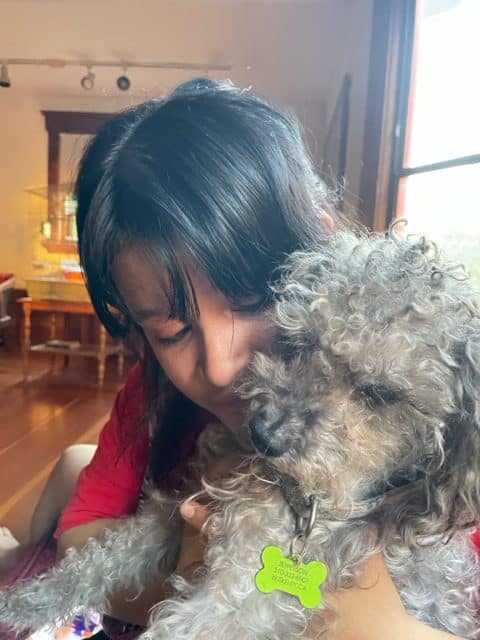
This week our family lost Jefferson, an 8-year-old poodle-terrier. If I close my eyes, I can see him dancing with joy and excitement as he did every morning when he spotted us, wagging his tail furiously and whipping his body back and forth so hard that he almost fell over. Nuzzling us and licking our hands if we were sad. Greeting us and our friends with ecstatic barks, jumping on his hind legs with his front legs stretched up, V-shaped, in the air. We are so profoundly grateful to have been blessed with his bright spirit and unconditional love for all these years. But now we are unmoored and bereft.
If you’ve lost a beloved animal companion, you, too, may have felt this sense of crushing loss. Perhaps you have even asked yourself, as I have, if you have a right to such grief in a world on fire. If so, you may find some comfort in a moving essay on Common Dreams called “Grieving the Family Cat in a Painfully Violent World,” published just yesterday by journalist Richard Eskow.
“I ask myself: Who am I to feel sad when people around the world are losing everyone they love, from infants to the elderly?” writes Eskow. “But grief can’t be quantified or compared. It’s like a neutrino. It has no mass, just energy…Too often we try to dictate our emotions, ordering them this way and that like we’re some border guard of the heart. That’s a mistake. Worse than a mistake. It’s apartheid of the spirit.”

We have been lucky to have experienced support from friends, colleagues and family. As my colleague Courtney Wise wrote, “I am so sorry! May the wind one day soon blow near your ankles and you be assured that it’s Jefferson’s tail-wagging and love whipping by to bring you a kiss.”
But some people mourning a companion animal have had their grief dismissed by well-meaning but insensitive sorts (“It’s just a dog”). Mourning a pet is a disenfranchised grief, argues Charles Trepany in USA Today, explaining that the loss of a pet causes deep grief that our society largely ignores. The New York Times has advised people on how to best support friends or family who have lost their pets, and support groups for pet loss are on the rise. You may also want to read this article by Paige Bierma, which chronicles the journey of two people who lost their cherished four-footed companions.
We invite you to send us stories commemorating your own pet. And we’ll give the last word to The Daily Show’s Jon Stewart, in a tribute to his best boy, Dipper.
— Diana Hembree
What Inside Out 2 gets right about anxiety
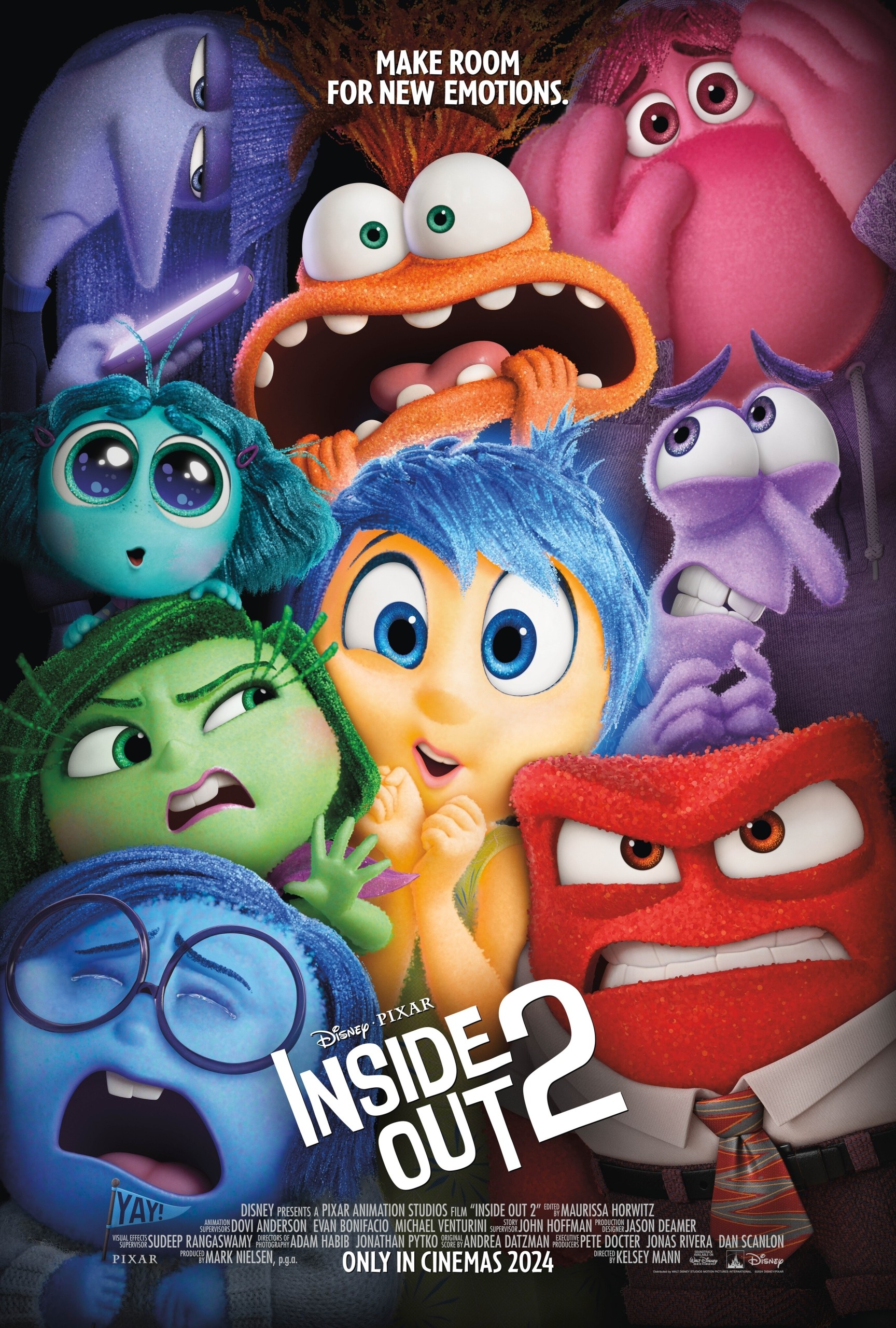
Nine years ago, Pixar’s “Inside Out” revealed the character and life of a little girl named Riley through her innermost emotions. Back then, her feelings were straightforward and understood: Joy, Sadness, Anger, Fear, and Disgust. Now though, Riley is 12 years old and feeling like her inner console is out of order. Puberty bulldozed through her sense of self and left new, more complicated emotions along the way: Embarrassment, Envy, Ennui, and Anxiety. Released recently, the New York Times did a deep dive on what the emotion is all about.
Filled with good intention, anxiety’s goal is to protect Riley “from the scary stuff she can’t see.” The only way for it to do that, unfortunately, is to obsessively imagine every possible way Riley could fail. With anxiety in charge, ‘badly’ is the only way her story can end. Manifested on screen as something like a Fraggle, Anxiety’s face is permanently plastered with a part smile, part grimace, the Times reads. Singularly focused on Riley’s perfection, it pushes all other emotions to the side, subduing them to the brink of a panic attack. It’s a solid example of the “either or” way we tend to see ourselves, said Dacher Keltner, a psychologist and expert on the science of emotion who consulted for both “Inside Out” movies.
A little anxiety can be helpful, experts say, acting like an internal caution button to keep us conscientious, safe, and aware. Too much, on the other hand, is debilitating, as Riley learns in the film. Kelsy Mann, the movie’s director, told the Times in a recent interview that part of its larger point is to show viewers they’re not alone. An adduional goal is to help them learn what different emotions are. “A big part of dealing with our emotions is actually naming them,” Mann said. “And suddenly, when they get recognized and seen, the intensity starts to go down a little bit.”
But they don’t always go away. Part of Riley’s development is her coming to understand that all of her experiences and accompanying emotional states form the whole of her. “At different points in your life, different things drive you,” said Dave Holstein, one of the film’s co-writers. “Sometimes joy has to step back.” Sound mental health also isn’t about always feeling good, said Lisa Damour, a clinical psychologist who advised the filmmakers. In reality, it’s about “having feelings that fit what’s happening and then managing those feelings well.”
In other news…
The one big thing you can do for your kid, according to Arthur Brooks’ recent article in The Atlantic: “The research shows that you probably have less effect on your kids than you think—with one major exception: Your love will make them happy.” He urges parents to keep these 3 things in mind: 1) Even a hot mess can be a good parent; 2) When you don’t know what to do, be warm and loving; and 3) Be the person you want your kids to become.
What responsibility do public scholars like Jonathan Haidt have to outline the caveats in their research when colleagues questioning it do not have the same platform? It’s the question posed by Science magazine as Haidt’s NYT bestselling book, The Anxious Generation: How the Great Rewiring of Childhood Is Causing an Epidemic of Mental Illness, flies off of shelves into the homes of the general public—amidst great scientific debate. In his book, Haidt says, social media “is the major cause of the international epidemic of adolescent mental illness.” Other researchers, including those at the US National Academies of Sciences, Engineering, and Medicine have determined it’s just not that simple.
There’s such professional backlash about the certainty of Haidt’s claims that Candice Odgers, a psychologist with expertise in adolescent mental health, told Science that she hadn’t wanted to write the review of his book (that she eventually did craft) because of how long it would take her to criticize it. “People are not standing up to it because the moral panic and fear around this issue has reached a fevered pitch,” Odgers said. Judging from the comments in Haidt’s response to Odger’s review, she may be right.
New dad, new brain: Previous research has shown that when women become pregnant and after they give birth, their brains physically change. There’s a reduction in gray matter that’s suspected to help prepare them for motherhood. Dads, new research finds, go through similar changes. Their brain differences likely boost their “ability to form a bond with the baby and connect sensitively to the baby because that’s important for our species’ survival,” psychology professor Darby Saxbe told the Washington Post. But, there’s a catch. The brain changes also make men more susceptible to postpartum depression, anxiety, and poor sleep health. “It’s more of a mixed bag,” Saxbe said.
If you or someone you know is in crisis or experiencing suicidal thoughts, call or text 988 to reach the 988 Suicide & Crisis Lifeline and connect in English or Spanish. If you’re a veteran press 1. If you’re deaf or hard of hearing dial 711, then 988. Services are free and available 24/7.
Recent MindSite News Stories
When a Pet Dies
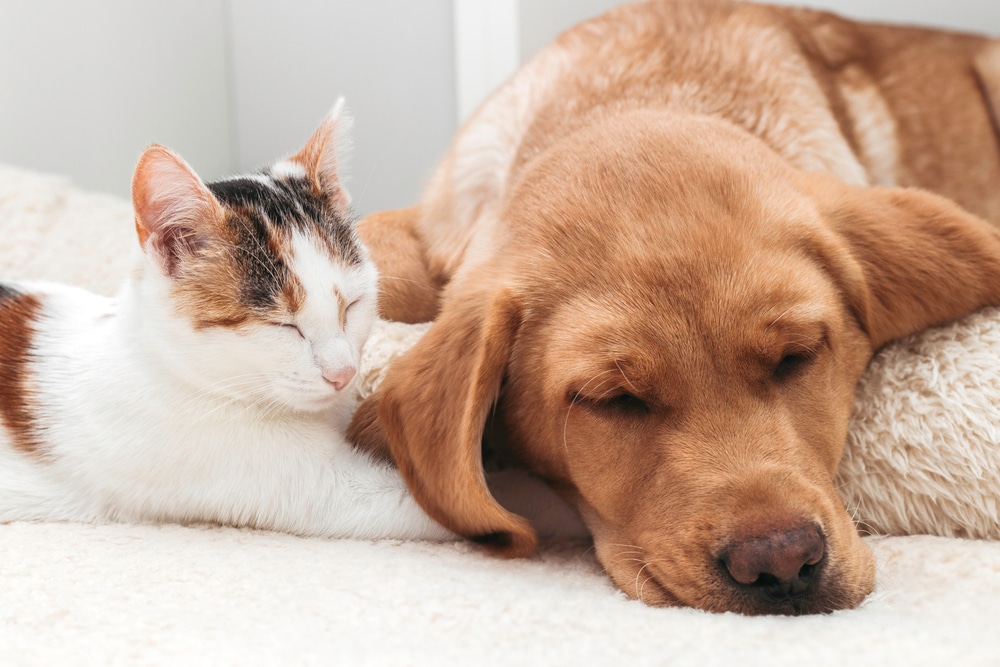
Friends and family may not understand the depth of the grief you feel over the loss of a beloved pet. Here are some ways to cope. Continue reading…
A County Jail Near a Colorado Resort Town Uses Suicide Smocks and ‘WRAPs’ to Restrain Agitated Prisoners

Restraints are often used by law enforcement on people in a mental health crisis, but advocates say there are better approaches. Continue reading…
Over 3 Years, 43 People Died in Riverside County Jail. Christopher Zumwalt, Violently Pulled from a Cell While Having a Psychotic Crisis, Was One

Correctional officers used pepper spray, stun shields, multiple Taser shocks and a Stinger 15 grenade to remove a single, naked man from his cell in Riverside County’s jail. Ten minutes later he stopped breathing. Continue reading…
If you’re not subscribed to MindSite News Daily, click here to sign up.
Support our mission to report on the workings and failings of the
mental health system in America and create a sense of national urgency to transform it.
For more frequent updates, follow us on Facebook, Twitter and Instagram:

The name “MindSite News” is used with the express permission of Mindsight Institute, an educational organization offering online learning and in-person workshops in the field of mental health and wellbeing. MindSite News and Mindsight Institute are separate, unaffiliated entities that are aligned in making science accessible and promoting mental health globally.
Copyright © 2021 MindSite News, All rights reserved.
You are receiving this email because you signed up at our website. Thank you for reading MindSite News.
mindsitenews.org

The name “MindSite News” is used with the express permission of Mindsight Institute, an educational organization offering online learning and in-person workshops in the field of mental health and wellbeing. MindSite News and Mindsight Institute are separate, unaffiliated entities that are aligned in making science accessible and promoting mental health globally.


Author

Related Articles

Trump’s Student Loan Changes Cause Anxiety and Panic
Borrowers face rising payments under the Trump administration’s student loan changes. Plus: teaching emotional literacy to teen girls, and why the new CDC youth mental health report is facing criticism.

Rumors of Kids Quitting College En Masse Are Exaggerated
This week: what the data says about Gen Z students quitting college, and why postpartum mental illness is more than depression.

Why Is Georgia Blocking Recovery Homes for Substance Abuse?
Georgia towns are using zoning loopholes to shut recovery homes down, even as addiction and mental illness surge statewide.