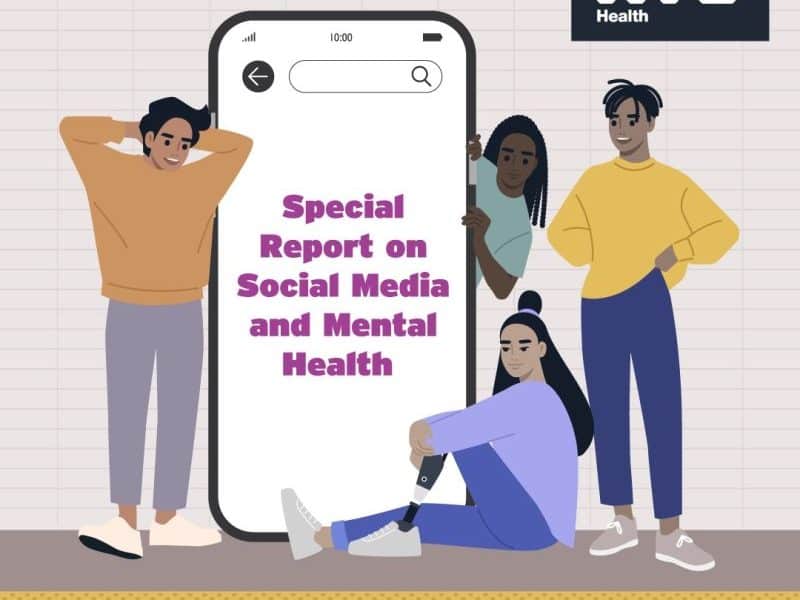
NYC Parents Say Social Media Is Harming Their Teens
Surveys of parents and teens in New York City provide support for the surgeon general’s call to place warning labels on social media platforms. One NYC answer: online therapy.

Monday, June 23, 2024
By Don Sapatkin

Good Monday morning! The FDA ruled that guns are not medical devices, rejecting a Florida law professor’s bid for the agency to “take aim at the firearms industry,” as a form of gun control, Politico Pulse newsletter reports. Nice try.
In today’s Daily: Surveys of parents and teens in New York City provide support for the surgeon general’s call to place warning labels on social media platforms. Illinois’s Cook County awarded tens of millions in grants to strengthen mental health infrastructure. Arizona’s governor, concerned about psilocybin hype, vetoed a legalization bid. Plus the CDC urged clinicians to prescribe an overdose reversal drug to ADHD patients who are turning to black-market Adderall – often laced with fentanyl – because of a worsening shortage. And more.
Protecting teens from social media’s mental health harms

Three days after Surgeon General Vivek Murthy called on Congress to place warning labels on social media platforms, New York City provided some ammunition, at least based on survey responses from parents and caregivers. Nearly four-fifths of parents surveyed said they believe the government should restrict teen access to social media.
“It is time to require a surgeon general’s warning label on social media platforms, stating that social media is associated with significant mental health harms for adolescents,” Murthy wrote in a New York Times op-ed. Such warning labels require congressional action, which is probably out of reach. Lawmakers are focused on passing a version of the Kids Online Safety Act, which has bipartisan support and recent momentum but must still overcome major hurdles. Parents who say a lack of social media guardrails contributed to their children’s deaths have been swarming congressional offices to support the bill. It would require social media networks, game sites and messaging apps to take “reasonable measures” to prevent online bullying, harassment, sexual exploitation, anorexia, self-harm, predatory marketing and other harms to minors.
The New York City report was based on two surveys conducted last year – one of 22,484 parents or caregivers of kids from 5 to 17, and the other involving 2,557 children ages 13 to 17. Parents of teens who use social media are more likely to say their child has anxiety (27%) or depression (14%) than of those who don’t. Frequency of mental health problems increase with rates of use: Among teens who use social media daily, 56% report at least some depressive symptoms. (Social media-consuming parents are also more likely to have indicators of depression or anxiety, compared with those who don’t, the report says.)
The surveys also found that teens in high poverty neighborhoods use social media more than those in wealthier neighborhoods, and the same for kids who attend public or charter schools compared to private schools. The city also released a guide for parents and caregivers that includes specific questions to ask teens about their social media use and offers practical steps to reduce exposure to harmful content. For example: “Have the whole family take time to customize the settings on social media apps in ways that support the mental health of each family member,” such as how the feed is set up, including how it uses data and what topics it prioritizes.
One of the city’s other responses will necessitate kids using their phones, but in a different way: Last November, the city rolled out “TeenSpace” — a free tele-mental health service available to all teenagers ages 13 to 17 years. In its first six months, the service — created in partnership with online therapy platform Talkspace — connected more than 6,800 New York teens to licensed therapists.
Cook County, Illinois commits $44 million to mental health treatment efforts
Cook County, Illinois is awarding more than $44 million to 53 local organizations to support area mental health, Crain’s Chicago Business reports. The Stronger Together initiative, as it’s called, is funded by the American Rescue Plan. Grants up to $1 million were given to health care and behavioral health organizations that prioritize service to underserved communities. The county hopes to make early intervention and prevention, treatment and recovery programs for people with depression, anxiety, behavioral and substance abuse disorders more accessible.
“We know that people in organizations in the communities have the best insight into what is needed in their communities, and how to go about making a difference,” said Tony Preckwinkle, Cook County president, at a recent press conference. “Providing financial support to these organizations helps us increase our touch points throughout the county, particularly areas with high rates on the social vulnerability index.”
It’s a different approach than being taken by Chicago’s Mayor Brandon Johnson, who is presently working to reopen a shuttered mental health clinic once operated by the city in the Roseland neighborhood, using city funds grants rather than grants.
−Courtney Wise
CDC warns desperate ADHD patients to stay away from black market Adderall
The recent arrests of the founder/CEO and another executive at the telehealth company Done on federal charges in a $100 million Adderall distribution fraud scheme may cause problems for tens of thousands of people with ADHD who rely on the stimulant medication that already was in short supply.
The disruptions could be so serious that the CDC issued a health advisory on its Health Alert Network, urging patients to stay away from medication “obtained from anyone other than a licensed clinician and licensed pharmacy.” The reason: the counterfeit pills may contain fentanyl.
The advisory recommends that providers, as a safety precaution against overdose, “prescribe naloxone and overdose prevention education to any patient who has difficulty accessing their stimulant medication or tell patients where they, their caregivers, or families, can access naloxone.”
In other news…

“Is that drink worth it to you?” That’s the question posed by longtime health-care journalist Susan Dominus in a first-person, how-in-the-world-do-I-sort-through-this? piece in the New York Times.
It is meticulously researched, which doesn’t actually help all that much. Not long ago, researchers considered moderate consumption of alcohol to be fine, perhaps even good if it was red wine. Now it’s become clear that no amount is safe. But how risky is it, really? To you – and to other people? And how do you weigh the fun of it?
Arizona Gov. Katie Hobbs vetoed a bill that would have created a state-regulated psilocybin services program, The Microdose newsletter reported. Senate Bill 1570 had passed the state House 42-16 just four days earlier. “We do not yet have the evidence needed to support widespread clinical expansion,” Hobbs, a Democrat, wrote in her veto memo, which also noted that the $400,000 a year needed to run the program was not accounted for in the state’s 2025 budget. “Arizonans with depression and PTSD deserve access to treatments that may be seen as outside the mainstream, but they should not be the subject of experiments for unproven therapies with a lack of appropriate guardrails.”
Why do people with major psychiatric disorders tend to die younger than others? Researchers looking for genetic culprits discovered just one: smoking. After accounting for substance use, which is common among people with mental illness, their large study of people with European ancestry found no associations between longevity and genes that have been linked to major psychiatric disorders. There were, however, associations between longevity and genes known to be related to smoking. “The findings suggest that the genetic liability of smoking, but not of psychiatric disorders, is associated with longevity,” the authors concluded in JAMA Psychiatry.
If you or someone you know is in crisis or experiencing suicidal thoughts, call or text 988 to reach the 988 Suicide & Crisis Lifeline and connect in English or Spanish. If you’re a veteran press 1. If you’re deaf or hard of hearing dial 711, then 988. Services are free and available 24/7.
Recent MindSite News Stories
When a Pet Dies

Friends and family may not understand the depth of the grief you feel over the loss of a beloved pet. Here are some ways to cope.
A County Jail Near a Colorado Resort Town Uses Suicide Smocks and ‘WRAPs’ to Restrain Agitated Prisoners

Restraints are often used by law enforcement on people in a mental health crisis, but advocates say there are better approaches.
Over 3 Years, 43 People Died in Riverside County Jail. Christopher Zumwalt, Violently Pulled from a Cell While Having a Psychotic Crisis, Was One

Correctional officers used pepper spray, stun shields, multiple Taser shocks and a Stinger 15 grenade to remove a single, naked man from his cell in Riverside County’s jail. Ten minutes later he stopped breathing.
If you’re not subscribed to MindSite News Daily, click here to sign up.
Support our mission to report on the workings and failings of the
mental health system in America and create a sense of national urgency to transform it.
For more frequent updates, follow us on Facebook, Twitter and Instagram:

The name “MindSite News” is used with the express permission of Mindsight Institute, an educational organization offering online learning and in-person workshops in the field of mental health and wellbeing. MindSite News and Mindsight Institute are separate, unaffiliated entities that are aligned in making science accessible and promoting mental health globally.
Copyright © 2021 MindSite News, All rights reserved.
You are receiving this email because you signed up at our website. Thank you for reading MindSite News.
mindsitenews.org

The name “MindSite News” is used with the express permission of Mindsight Institute, an educational organization offering online learning and in-person workshops in the field of mental health and wellbeing. MindSite News and Mindsight Institute are separate, unaffiliated entities that are aligned in making science accessible and promoting mental health globally.


Author

Related Articles
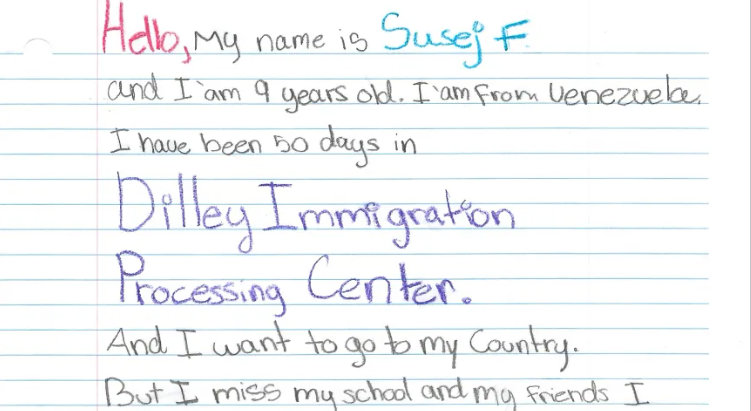
Health Organizations Condemn Traumatic ICE Raids, Family Separation
According to letters from children living in an ICE detention facility, living conditions are inhumane and their mental health is suffering.

In Teens, Social Anxiety Often Looks Like Anger
A study finds that some teens’ aggressive behavior may be due to social anxiety, not straightforward reactivity.
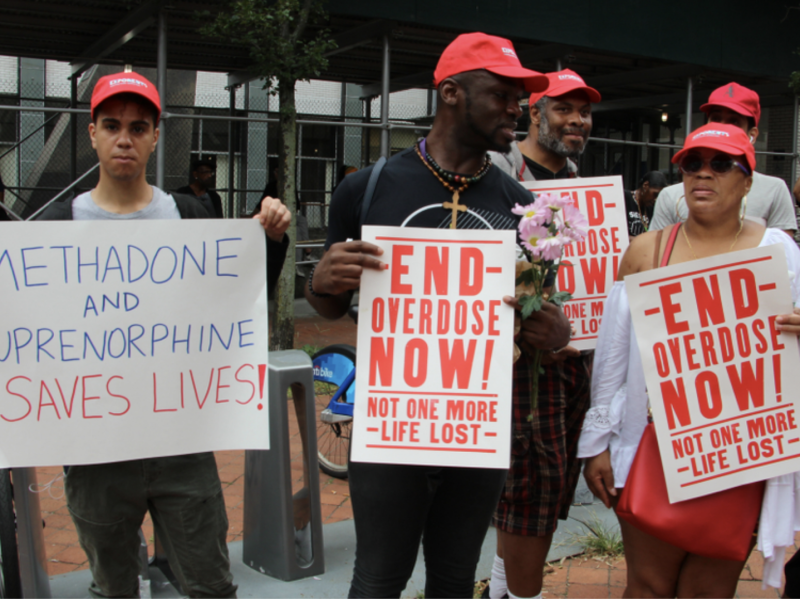
Expert Calls for Harm Reduction, Not Punishment, to Resolve Our Overdose Crisis
As the Trump administration pulls funding from harm reduction, an expert on the overdose crisis says it’s the best way to save lives.
