
Funds for Caregiving Are a Top Priority for Voters, Survey Finds
A bipartisan survey has found that Americans urgently need financial support for child care and family members who are ailing. An Rx for housing. And more.


June 26, 2024
By Courtney Wise

Greetings MindSite News Readers. In today’s Daily, voters make it clear that they want policymakers who will invest in caregiving. We learn the depth of the mental health crisis in the Army through the eyes of one soldier’s devastated family. And health equity advocate Dalma Diaz argues the merits of “prescribing” housing to treat homelessness by looking at the model in practice by Medi-Cal.
Voters want lawmakers who will invest in caregiving, new bipartisan survey from Pivotal Ventures finds

“Care is the work that makes all other work possible,” declares Ai-jen Poo, labor and care activist and president of the National Domestic Workers Alliance. Americans overwhelmingly agree, regardless of their political identities, according to new research conducted by Morning Consult and backed by Pivotal Ventures and Bipartisan Policy Center Action. Eighty-two percent of US voters believe lawmakers and political candidates should support policies that make it easier for them to care for their loved ones, the survey finds. Accounting for political affiliation, results found the sentiment is shared by 89% of those who identify as Democrat, 80% of those who identify as Republican, and 77% of those who identify as Independent.
The lack of care support contributes to the mental, financial and physical distress of caregivers over time. Overlooked in policy for years as a gender issue, research is showing that inadequate caregiving support is a healthcare issue, too. Ever-increasing care costs, combined with the lack of employer support or social infrastructure for family caregivers, contribute to the high stress that caregivers face. Long linked to increased risk for heart disease, diabetes, and certain immune disorders, chronic stress is also associated with the development of serious mental illnesses.
Moreover, the care crisis is straining our economy, with more than 80% of men and women with children under age 5 citing child care benefits as a deciding factor in their decision about whether to stay in a job. Other research confirms that a significant number of people leave work due to caregiving responsibilities, while a different Pivotal Ventures survey found that 65% of voters say that caregiving benefits would be very or somewhat important to their decision to accept a job offered today.
The good news is, research shows that companies and employees both gain when employees are provided with caregiver benefits. A March 2024 report from Moms First examined five companies offering child care benefits and found a positive return on investment for all of them, up to 425% for one.
A soldier’s death highlights the Army’s suicide crisis
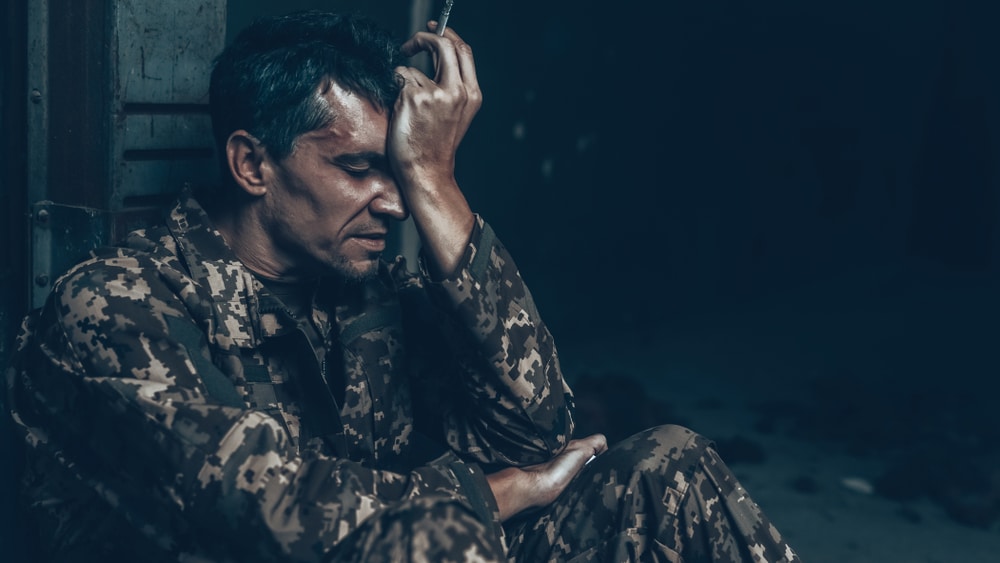
Austin Valley was so enamored with the idea of being a soldier in the US Army that he gifted himself enlistment for his 18th birthday. Three years later, he would be dead by suicide, a victim of a military-induced mental health crisis, said a senior officer in Valley’s brigade.
“Every generation of soldiers is defined by the conflicts that killed them,” the officer told the New York Times on condition of anonymity. “For the greatest generation, it was World War II; for baby boomers it was Vietnam; for Gen X it was Iraq and Afghanistan. This new generation, what’s killing them is suicide.”
Soaking in the Army’s principles of brotherhood and teamwork, Austin Valley idealized military life growing up, said his mother, Diane. He became an infantryman just like his father, Erik. He commanded a Bradley Fighting Vehicle, just like his dad too. But from the onset, he was placed in circumstances that put his mental health at risk. His heavily-armored unit made Valley and his peers eligible for more frequent deployments, without adequate periods of rest and reset in between.
This was not an isolated case: Severe understaffing and pressure to meet troop quotas for deployment have contributed to a rise in soldier suicide, described by one officer as “the Army’s new war.” Being tasked with seemingly futile, purposeless work contributed to the demise of Valley and his unit’s morale. “Officially,” one soldier said, “we’re ‘giving Russia the middle finger’ by ‘showing them we can deploy anywhere by any means with all our gear. [Unofficially], I have no idea what we’re doing here.” The sense of hollowness hacked at their mental fortitude. “Sometimes we sat around and joked all day about killing ourselves,” said another former member of Valley’s platoon. “I mean, we were all depressed. Everyone in the Army is depressed.”
Recognizing the decline in his mental wellness after a visit home, Valley’s mother insisted he seek help and he obliged, making an appointment with the Army’s Behavioral Health department, or BH, when he returned to base. Admitting his suicidal ideation on the intake form, Valley was prescribed an antidepressant called mirtazapine at the end of his first 60-minute session. Subsequent visits were conducted in the severely understaffed behavioral health unit, pinging him from counselor to counselor without coordinated care or communication.
And despite clear evidence that Valley’s mental health was too poor for deployment, his superiors submitted to pressure to fill troop quotas for a mission to Poland, asking him to request a BH waiver to make him eligible. His friends weren’t in support, said Adrian Sly, a friend of Valley’s who left the Army last year and believes the military should be held accountable for his death. “Those of us who worked with him every day knew he was struggling,” Sly said. “But the leaders guilted him into it, and being Valley, he didn’t want to let them down.”
Chippewa Tribe in Michigan’s Upper Peninsula opens its own addiction clinic
Research shows that drugs like methadone and buprenorphine are highly effective at preventing overdose deaths, and Austin Lowes, chairperson of the Sault Ste. Marie Tribe of Chippewa Indians, is ensuring community access for his tribe: He’s leading the opening of the tribe’s own medically-assisted addiction clinic. Even before it launched earlier this week, 225 people had already signed up for appointments, Bridge Michigan reports.
“Addiction is a horrible disease that can trap anyone, regardless of their social status,” Lowes said. “It’s something that has been especially damaging to Native American communities both here [and] across the country, so the Sault Tribe is very proud to be able to offer a safe and effective place for those seeking help.” The CDC’s most recent data shows that non-Hispanic Native Americans and Alaskan Natives die of overdose at higher rates than any other racial or ethnic group. The clinic, however, will serve both tribal and non-tribal members.
In other news…
Homelessness is a life-threatening condition that can be treated by prescribing housing, declares Dalma Diaz, a health equity fellow at the California Health Care Foundation. In a guest column published by CalMatters, Diaz says that Medi-Cal’s resources can and should be used to tackle homelessness, thus removing a major barrier to the many other social supports unhoused people need, including nutritious food, job opportunities, health coverage, social benefits, shower access, and a place to receive critically-important mail. In fact, in Oakland, California, two nurse practitioners tapped CalAIM funds to turn a motel into a care home for medically frail Oakland residents who were unhoused. As one said, “This place saved my life.”
ICYMI, NPR’s Lost Patients podcast explores the challenges of treating mental illness in Seattle, Washington. Across six episodes, you’ll meet real patients, their families and professionals all working toward solutions to connect those stuck in a maze of mental health care to resources that can make a difference.
Residents of Juneau, Alaska celebrate the unveiling of the very first crisis stabilization center for teens and adults in Southeast Alaska. Housed at Barlett Regional Hospital, the Aurora Behavioral Health Center will open to patients this fall, providing 23-hour access to mental health and substance use care services. It’s expected that most patients will stay for 18 hours, but space also exists for those who need short-term stays of up to one week, reports the Juneau Empire. The center was christened “Aurora” by hospital employees. According to hospital Board President Kenny Solomon-Gross, “Two different staff submissions referred to Aurora as a light that can be seen during the darkest times — which is what we hope these new service lines will offer to people in crisis.”
If you or someone you know is in crisis or experiencing suicidal thoughts, call or text 988 to reach the 988 Suicide & Crisis Lifeline and connect in English or Spanish. If you’re a veteran press 1. If you’re deaf or hard of hearing dial 711, then 988. Services are free and available 24/7.
Recent MindSite News Stories
When a Pet Dies

Friends and family may not understand the depth of the grief you feel over the loss of a beloved pet. Here are some ways to cope. Continue reading…
A County Jail Near a Colorado Resort Town Uses Suicide Smocks and ‘WRAPs’ to Restrain Agitated Prisoners

Restraints are often used by law enforcement on people in a mental health crisis, but advocates say there are better approaches. Continue reading…
Over 3 Years, 43 People Died in Riverside County Jail. Christopher Zumwalt, Violently Pulled from a Cell While Having a Psychotic Crisis, Was One

Correctional officers used pepper spray, stun shields, multiple Taser shocks and a Stinger 15 grenade to remove a single, naked man in crisis from his cell in Riverside County’s jail. Ten minutes later he stopped breathing. Continue reading…
If you’re not subscribed to MindSite News Daily, click here to sign up.
Support our mission to report on the workings and failings of the
mental health system in America and create a sense of national urgency to transform it.
For more frequent updates, follow us on Facebook, Twitter and Instagram:

The name “MindSite News” is used with the express permission of Mindsight Institute, an educational organization offering online learning and in-person workshops in the field of mental health and wellbeing. MindSite News and Mindsight Institute are separate, unaffiliated entities that are aligned in making science accessible and promoting mental health globally.
Copyright © 2021 MindSite News, All rights reserved.
You are receiving this email because you signed up at our website. Thank you for reading MindSite News.
mindsitenews.org

The name “MindSite News” is used with the express permission of Mindsight Institute, an educational organization offering online learning and in-person workshops in the field of mental health and wellbeing. MindSite News and Mindsight Institute are separate, unaffiliated entities that are aligned in making science accessible and promoting mental health globally.


Author

Related Articles

The Lindsey Clancy Murder Trial
Women nationwide watch the Lindsay Clancy trial and see themselves in her story, plus an investigation into hospitals that fail patients with addiction.
Grief and Rehabilitation in a California Prison
This month: a DUI offender’s path to rehabilitation, Lindsay Clancy revisited, Illinois prison protests, a fatal cell fire, and Missouri’s competency crisis.

Meta Pays $17 Billion Settlement for Lawsuit Over Child Harm
Meta will pay up to $17.1 billion and reshape how its platforms operate after 47 states argued that they are harmful and also addictive to children by design.