
Watching Too Much True Crime TV Can Be Bad for Your Mental Health, Experts Say
Some women who consume hours of true crime shows and podcasts have reported suffering from hypervigilance or a reluctance to leave the house.

When watching true crime on television, how much is too much?
That depends on the individual, according to Chivonna Childs, a psychologist at the Cleveland Clinic. For some people, she says, watching too much can undermine their mental health.

Childs is talking about true crime shows such as “Snapped” and “Forensic Files,” as well as fictional crime dramas that are often based on real-life cases, such as “Law & Order” and “Criminal Minds.” “You become very anxious, or you become depressed because of this true crime you’re watching,” Childs says. “That’s when it is detrimental to our mental health.”
In some cases, she says, people who watch too much of these shows can suffer from hypervigilance, in which they see danger lurking around every corner, or fear of socializing, in which they don’t want to leave the house.
Rachel Monroe often writes about true crime for The New Yorker magazine. She says it is important to remember that serial killers are far from common.
“If you’re just constantly reading about terrible things that happen to other people, it starts to feel like that’s everywhere, you know, even when it’s actually quite rare,” she says. “Stories about serial killers are so popular, but in terms of actual crime statistics, people are much more likely to be harmed by somebody they know – somebody in their own family, somebody close to them – than a random stranger. The crimes that get focused on can lead to a distorted perception of what danger really looks like.”
Often, people don’t realize when they’re overconsuming true crime because the behavioral effects can be good at first.
“The positive effect of true crime is that it teaches us to be aware of our surroundings,” Childs says. But some people take such vigilance too far and begin to be frightened by normal, everyday occurrences.
“Hypervigilance is when you’re extra jumpy, everything scares you,” she says. “You think there’s a killer around every corner. You think every white van has a killer in it.”
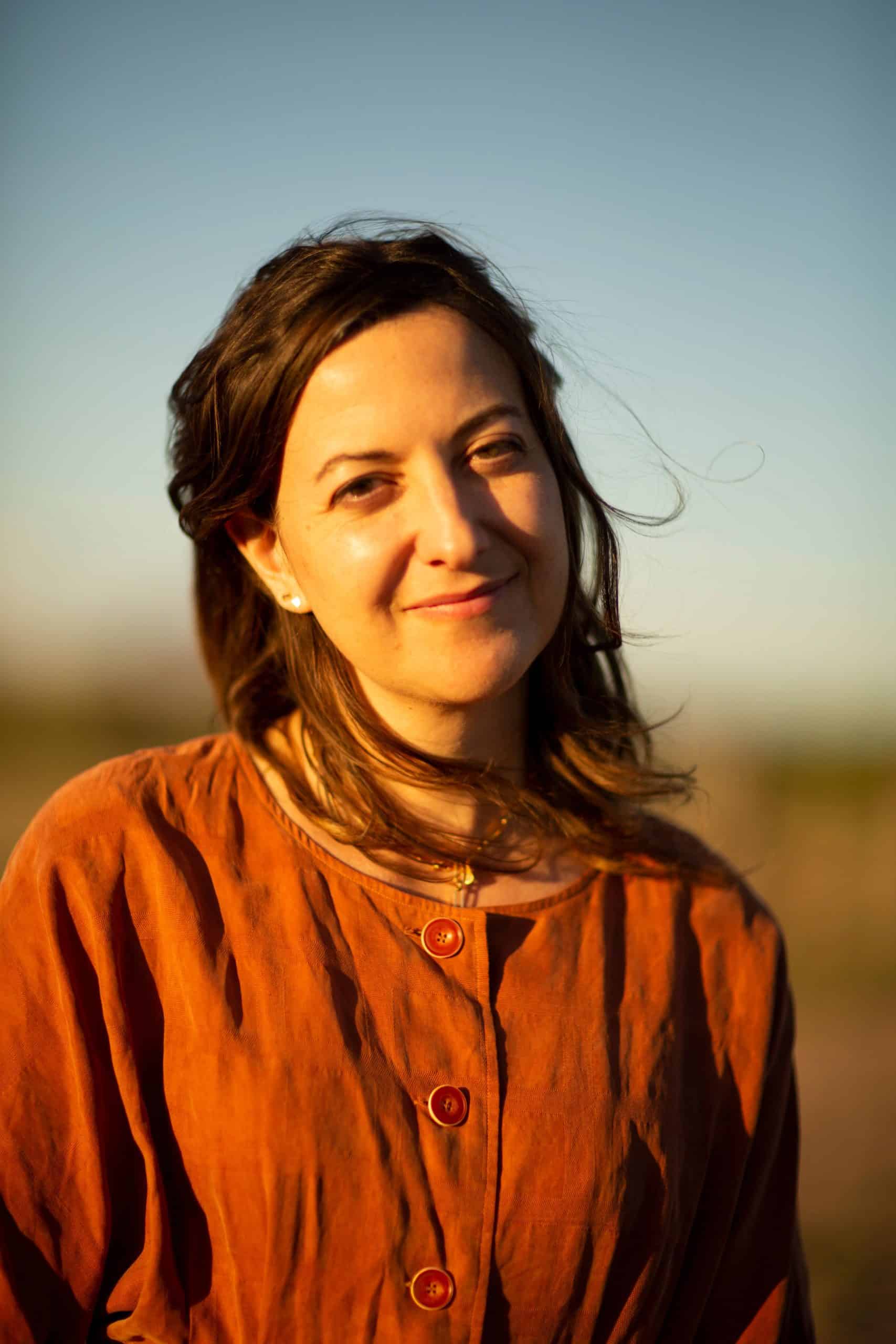
Monroe is the author of the 2019 book “Savage Appetites: Four True Stories of Women, Crime, and Obsession.” The story links four archetypes of the genre – detective, victim, defender, killer – to observe the cultural fascination with crime, especially by women.
“There were true-crime magazines in the 1940s and 1950s that catered to men” with gangster stories, she says. Today’s true crime is more often about “the murderer next door. So, I think the domestic context is kind of aimed at a female audience and so that’s who consumes it.”
Monroe worries that “as a society, we glamorize murderers even as we condemn them. And so I think that certainly women who consume that culture are just as susceptible as the rest of us to kind of finding that fascination.”
On the other hand, part of women’s fascination in true crime videos and podcasts may be a drive to figure out how to protect themselves, according to recent research.
In “True Crime Consumption as a Defensive Mechanism, published in the July 2021 issue of the Archives of Sexual Behavior, the authors noted that younger women, those who lived in neighborhoods seen as dangerous, and those who have previously been assaulted, among other factors, were more likely to worry about being attacked. The journal reported that “women who were more fearful of rape reported consuming true crime media with greater frequency and indicated that this consumption was specifically motivated by the desire to learn strategies to prevent or escape an attack.”
Another article, published in the journal Violence Against Women, noted that true crime podcasts on interpersonal violence (IPV) indeed had some educational value, especially since they commonly depicted “controlling behaviors, emotional abuse, and coercive control.” Although the podcasts did not explain the conditions in society that permit abuse, the journal said, it added that “the podcasts provided a much more realistic portrayal of IPV than traditional news sources.”
Childs points out, however, that overconsumption of anything can be bad for our mental or physical health. “If you have too much water, too much food, it can be a bad thing,” she says, “so it’s important to exercise moderation in everything.”
Fear of socialization is an extreme side effect of hypervigilance. This goes back to being suspicious of everybody, even your own friends and colleagues. In true-crime television, there is a lot of backstabbing and betrayal. Spouses murder spouses. Friends kill friends. While it is true that real-life murders are often committed by people the victim knew, this fact may make it difficult for those who overconsume crime shows to trust some of the people they know and love. And in extreme cases, that can lead them to shut themselves off from the world.

Of course, there is a difference between choosing not to associate with friends because they are engaging in potentially dangerous behavior, and choosing not to associate with them because they suddenly seem “suspicious.” Childs says the latter can cause us to misjudge others. “We might start to treat people differently, even people who did nothing wrong other than they look like somebody we saw on this true crime show.”
Such behavior can cause rifts in our relationships with those who are close to us or even extend to strangers on the street.
“That’s where we go into isolation and not wanting to be around other people, keeping to ourselves or not speaking to other people,” Childs says. “We might not want to cross the street when we see someone who looks ‘suspicious.'”
When you binge-watch true crime shows, you see hour after hour of people being murdered by criminals who may not feel remorse. The grisly scenes can lead to a fear of it happening to you.
“Oftentimes, we can think, ‘What if that happened to me?’ “Childs says. “Or ‘What would I do?’ It can trigger us if we know someone who’s been in that position or if we’ve been in that situation.”
All of which is why it is important to know your limits when it comes to watching any kind of television. Know what scares you and what doesn’t, and when to turn the TV off.
Childs says networks are obligated to include disclaimers when shows contain on-screen violence and the like, but she says it is up to the viewer what to watch.
“We do have free will to determine whether we’re not going to watch something or if we will,” Childs says. “We must be diligent with what we put into our brains.”
You get sucked in [to a true crime show], and then the next thing you know, you’re like, ‘Wow, did I just watch like six episodes of that?'”
RAchel Monroe, New Yorker Crime Writer
Childs suggests setting up a schedule of what you plan to watch on a given day.
“If you find you’re losing sleep, or having nightmares, or you’re losing appetite, or you’re more depressed, or not wanting to spend time with friends or family, these are all signs of anxiety and depression,” she says. “I tell people to watch cartoons, listen to good music or watch TV that makes you feel good. … Make sure you have a good mix of everything, and you’re not overconsumed with anything.”
Monroe says it is easy to overconsume true crime: “Particularly the shows on cable TV, they want to almost hypnotize you. I don’t know if you’ve ever had this experience: You get sucked in, and then the next thing you know, you’re like, ‘Wow, did I just watch like six episodes of that?’ “
Monroe figures it is a matter of watching with a critical eye.
“People should consume whatever media is compelling to them, but just make sure to keep your mind open and think about what are the underlying messages that it’s telling me,” she says. “Are those messages true? Is there a part of the story that I’m not getting? Are there things that they’re over-emphasizing? Are there things they’re leaving out?
“I really think that anything that you watch with that kind of active, curious, critical mindset, you’re going to be fine.”
Courtney Dickerson is a rising sophomore at Annandale High School in Virginia. She worked on this article with Youthcast Media Group, which has a partnership with Annandale’s journalism class. Erik Brady is a YMG Mentor-Editor and former USA Today sports reporter.
The name “MindSite News” is used with the express permission of Mindsight Institute, an educational organization offering online learning and in-person workshops in the field of mental health and wellbeing. MindSite News and Mindsight Institute are separate, unaffiliated entities that are aligned in making science accessible and promoting mental health globally.


Authors


Related Articles

Ahead of album release, Ye apologizes for hate speech, blames bipolar 1
Ye (Kanye West) issues a formal apology for 2025’s extremist actions, citing a 2002 brain injury and bipolar mania. Some experts and fans remain skeptical.
From “Girl, Interrupted” to “Girl in Pieces”: What I learned from reading three books about teen mental illness
How books on teens with mental illness help destigmatize and educate us.
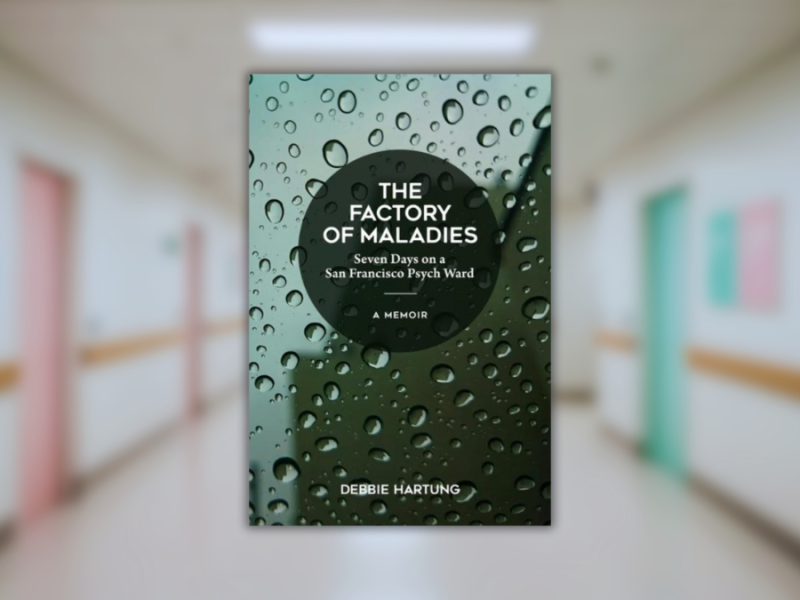
‘The Factory of Maladies’: A Chilling First-Hand Account of Life in a Psych Ward
“The Factory of Maladies,” a memoir by Deborah Hartung, is a gripping account of being locked up in a San Francisco psychiatric ward.
