
Homeless Children Are Likely to Suffer Poor Health as Teens
The stress of housing insecurity has long-term consequences for kids’ mental and physical health. Readers react to MindSite story on pet loss. And more.
Friday, July 5, 2024
By Courtney Wise

Greetings, MindSite News Readers. I hope you had a great time yesterday, reflecting upon our nation’s independence and yours. May we be moved in the days to come to ensure that our citizenry remain more than ostensibly free.
In today’s Daily, a study confirms what our souls knew – kids need stable housing for long-term mental wellness.
Also in this issue: Making stuff with your hands can give your brain a boost and reduce your stress. An excerpt from Rachel Zimmerman’s memoir on how she and her girls managed to live after her husband’s suicide. Readers respond to MindSite News’ story on pet loss and mental health. And more.
Housing insecurity threatens youth mental health
Children who experience homelessness experience a level of stress that can affect them later in life, according to a new study, reports NPR.
That stress may also increase dramatically in upcoming months as a result of the Supreme Court’s recent decision to approve homeless sweeps, arrests and fines by police, which essentially criminalizes homelessness, according to a blog by the California Health Care Foundation.
“It’s hard to imagine the chaos that is going to ensue,” said Ed Johnson, director of litigation at the Oregon Law Center and lead attorney representing homeless defendants in the case, noting that the ruling means the police can seize blankets, sleeping bags and tents, among other possessions. “If people aren’t allowed to engage in survival while living outside… they can die.”
Even without homeless sweeps, housing insecurity is dangerous to children’s present and future mental health. Researchers from the NYU Grossman School of Medicine analyzed data from the Future of Families and Child Well-Being study, which has tracked children from birth for more than 20 years. Their findings, published recently in the journal Pediatrics, suggest that youth who experience housing insecurity suffer worse health in their teen years, including increased levels of depression and anxiety.
The study grouped youth according to their housing stability – 47% stable, 46% moderately insecure, and 6% highly insecure – and confirmed that the more uncertain their housing, the worse the physical and mental health youth self-reported by age 15. The findings highlight how critical stable housing is to the long-term health and wellbeing of children, said Hemen Muleta, a pediatrician at The Children’s Hospital at Montefiore. Its focus on youth, rather than adults, is also important.
“Everything we know about [early] childhood is that it’s the most critically important time to get your foundation right,” said Rahil Briggs, national director of Healthy Steps, an organization that supports low-income families with children from infancy to preschool. She added that pediatricians are invaluable resources when it comes to learning which young patients are in need of housing support — but it’s tough to resolve the issue once it’s identified.
“Ninety percent of young children regularly attend well-child visits. It is the single and only setting that we have in this country to regularly reach young children in their families. Furthermore, families trust pediatricians,” Briggs said. Doctors do what they can to connect families to social workers and other community health workers, but to truly fix the problem, there needs to be more affordable housing. A government decision that housing is a human right would be a step in that direction.
Reader response to MindSite News story on pet loss
We recently invited readers to share their stories about pets and grief after an editor’s recent reflections on the devastating loss of her family’s poddle-terrier. On social media, many sent their sympathy and talked about how painful it is to lose our cherished dogs, cats and other pets. A dear friend also sent a link to a TED talk she found helpful — Pet loss grief: The pain explained — while grieving the loss of her remarkable dog, who died early and unexpectedly.
And Elliot Jurist, a professor of psychology and philosophy at the City College of New York, cited our story in his Substack column Mental (izing) Health and said it inspired him to write about the loss of his beloved dog. We include an excerpt below (the full account can be found on Substack).

From Elliot Jurist:
“Our family dog, Pretzel, died in early April this year. Pretzel was a long-haired, orange-brown dachshund with distinguished graying around his muzzle; he died after a slow decline from kidney failure, at 15 years old. He had a great spirit, was extraordinarily loving, and could even smile, along with possessing a few less than praiseworthy traits, like not always coming when called…
“During the months when Pretzel was going downhill, my son would sing to him every night before going to bed — pop songs about love and surprising us with lovely Hebrew melodies that Pretzel seemed to relish.
“It has been interesting to observe our divergent mourning processes in the family. Both my wife and son have been emotional and expressive about the loss, crying easily and intensely…. I have been slower to feel the loss, although I find myself privately looking over at his empty bed, half-expecting to see him raise his head and greet me in the morning with hopeful and excited tail-wagging.
“A week ago, we finally held a ceremony in Pretzel’s honor that we had been planning for some time: we painted rocks with individual messages, went down to Riverside Park, which he loved, read a few of Mary Oliver’s simple, joyous poems about dogs, and placed the rocks in the cracks of the stone wall. Somehow that has helped to unlock emotion within me, and I have been thinking about Pretzel more frequently and tearfully. My plan to write this month’s newsletter on another topic can wait.”
Create something with your hands – your brain will thank you
Help your children make something with their hands, just for the fun of it. Even if what they create is only beautiful to them (and you), the act of making it contributes to mental wellbeing, increased happiness and self-confidence, and reduced stress, researchers say. Our creations provide “a sense of mastery that is really hard to get sometimes in other places,” said Michael Norton, a Harvard business professor and author of The Ritual Effect. Experts told the New York Times that making things with your hands is also good for your brain.
“When you look at the brain’s real estate — how it’s divided up, and where its resources are invested — a huge portion of it is devoted to movement, and especially to voluntary movement of the hands,” behavioral neuroscientist Kelly Lambert told The Times in a previous interview. Reserving space in your home to create is a good way to remind yourself to give your brain time to vision and play.
Hinda Mandell, a professor of communication at Rochester Institute of Technology and the editor of Crafting Dissent, suggests keeping your art and craft materials nearby so that you can dive in whenever you’re ready to create. “When they’re right there, then you can begin fiddling and tinkering with them,” she said. “Because the goal is really not so much to make something. The goal is to play, even if you have a break for just a few minutes.” To guarantee a positive impact, heave the pressure of perfection — and of being any good at your craft — far away. Being open to the joy of creation is key. If you prefer a more structured environment, local libraries often offer craft workshops for free.
In other news…

If you or your teen’s favorite media is true crime, consider this MindSite News story from YouthCast Media Group: Too much Criminal Minds or Forensic Files can wreak havoc on your mental health. “If you’re just constantly reading about terrible things that happen to other people, it starts to feel like that’s everywhere, you know, even when it’s actually quite rare,” said Rachel Monroe, who writes about true crime for The New Yorker. “Stories about serial killers are so popular, but in terms of actual crime statistics, people are much more likely to be harmed by somebody they know – somebody in their own family, somebody close to them – than a random stranger. The crimes that get focused on can lead to a distorted perception of what danger really looks like.”
When the unthinkable happens: Ten years ago, when their daughters were 8 and 11 years old, Rachel Zimmerman lost her husband to suicide. Conceiving the words to tell the girls what happened was something she couldn’t do alone; figuring out how to actually move forward was another mountain altogether. But somehow, they did. Zimmerman shares their story in Us, After: A Memoir of Love and Suicide, which was published on June 30. Read an excerpt here, in the Washington Post.
Sesame Workshop is expanding its support of youth mental health with a focus on laughter. Their latest initiative, the Gift of Giggles, launched this summer in the US, before spreading to Germany and Latin America. The first video in a series of shorts was released Tuesday on YouTube, kidscreen reports. It features kids with their favorite Sesame Street Muppets working to make them laugh — and even Oscar the Grouch gets in on the fun.
ICYMI: MindSite News editors discuss mental health while evoking the ghosts of their World War II fathers to condemn the recent, disastrous Supreme Court decision to grant presidents immunity for crimes committed while in office.
If you or someone you know is in crisis or experiencing suicidal thoughts, call or text 988 to reach the 988 Suicide & Crisis Lifeline and connect in English or Spanish. If you’re a veteran press 1. If you’re deaf or hard of hearing dial 711, then 988. Services are free and available 24/7.
Recent MindSite News Stories
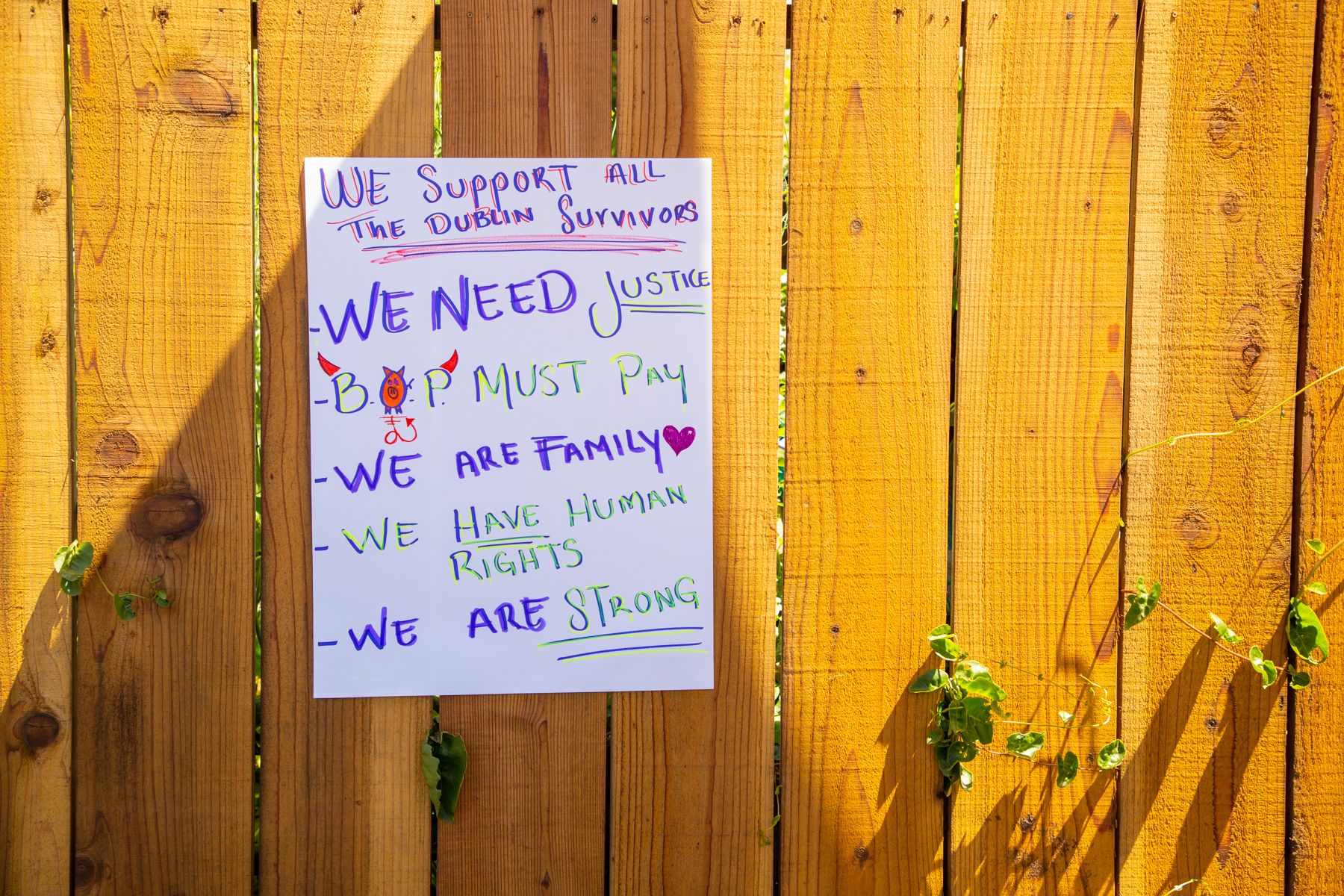
To Heal from Trauma, Women Sexually Abused by Prison Guards Are Seeking and Sometimes Winning Compassionate Release
Lawyers representing survivors of sexual abuse at an infamous federal prison in Dublin, California, are trying a novel strategy: compassionate release. Generally conceived of as a last-resort option for dying or medically incapacitated prisoners, it’s being considered for the first time for women who’ve been sexually abused while in federal custody. Continue reading…
Our World War II Dads, the Supreme Court and Our Collective Mental Health

Our World War II parents would be outraged and not rest till the courts’ presidential immunity decision was overturned, and so should we. Continue reading…
Watching Too Much True Crime TV Can Be Bad for Your Mental Health, Experts Say

Some women who consume hours of true crime shows and podcasts have reported suffering from hypervigilance or a reluctance to leave the house. Continue reading…
If you’re not subscribed to MindSite News Daily, click here to sign up.
Support our mission to report on the workings and failings of the
mental health system in America and create a sense of national urgency to transform it.
For more frequent updates, follow us on Facebook, Twitter and Instagram:

The name “MindSite News” is used with the express permission of Mindsight Institute, an educational organization offering online learning and in-person workshops in the field of mental health and wellbeing. MindSite News and Mindsight Institute are separate, unaffiliated entities that are aligned in making science accessible and promoting mental health globally.
Copyright © 2021 MindSite News, All rights reserved.
You are receiving this email because you signed up at our website. Thank you for reading MindSite News.
mindsitenews.org

The name “MindSite News” is used with the express permission of Mindsight Institute, an educational organization offering online learning and in-person workshops in the field of mental health and wellbeing. MindSite News and Mindsight Institute are separate, unaffiliated entities that are aligned in making science accessible and promoting mental health globally.


Author

Related Articles
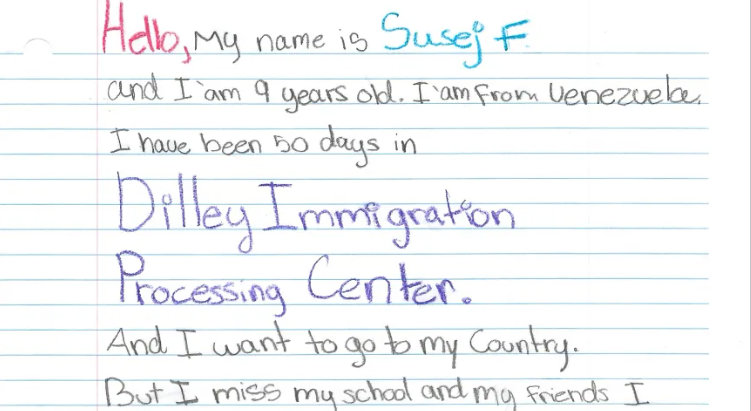
Health Organizations Condemn Traumatic ICE Raids, Family Separation
According to letters from children living in an ICE detention facility, living conditions are inhumane and their mental health is suffering.

In Teens, Social Anxiety Often Looks Like Anger
A study finds that some teens’ aggressive behavior may be due to social anxiety, not straightforward reactivity.
Expert Calls for Harm Reduction, Not Punishment, to Resolve Our Overdose Crisis
As the Trump administration pulls funding from harm reduction, an expert on the overdose crisis says it’s the best way to save lives.
