
Palestinian Youth Talk About War’s Toll on Their Mental Health
The devastating damage of the Gaza war on Palestinian children and teens. And more.

Greetings, MindSite News Readers.
In today’s Daily, middle school students in East LA launched a mental health gardening project that’s reached more than 1,000 people beyond their school community. Also in this edition, how ACEs affect healthcare usage and spending in adults, apps to help you limit and monitor your child’s screen time, and Dr. Barbara Greenberg on the warning signs of “gateway touching.”
Plus, a compelling 14-minute documentary from Undark, produced with support from the Pulitzer Center on Crisis Reporting, about young Palestinians and the toll that decades of trauma on their parents and grandparents, along with Israel’s current war in Gaza, is taking on their mental health.

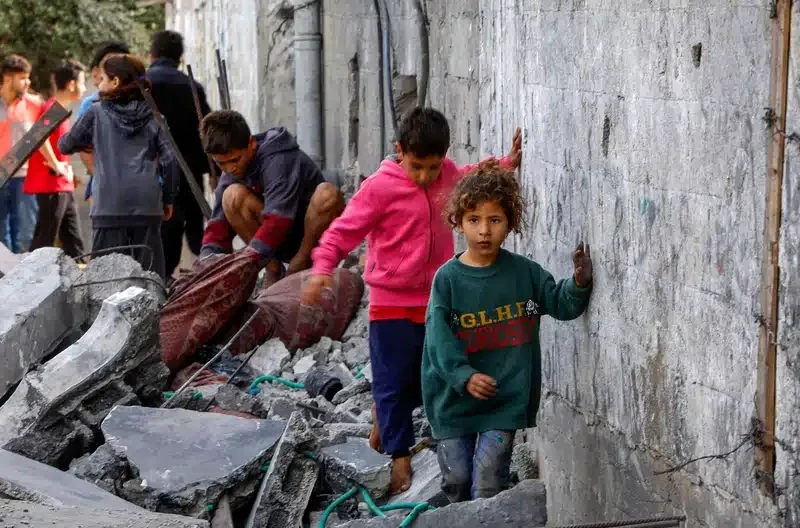
Palestinians search a house after an Israeli air strike in the city of Rafah in southern Gaza, on October 12 2023. Credit: Ana Mohammed/Shutterstock
“It’s hard as a youth to live in a place where nothing is certain”
In 2022, a joint report from the World Bank and other organizations revealed that more than half of all Palestinian adults living in the West Bank and Gaza suffered from depression. It’s an astounding statistic on its own, since that rate is 10 times higher than the global average, according to the World Health Organization. High rates of post-traumatic stress disorder (PTSD) and other serious mental health issues were also found among adults in the community,
Iman Farajallah, a Palestinian-American psychologist based in California, told MindSite News last year that she had studied Palestinian children in Gaza two years after the 2014 war and was shocked by how traumatized they were. Some cried constantly, woke up at night screaming and weeping, were unable to concentrate at school, and were terrorized by drones buzzing on top of the house. Many had lost limbs or eyes “or had splinters and fragments in their bodies from the bombs.”
And that was years before the current war, which began after the deadly Hamas attack on an Israeli border kibbutz and military base in October 2023. The resulting Israeli war in Gaza has killed more than 38,000 Palestinians, with the highest casualties among women and children. Tens of thousands more civilians have been maimed and disabled.
Now a new documentary from Undark, “Young Palestinians Face a Steep Toll on Mental Health,” shows the anguish that Palestinian teens are living with. “It’s hard as a youth,” said Ramallah-based therapist Muna Odeh, “to live in a place where nothing is certain.”
Faris Zuhairi, a 15-year-old high school sophomore in Ramallah, told filmmakers that he wants to focus on school, but he can’t focus. “Palestinians my age are feeling like we should worry every minute of life.” His 16-year-old classmate, Zeina Abulaban, agrees. “When I sit, I just hear the news and I can’t focus on my book. I have to look at the news and see what’s going on. And if I don’t see it, I hear it. It breaks my heart, really,” she said. (Read more in the Undark discussion of the video here in MindSite News).
“What Palestinians, and particularly Palestinian children, have been experiencing is a complex, continuous trauma,” says Farajallah.The biggest problem for mental health professionals is that they know there’s rampant post-traumatic stress disorder in the region, but in order to treat it, people need to be removed from the conditions creating the trauma and distress. But Palestinians can’t do that, Farajallah said. “Palestinians are not being able to move or not being able to escape what has been happening to them since the day of Israeli occupation in 1948 until today.”
For its part, the International Court of Justice ruled this month that Israel’s presence in the occupied Palestinian territories of Gaza, the West Bank and Jerusalem is illegal and must end – and that it must make reparations for the damage it has done. The International Criminal Court also announced in May that it plans to issue arrest warrants for Israeli Prime Minister Benjamin Netanyahu and Israel’s Defense Minister Yoav Gallant for war crimes and crimes against humanity, including intentionally directing attacks against a civilian population and using starvation as a weapon of war, as well as warrants against three Hamas leaders.
Meanwhile, the death toll for Palestinians is nearing 40,000, with women and children accounting for the greatest number of casualties. Said Sally Abi Khalil, the Middle East director of the international relief agency Oxfam, “It is unimaginable that the international community is watching the deadliest rate of conflict of the 21st century unfold while continuously blocking calls for a ceasefire.”
Read more about our Israel-Palestinian mental health coverage here.
-Diana Hembree
Middle school students in East LA use gardening to build community and mental health awareness
In Fall 2020, Emma Oceguera was preparing to return to middle school, but she wasn’t feeling her best. Like many of her peers, she was struggling with increased stress, anxiety and depression because of the pandemic. Rather than struggle alone, though, Oceguera and other students at Griffith STEAM Magnet Middle School in East Los Angeles decided to form a club to learn how to address their mental health issues. Also noting the lack of green spaces available to gather in their community, the club decided to create one in which they could – literally – grow something healthy and beautiful. Hence, Mindful Gardeners, a student-led, ongoing community service project, was born. The group’s activities stem from its slogan, “water your plants, water your mind.”
“That message is important because we’ve all got so much going on in life that we forget to take care of ourselves,” Oceguera, who still volunteers with the group, told the Boyle Heights Beat. The 15-year-old rising high school sophomore added, “Just like how you take care of a plant, we need to give the same care to ourselves.”
Since its launch 4 years ago, Mindful Gardeners has become a project of GirlsBuild, an initiative of the LA Promise Fund that provides grants to girl-founded and girl-led programs based in public schools and nonprofits. Support from GirlsBuild has enabled the gardeners to create a website, lead a social media campaign and host a mental health awareness booth at the East LA Certified Farmers Market.
Besides hosting a booth at the farmers market, the group offers “Days of Service” at their school garden, where Mindful Gardeners give away planting kits with seeds and mental health resource guides and run craft and painting activities for young children and their families. To date, the club has reached more than 1,000 community members beyond their school and respective households. And it’s all because of the teens’ efforts, said Griffith STEAM’s psychiatric social worker Christine Mariano. She explained that she helps oversee the club, but the students make all of the decisions. “It’s been amazing seeing the impact the program has had on the different students who have gone through it over the years,” Mariano said.
Recently, Mindful Gardeners had the opportunity to share their work and discuss neighborhood youth concerns with public officials: Jennifer Siebel Newsom, the state’s first lady, and LA County Supervisor Hilda Solis.
“I love Mindful Gardeners, it’s like a family for me,” said Oceguera. “I hope the program expands. It’s such a great program with such a positive message that has helped me and many others. There needs to be programs and opportunities like Mindful Gardeners in every school, because you help students and you help the neighborhood too.”
“Gateway touching”: What your child should know
A client asked teen and parent psychologist Dr. Barbara Greenberg to share her story about her 11-year-old daughter and a teacher who invited her and some other girls her age to stay in the classroom to do artwork during recess. There, he rubbed their backs while they worked, along with guiding their hands when it wasn’t necessary. This kind of behavior, Greenberg said, is what experts call “gateway touching” – gentle and subtle touch that does not rise to the level of sexual abuse but could lead to more inappropriate touching. Read what she has to say in Psychology Today online.
In other news…
How much money might the country save if we reduced childhood trauma? Suffering adverse childhood experiences (ACEs) without buffering from caring adults have long been linked to chronic disease, drug use and other problems across the lifespan. However, less is known about how ACEs affect adult health care and spending. A new study from Health Affairs, released ahead of print, used medical expenditure data to look at the differences between adults with ACEs and those without them. After adjusting for race, sex, race and ethnicity, adults with ACEs had 26.3% higher health care spending than comparable adults without ACEs – and they spent $292 billion more on health care. The study also found associations between ACEs and a wide range of other issues, including food insecurity, financial and housing problems, and feeling less than satisfied with their life.
Apps to help you limit and monitor your child’s screen time: To my mind, tablets and smartphones aren’t going anywhere. So rather than stress about how to keep my child away from them, I like to consider the ways I can keep her focus on mostly positive, enriching and wholesome content while she’s using them. For like-minded parents, Jennifer Jolly has penned this column in USA Today that includes smartphones equipped with built-in parental controls, tablets designed specifically for kids, and even AI-driven apps that direct youth back to trusted adults whenever attempts are made to access unsafe or grownup content
More picture books on mental health: Kalea Ellison told Oklahoma’s Fox23 News that she never intended to be a children’s book author, but a bad book made her feel like she should give it a try. She was babysitting her friend’s kids and the time came when they asked her to read them a story. “They picked a book to read at bedtime. I read it and I thought, “This is terrible.” Ellison said. “They were bored, I was bored and I thought, “I can write something else.” So she did. Aside from offering entertainment, her first book, Sometimes I Dream, teaches children how to tame bedtime anxiety and nighttime fears. A new release, Sometimes I Imagine, is focused on helping “children turn worry into wonder,” she said
Helping college students in NY state continue mental health care: It’s something we don’t often think about because, after living so much life online during the pandemic, we figure we can Zoom anything. But mental health care is proving tough to carry to college in New York State and vice versa. By that I mean, college students receiving therapy from outside of New York aren’t able to continue treatment with their licensed therapists, if the therapist isn’t also licensed in the State of New York. Unlike some states, New York doesn’t allow interstate telehealth therapy. Boston University undergraduate Sean Waddington knows firsthand.
“I struggled a lot my first semester. I tried to do my best, but there were a lot of failures,” he told WXXI News. “I was having a lot of mental health issues.” He was able to secure a therapist in Boston who helped—but then came summer. “And what happened was, when I came back home, I wasn’t allowed to see her because … my therapist isn’t licensed to practice in New York.” The political science and sociology major has since had conversations with state representatives hoping to get the law changed.
If you or someone you know is in crisis or experiencing suicidal thoughts, call or text 988 to reach the 988 Suicide & Crisis Lifeline and connect in English or Spanish. If you’re a veteran press 1. If you’re deaf or hard of hearing dial 711, then 988. Services are free and available 24/7.
Recent MindSite News Stories
‘I Was Terrified, Actually. It Could Be Me Next’

Even before the Israeli-Hamas war broke out last October, rates of depression among Palestinian adults in the West Bank and Gaza were 10 times the global average. Among children, the rates were higher still – and are getting worse.
Relief Funds Offer Help for the Mental Health of Farmers with Land Poisoned by ‘Forever Chemicals’
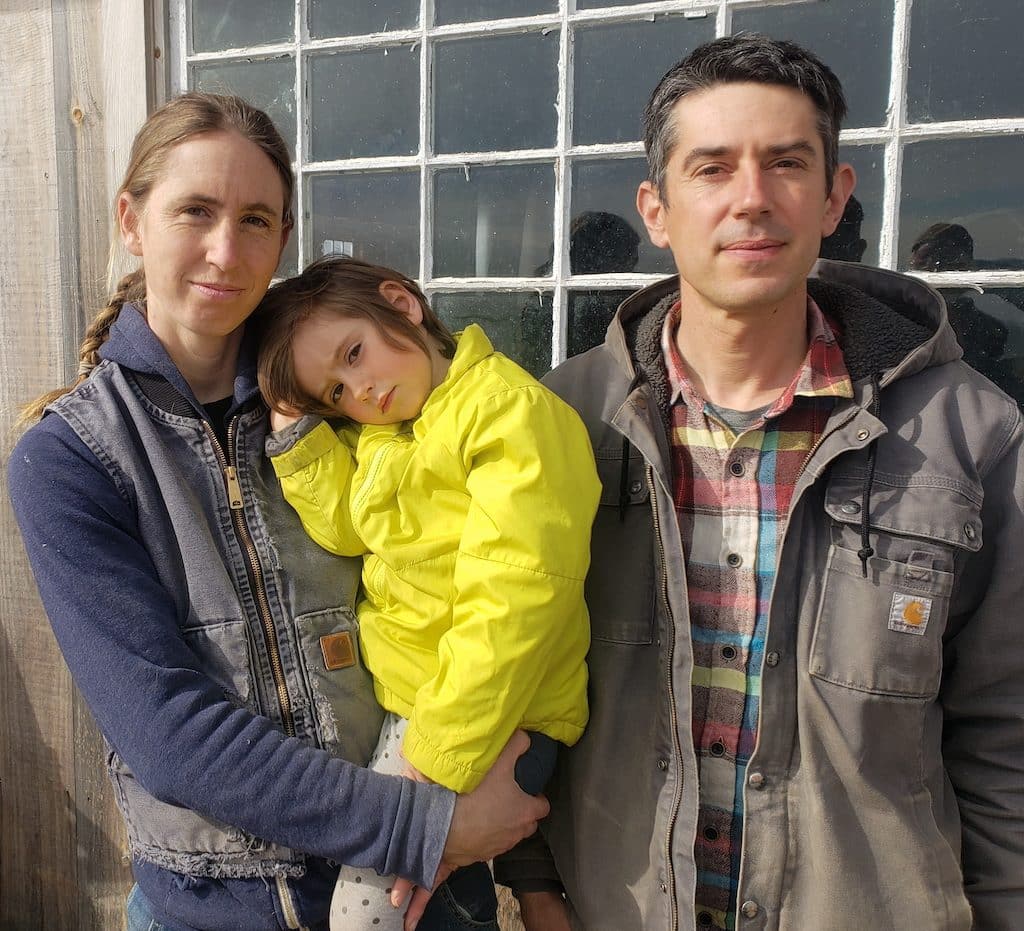
In Maine, state agencies and nonprofits are working to help farmers distressed by the discovery of PFAS – better known as “forever chemicals” – on their land.
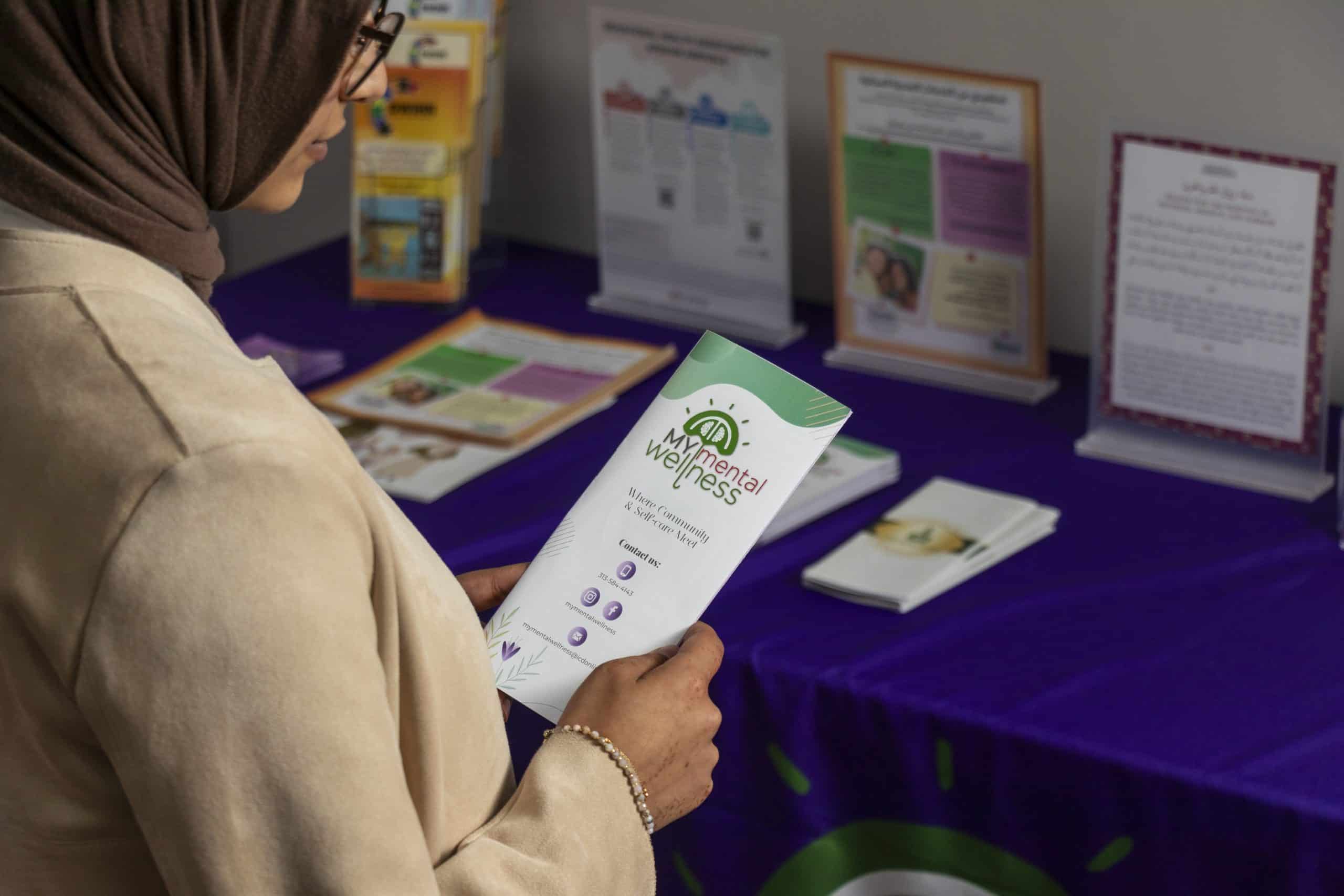
Detroit Islamic Center Offers Free Mental Healthcare for Anyone in Need
Muslim Americans have high rates of mental illness, including suicide. In the Detroit area, which has the largest concentration of Muslims in the U.S., imams have taken note. The Detroit Islamic Center has expanded My Mental Wellness to offer free mental health care for those in need.
If you’re not subscribed to MindSite News Daily, click here to sign up.
Support our mission to report on the workings and failings of the
mental health system in America and create a sense of national urgency to transform it.
For more frequent updates, follow us on Facebook, Twitter and Instagram:

The name “MindSite News” is used with the express permission of Mindsight Institute, an educational organization offering online learning and in-person workshops in the field of mental health and wellbeing. MindSite News and Mindsight Institute are separate, unaffiliated entities that are aligned in making science accessible and promoting mental health globally.
Copyright © 2021 MindSite News, All rights reserved.
You are receiving this email because you signed up at our website. Thank you for reading MindSite News.
mindsitenews.org

Mental health can't wait.
America is in a mental health crisis — but too often, the media overlooks this urgent issue. MindSite News is different. We’re the only national newsroom dedicated exclusively to mental health journalism, exposing systemic failures and spotlighting lifesaving solutions. And as a nonprofit, we depend on reader support to stay independent and focused on the truth.

It takes less than one minute to make a difference. No amount is too small.
The name “MindSite News” is used with the express permission of Mindsight Institute, an educational organization offering online learning and in-person workshops in the field of mental health and wellbeing. MindSite News and Mindsight Institute are separate, unaffiliated entities that are aligned in making science accessible and promoting mental health globally.

Author

Related Articles
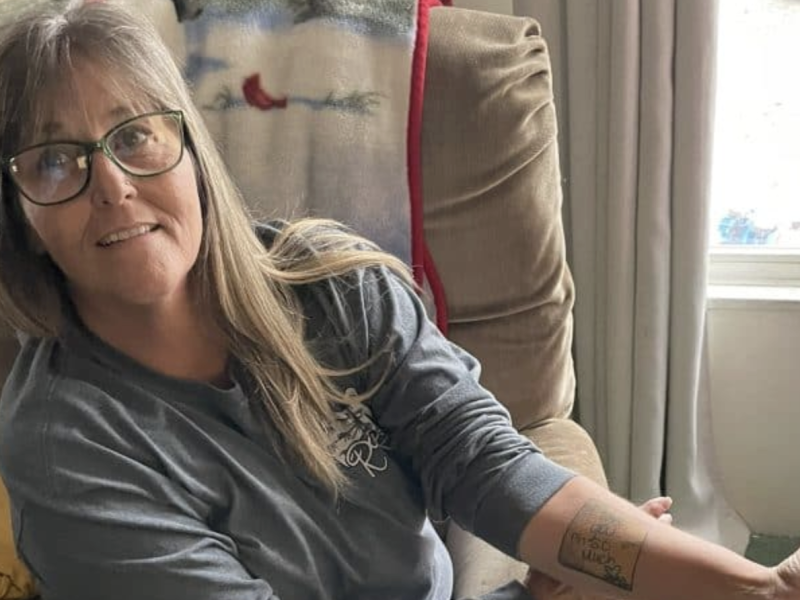
Trump Administration Cancels, Then Restores Federal Grants for Addiction Treatment and Mental Health
The administration restored nearly $2 billion in addiction and mental health grants after an overnight cancellation sparked a furious outcry.
Unseen: ICE’s Assault on Asians in the United States
A months-long investigation looked into the impact of Trump’s draconian immigration policies on Asian Americans.
The News From Minneapolis That Makes It Hard To Breathe
Minneapolis residents are reeling after the January 7 killing of Renee Nicole Good by a masked ICE agent.
