
An Antidote for Loneliness Among the Mentally Ill
Clubhouses – places where people with mental illness can gather socially and interact meaningfully – help ease their loneliness and should be a cornerstone of treatment, a new study from Fountain House finds.


Wednesday, July 31, 2024
By Courtney Wise

Greetings, MindSite News Readers. In today’s Daily, clubhouses – places where people with serious mental illness can gather socially and interact meaningfully – help ease their excruciating loneliness and should be a cornerstone of treatment, a new study from Fountain House, the godparent of the clubhouse movement, finds.
Plus: A mentally ill man who was committed against his will to a psychiatric hospital was released – and presented with a bill for $770,000. The podcast Reveal shines a light on the damaging cycle of prison, homelessness and involuntary commitment experienced by those with severe mental illness. How elite athletes can mentally prepare for the life shock that follows the end of competition. And more.
Clubhouses help people with serious mental illness connect socially, easing loneliness
This story has been updated to reflect a changed definition used for one of the outcomes discussed in the third paragraph.

One in five Americans is lonely – one reason the US Surgeon General recently declared loneliness an epidemic. But for those with serious mental illness, the rate is two to three times higher. Now, a new paper from researchers at Fountain House, the New York City program that originated the clubhouse model, finds that they offer people with serious mental illness a cost-effective, replicable treatment by providing them a place to socialize and take part in meaningful activities
“What’s particularly insidious about loneliness for people who also live with serious mental illness is that there’s a reciprocal dynamic. It’s both a risk factor for mental illness and a consequence of it,” said Ken Zimmerman, CEO of Fountain House. “Clubhouses are a time-tested and rigorously researched solution for loneliness that recognize our innate need for social connection.”
A racially diverse group of 206 women, men and gender non-binary people with diagnoses of schizophrenia, depression, bipolar disorder and personality disorder participated in the Fountain House study, all of them members of the clubhouse. At the onset of the study, 73% of them reported being lonely. By the end, 56% reported a decline in loneliness, with 22% no longer meeting the threshold for significant loneliness as defined by the UCLA 3-item loneliness scale.
“I didn’t fully understand what was going on when the symptoms first hit. I didn’t have anyone to talk to and would isolate myself for long periods of time,” said Kirsten, whose last name was withheld to protect her identity. “I have so much support now. If I’m not at the clubhouse for a week, I’ll have someone calling me, saying, ‘We haven’t seen you in a while, we miss you.’”

The study demonstrates that nonclinical, community-focused social activities are critical to treatment and shows the need to replicate the model, researchers said. Mental health providers can begin to tackle loneliness by first tracking and measuring the issue to understand where an impact has to be made, said study co-author Joshua Seidman, Chief Research and Knowledge Officer at Fountain House.
To get them to actually do it, Seidman argues in an op-ed, a portion of the payment providers receive should be tied to their effectiveness in reducing loneliness among patients. “We need to hold them accountable for outcomes,” he said, “since we know that loneliness dramatically impacts both the quality and length of people’s lives.”
Fountain House researchers will soon begin collecting data across an additional 11 clubhouses in seven states to further determine the impact their model has on reducing loneliness.
A California man was involuntarily committed to a state hospital. Then they charged him $770,000
Treatment at Napa State Hospital helped Sultan Khan stabilize his post-traumatic stress disorder and newly diagnosed schizophrenia. But had he known the state of California would bill him $769,490 for psychiatric treatment after he pled not guilty by reason of insanity, he might have opted to just go to prison. “I’m basically going to be in debt for the rest of my life,” he told CalMatters.
The majority of the 5,500 patients in the state’s five mental health hospitals are sent from the criminal justice system, charged or convicted of offenses related to their mental illnesses. But though the state no longer collects fees from former jail or prison inmates for costs associated with their incarceration, it continues to bill people committed to the state’s hospitals.
“Here’s (the Department of State Hospitals) quietly collecting hundreds of thousands of dollars from our absolutely most, most vulnerable clients with the least ability to make any kind of payment,” said Rachel Draznin-Nagy, a public defender working with Khan to get his bill forgiven. “I’m so furious about it.”
In an unsigned, emailed statement to CalMatters, the Department of State Hospitals said that California statutes require that they collect payment for the cost of care despite “the stress and concern that individuals may experience when receiving financial notifications.” It added that the department doesn’t send outstanding invoices to collections agencies nor garnish former patients’ wages. But without documented efforts to pay or contest the bill or apply for financial assistance, they reserve the right to collect unclaimed property, funds or tax returns.
Whatever the law, public defenders say it’s bizarre to charge vulnerable people for care they didn’t request. Besides, said Stephanie Campos-Bui, a Berkeley Law professor who helped end the collection of fees from incarcerated people, the cost of collecting the fees “often negates any revenue such fees might generate.”
How elite athletes can beat the post-Olympics blues
It’s only the first week of the Olympic Games, but as many athletes compete for medal glory, they’re also looking ahead to the end – when competition stops, and they must learn who they are beyond sports. Though Team USA rower Kate Knifton is a first-time Olympian at this summer’s Paris games, she experienced a mental crisis in 2022 after a major spine injury. She thought it was the end of her career. “Your body has a reaction from doing all this training and then suddenly doing nothing at all,” she told Scientific American. “I’m now more aware of having things in place for myself for one day (in the future) when I’m not rowing.”
The mental health of elite athletes has long been the subject of interest. Athletes face burnout, anxiety, eating disorders, and depression across Olympic, professional, and collegiate levels. A study of the Canadian national team by researchers at the University of Toronto found that more than 40% of athletes training for 2020 games had one or more of the aforementioned conditions. Another study found that nearly one quarter of Olympic and Paralympic athletes experienced mental distress when the games concluded. Mental health challenges were more pronounced among athletes preparing to retire from competition altogether, with researchers noting a perceived loss of goals and identity.
Briana Scurry, retired soccer goalkeeper and two-time Olympic gold medalist, encourages elite athletes to consider what retirement will look like early in their career. She understands the mental shock that can come with a sudden pivot, having survived a career-ending traumatic brain injury on the soccer field in 2010. After accepting her reality, Scurry said she considered how she could apply her remaining skills to her love of the game. She’s since extended her career by coaching, motivational speaking, and educating athletes about how concussions can affect mental health. Scurry added that folks interested in leaving sports altogether should know that the strategies and mindsets that make them successful athletes transfer well to the business world.
Most of all, she emphasizes that the end of competition isn’t synonymous with stagnation in body and life. She encourages retired athletes to embrace their free time with a vacation or long visit home to see people they love. They should also consider pursuing skills and interests that they previously let rest in service of an athletic career. And while physical movement won’t look like training for the Olympics again, staying active is critical to keeping depressive symptoms at bay. “At the end of the day, the Olympics part of your life will end,” Scurry said. “You have a lot of time for the other parts.”
In other news…
The Churn: Why do some people get stuck in a seemingly endless loop of psych ward, jail, homelessness, repeat? Adam Aurand has been trapped on the hamster wheel for almost ten years, and his mother is ready for it to end. Reporters from the Lost Patients podcast by KUOW and the Seattle Times hit the streets in a special episode of Reveal to find out why America’s mentally ill get stuck in this way.
A friendship park: A new park where people can gather to chat about their mental wellbeing is in the works for Leicestershire County in England, the BBC reports. The aptly – and obviously –named “Friendship Park” will feature plant design and landscaping that encourages “people to gather safely, surrounded by nature, and…foster connections between those who use them.” Proposed designs have had input from community members, who told the BBC that there needs to be more spaces where people can talk about their feelings, “especially after COVID,” said longtime resident Colin Peach. “I’ve got friends who are struggling even now. So this could be fantastic. I think it’s a brilliant idea.”
Not all victims of police shootings die: New research seeks to measure the extent of the mental and physical scars nonfatal police shootings leave behind, Undark reports.
If you or someone you know is in crisis or experiencing suicidal thoughts, call or text 988 to reach the 988 Suicide & Crisis Lifeline and connect in English or Spanish. If you’re a veteran press 1. If you’re deaf or hard of hearing dial 711, then 988. Services are free and available 24/7.
Recent MindSite News Stories
The Burnout Crisis Isn’t Over. Here’s What We Can Do About It.

Healthcare and social services workers are experiencing enormous burnout. But a closely evaluated pilot program offering therapy, wellness sessions and coaching is helping lower depression and anxiety in three-quarters of participating healthcare workers.
‘I Was Terrified, Actually. It Could Be Me Next’

Even before the Israeli-Hamas war broke out last October, rates of depression among Palestinian adults in the West Bank and Gaza were 10 times the global average. Among children, the rates were higher still – and are getting worse as […]
Relief Funds Offer Help for the Mental Health of Farmers with Land Poisoned by ‘Forever Chemicals’
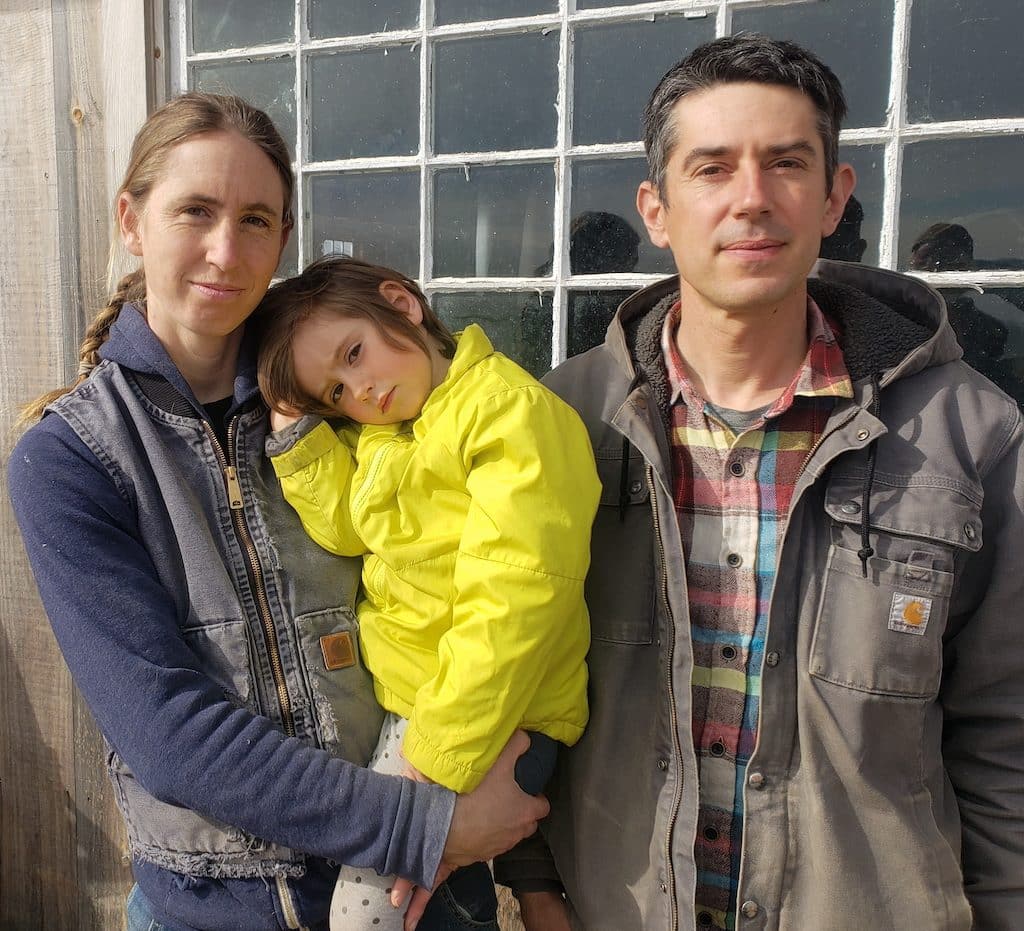
In Maine, state agencies and nonprofits are working to help farmers distressed by the discovery of PFAS – better known as “forever chemicals” – on their land.
If you’re not subscribed to MindSite News Daily, click here to sign up.
Support our mission to report on the workings and failings of the
mental health system in America and create a sense of national urgency to transform it.
For more frequent updates, follow us on Facebook, Twitter and Instagram:

The name “MindSite News” is used with the express permission of Mindsight Institute, an educational organization offering online learning and in-person workshops in the field of mental health and wellbeing. MindSite News and Mindsight Institute are separate, unaffiliated entities that are aligned in making science accessible and promoting mental health globally.
Copyright © 2021 MindSite News, All rights reserved.
You are receiving this email because you signed up at our website. Thank you for reading MindSite News.
mindsitenews.org

The name “MindSite News” is used with the express permission of Mindsight Institute, an educational organization offering online learning and in-person workshops in the field of mental health and wellbeing. MindSite News and Mindsight Institute are separate, unaffiliated entities that are aligned in making science accessible and promoting mental health globally.


Author

Related Articles
Generation Cancer: Millennials Struggle With Death at an Early Age
More young adults are being diagnosed with cancer. Even for those who survive, the experience can be destabilizing and isolating.

Millennials Weigh Having Children On Their Own Terms
Not having children is also a valid path, and one that everyone should consider, Merle Bombardieri argues in her 1981 book.

Waiting for Word on Relatives Under Attack in Iran
Iranians in the US are caught between two “unrepentant regimes,” says Iranian-American writer and professor Shervin Malekzadeh.
