
‘If They Would Have Had the Right Training’
A trio of stories examines one recent case where police intervention to a mental health crisis ended tragically – and also looks at the growing wave of cities working to create a different kind of response.

Tuesday, August 6, 2024
By Josh McGhee
Hello again MindSiters,
We’re back with a slightly delayed edition after all the excitement around former president Donald Trump’s appearance at the National Association of Black Journalists Convention last week in Chicago. I was there and it was quite weird; we’ll leave it at that.
Today, we bring you a trio of stories on an issue that has been a core focus of ours since the launch of MindSite News nearly three years ago: the use of force to respond to people in a mental health crisis. Since 2015, 1,958 people have been killed by police in these situations, according to a database compiled by the Washington Post.
Our latest investigation examines the death of one young man, killed a year ago in Columbia, Mo., and the grief and outrage of his father who – in a bit of tragic irony – works on a mobile response team helping people experiencing behavioral health crises.
Columbia doesn’t have a mobile response team but Durham, N.C. does and today we’re also pleased to share the work of our friends at Tradeoffs and the Marshall Project looking at that city’s much-lauded crisis reponse program. A Tradeoffs producer embedded himself in Durham to get an on-the-ground feel for how that program operates.
The Marshall Project took a look at the uneven efforts to create mobile crisis response teams around the country and came away with some big-picture points:
- The programs are spreading: there are more than 100 response units across the U.S.
- Not sending one of these teams could be a civil rights violation: Cities, like Washington D.C., and counties, like Washington County, Oregon, are being sued at the moment.
- These programs rarely need to call police for backup
- Programs need more money and more staff to reach full potential
Let’s get into it…
Crisis in Columbia, Missouri
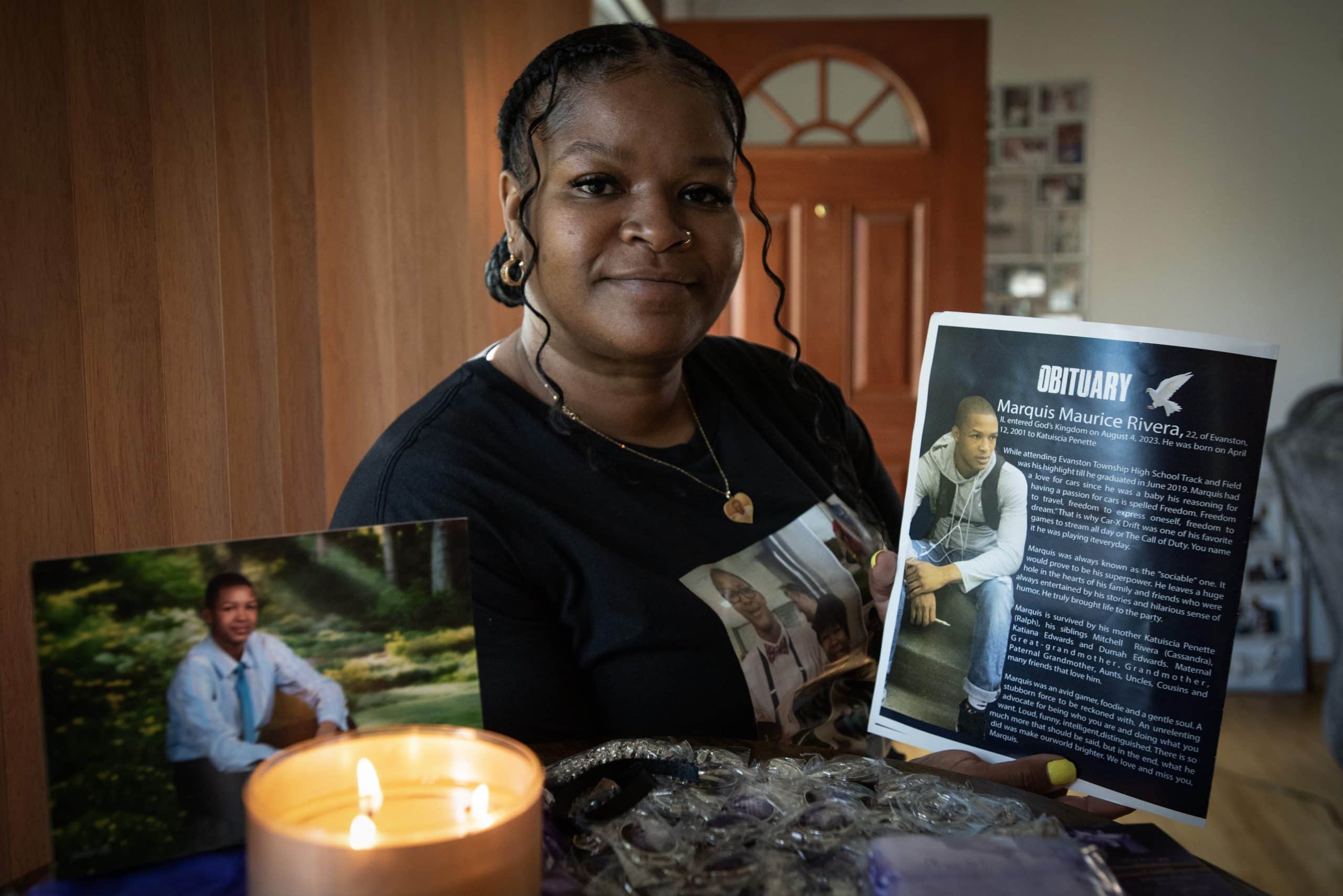
Months after a breakup with his girlfriend, Marquis Rivera wasn’t in a great spot mentally.
He was contemplating suicide, he told a 911 dispatcher before hanging up. When two officers arrived, Rivera didn’t say much, but meekly admitted his plans to hurt himself.
One of the officers asked him questions and threatened to involuntarily hospitalize him, but he ultimately left without doing so, and 22-year-old Rivera went back inside his apartment. Six minutes later, he called 911 again. When officers arrived at the apartment complex this time, he was holding a gun and the confrontation ended fatally for Rivera.
“So many gray areas, red flags,” said Rivera’s stepfather, Ralph Edwards, in an emotional interview nearly a year after his son was killed. “If they would have had any kind of sense, (if) they would have had the right training in their own mind to be able to help my son and get him out of the situation that he (was) in, he would be alive today. But that didn’t happen.”
Police departments, public officials and advocates for police reform have long debated how officers should respond to situations like these, which are commonly called “suicide by cop.”
A study of more than 700 officer-involved shootings conducted in 2009 found that more than a third of incidents stemmed from someone provoking officers to use deadly force. In other studies, the number ranged from 10% to 46%.
The definition for what constitutes “suicide by cop” can be vague, controversial, and used to justify police violence, critics say. The 2009 study also found police killed the suicidal person more than half of the time and injured the person in 40% of encounters.
For the last six months, reporter Melissa Dai has been digging into what went wrong in the death of Marquis Rivera. For her investigation, she filed public records requests for police call data and investigative files. She also collected video of the encounter and spoke to police and crisis response experts.
What she found was a city that desperately needed an alternative response and set aside almost $2 million in funds to start one – but never got it done.
Her analysis also found that calls to 911 involving a suicidal person are not uncommon. Of more than 3,300 mental health-related calls to Columbia police in 2021 and 2022, almost half involved people who were potentially suicidal.
Read the full investigation here.
The Fifth Branch

At around 6 p.m. on a sunny evening in August 2022, Durham, N.C., Police Chief Patrice Andrews picked up a call from one of her deputies about a barricade situation involving a man with a history of mental illness.
His family would like him to be hospitalized, but with officers camped outside their home, he has begun making threats. If officers try to come in, he tells officers, he’ll shoot.
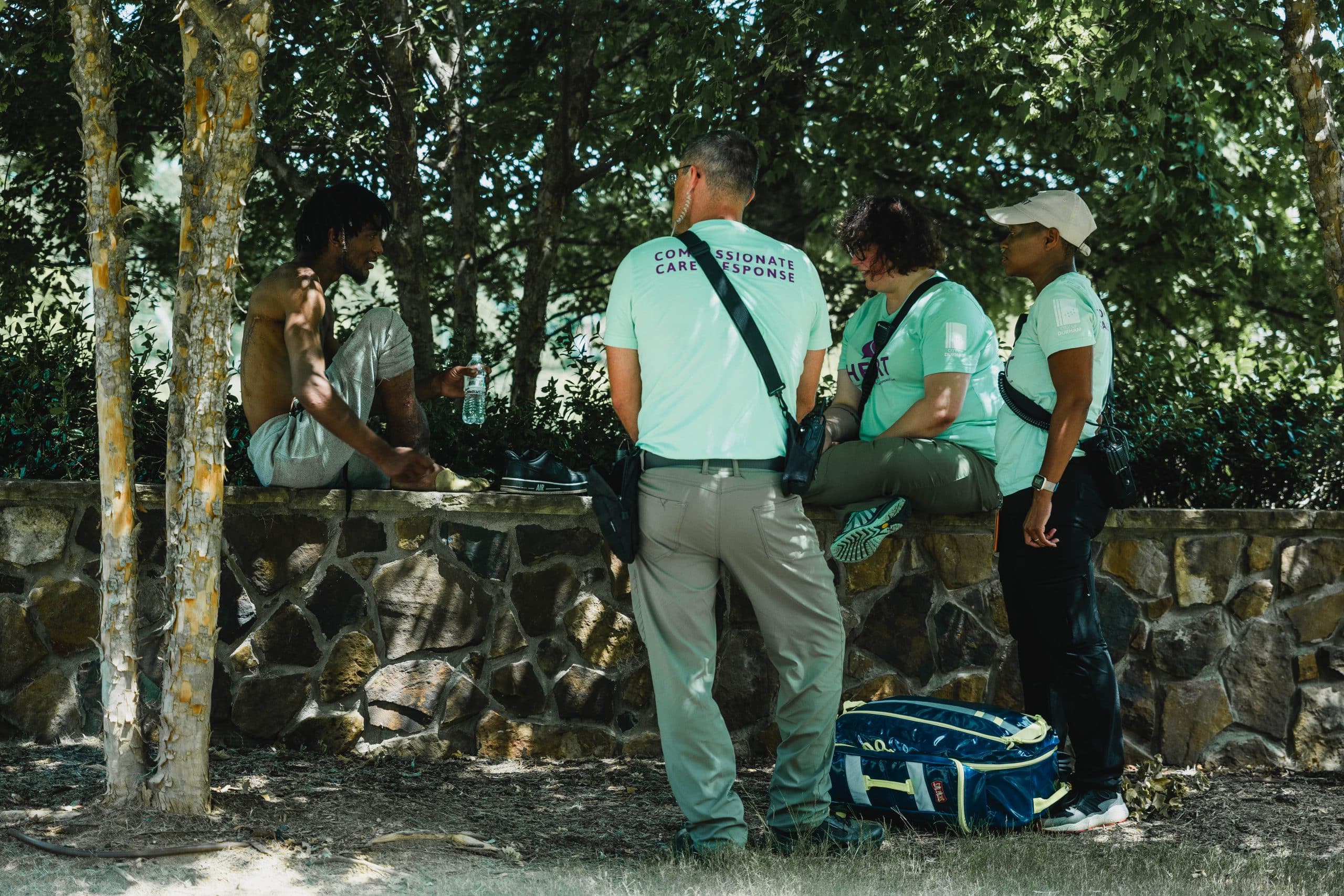
The deputy wants to call the SWAT team, but the chief wants to try something different: HEART — the Holistic Empathetic Assistance Response Team, composed of a social worker, an EMT and a peer responder. The Tradeoffs podcast tells us what happened next. Spoiler alert: he survives.
Since 2015, 20% of all people killed by police in the U.S. were experiencing a mental health crisis, according to the Washington Post database.
In response to these statistics and calls for police reform after high-profile police shootings, cities across the country, including Denver, Houston, Louisville and Albuquerque, launched alternative crisis response programs, where social workers and EMTs – instead of armed officers – respond to at least some of the 911 calls that involve mental illness, addiction and suicidal ideation.
In the new three-part podcast series, The Fifth Branch, Tradeoffs, in partnership with The Marshall Project, takes a deep look at the HEART program and the process that went into creating it.
In the first episode, Tradeoffs producer Ryan Levi explores what it took to convince officers in Durham to buy into their new response team – ending a violent encounter peacefully.
Along the way, we’re introduced to Durham’s Police Chief Patrice Andrews, who wants to reduce the harm police can cause; Ryan Smith, Director of Durham’s Department of Community Safety; a police sergeant in the department and a clinical manager in the Department of Community Safety.
As well-intentioned as the HEART program is, it’s not a panacea. At one point, Smith tells the story of how the program intervened with an unhoused man struggling with mental illness, substance abuse and dental pain. The HEART team begins working to get him a dental appointment and a cell phone. Then he goes to a shelter and responsibility switches to a different provider. A few weeks later, they received his obituary.
“I wondered what if we had held on a little bit longer when he went into the shelter? Here was someone who came in, really wanted the help,” Smith said. “We were getting them on a path. And they’re not here anymore.”
The reality is these handoffs often fail and people land back with HEART. In Durham, 39 people account for 1,201 calls – or 8% of their total calls.
Listen to all three episodes here.
MindSite News on the radio
Can’t get enough of the voices behind our Fateful Encounters series? Catch up on our radio appearances here.
- How Chicago-area mental health workers could respond differently to crises than police (WBEZ, July 24, 2024)
- Racialized Police Use of Tasers in 911 Mental Health Calls on KPFA 94.1 (July 18, 2024)
Until next time,
Josh McGhee
If you or someone you know is in crisis or experiencing suicidal thoughts, call or text 988 to reach the 988 Suicide & Crisis Lifeline and connect in English or Spanish. If you’re a veteran press 1. If you’re deaf or hard of hearing dial 711, then 988. Services are free and available 24/7.
Recent MindSite News Stories
If Mental Health Responders – Not Police – Had Come to Marquis Rivera’s Home, Would He Be Alive Today?
One year ago, a 22-year-old man who was feeling lost and suicidal in the aftermath of a break-up was killed by police. His father, a crisis mental health worker, still wonders: What would have happened had he gotten a different kind of response?
Sending Unarmed Responders Instead of Police: What We’ve Learned
In the four years since George Floyd’s murder, many sweeping attempts to reform policing have faltered. But one proposal that has taken hold across the country, and continues to spread, is launching alternative first response units that send unarmed civilians, […]
Meet the New Generation of Unarmed Responders in this New Podcast Series

This tree-part podcast looks at efforts across the country to deploy first response units that use unarmed civilians, instead of armed officers, to mental health emergencies.
If you’re not subscribed to MindSite News Daily, click here to sign up.
Support our mission to report on the workings and failings of the
mental health system in America and create a sense of national urgency to transform it.
For more frequent updates, follow us on Facebook, Twitter and Instagram:

The name “MindSite News” is used with the express permission of Mindsight Institute, an educational organization offering online learning and in-person workshops in the field of mental health and wellbeing. MindSite News and Mindsight Institute are separate, unaffiliated entities that are aligned in making science accessible and promoting mental health globally.
Copyright © 2021 MindSite News, All rights reserved.
You are receiving this email because you signed up at our website. Thank you for reading MindSite News.
mindsitenews.org

The name “MindSite News” is used with the express permission of Mindsight Institute, an educational organization offering online learning and in-person workshops in the field of mental health and wellbeing. MindSite News and Mindsight Institute are separate, unaffiliated entities that are aligned in making science accessible and promoting mental health globally.


Author

Related Articles

Family of 6 in ICE Detention for 9 Months ‘Dying on the Inside’
After nine months in Dilley Immigration Processing Center, “we forgot what it feels like to be free,” a recent high school graduate wrote.
Generation Cancer: Millennials Struggle With Death at an Early Age
More young adults are being diagnosed with cancer. Even for those who survive, the experience can be destabilizing and isolating.

Millennials Weigh Having Children On Their Own Terms
Not having children is also a valid path, and one that everyone should consider, Merle Bombardieri argues in her 1981 book.
