‘I Felt a Lot of Freedom’: Midwest Summer Camp for LGBTQ+ Youth Offers Sanctuary and Life Lessons
Summer camps offer outdoor fun for kids, but for LGBTQ+ teens, they’re not always welcoming. Enter Camp 4 All – a place for friendship and adventure for LGBTQ+ kids in Michigan and Ohio.
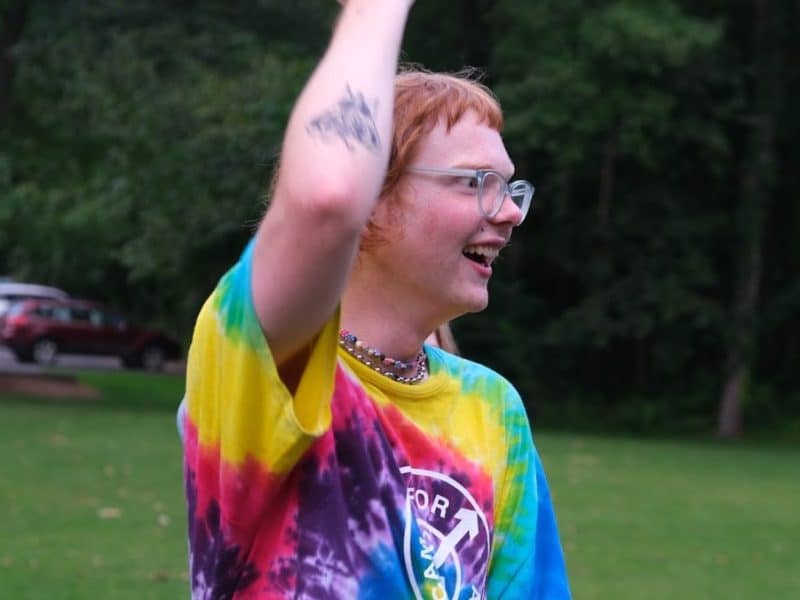
At a summer camp for LGBTQ+ teens across Michigan and Ohio, Camp 4 All offers a safe place for summer fun
Standing on a beach in Traverse City, Michigan, 16-year-old Naja Nile chose not to swim despite the brutal summer sun, but saw them: kids with colorful hair splashing in the sparkling water.
Wearing bathing suits and chest binders, the kids were a burst of joy on an idyllic shoreline more than 250 miles away from Nile’s home in Detroit.
Anxious and quiet, Nile suddenly felt a sense of awe, thinking the moment could never happen at a big waterpark. Nile still remembers it six years later. “They were just, like, comfortable,” said Nile, now 22. “I was just watching people have fun and listening to the laughter and the jokes, and I still felt included.”
The vivid memory was from Camp 4 All, a summer camp for LGBTQ+ teens and kids between 10 to 18. This summer, the camp will hit the trails, renting campsites in Michigan and Ohio.
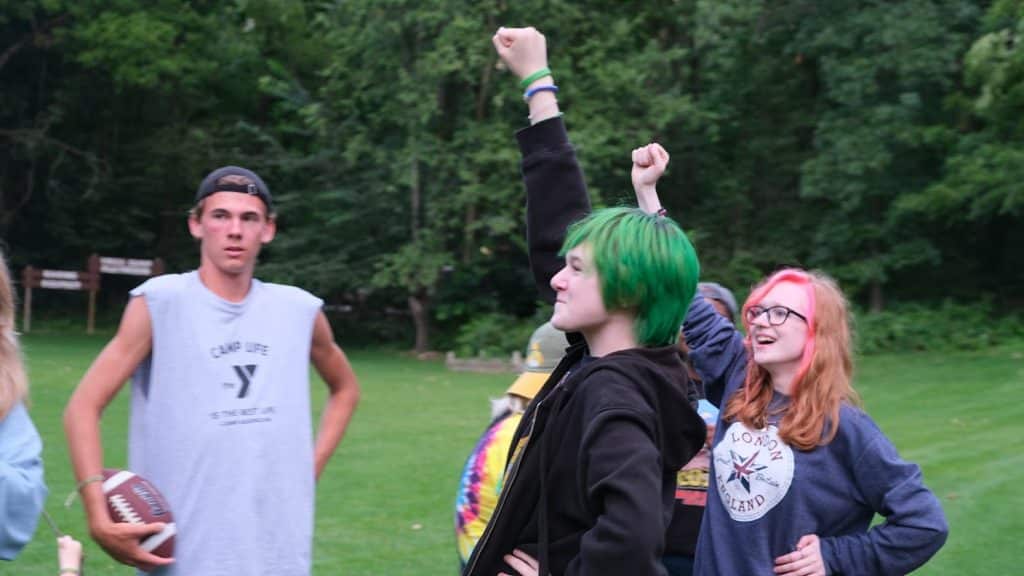
In the thick of the woods, young LGBTQ+ people in the camp find temporary refuge from stigma, bullying and discrimination. Nile remembers hopping on a bus as a teen in Ferndale and heading up north to the camp. The journey was tough and a test of their independence.
“I always have been very, like, socially anxious as a kid,” they said. “Doing things by myself has always been hard.”
But at Camp 4 All, they were able to relax. Teens there didn’t have to hide, getting a chance to be their true selves without taunts, interrogation or probing stares. Today, just as it was when Nile first arrived, its campers are young people who represent a spectrum of sexual and gender identities, though personal labels are fluid and ever-changing.
Gender-affirming spaces, researchers note, can nurture the emotional well-being and resilience of LGBTQ+ young people, a diverse group vulnerable to anxiety, stress and depression because of stigma. Nile is nonbinary but only ever knew people like them online. To see nonbinary people rambling around the summer camp confirmed a theory in Nile’s mind.
“I knew they were out there,” they said. They were real people, not just avatars on the internet.
Summer camp for LGBTQ+ offers adventure, belonging
The ongoing lament of the death of LGBTQ+ spaces eulogizes bars that served as anchors of community life, but less attention has focused on the scarcity of places where LGBTQ+ people 18 and under can hang out and bond after the school bell rings for dismissal.
“It’s hard for them at school a lot of the time,” said Gigi Hickey, a 25-year-old staffer who identifies as trans, during an April interview. Hickey is in charge of scheduling at Camp 4 All. “But in the summer, that’s when you tend to be more isolated.”
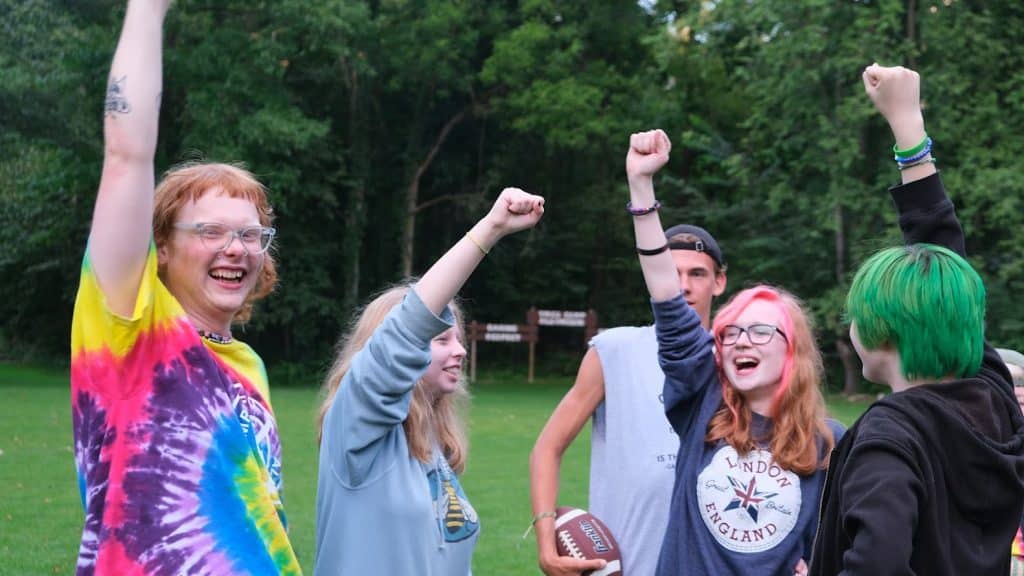
Camp 4 All is unique in the landscape of more than 12,000 summer camps in the United States, but similar camps have popped up. In the Midwest, Camp Indigo Point offers a summer experience for queer and trans youth in second through 11th grade, and the music education workshops at Girls Rock! Chicago nourishes self-esteem and leadership skills for girls, trans and gender expansive young people. Founded in 2011, Camp Lightbulb has hosted summer camps for LGBTQ+ youth in California, Massachusetts and New York.
Since the pandemic, more camps are focusing on the mental health of their kids and teens. This is a welcome change, but it doesn’t always go far enough. Traditional summer camp programs aren’t necessarily built for LGBTQ+ young people, Hickey said. Some campers remain closeted and didn’t feel comfortable with cabins separated by gender in previous summer camp stays.
There’s camps out there for kids with cancer. But in my research, there was nothing there for LGBTQ youth.”
David Yuhaus, camp 4 all founder
Camp 4 All was created in the wake of the 2016 presidential election. At the time, David Yuhaus worked at a YMCA camp in Michigan, and his colleagues were distraught about the coming Trump presidency.
“They’re angry. They’re scared,” said Yuhaus, who felt compelled to find a way to make a difference. Originally a YMCA program, Camp 4 All filled a hole in the social life of young people who didn’t identify as heterosexual. “There’s camps out there for kids with cancer,” Yuhaus said, “But in my research, there was nothing there for LGBTQ youth.”
A straight white man, Yuhaus is the camp’s co-founder and has leveraged his position to uplift LGBTQ+ kids. He’ll rush to the aid of campers and counselors in the event of an emergency, but mostly prefers to melt into the background.
“As a general rule of the orientation, I may stand up and play bad cop a little bit as far as ‘Hey, don’t break the rules,’ and then I just go away,” he said. “I want this experience to be driven by members of the LGBTQ+ community, not by me.”
The summer camp for LGBTQ teens and kids was run by the YMCA from 2017 to 2019 and wasn’t open during the pandemic year of 2020. Since 2021, the camp has been part of Experiential Ink, a nonprofit organization focused on outdoor education where Yuhaus serves as executive director. Camp 4 All is primarily staffed by camp counselors, a mix of LGBTQ+ adults and allies. This summer, at least 63 campers plan to attend the summer camps scheduled in Michigan’s Traverse City and Hastings and Bellefontaine, Ohio. Staffers promoted the camp during local Pride celebrations and social media.
“It gives them a better outlook on things,” said Justin Bettcher, a community engagement manager at Affirmations, a LGBTQ+ community center in Ferndale, Michigan and a Camp 4 All board member.
“It shows them, ‘Okay, I’m not being lied to by a lot of these adults that are saying ‘It gets better’ because it does.’”
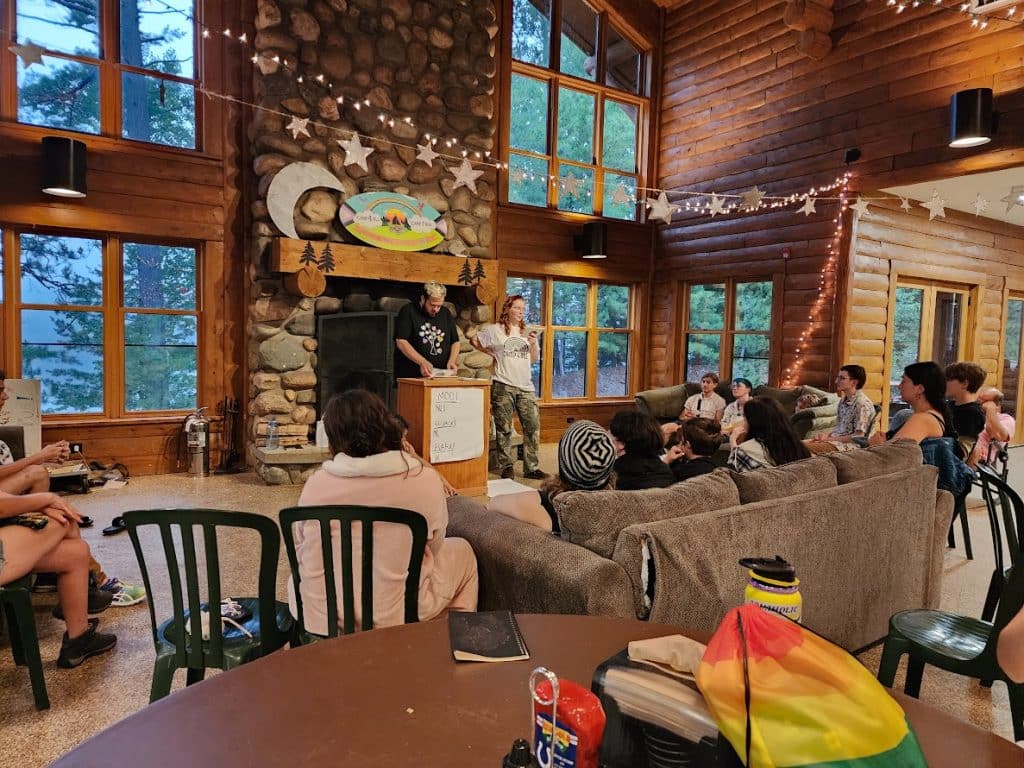
In the past, campers came from Michigan and as far as Illinois and Washington, some learning about the summer camp for LGBTQ youth through referrals from social workers. Camp 4 All has attracted many trans young people.
Once they arrive, campers can enjoy a week of classic summer activities. Rock climbing, high ropes, archery, swimming in a lake at dawn. The vibes at Camp 4 All are anything but rigid.
Between outdoor adventures, campers can take arts and writing workshops, whose topics have ranged from the highs and lows of positive and negative labels to self-image and healthy relationships. The camp has hosted queer trivia nights on LGBTQ+ historical events like the Stonewall Uprising and a drag show starring a professional performer, events that can foster intergenerational connections.
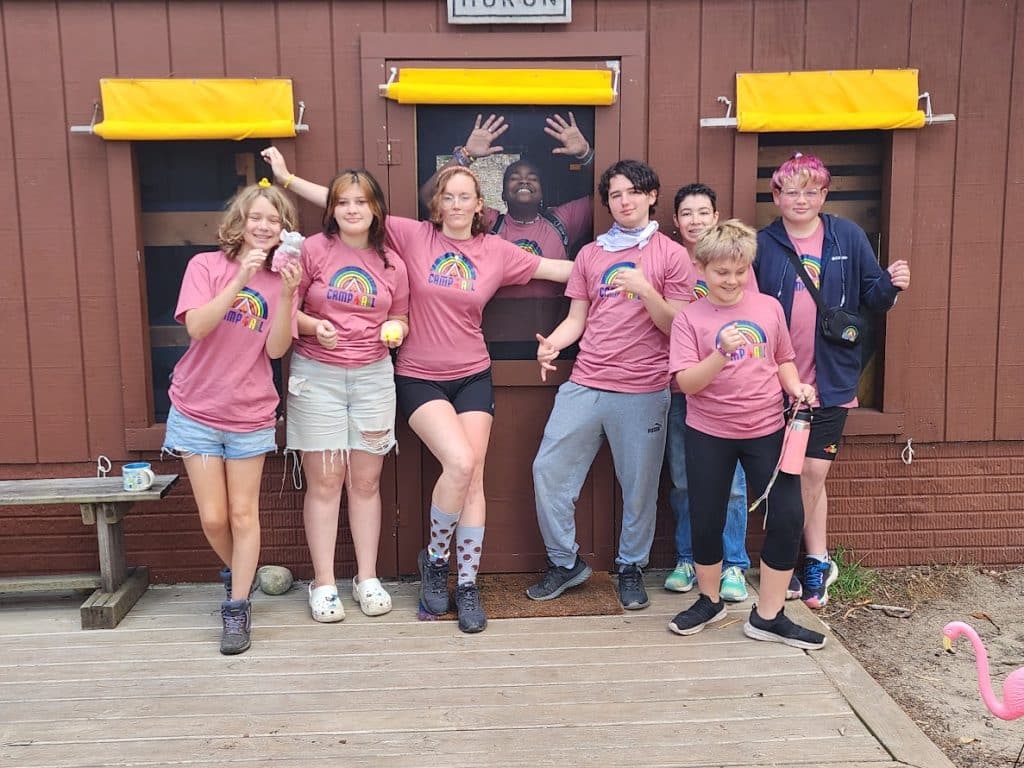
The cabins, named after historical LGBTQ+ icons like tennis champion Billie Jean King and civil rights activist Bayard Rustin, are divided by age.
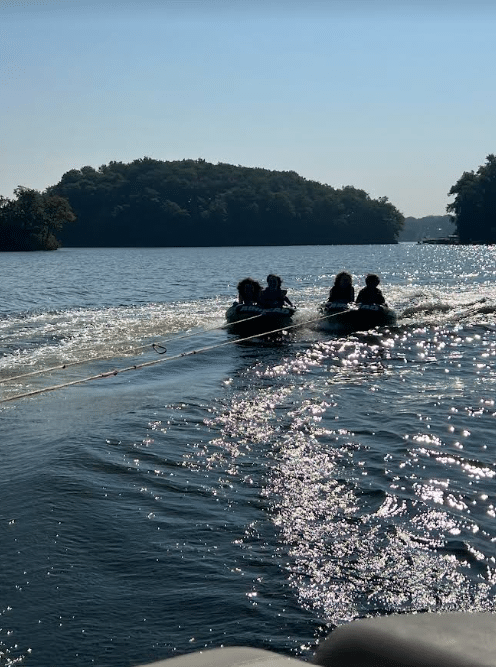
A main goal of the camp is to cultivate community among the campers that lasts beyond the days spent swimming, climbing rope and kayaking. Campers can stay in touch via a Discord channel throughout the year.
Education is a two-way street. The campers connect with the counselors, who become the role models sometimes missing in their hometowns. Counselors pick up knowledge about the expansive scope of sexual and gender identities from campers. “We’re all there together to learn,” said Geneva Maze, a founding member of Camp 4 All.
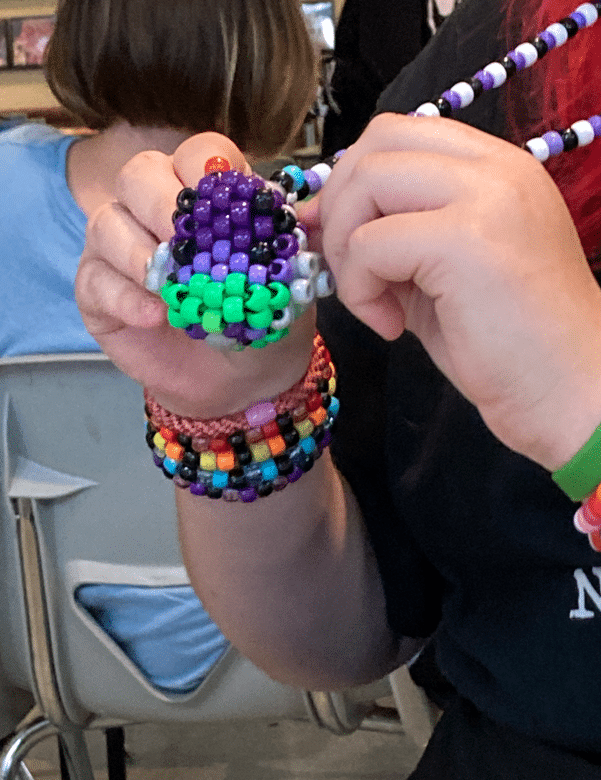
Playfulness, creativity and self-expression flow through Camp 4 All’s DNA. Campers have strung together friendship bracelets and necklaces whose colored beads match a smorgasbord of pride flags and grabbed free gender-affirming garments and accessories, like chest binders, that can transform the shape and silhouettes of their bodies.
“Through the years, you’re seeing confidence built,” said Maze, a former minister who identifies as a lesbian. She’ll never forget the day a camper discovered his power.
Maze was sitting in the dining hall and finishing up work. A young boy ran to her, crying. She thought something was wrong and wanted to help him. The boy thought because he was gay he’d never be athletic. “I’ve always been called a sissy,” Maze remembered the boy telling her. “I just did the rope course all by myself.”
Threats to mental health and safety
Recent years have seen a surge of anti-LGBTQ+ legislation. Eight states have passed laws requiring schools to notify parents when children seek to change their gender identity. Others have removed LGBTQ+ themed material from school curricula or imposed restrictions on gender-affirming healthcare for youth. These laws all target teenagers like the ones who jump in the lake at Camp 4 All.
The chilling of LGBTQ+ rights and protections, spearheaded by lawmakers in red states, coincides with a major demographic change: More adults identify as LGBTQ+, and Gen Z adults are more diverse in terms of LGBTQ+ identity compared to older generations, according to a report released early this year by the Public Religion Research Institute, or PRRI.
In states with stringent anti-LGBTQ+ laws, hate crimes at K-12 schools have more than quadrupled, a Washington Post analysis published in March found. Calls to LGBTQ+ crisis intervention hotlines have skyrocketed.
In February of this year, 16-year-old nonbinary student Nex Benedict got in a fight in a bathroom at an Oklahoma public school. Bullies had targeted the teenager because of their gender identity, according to media reports. A day after the altercation, Nex, who was Indigenous, collapsed in their home and died. In the aftershocks of grief, candlelight vigils across the country honored Nex’s life.
After every devastating loss, anxieties are rampant, and many LGBTQ+ kids aren’t alright. Thirty-nine percent of LGBTQ+ young people seriously considered attempting suicide in the past year – including 46% of transgender and nonbinary people, according to a report by The Trevor Project, an LGBTQ+ suicide prevention organization. Youth of color reported higher rates of considering suicide than their white peers.
And the ugly tenor of homophobic rhetoric is exacerbating the youth mental health crisis, especially among LGBTQ+ teens. In a national survey of more than 18,000 LGBTQ+ young people ages 13 to 24, 90% of respondents said current political rhetoric hurts their mental health, The Trevor Project revealed.
Threats to safety have pushed some families to rethink their futures. Forty-five percent of transgender and nonbinary young people said they or their family have considered moving to a different state because of LGBTQ+ related laws.
Compared to other states, Michigan is considered safer for LGBTQ+ people, Maze said.
Gov. Gretchen Whitmer, a Democrat who’s been an outspoken LGBTQ+ ally and has a gay daughter, signed into law a ban on conversion therapy and codified anti-discrimination protections under the Elliott-Larsen Civil Rights Act.
Yet battles over recognition and acceptance of LGBTQ+ people continue in the Great Lakes State. Some communities have forbidden Pride flags in schools and public property. A group of parents and students in Vicksburg, Michigan filed a lawsuit against the school system’s transgender bathroom policy. The Dearborn school district removed an LGBTQ+ themed book from school shelves after a raucous school board meeting teeming with jeers and screams. Some parents complained about the sexual imagery found within some books, deeming the material inappropriate for children.
Last year, the FBI released its annual crime report for 2022, which showed that hate crimes against anti-LGBTQ+ people were up sharply from the previous year, with a 14% increase in reports based on sexual orientation and a 33% jump in hate crimes based on gender identity.
“I see a lot of depression and suicide in the transgender youth community because of the political hate that’s going on.”
Geneva Maze, Co-Founding Member of Camp 4 all
Many LGBTQ+ young people are vulnerable and unprotected from the threats and hostile discourse, worsening an ongoing mental health crisis.
“I see a lot of depression and suicide in the transgender youth community because of the political hate that’s going on,” Maze said.
Camp 4 All has received derogatory social media comments, so staffers decided to remove information on some campers online to protect them from harassment.
“People are going to do that, because that’s the political climate. The grievances and negativity rule the day,” Yuhaus said. “And I don’t know if that’s ever going to change. We do our best to maintain positive attitudes and do what is right.”
The camp hasn’t publicized locations of their campsites out of concern they’ll attract negative attention, Hickey said.
“We put those barriers and those precautions in place, but overall, the support is very positive,” Bettcher said. “There’s a lot more support than there is pushback.” Still, worries linger, since the camps are often held in more conservative areas.
Even as negative headwinds threaten to dampen their good times, Yuhaus is prepared for potential conflict and puts his campers first. He garnered outrage from some parents a few years ago after performing in drag as part of a fundraiser, but he feels confident in his decision.
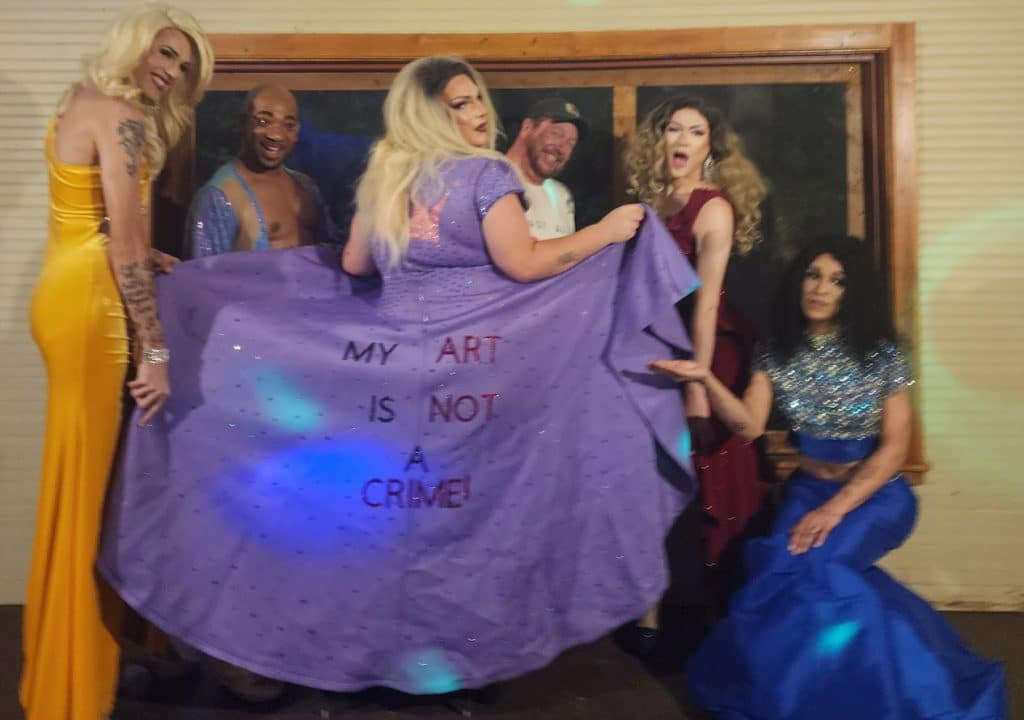
Drag performances have become culture-war flashpoints in many places, including Ohio, where Camp 4 All hopes to expand its programming in the future. Local lawmakers have proposed a bill banning drag entertainers from performing before children, which has been met with passionate opposition.
For Yuhaus, the camp’s drag shows must go on.
“We’re still moving forward as if it’s okay for us to do that. It’s a part of LGBTQ history, culture. It’s part of who so many of them are,” Yuhaus said.
Camp 4 All aspires to be a positivity-only zone, although that can be a hard promise to keep. During orientation, counselors stress the camp is a safe place to express their feelings. Campers can separate themselves from traumatic conversations if they feel uncomfortable.
“Most of our campers have switched schools or gone to online school because of bullying. It’s just a lot for them to deal with.”
Gigi Hickey, Staff member of Camp 4 All
It was eye-opening for Hickey when some campers shared painful personal stories. She came out as trans in college and understands the challenges of being true to yourself while going through puberty can be brutal.
“Most of our campers have switched schools or gone to online school because of bullying. It’s just a lot for them to deal with,” she said.
Camp 4 All has big plans ahead: The camp hopes to create a bridge program providing leadership training for older campers. One of the biggest hurdles is a lack of transportation options. To make the camp more accessible, Yuhaus wants to buy a bus.
Another hope is to purchase land and create their own campsite, made possible by donations that support the small team’s ambitions. “We’re gonna have to find some people that like us a lot to write some checks,” Yuhaus said.
How summer camp for LGBTQ+ teens becomes a life-changing experience
Nile is now a student at the University of Michigan-Dearborn, where they are taking women’s and gender studies classes. Sporting a Camp 4 All bucket hat, Nile sat in Kitab Cafe and Bookstore nestled on Holbrook Avenue in the multicultural enclave of Hamtramck, Michigan, where they now live.
On an ordinary spring afternoon, the vivid memories of summer camp came flooding back: the first taste of freedom that shaped the arc of Nile’s life.
At 16, Nile scrolled through Instagram and found a post about Camp 4 All. One of the camp’s speakers was a social justice organizer they admired.
“How is that real?” Nile wondered. They’d been a Girl Scout, which was fun, but had never seen anything like Camp 4 All.
On the way to camp, Nile didn’t know anyone. “I was feeling apprehensive and nervous and scared,” they said. Nile remembered sitting on the ground, alone and watching other kids getting on the bus. Every single camper had colorful hair. Nile’s hair was purple.
Something stirred in them.
“It immediately felt like a place where I would be able to just be by myself and not feel by myself,” Nile said.
After they arrived, Nile started noticing the little changes that made camp special – like the gender-neutral sign affixed to the bathroom doors that defied gender norms. “I kind of love this,” Nile thought. “Such a small thing is a big deal.”
Camp 4 All “was the first time I really got to see, in person, the kind of person I wanted to be.”
Naja nile, former camper and now a counselor at camp 4 all
Growing up, Nile had adult role models who were kind and accepting but didn’t have ones who shared the same identity. At camp, Nile recalled the queer and trans counselors were always caring and sensitive, always speaking their mind. One counselor had started taking hormones and gotten top surgery. All of them inspired Nile. “It was the first time that I really got to see, in person, the kind of person that I wanted to be,” they said.
Nile got brave. They put on a harness and climbed the high ropes, moving closer to the sky. Forty feet up in the air, isolated from the world but still part of the community of people down below, Nile felt like a normal kid.
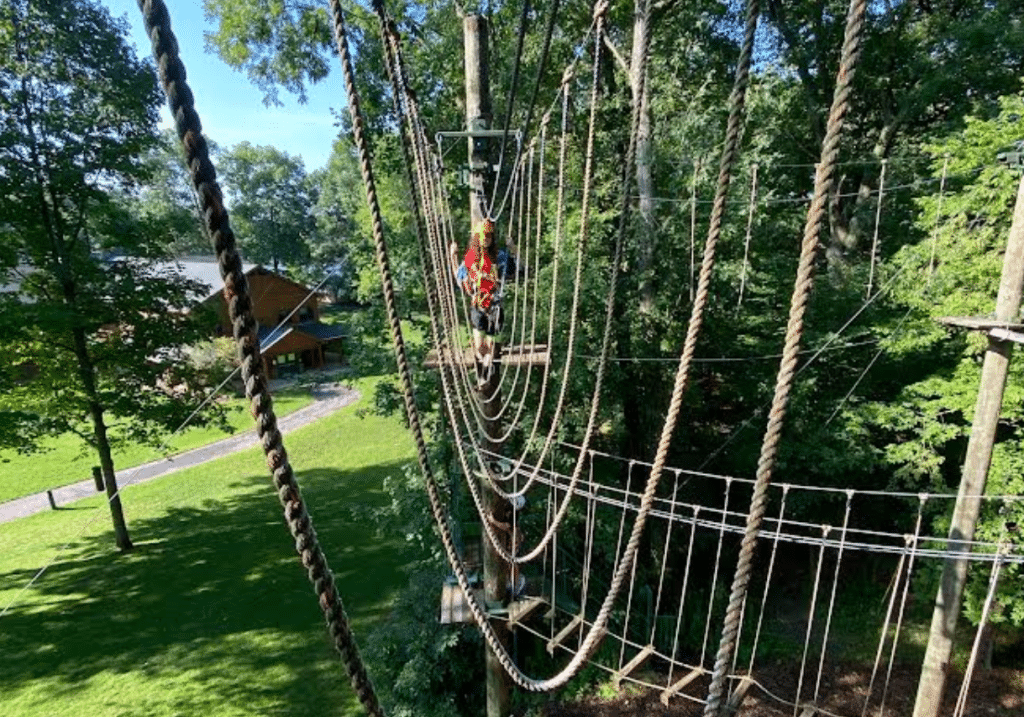
Some campers weren’t restricted by personal labels. That exploration left an impression on young Nile.
“I felt a lot of freedom to do the same thing, even though I already felt really confident in my identity and who I was and how I wanted people to perceive me,” they said.
Then Nile found joy on the waterfront.
The week ended. Nile had a new awareness of the people around them and more clarity about their life goals. They returned but eventually aged out of the program. When that happened, Nile remembered feeling dejected. There wasn’t a social space that felt the same as camp. They didn’t have anywhere else to go.
Instead, Nile hit the books and graduated high school. As the COVID-19 pandemic surged, the camp shut down. As the restrictions lifted, Camp 4 All reemerged, and staffers posted a call for camp counselors on social media. Nile immediately applied.
These days, Nile is one of Camp 4 All’s summer counselors. They know CPR and first aid, the rules of the camp and how to keep young people safe. Early in the morning, they’ll wake up the kids and get them ready for breakfast and a day of summer camp magic. They help campers get from point A to point B and feel accepted and appreciated for who they are. The cycle of care rolls along.
Young LGBTQ+ people go through so many ups and downs, Nile said, enduring microaggressions and personal attacks inside homes, schools and communities, and keeping up with the latest political news to stay safe. Camp 4 All helps them escape and have fun, even if it’s just for a little while.
As a counselor, Nile has seen campers hug each other and cry and not want to go home when the week ends. “I’m tearing up just thinking about it,” Nile said inside the Hamtramck coffee shop.
“Joy is integral to survival,” Nile said. “It’s important to take time and invest in yourself and your happiness and your mental health. Because no one else will.”
This story was supported by the Solutions Journalism Network’s HEAL fellowship and the National Institute for Health Care Management Foundation.
The name “MindSite News” is used with the express permission of Mindsight Institute, an educational organization offering online learning and in-person workshops in the field of mental health and wellbeing. MindSite News and Mindsight Institute are separate, unaffiliated entities that are aligned in making science accessible and promoting mental health globally.


Author

Related Articles
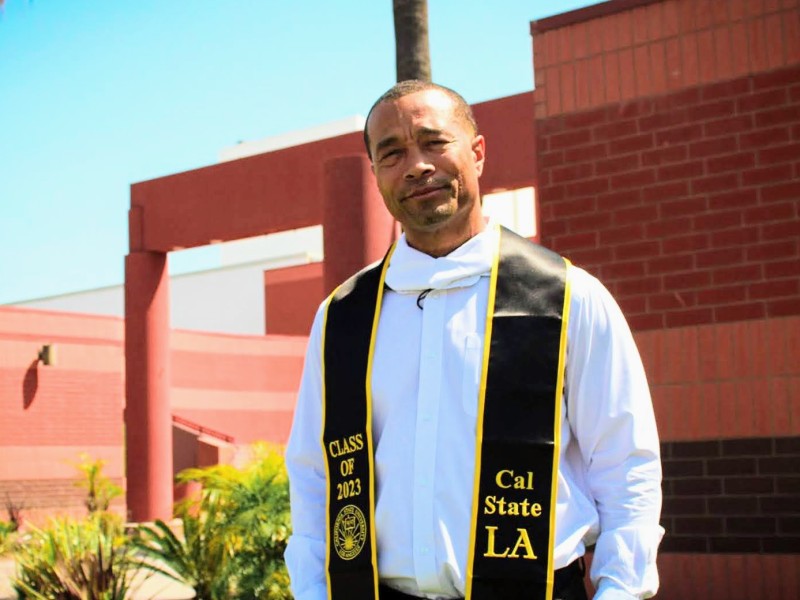
Formerly Incarcerated Mentors Are Changing Lives in California
Peer support specialists provide valuable mentorship and emotional support — grounded in hard-earned personal experience.
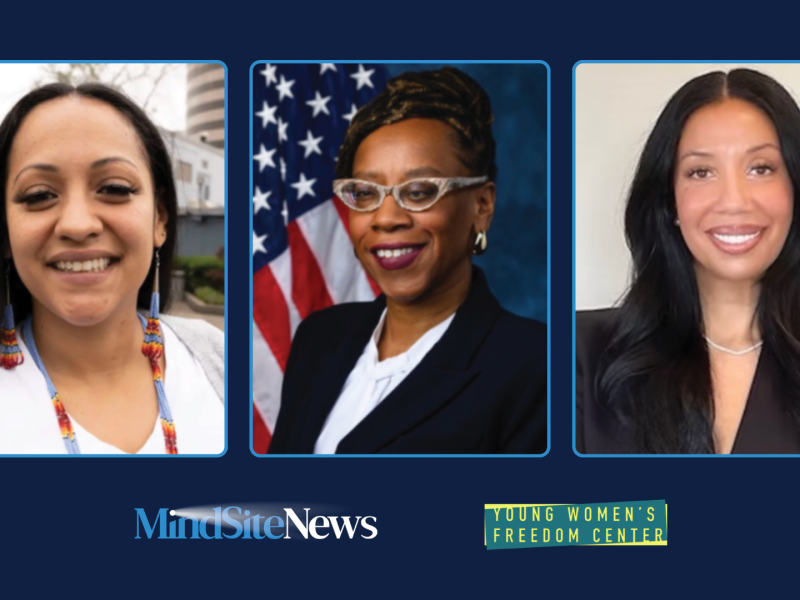
At the Young Women’s Freedom Center, Sisters Are Doing It for Themselves: Listen to the Podcast
Congresswoman Lateefah Simon and leaders of the Young Women’s Freedom Center were in conversation with MindSite News at this Commonwealth Club panel.
Hive Mind: The Surprising Mental Health Benefits of Beekeeping
Emerging research shows the healing power of the hive for people grappling with stress and trauma.