
The Troubled Teen Industry’s Staggering Record of Abuse
Our August 31 series covered an alarming new trend in teen psychiatric residental care centers and the survivor movement for justice.


Tuesday, September 3, 2024
By Courtney Wise

Hello MindSite News readers! We’re pleased to bring you a special edition of the parenting newsletter that focuses on the troubled teen industry, one that runs remote residential treatment centers for kids deemed to have behavioral health problems. Patients from many of these treatment centers, as well as Senator Ron Wyden, call the industry “taxpayer-funded child abuse.”
This is not like residential care in a well-regarded psychiatric facility. As part of the troubled teen industry, scores of teens were woken up at night in their homes by employees of a care facility and forcibly taken to “wilderness camps” or driven across state lines to remote psychiatric residential treatment facilities, where many suffered beatings, sexual assaults, severe emotional abuse, dangerous restraints and over-medication, and seclusion for weeks or even months at a time. Some also witnessed the suicides and deaths of fellow “patients.” In our sidebar, you’ll meet five survivors of these places, now grown, who are leading a movement to reform the industry. The leader of the survivors’ movement: celebrity model and businesswoman Paris Hilton, who spent time at the notorious Provo Canyon School in Utah.
On August 31, we released our two-part series, which focused on scandals at four troubled teen industry leaders, including Acadia Healthcare, a Tennessee-based, publicly traded company that runs 253 behavioral treatment centers, is valued at $6.5 billion and gets 53.9 percent of its revenue from Medicaid. Media accounts have reported widespread sexual assaults and beatings of out-of-state foster care children at Acadia centers, and on Sept. 1, the New York Times reported on Acadia’s ill treatment of adult patients. Despite its reported abuses, the chain has shared plans to expand its teen residential treatment centers. “We haven’t seen any real impact from the Senate hearing,” Acadia CEO Christopher Hunter said in an Aug. 1 earnings call. Regulators, he said, “understand our facilities are providing high-quality care to this population” – something the Senate report clearly disputes.
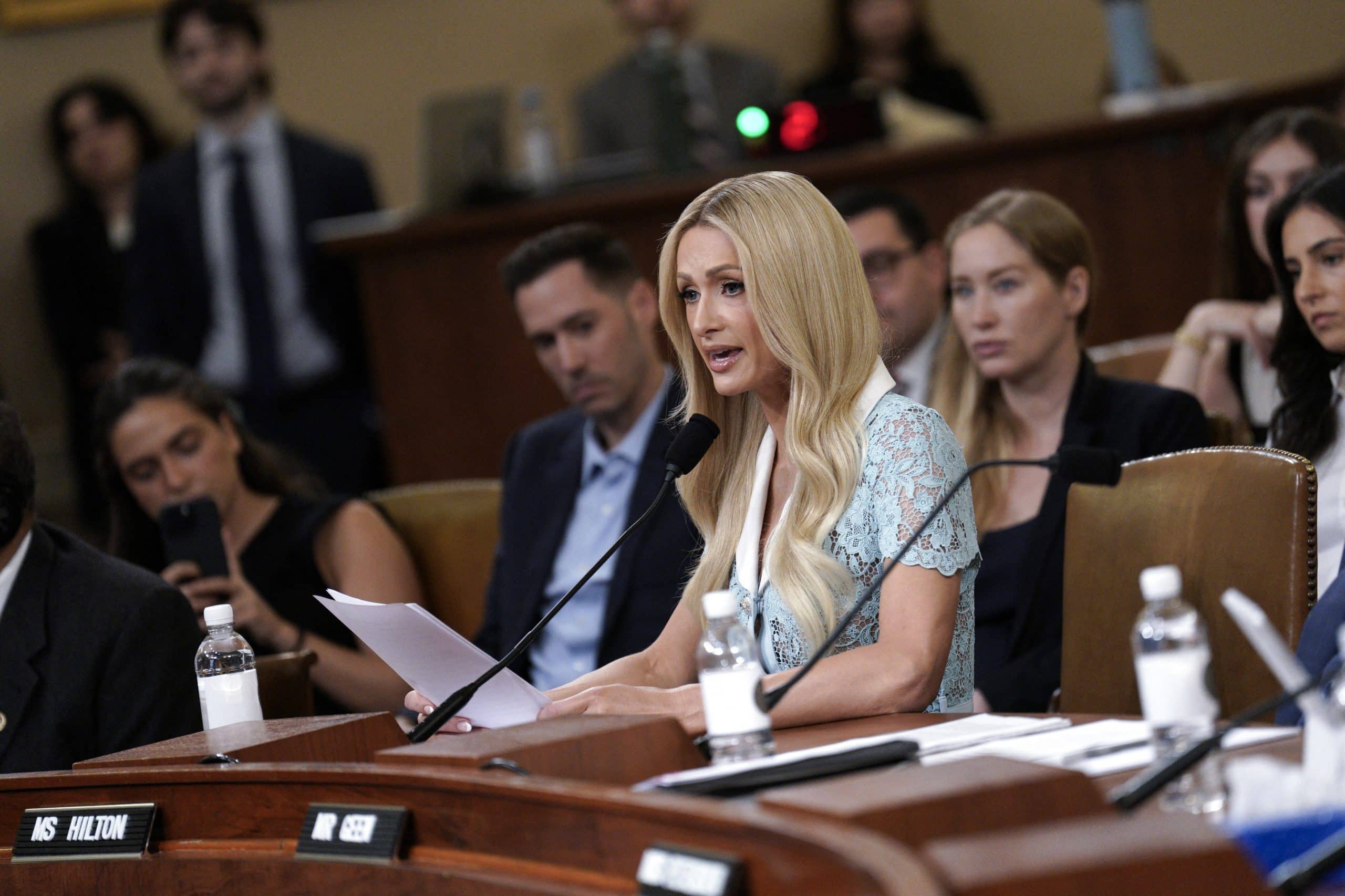
Our series, which examines an alarming new trend in the industry and a catastrophic failure in regulation, was written by investigative reporter Art Levine, author of Mental Health Inc. and an award-winning contributing editor at The Washington Monthly who has written for Salon, The Atlantic and many other publications.
MindSite News is continuing our investigation of the troubled teen industry, so if you are a former patient, parent or employee of a psychiatric residential treatment facility, we are interested in hearing from you. You can reach us at info@mindsitenews.org.

Troubled teen industry is ‘taxpayer-funded child abuse,’ Senate report and Paris Hilton say. Where are the government regulators?
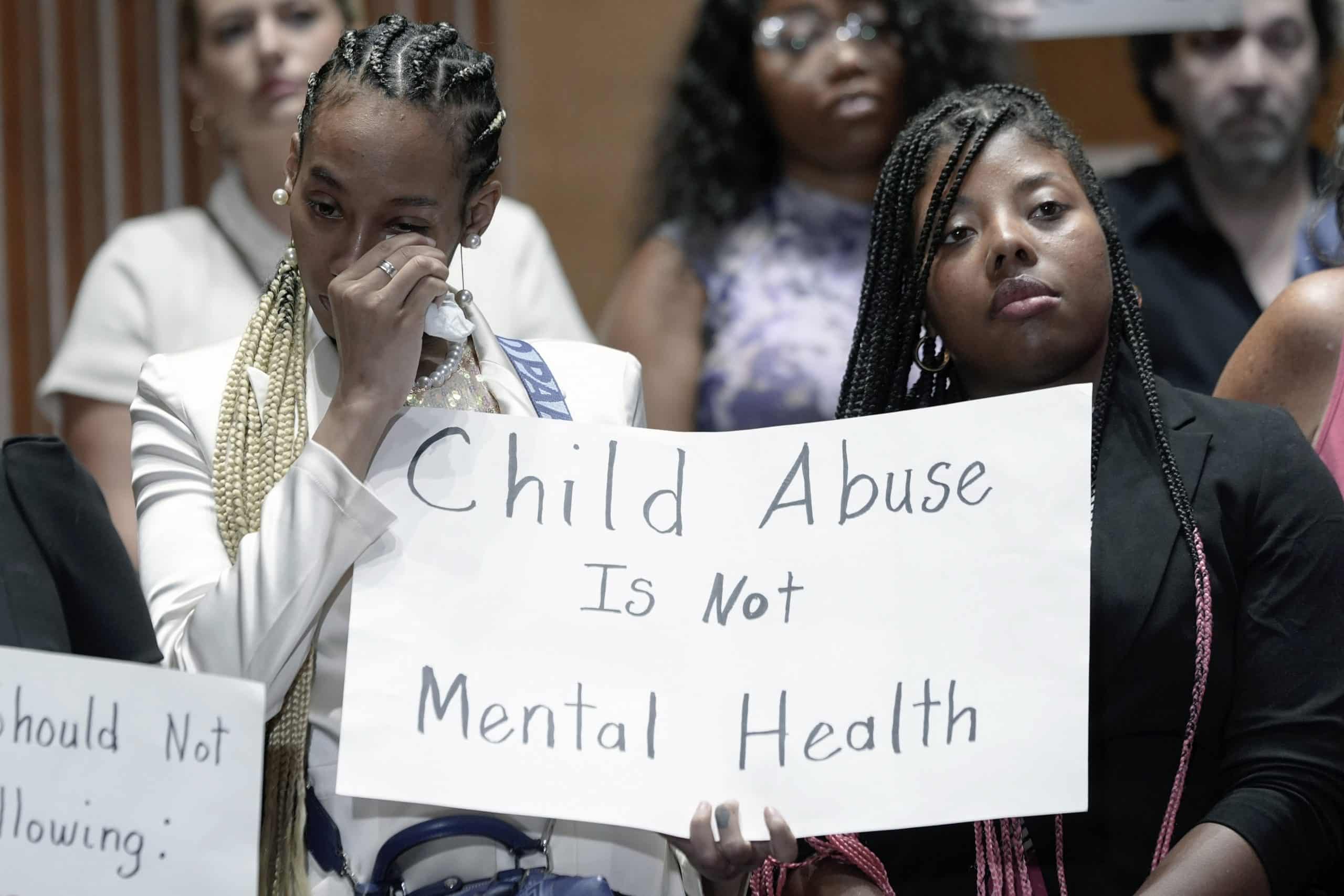
An excerpt from part 1 of the MindSite News series on the troubled teen industry:
Cornelius Frederick was known as a jokester by other kids at Lakeside Academy, a Michigan facility for troubled youth owned by Sequel, a residential treatment chain. When the 16-year-old foster child threw bits of bread from a sandwich at other kids in the cafeteria in April 2020, he’d already been physically restrained by staff members 10 times in the six months he’d spent there, according to a state investigation and legal depositions.
But this time, several staffers piled on him, and held him face-down for 12 minutes, as he slowly suffocated to death, a scene that was caught on camera.
A medical examiner ruled the death a homicide, and two staff members pleaded no contest to charges of involuntary manslaughter, while an on-duty nurse was charged with felony-level child abuse for failing to provide medical care or call 911 for 12 minutes after finding Frederick unresponsive. A judge decided the death resulted from poor training and oversight, and the three employees received probation.
No executive of the facility, which closed a few months after Frederick’s death, or Sequel Youth and Family Services, the chain of treatment centers that owned it, has been held to account. Many of Sequel’s treatment centers were sold or shuttered after being hit with abuse allegations, and some now operate as part of a mysterious new chain called Vivant Behavioral Health that has no website or listed phone number. Both Sequel and Vivant were founded by a former Jiffy Lube executive, Jay Ripley.
Investigators who put together a report on the troubled teen industry for the U.S. Senate Finance Committee say Ripley used Vivant to buy troubled Sequel facilities that are in legal jeopardy as a way of changing owners and dodging accountability.
For more than three decades, investigative journalists and advocates have been exposing the abusive behavior, violence and degrading treatment of children taking place in many of these teen treatment centers. Yet the facilities have continued to operate, with little apparent change in the types and frequency of abuse.
But today two things have changed: The revenue streams that support these companies increasingly come not just from self-paying parents or private insurers but from tax dollars provided by the federal Medicaid program and state child welfare systems. These funds continue to flow despite the fact that the companies are mired in lawsuits charging them with abuse, according to the Senate report. Neglect and physical abuse of at-risk children and teens is ‘routine’ in psychiatric residential treatment centers, which are raking in billions with the aid of Medicaid funding, charges Sen. Ron Wyden, who led the Senate hearing.
Now, only about a quarter of youth are placed in these programs by parents, according to estimates by the American Bar Association. Instead, most come from subsidized foster care, specialized disability education programs, juvenile justice referrals and frantic middle-class parents who can’t afford pricey care and relinquish custody of their children to the state to get help. All this keeps the programs stocked with a fresh supply of at-risk kids – whose families often have few resources and little power.
The second big change is that the children once treated in these facilities – and in some cases, their parents – have become increasingly effective advocates working to expose and end the horrors they were subjected to, including sexual abuse, which the Senate report concluded was “endemic to the industry.”
Outraged by the lack of meaningful oversight by state and federal authorities, activists have built a movement to fight against the “troubled teen industry,” launching organizations like Unsilenced. The group has compiled a database of 399 youth and young adult deaths allegedly linked to teen treatment facilities and created a website to share survivors’ stories.
Read the rest of the story here.
How Paris Hilton and other survivors of the troubled teen industry unleashed a movement
Meet five true-life avengers who are holding the troubled teen industry accountable
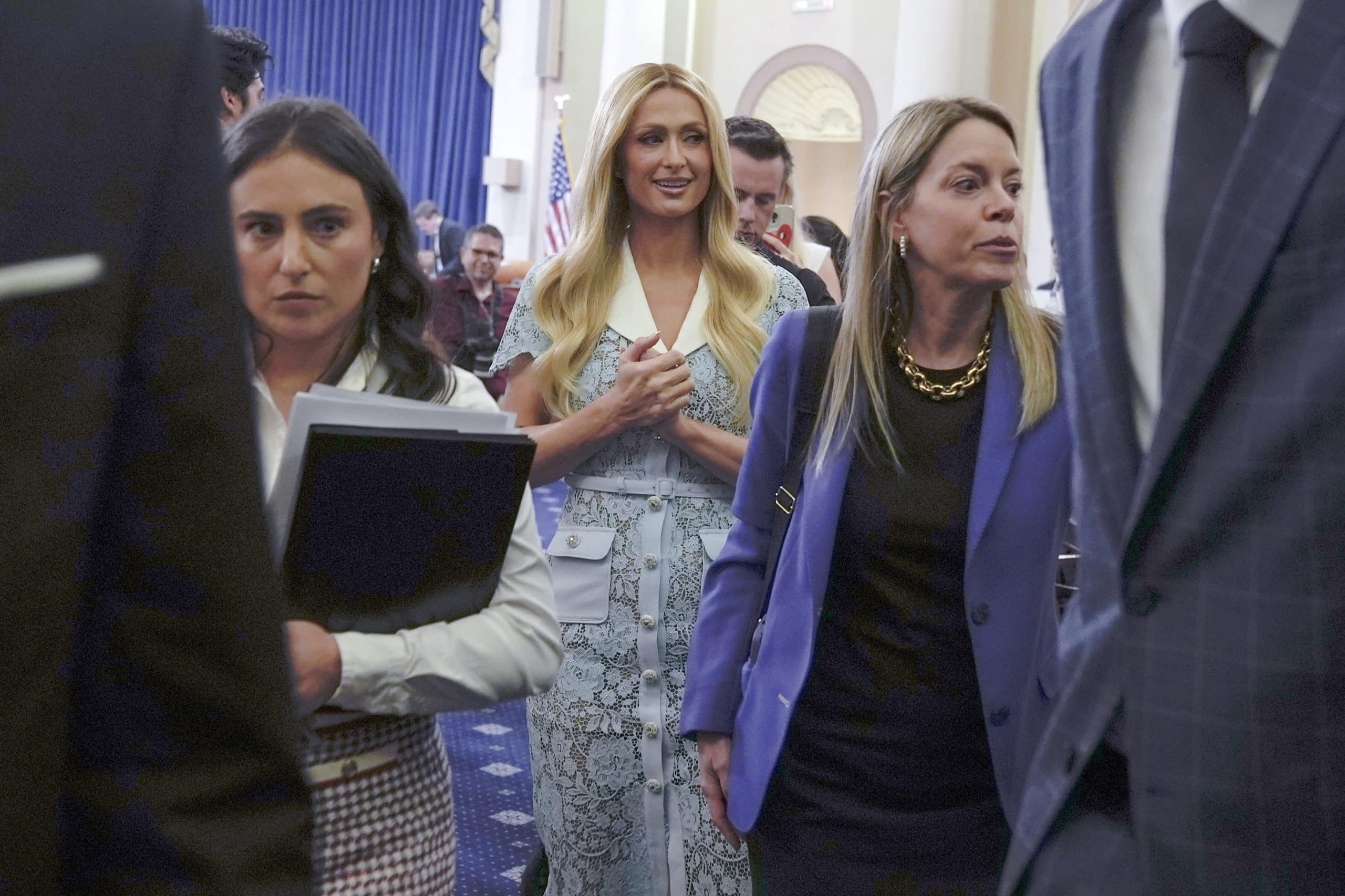
Parents, lawmakers, and anyone who has ever worked in a youth residential treatment center: Survivors of the troubled teen industry would like a word with you.
As MindSite News correspondent Art Levine has written, “For decades, as news of deaths and mistreatment in the so-called troubled teen industry cropped up in the headlines or evening news, the voices of the young people held in these facilities were heard only as victims – or when they grew older, as grownups struggling to expose abusive facilities. Today, far more survivors are now adults, and they are spearheading a movement to reform the industry.
“These survivors, as they call themselves, are fighting to ensure that more teens don’t endure the horrors they experienced. Their biggest star, Paris Hilton – the hotel heiress, businesswoman and celebrity influencer – spent nearly a year of her adolescence as an unwilling resident of Provo Canyon School, a psychiatric youth residential treatment center in Utah. She is now using her celebrity and 11:11 Media Impact – the charitable division of her global media company – to shine a media spotlight on these programs, while also helping to fund and promote a movement of activists who are getting into the weeds to shape policy and proposing regulations.”
These survivor-activists are also helping to produce hard-hitting media series such as the highly produced podcast Trapped In Treatment, which, like the Max series Teen Torture Inc., investigates the horrors of the troubled teen industry. (See Levine’s sidebar for more on the survivors’ movement).
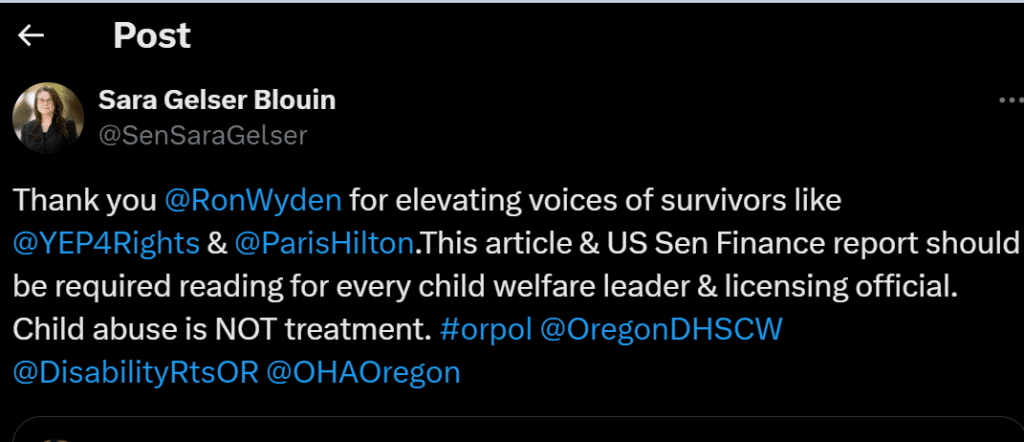
Shortly after we published our series, author Art Levine forwarded us a response to his tweet about it from Senator Sara Gelser (D-Oregon), a consistent champion of children in care. She wrote that our MindSite News article “should be required reading for every child welfare leader & licensing official.”
Read the rest of the story here.
If you or someone you know is in crisis or experiencing suicidal thoughts, call or text 988 to reach the 988 Suicide & Crisis Lifeline and connect in English or Spanish. If you’re a veteran press 1. If you’re deaf or hard of hearing dial 711, then 988. Services are free and available 24/7.
Recent MindSite News Stories
If you’re not subscribed to MindSite News Daily, click here to sign up.
Support our mission to report on the workings and failings of the
mental health system in America and create a sense of national urgency to transform it.
For more frequent updates, follow us on Facebook, Twitter and Instagram:

The name “MindSite News” is used with the express permission of Mindsight Institute, an educational organization offering online learning and in-person workshops in the field of mental health and wellbeing. MindSite News and Mindsight Institute are separate, unaffiliated entities that are aligned in making science accessible and promoting mental health globally.
Copyright © 2021 MindSite News, All rights reserved.
You are receiving this email because you signed up at our website. Thank you for reading MindSite News.
mindsitenews.org

The name “MindSite News” is used with the express permission of Mindsight Institute, an educational organization offering online learning and in-person workshops in the field of mental health and wellbeing. MindSite News and Mindsight Institute are separate, unaffiliated entities that are aligned in making science accessible and promoting mental health globally.


Author

Related Articles
He Almost Killed His Father. Now He Helps Others At Risk.
In today’s newsletter, we explore how one man healed after a dangerous psychotic break that nearly led him to murder.

Fallout Over Supreme Court Ruling on Conversion Therapy
Despite the Supreme Court ruling, conversion therapists can still be sued for a practice the United Nations calls “torture.”

On No Kings Day, Millions Rallied to Denounce Trump and “Epstein War”
Anti-Trump protests took place in all 50 states, Puerto Rico and other US territories and in countries around the world.
