
Investigating the Troubled Teen Industry: Behind the Story
Our writer and editors talk about what led them to cover the shocking abuses taking place in teen psychiatric residential centers.


September 5, 2024
By Courtney Wise

Hello MindSite News readers! We’re pleased by the strong response to last week’s special issue of the parenting newsletter that focused on the troubled teen industry, which runs residential treatment centers for kids deemed to have behavioral health problems. A couple of our editors and writers have reported on the abuses of this industry for years and will share how they first learned about the hellish conditions of many residential treatment centers that Sen. Ron Wyden called “warehouses of neglect.”
Parents and caregivers, these are not the kinds of places you want to surrender your children to. Far from the kind of professional treatment you would receive in a well-regarded hospital’s psychiatric residential treatment center, remote and poorly staffed troubled teen centers are more akin to teen jails — or worse.
But first we’d like to share another public response from a reader to our troubled teen article. Yesterday we were honored to find that Paris Hilton, herself a survivor of the troubled teen industry who is leading the movement for change, thanked us on her Twitter account for our exposé (see below). “Loved this read,” Hilton wrote. “Thanks for the investigation @mindsitenews…so grateful for people shining a light on our work and the movement.”

In this edition, we’ll also talk about an experimental cancer drug that shows promise in unlocking a treatment for Alzheimer’s in humans, and more.
Let’s start with the account of how MindSite News’ editors, two longtime journalists, first learned about the troubled teen industry:
How my brother nearly landed in a troubled teen facility run by a sex criminal
MindSite News editor Diana Hembree first became interested in investigating the troubled teen industry when her brother got in trouble decades ago for swigging some Jack Daniels in high school and being chased by the principal. The potential consequence — a stay in a remote ‘reform school’ wilderness camp in north Georgia– was far more dangerous than anyone suspected. But first, a detour to Mississippi:
“Years ago, as part of a national investigation of corporal punishment in the schools for Parenting magazine, then part of Time Inc., Rob Waters and I investigated the founder of a so-called Christian school and residential treatment center for troubled teenagers in Mississippi that was well-known for beatings its charges and other cruelty. A prominent attorney in the area said that he had closed down the place and others in what he called his “crazy preacher file” by charging them with kidnapping. But like many other abusive religious treatment centers, he said, this one kept popping up under new names. I’ll never forget what the Reverend at the center said when asked about the beatings at his troubled teen facility. He told us that yes, he did indeed have to beat the devil out of the kids, adding earnestly: “I soak the switches in salt water first — so it hurts more.”
“The preacher’s words jogged loose an old memory: My brother Bill, who was quite the hellraiser during high school, nearly found himself at a troubled teen center himself up in northwest Georgia. My father and mother drove us up to a place called the Anneewakee Treatment Center in Douglasville, which purported to be a wilderness therapy camp. I thought we’d see some boys hiking, laughing or maybe playing guitar, but all we could see were a couple of dreary barracks and dirt, along with a silent teen digging holes with a shovel. Bill, our parents and I listened as the founder, Lou Poetter, an unpleasant-looking man who kept leering at my brother, talked at length about how the center would “straighten this here boy right up” and “make a real man out of him.”
“I remember feeling a chill as he spoke and was getting ready to beg my parents not to send Bill there. But when Poetter finished his tour and asked when my brother would be arriving, my father said curtly, “He won’t be coming here.” Later he told me that he and my mother had felt a strong sense of foreboding about the man and the place, as did my brother, who told me he had never been so relieved as to see the desolate-looking camp fading into the distance as we drove off.
Fast forward to the present: I recently came across a mention of the Anneewakee Treatment Center on law.com: It turns out 110 former youth “patients” had sued the place for physical and sexual abuse, exploitation of child labor and deprivation of education practiced at the center from its inception through the 1980s. Lou Poetter, the man we spoke with at Anneewakee and who the law article called “one of Georgia’s most famous sex criminals,” pled guilty to 18 counts of sodomizing his charges and died at home some years after serving out a 20-year prison sentence.
This accounts in part for my deep interest in wilderness therapy camps, a topic that my friend and colleague Paige Bierma also worked on with me for a wrenching story called “Death Trip” about a Utah wilderness camp for the late Vibe magazine. She later revisited the story in a short update for another outlet.
So it was natural for Rob and I to want to cover the troubled teen industry and explore an alarming new trend in the business, as well as a recent Senate report that calls psychiatric residential treatment centers “taxpayer-funded child abuse,” marked by horrific physical and sexual assaults, emotional maltreatment, forced retraints, seclusion and even death. In our story “The Troubled Teen Industry is ‘Taxpayer-Funded Child Abuse,’ Senate Report and Paris Hilton Say. Where Are the Regulators?” journalist Art Levine discusses the alarming misuse of federal funds and a catastrophic failure to regulate.
We were also glad to be able to cover a movement led by survivors of the troubled teen industry, headed up by celebrity model and businesswoman Paris Hilton; it has called for reform and a shutdown of scandal-ridden teen residential centers. If you missed Art Levine’s story on the survivor movement, you can read it here.
—Diana Hembree
Behind the story with Art Levine

Art Levine is the author of Mental Health Inc., a 2017 Newsweek exposé on the harrowing conditions inside a sadistic Alabama bootcamp for troubled kids (above), and a contributing editor at The Washington Monthly. He wrote the two-part series on the troubled teen industry for MindSite News and plans to keep covering the industry. As Levine puts it, “Since I began covering mental health issues in the early 2000s, I’ve found there is arguably no institution mired in scandal, deaths, abuse and sexual assaults as impervious to reform as the troubled teen industry.”
Read his MindSite News “behind the story” piece here, which credits Paris Hilton and other courageous survivors for alerting the public to the abuse going on behind closed doors in the troubled teen industry. “Without the voices, information and evidence from first-hand survivors,” he says, “I couldn’t investigate the ongoing scandals that make up a large part of the reporting I’ve done for MindSite News on this issue.”
More news on the troubled teen industry
Another day passes, another abuse at a residential center makes headlines. Here are a couple of recent stories:
—The HuffPost’s story Sept, 3 story “Abuse Runs Rampant At Utah ‘Troubled Teen’ Facility: Report.” Elevations Residential Treatment Center in Syracuse, Utah, allegedly abused its young patients instead of providing care.
— How the Troubled Teen Industry Preys on the One Percent.” An earlier story, this Town and Country article doesn’t mention that Medicaid dollars are being used to funnel thousands of at-risk kids, including foster children, into abusive residential ‘treatment’ facilities. However, its take on how well-off families are lured into these arrangements is spot-on.
Experimental cancer drug offers exciting potential for Alzheimer’s treatment
The older we get, the more we tend to worry more about our parents and grandparents getting the dread diagnosis of Alzheimer’s disease. There is no cure to date, but scientists now believe that an experimental cancer drug may one day be able to reinvigorate brain cells compromised by Alzheimer’s.
So far, the drug has shown positive effects in mice with the disease, leading to hopeful hypotheses for future research in humans. Researchers at Stanford unintentionally stumbled upon the finding, while conducting an experiment in which they removed the IDO1 enzyme from the brains of mice with Alzheimers. As IDO1 enzyme is critical to a cell’s metabolic function, researchers hypothesized that, in mice with Alzheimer’s, the enzyme itself was damaged in a way that limited the brain’s ability to process its nutrients correctly. Expecting a steeper decline in their already reduced function, they observed the mice regain cognition.
“It was such a profound rescue that we sort of went back to the drawing board and tried to figure out what was going on,” Stanford neurologist and neuroscience Katrin Andreasson told NPR. “But no, it was the complete opposite.”
Findings in the follow-up experiment, recently published in Science, showed that blocking the IDO1 enzyme with the experimental cancer drug reactivated the mice’s brain astrocytes, which provide energy to neurons—the cells that are in charge of learning and memory. That’s because when the harmful plaques and tangles of Alzheimer’s begin to form in the brain, levels of IDO1 rise, prompting astrocytes to shut down. “They’re kind of put to sleep,” Andreasson said. So “you’ve got to wake them up to get them to help the neurons.” Blocking the IDO1 enzyme did just that, enabling astrocytes to get back to their job.
Further testing showed that the Alzheimer’s-affected mice even resumed normal function, scoring as well as mice without a history of Alzheimer’s on cognitive tests, including remembering how to escape an intensely bright light. Remarkably, scientists found the same results in tests with the cancer drug on human astrocytes and neurons derived from Alzheimer’s patients.
It shows that “we can have these metabolic changes in our brain, but they’re reversible,” said Shannon Macauley, an associate professor in the College of Medicine at the University of Kentucky who is unaffiliated with the study. Metabolic treatments, like the cancer drug used in the experiment, might even one day lead to enhancements of existing Alzheimer’s drugs that remove amyloid plaques, she added. But—not before similar promising results are shown in people.
In other news…
Medicine knows mental health affects physical health—and needs to start acting like it, argues emergency physician and Columbia medical professor Helen Ouyang, in this op-ed for the New York Times. As she encounters more patients willing to discuss how their mental state might be impacting their physical wellness, it’s especially frustrating. Not even she is properly equipped to help connect patients to mental health treatment when they want it, and it’s an unresolved problem for current medical students. That must change, Ouyang says. For those concerned about what it would cost, there’s evidence that a solution would save money.
“Patients with concurrent mental illness generate some of the highest total medical costs in the United States, most of which is not spent on behavioral health,” she writes. “But mental well-being has been shown to reduce overall health care usage and costs, as well as improve education and employment. For adults who have chronic medical conditions, receiving mental health services was found in one analysis to reduce their overall health care expenditure by nearly 22 percent. An ounce of psychological prevention may well be worth a pound of medical cure.”
Broken Open is the title of William Cope Moyers latest memoir. In it, the recovery advocate and vice president of public affairs at Hazelden Betty Ford discusses his personal battles with addiction, recovery, and now, aging in sobriety. He shares more about the complexities of the journey in this interview about his life and the new book with the MinnPost.
If you or someone you know is in crisis or experiencing suicidal thoughts, call or text 988 to reach the 988 Suicide & Crisis Lifeline and connect in English or Spanish. If you’re a veteran press 1. If you’re deaf or hard of hearing dial 711, then 988. Services are free and available 24/7.
Recent MindSite News Stories
How Paris Hilton and Other Survivors of the Troubled Teen Industry Unleashed a Movement

Meet Five True-Life Avengers Who Are Holding the Troubled Teen Industry Accountable. Continue reading…
Troubled Teen Industry Is ‘Taxpayer-Funded Child Abuse,’ Senate Report and Paris Hilton Say. Where Are the Government Regulators?
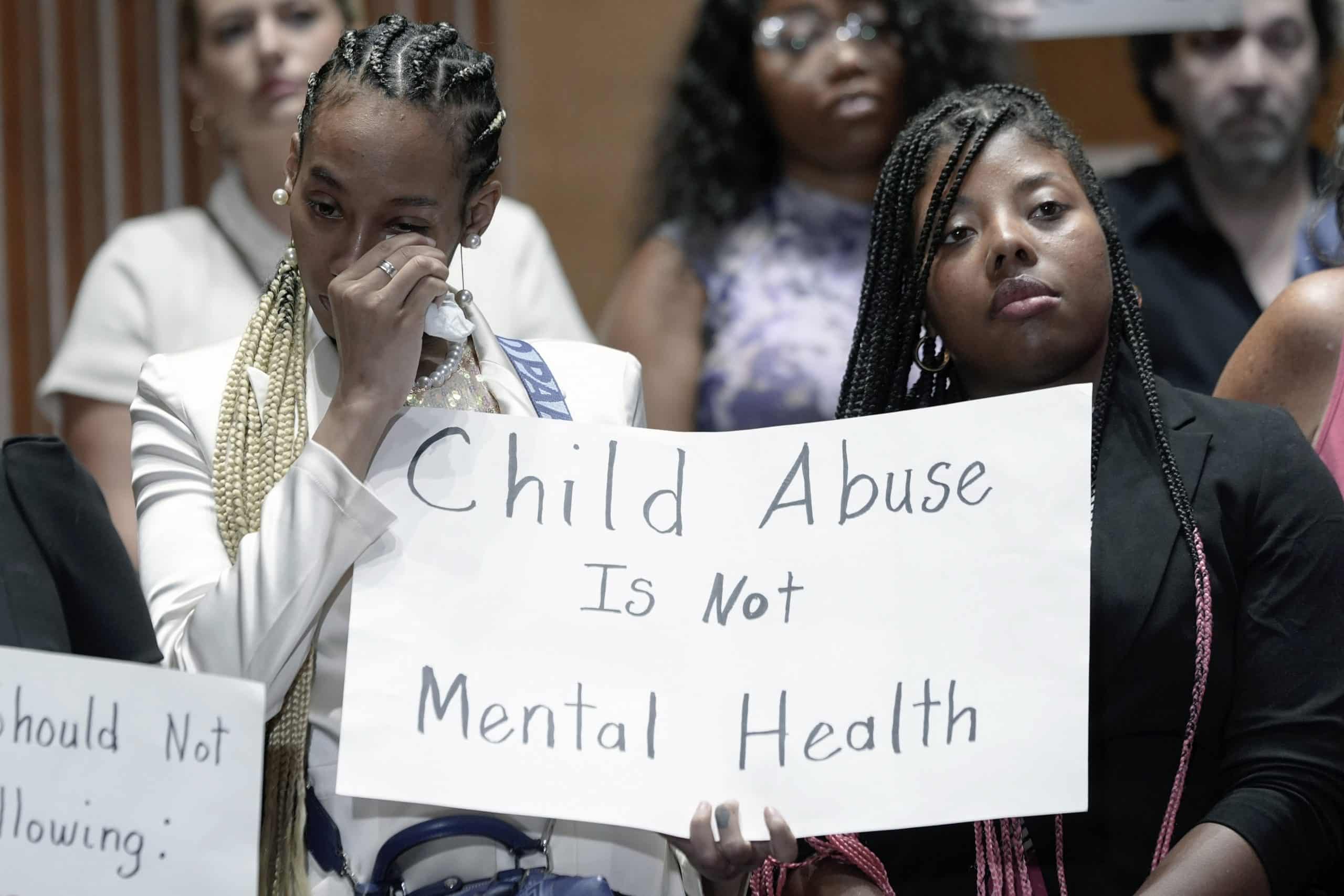
Physical abuse, rape, and emotional trauma is endemic to psychiatric residential treatment centers for kids and youth nationwide, Senate report says.
If you’re not subscribed to MindSite News Daily, click here to sign up.
Support our mission to report on the workings and failings of the
mental health system in America and create a sense of national urgency to transform it.
For more frequent updates, follow us on Facebook, Twitter and Instagram:

The name “MindSite News” is used with the express permission of Mindsight Institute, an educational organization offering online learning and in-person workshops in the field of mental health and wellbeing. MindSite News and Mindsight Institute are separate, unaffiliated entities that are aligned in making science accessible and promoting mental health globally.
Copyright © 2021 MindSite News, All rights reserved.
You are receiving this email because you signed up at our website. Thank you for reading MindSite News.
mindsitenews.org

The name “MindSite News” is used with the express permission of Mindsight Institute, an educational organization offering online learning and in-person workshops in the field of mental health and wellbeing. MindSite News and Mindsight Institute are separate, unaffiliated entities that are aligned in making science accessible and promoting mental health globally.


Author

Related Articles

Family of 6 in ICE Detention for 9 Months ‘Dying on the Inside’
After nine months in Dilley Immigration Processing Center, “we forgot what it feels like to be free,” a recent high school graduate wrote.

Generation Cancer: Millennials Struggle With Death at an Early Age
More young adults are being diagnosed with cancer. Even for those who survive, the experience can be destabilizing and isolating.

Millennials Weigh Having Children On Their Own Terms
Not having children is also a valid path, and one that everyone should consider, Merle Bombardieri argues in her 1981 book.
