Treatment Not Trauma: The Push to Transform Chicago’s Mental Health System Takes Some Big Steps
A coalition of community advocates and mental health professionals have been demanding change in Chicago’s mental health landscape for years. For the moment, at least, they’re taking a victory lap.
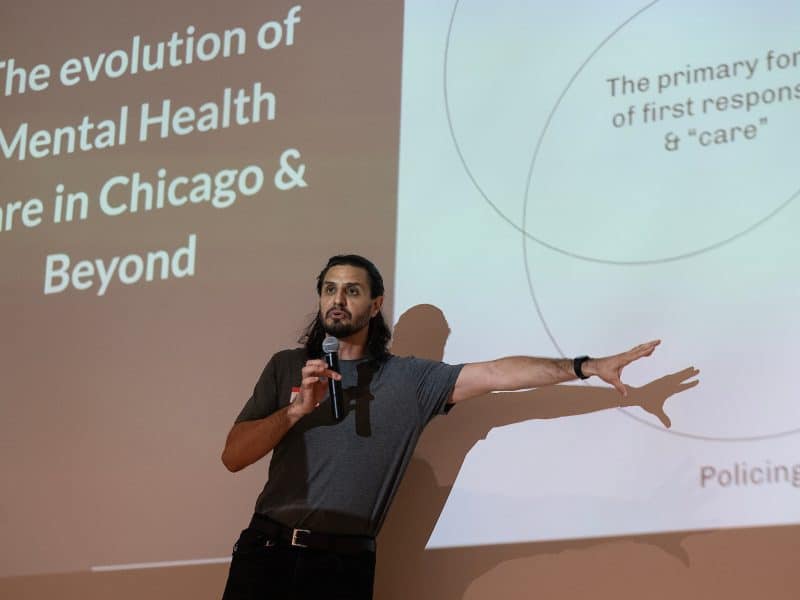
Participants in a South Side summit celebrate the planned reopening of community clinics and a shift to crisis response teams that don’t rely on police
A few months after the murder of George Floyd in May of 2020, Chicago Alderwoman Rossana Rodriguez-Sanchez introduced a proposal to reform the city’s mental health system in ways that community groups and mental health professionals had been demanding for years.
The central goal of the organizers, led by the Collaborative for Community Wellness, was the development of a care-centered, citywide response for people dealing with mental health crises. They named their campaign “Treatment not Trauma,” and for the next four years its key goals were to reopen public mental health clinics closed by Mayor Rahm Emanuel in 2012 and establish a crisis response system that would use mental health workers rather than police to respond to mental health emergencies.
But Mayor Lori Lightfoot, who had run for office in 2019 pledging to reopen the clinics, instead released a plan to contract with mostly private nonprofit agencies to provide mental health services in high-need neighborhoods. And her plan for crisis response was to create the CARE program, using teams that largely relied on pairing mental health workers with police – an approach known as co-response. Rodriguez and the community coalition were not happy.
What a difference four years – and a change in mayors – makes.
On Sept. 14, the second annual Treatment not Trauma summit was something of a victory celebration. Chicago’s new mayor, Brandon Johnson, who took office in May 2023, has committed to introducing mental health services into a vaccine clinic in Pilsen, a majority Latino neighborhood by the end of October, and to reopen the shuttered community mental health center in Roseland, a majority Black neighborhood on the South Side by the end of the year. At the end of September, police officers and the fire department are to be phased out of the CARE crisis response teams.
“This is a huge triumph because in a time where we have been defunding public care, we were able to come back, create those public jobs and create spaces for care where it doesn’t matter if you have documents, doesn’t matter if you have insurance, it doesn’t matter if you can afford it, you’re going to be able to come in and get the care that you need,” Rodriguez-Sanchez told MindSite News at the summit.
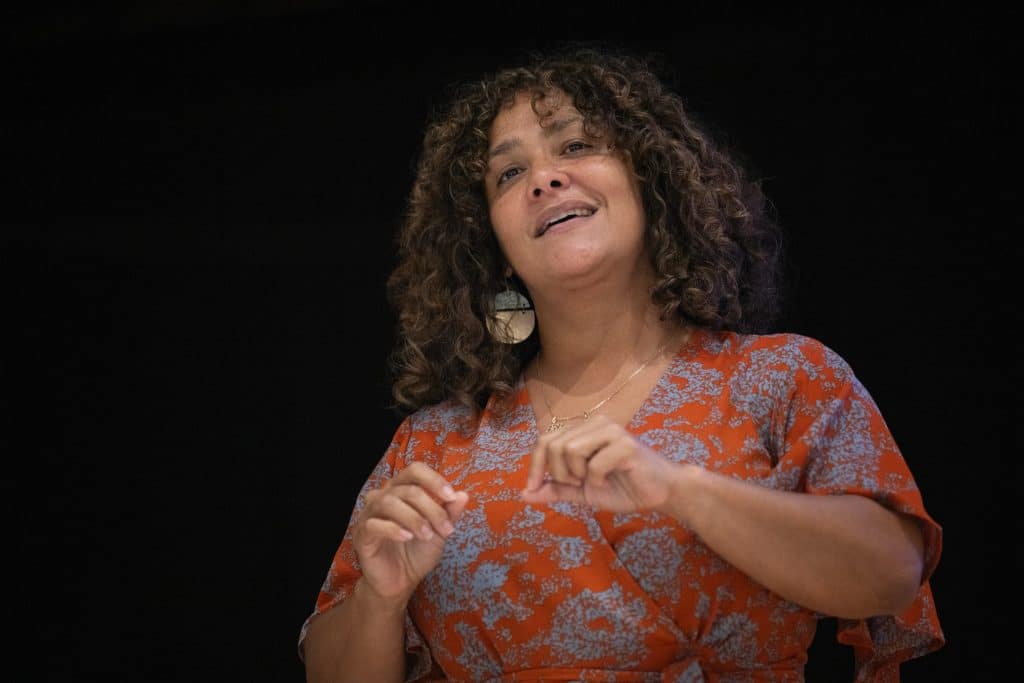
“It’s Black and brown people who have been saying we have a pressing need to get access to mental health resources, and we have a pressing need to keep people safe when they are in crisis,” she added. “And we have come together to make sure that it happens and we have been incredibly successful in the process.”
The summit organizers took a victory lap – and then got down to work. The 100 or so attendees broke into groups organized by neighborhood to work through demands for moving the campaign forward. Residents also called for better access to healthy food, resources for violence prevention and grief counseling for survivors of violence. A table of Spanish speakers stressed the importance of cultural competency in the mental health care provided.
But others expressed doubt that their demands would be taken seriously given the absence of many other public officials at the summit. For those, who have been fighting for years, the theme was clear: this is just another step on a long journey.
The long quest for change
Chicago resident Kathy Powers, now 73 years old, has been receiving treatment for bipolar I disorder since she was 16. She has been shuttled from therapist to therapist, psychiatrist to psychiatrist, and between public and private providers. The best treatment she received, she said, was at the now-shuttered Rogers Park public mental health center.
Powers went to the clinic about twice a week. She had a dedicated case manager and therapist and sometimes attended group therapy. She tried art therapy there and remembers attending an intriguing presentation where she learned how nutrition and mental health interact.
“The services I’ve received at the mental health clinic were the best I ever got,” Powers said. When the city closed it down nearly 15 years ago, she recalls, “it was like a slap in the face.” The nearest mental health facility – North River Mental Health Center – was a three-hour round trip by bus from where she lived, and she hasn’t had consistent care since.
Although the Lightfoot administration said it provided funding to 177 clinical programs operated by various nonprofit agencies, including six of the original 19 community mental health centers, residents say that the shuttering of the other community clinics over the years left many people stranded. And a survey later found some residents turned away from Lightfoot’s private clinics due to undocumented status or uninsured status.
Powers said the closing of the Rogers Park mental health clinic “turned her activist.” She’s long been part of the Community Mental Health Board of Chicago, a group of treatment providers and consumers that meets monthly in public sessions, and is an enthusiastic backer of Treatment Not Trauma’s goal to create a crisis response system that doesn’t rely on police.
“If you have a heart attack, you wouldn’t want to see a cop there for your heart attack,” Powers said. “You want to see some professionals who can help you.”
‘People don’t know who to call if a family member is in crisis’
Advocates are elated by the prospect of re-opened neighborhood mental health clinics, especially since the need for mental health services is overwhelming. According to data collected in 2021 and 2022, 74% of people over 18 in Chicago who have moderate or severe psychological distress are not receiving any mental health treatment. The number is even higher in Chicago’s Black and Asian or Pacific Islander communities, where 80% of people over 18 who are in mental distress are not treated for it.
“People don’t know who to call if a family member or friend is in crisis,” said Any Huamani, a community organizer with the Brighton Park Neighborhood Council. She said everyone should be able to “go into one of the public mental health centers and get the services you need, and not have to be calling from nonprofit to nonprofit asking if they take insurance.”
When Arturo Carrillo grew up on Chicago’s South Side, nobody spoke about mental health. He was introduced to long-term, trauma-healing work during his first placement from social work school at Saint Anthony Hospital’s Community Wellness Program and couldn’t believe how different it was from the “watered-down behavioral health model” he saw in his community for acute situations. When he began practicing as a clinical social worker, he worked to address the mental health disparities he saw by working for a place that provided Chicagoans care for no charge.
“There was an unmet need around mental health access,” he said. “Being a provider who was offering free services to anybody who walked into the door without any requirements gave a unique view.”
This became increasingly evident when Carillo, a mental health researcher and community organizer for Brighton Park Neighborhood Council, helped start the Collaborative for Community Wellness (CCW) and pushed to expand public mental health services. The group surveyed Chicago residents in 2020 and 2021 and found that 86% of respondents said there weren’t enough mental health resources in their neighborhood and 90% would go to a city-run mental health clinic in their neighborhood offering free services.
After CWW hosted seven community listening sessions and the city held open community meetings about Treatment Not Trauma, Johnson proposed a $4.8 million increase for mental health clinics in its 2024 budget. Johnson often notes that his support for improving mental health services is inspired partly by his brother Leon, who, he says, “suffered from mental illness and died addicted and unhoused.”

The hiring of new personnel takes time, and there is a national shortage in behavioral health professionals, said Matt Richards, the city’s deputy commissioner of behavioral health. He told MindSite News that the city is revamping its hiring process to fill vacancies more quickly, recruit early-career clinicians and bring on clinical social workers before they are fully licensed.
Carrillo acknowledges that accelerating the rate of hiring is difficult.
“Even though the money is allocated, getting it staffed and reopened takes time,” Carrillo said. “It unfortunately takes more time than we’re comfortable with.”
President Kennedy’s vision, revisited
The roots of the Treatment Not Trauma philosophy go back to the Community Mental Health Act, signed by President John F. Kennedy in 1963, to create 2,000 community mental health centers across the U.S. When he signed the bill, Kennedy expressed his hope that the “cold mercy of custodial care would be replaced by the open warmth of community” for people struggling with mental issues. It was the last bill he would sign, however. He was assassinated in Dallas three weeks later.

By 1989, 19 public mental health centers in Chicago had been opened by the city’s Department of Public Health. They operated for the next 13 years – until Emanuel closed half of them in 2012. Mayor Lightfoot said she would reopen mental health centers when she became mayor in 2019, but instead pivoted towards a private, third-party mental healthcare model upon taking office.
By 2023, she increased annual mental health spending to $89 million, much of it going to private nonprofit agencies that were part of a network she called Trauma Informed Centers of Care (TICCs), which offered mental health services and support. She pledged that the services would be offered in all 77 of Chicago’s neighborhoods compared to the previous 11.
“When I took office, the City was delivering mental health services to 3,600 adults per year and zero children,” she said in the announcement. “Now, we are delivering these critical services to tens of thousands of adults and children across each of our communities.”
However, a study conducted by CCW in 2023 found gaping inequities in the offerings. Only five of the 80 TICCs in Chicago offered the barrier-free access one would expect of a public mental health center. A 2021 assessment found that 17% of surveyed TICC providers didn’t serve undocumented people, 25% didn’t serve uninsured people and 21% required people to have a primary care provider in order to receive mental health services. Another 29% had a waiting list ranging from one to three months.
In 2022, CCW activists placed a nonbinding referendum in support of Treatment not Trauma on the ballot in three of the city’s 50 wards and knocked on doors to organize support. They were rewarded with a yes vote of more than 90% in all three.
“When I talk to people, when I door-knock, when I call people, people really want the public mental health centers reopened,” said Cheryl Miller, a public-health organizer for Southside Together Organizing for Power. This was especially true, she said, in communities where centers closed down.
While Richards recognizes the frustrations many people have had with the slow rollout, he is pleased with the city’s recent progress. “You have to have the leadership coming from City Hall to really help you make this a priority – to invest in growing our direct mental health services program – and the mayor has done that,” he said.
Community organizers remain cautiously optimistic.
“It’s been a testament to the power of the movement to elect a mayor who really will listen to the community and incorporate our demands into his platform,” Carrillo said. “We definitely are helping shape (things) in a way that hasn’t happened before.”
South Side resident Deadra Ashford-Montgomery attended the summit earlier this month to learn about some of the mental health needs of the community. She walked away from the summit surprised and optimistic for the future.“I learned there is going to be success in numbers and in collaboration,” she said. “It can’t be one group. It has to be a diverse group. It has to be many voices – collective voices – to create the ultimate reality of change.”
Reporting for this story was supported by the Commonwealth Fund, the Reva and David Logan Foundation and the National Institute for Health Care Management Foundation.
The name “MindSite News” is used with the express permission of Mindsight Institute, an educational organization offering online learning and in-person workshops in the field of mental health and wellbeing. MindSite News and Mindsight Institute are separate, unaffiliated entities that are aligned in making science accessible and promoting mental health globally.


Authors


Related Articles
Hive Mind: The Surprising Mental Health Benefits of Beekeeping
Emerging research shows the healing power of the hive for people grappling with stress and trauma.
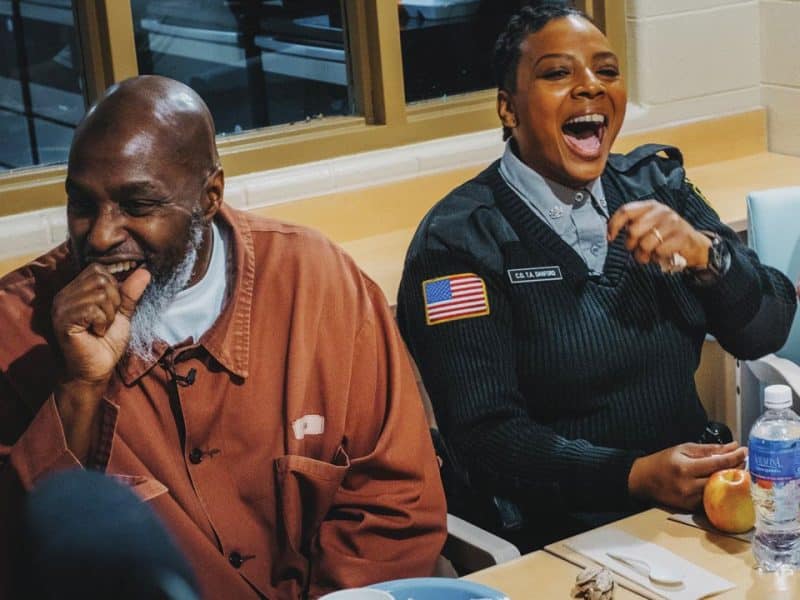
‘We Take Care of Each Other’: Inside the Prison That Could Change Incarceration in America
This prison outside Philadelphia is modeled on prisons in Norway and Sweden that are considered the most humane and effective in the world. “It’s a transformational approach to how we think about prisons,” said a Pennsylvania state legislator.
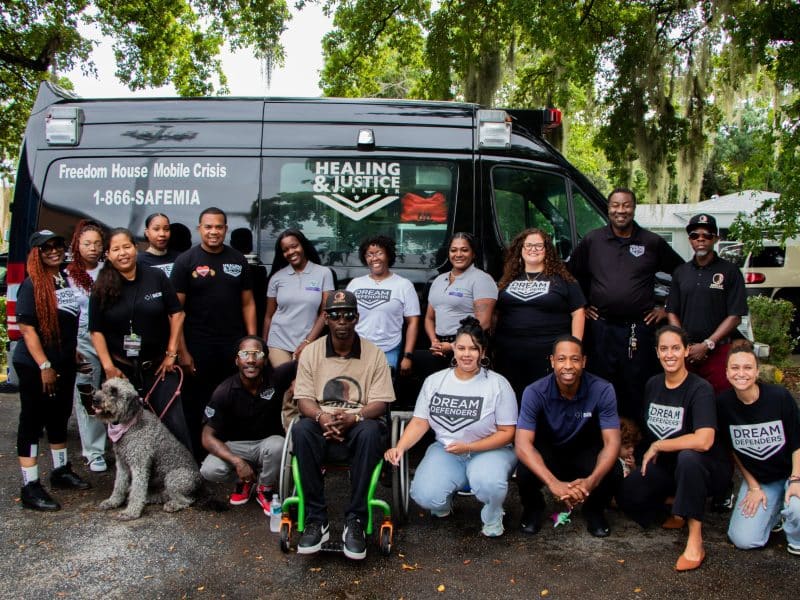
Miami Community Responders Work to Ease Mental Health Crises
A three-year-old mobile team responds to the needs and crises of community members in Miami’s Liberty City as an alternative to police. We paid a visit.
