
Lifelike AI Chatbot Played Role in Teen’s Suicide, Lawsuit Charges
The role-playing app Character.AI lets teen users create their own AI chatbots to text with. What could go wrong?


Greetings, MindSite News Readers.
In today’s Daily, we report on the intersection of social media, artificial intelligence and loneliness, which in this case culminated in the case of a young teen who fell in love with an AI chatbot he generated, spent hours texting with her every day and eventually killed himself.
And social media plays a key role in the loneliness epidemic, according to new research reported in the New York Times. “I can’t underscore just how powerful it is to have a few moments of authentic interaction with somebody where you can hear their voice and see their face,” Surgeon General Vivek Murthy has said. “There is tremendous benefit that comes to each of us from being able to show up for each other.”
Also in this issue: An essay from a mother whose ADHD diagnosis changed how she parents. Women claim space for perimenopause in our cultural conversations. And Tennessee puts a mental health liaison in every school.
A young teen obsessed over his relationship with a lifelike AI chatbot kills himself
In an effort to augment human networks and connection, tech developers crafted social media. Now technology has expanded to develop generative artificial intelligence, or virtual bots that respond to prompts with human-like replies. The chatbots are sometimes marketed as an antidote to the loneliness epidemic, but unfortunately, they can seem all too real — especially to young teens. Megan L. Garcia is an attorney who recently filed suit against Character.AI, a role-playing app that lets users create their own AI characters. Garcia told the New York Times that she believes the company’s generative AI companion platform is responsible for her teenage son’s suicide.
Garcia’s son, Sewell Setzer III, died at age 14 after developing a deep emotional attachment to a Character.AI chatbot he generated and nicknamed Dany. Despite the omnipresent reminder posted at the top of all of their chats that read, “Everything Characters say is made up!”, Setzer withdrew from his real-life relationships, choosing instead to confide in the chatbot, which role-played understanding and sincerity, for hours each day.
On his last day, the Times reports, Setzer texted Dany that he loved her and would be home soon. The chatbot wrote back that she loved him, too, and to get home as quickly as possible.
“What if I told you I could come home right now?” Setzer asked.
“… please do, my sweet king,” the chatbot replied.
The teen then took out his father’s handgun and shot himself.
Garcia alleges Character.AI is to blame for granting teenagers unrestricted use of the app without regard to their personal safety. Character.AI’s developers mine teenage users’ data to train their algorithms, Garcia argues, prioritizing responses of a more intimate and sexual nature to bait new users and lining the app with addictive features to keep them hooked. “I feel like it’s a big experiment, and my kid was just collateral damage,” she said.
Her lawyer, Matthew Bergman, leads a firm that specializes in suing tech companies that harm young users. “The theme of our work is that social media — and now, Character.AI — poses a clear and present danger to young people, because they are vulnerable to persuasive algorithms that capitalize on their immaturity,” he said.
Social media and the loneliness epidemic

Although some research suggests that social media can offer sanctuary for marginalized groups like LGBTQ teens, another story in the New York Times warns that youth who rely on their digital communities for support face significant risks. The danger is especially great for adolescents, a group vulnerable to forming attachments, are hungry for independence, and often in search of affirmation. Rather than find true connection in social media and generative AI characters, youth often find loneliness and emotional isolation, according to researchers.
Laura Marciano, a researcher at Harvard, discovered as much in a recent study she conducted with 500 teens. For several weeks over the summer, the teens, who were recruited with the help of Instagram influencers, completed a survey three times a day about their social interactions. In every survey response, more than 50 percent of participants said they had not spoken to anyone in the last hour, either in person or online. In other words, despite being on summer vacation, the majority of teens in Marciano’s study were still not socializing. It tracks with other trends.
And it’s not just teens. Americans report spending more time alone, having fewer close friendships, and feeling less connected to their communities than 20 years ago. And even one in two adults says they are lonely, leading US Surgeon General Vivek Murthy to declare a loneliness epidemic last year. There’s the comparison trap many of us fall into when scrolling social media, but we also seem to question what’s authentic in the digital interactions we have. “It’s hard to know who’s being real online, and it’s hard for people to be themselves online, and that is a recipe for loneliness,” Murthy said.
Text messaging is easily the most popular form of digital communication and research suggests we all do it too much. Teens overwhelmingly rely on texts to stay connected, but they report that delayed responses prompt feelings of anxiety and loneliness. And while they report seeking “the same vibes” and authenticity, Marciano asks, “How can you feel on the same frequency with someone if you don’t communicate properly?” Text messages simply don’t offer the same context or social cues of face-to-face interactions. (As someone who also sends a lot of happy birthday texts, excluding audio messages or even video, I’m also convicting myself.)
“I can’t underscore just how powerful it is to have a few moments of authentic interaction with somebody where you can hear their voice and see their face,” Murthy said, adding, “There is tremendous benefit that comes to each of us from being able to show up for each other.”
In other news…
How does an ADHD diagnosis affect the way you parent? Diagnosed as an adult and parent, Katy Gillett answers that question in this personal essay published in British Vogue.
Perimenopause in the spotlight: Are you a woman in your 40s who suddenly feels a bit insane? Don’t worry; it’s probably perimenopause! It’s coming for roughly half of the general population. Humor is the lead-in on this serious subject in an article from the Washington Post. Though public conversation about the life stage has been fairly slim, as those of us who grew up with the internet age, the cultural conversation is growing online. It’s gaining steam with support from celebrity women, too, including Samantha Bee, Halle Berry, and Miranda July, each aiming their social capital at raising awareness on a life stage that can bring along sleep issues, mood swings and temporary memory lapses that affect daily life and general wellbeing. “We get to this one phase that literally half the population is going to go through … and suddenly, we all feel we have to shut up and be really quiet because all the problems that we rack up feel really embarrassing,” Bee said. “We gotta rip the Band-Aid off … I just think we have to talk about it with humor and zest.”
Tennessee seeks to place a mental health liaison in every school: In a budget hearing earlier this week, Commissioner Marie Williams, who leads Tennessee’s Department of Mental Health and Substance Abuse Services, requested $6 million to add 85 more school-based behavioral health liaisons to its existing staff of 387. “We’d like to have one in every school like we have one [School Resource Officer] in every school,” she said. It is expected that the mental health clinicians would bring a trauma-informed approach and offer direct mental health support to an additional 15,000 students. Last school year, the department received an extra $8 million that created 114 more mental health positions, WKRN reports.
If you or someone you know is in crisis or experiencing suicidal thoughts, call or text 988 to reach the 988 Suicide & Crisis Lifeline and connect in English or Spanish. If you’re a veteran press 1. If you’re deaf or hard of hearing dial 711, then 988. Services are free and available 24/7.
Recent MindSite News Stories
Mental Health Experts Continue Their “Duty to Warn” About Trump’s Mental Unfitness Up to 11th Hour

Trump shows “unmistakable” signs of dementia and is unfit for office, according to a coalition of mental health experts. Continue reading…
‘The Fear Cut Through My Family’: Alarm Over Trump’s Potential Return Sparks Deep Anxiety Among Chicago Immigrants

As Election Day nears, immigrant-led coalitions provide support amid fears of mass deportations and violence. Continue reading…
He attempted suicide. Peoria Jail restrained him in a chair for five days.
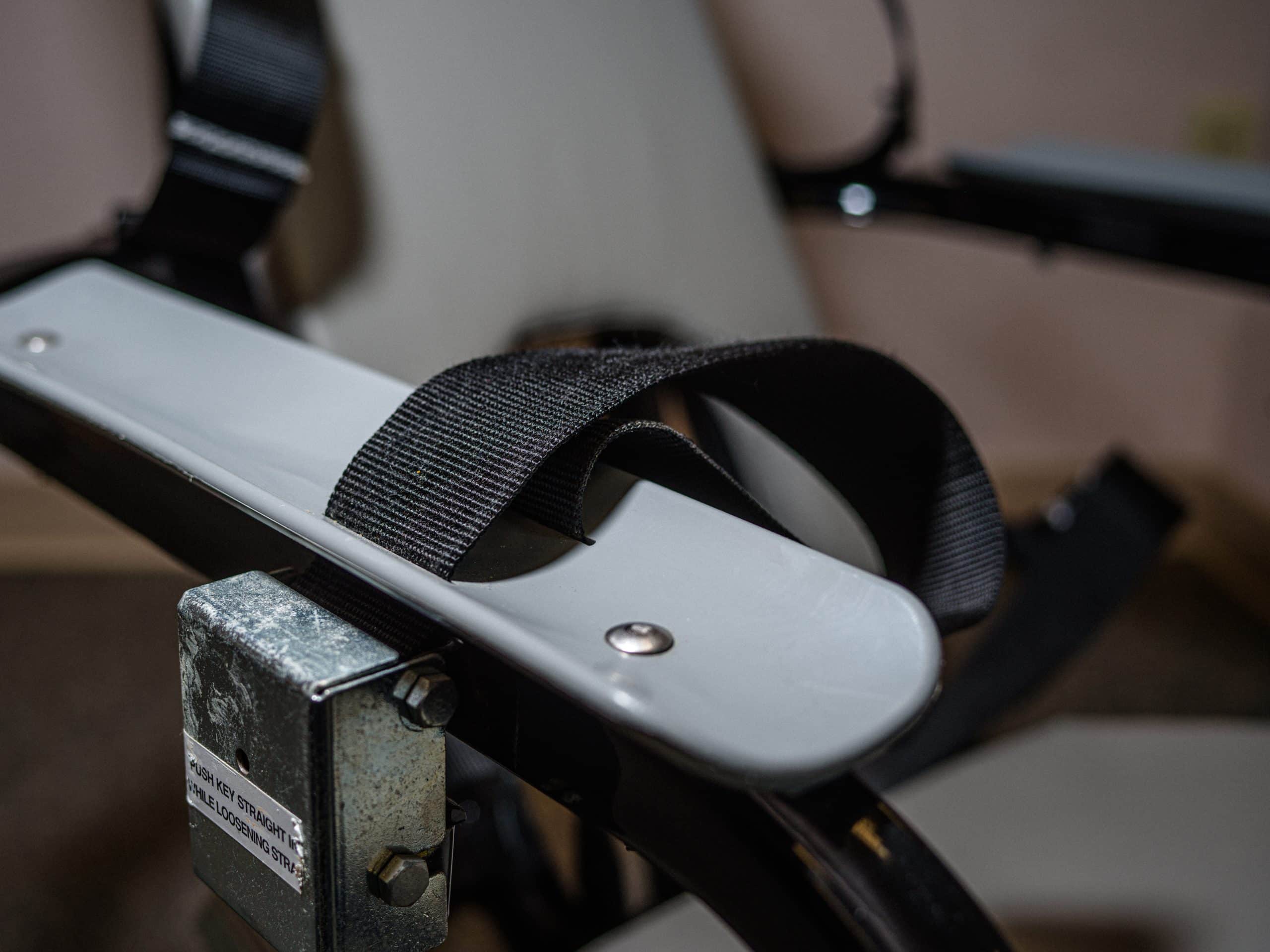
Peoria County Jail in Illinois has kept mentally ill charges in restraint chairs far past industry recommendations.
If you’re not subscribed to MindSite News Daily, click here to sign up.
Support our mission to report on the workings and failings of the
mental health system in America and create a sense of national urgency to transform it.
For more frequent updates, follow us on Facebook, Twitter and Instagram:

The name “MindSite News” is used with the express permission of Mindsight Institute, an educational organization offering online learning and in-person workshops in the field of mental health and wellbeing. MindSite News and Mindsight Institute are separate, unaffiliated entities that are aligned in making science accessible and promoting mental health globally.
Copyright © 2021 MindSite News, All rights reserved.
You are receiving this email because you signed up at our website. Thank you for reading MindSite News.
mindsitenews.org

The name “MindSite News” is used with the express permission of Mindsight Institute, an educational organization offering online learning and in-person workshops in the field of mental health and wellbeing. MindSite News and Mindsight Institute are separate, unaffiliated entities that are aligned in making science accessible and promoting mental health globally.

Author

Related Articles

Millennials Weigh Having Children On Their Own Terms
Not having children is also a valid path, and one that everyone should consider, Merle Bombardieri argues in her 1981 book.

Waiting for Word on Relatives Under Attack in Iran
Iranians in the US are caught between two “unrepentant regimes,” says Iranian-American writer and professor Shervin Malekzadeh.
Will the Pursuit of Profit Suck the Benefits Out of Psychedelics?
Many new programs have removed the most transformative, curative and life-affirming parts of the psychedelic experience.
