
Restoring Human Dignity in Prison
A maximum-security prison in Argentina offers a cooperative that reignites dignity and purpose inside the walls.


Wednesday, December 4, 2024
By Courtney Wise

Greetings, MindSite News Readers. In today’s Daily, an innovative program in an Argentine prison helps to restore dignity to prisoners and builds a path toward restorative justice. In other news, families of all sorts and single people, too, are choosing intergenerational housing communities over the space and privacy offered in single family homes. The tradeoff? Less stress and no loneliness.
Plus, the lasting scars left behind from non-fatal in-air flight emergencies. The benefits of altruism. Nick Cannon talks about his narcissistic personality disorder. And finally, we received some beautiful donations yesterday on Giving Tuesday, but we still have a ways to go to meet our year-end goal. Please help if you can.
The sweet taste of Liberté
Think of an Argentine prison and what first comes to mind? For some of us, it’s Kiss of the Spiderwoman by Manuel Puig. For others, it’s Liberté.
Liberté is an experiment born of a small act of courage. Xavier Aguirreal, an inmate best known as Pampa at the Batán maximum-security prison in Argentina, quickly felt his dignity eroding behind the prison’s walls. “In prison, you either become dependent or beg,” he told Yes! Magazine. “You come in with a couple of pairs of shoes and a shirt, but when those wear out, you cannot obtain new ones unless a family member or an NGO provides them. I didn’t want that for myself.” So two years after his arrival, he requested to launch a business. Ten years later, what became Liberté is still in operation.
The cooperative association is housed within Unit 15 of the prison. But unlike most of the 1,600 inmates on other levels, the 80 or so stewards of Liberté say they get to remember what it is to be free. The work they do to sustain themselves and contribute to the wellbeing of others reignites their dignity and allows them to reclaim parts of their humanity. They cultivate and nurture gardens, bake bread with fellow residents, play sports, visit the library, and participate in textile and carpentry workshops. It stands as a beacon of hope for prisons elsewhere.
“Most prisoners want to leave their cells and desire to work or study,” said lawyer Diana Márquez. “The problem is that in prison there are very few educational options available—mostly just elementary school—and nearly no job opportunities, many of which are undignified.” Liberté’s first effort was to make wall clocks. They’ve since expanded to work with Márquez and a nonprofit she coordinates, Víctimas por la Paz, which helps survivors of crime and promotes restorative justice. As part of its vision of self-restoration, Liberté gives back a portion of all grocery earnings to victims of crime through its Victim Support Fund.
Argentina doesn’t officially track recidivism, but data from the Latin American Center for Studies on Insecurity and Violence at the Tres de Febrero National University estimates that upwards of 70% of people released from prison return within one year. Of the 1,000 Batán residents who have participated in Liberté, 104 have been released and none have reoffended.
Models like Liberté are necessary, said Pampa. “If you deprive someone of their rights for decades, what do you think they learn?” he asks. “That human rights don’t exist. Prison should not be a place of punishment but of restoration…If the punitive model of punishment worked, it might be worth pursuing,” Pampa said. “But what truly works is restorative justice.”
Isolated and overwhelmed, families found connection, fun and built-in babysitters with communal living

Four years ago, in the thick of the pandemic, isolated and stuck inside with two little kids, Rachel Damgen and her husband, Chris, felt like life was impossible. Sometimes, during a toddler’s meltdown, Rachel would have one too, she told NPR. With no family living nearby, the pair sat down to determine how to make their life more manageable. Their solution? Communal living.
Cohousing, as the pair call it, requires much more work than the typical single-family household, but proponents say they’re less stressed doing it, making the tradeoff worth it. “I think the closest comparison I can make is a college dorm,” says Chris Damgen. “Only this time there’s a wall between you, and we’re all adulting, allegedly.”
The biggest time commitment isn’t gardening or washing dishes, either: It’s governance. Cohousing communities typically operate by consensus, with decisions made slowly, after lots of discussion and debate. Where the Damgens live, at Daybreak Cohousing in Portland, Oregon, committees are where decisions are made: process, facilities, project management, security, facilitation, and steering. Residents must serve on at least two of them and assist with shared chores, like cleaning common spaces and handling yard work.
It’s time consuming, and the Damgens have considerably less private space than before with just two bedrooms across 900 square feet for their family of five. Still, Rachel says they have no plans to move. The social benefits of the community are too valuable to let go, she explained.
Recently, one of her young children was sick and napping, but she needed to pick up the other one from a separate location. I can’t speak for the Damgen’s children, but I know waking my own typically delightful six year old from a nap is a lot like stirring a resting Chucky doll. I once sat in a Kroger parking lot for 30 minutes before going in just to let her wake up on her own to avoid the stress of a tantrum. Rachel makes no such compromises these days. Worry free, it took her five minutes to find a neighbor to sit at home for a bit while she ran out.
“It’s not uncommon for me to have those hit-you-in-the-heart moments,” she said, “where my kiddos will be downstairs kicking a soccer ball around with a neighbor and I come outside to look and — you just gotta, like, almost pinch yourself.”
In other news…
In-air emergencies aren’t running rampant, but for those who survive them, the scars they leave are deep and lasting. And it’s not only travelers who are affected. Flight crews experience psychological trauma after hazardous flight events too, including extreme turbulence, a blown-out door, or even an engine on fire. Dorian Cerda was flying to Fort Myers in Florid this past March when the plane he was in caught fire. He was seated close enough to feel the fire’s heat, telling the New York Times that he’s since become an overthinker, always wondering when it will happen again.
“I’ve been on five airplanes, and one of them caught on fire,” he said. “My odds are at 20 percent. I wouldn’t risk my life on a 20% shot. I made it, but my life is affected.” Psychology experts say survivors of actual plane crashes are known to be at high risk for PTSD and depression, but survivors of non-fatal emergencies are often forgotten in the conversation.
Doing good for others makes you feel better mentally and physically, researchers say. It can even help when you don’t feel like it. “If things are hard, you often don’t feel like going out of your way to do the things that will help other people around you,” said Georgetown researcher Abigail Marsh. “But, in fact, that may be actually one of the best things you could do.” Altruism not only changes how you think of yourself, but it encourages the belief that we live in a world of people who try to help each other, she said. The Washington Post has more on the power of altruism, including why researchers think we humans may be hardwired to do well for each other from toddlerhood or earlier.
Celebrity Nick Cannon recently shared that he’s been diagnosed with narcissistic personality disorder, telling People magazine, “I feel like there’s so many labels out there, but it’s like, to be able to embrace it and say, ‘Look, I’m healing. I need help. Show me.’ I just embrace mental health and therapy in such a strong way.” But so many people in my social media timelines have questioned the sincerity of what he said that I decided to turn to Dr. Ramani Durvasula, an expert on the subject of narcissism and author of It’s Not You: Identifying and Healing from Narcissistic People. She says therapy may help some narcissists, but not in such a drastic way that the people they’re harming will notice the changes. If noticeable change can happen, folks should expect it to take “years and years and years,” Durvasula said.
Recent MindSite News Stories
The Return of Trump: What Does it Mean for Mental Health Policy and Advocacy? A Live Discussion

Thursday, Dec. 19, 12:00 pm PT / 2:00 pm CT / 3:00 pm ET.
Join MindSite News and a team of mental health policy advocates and experts as we explore what a second Trump presidency will mean. Continue reading…
Chicago Advocates and Clinicians Come Together to Support Mental Health of Immigrants in Peril
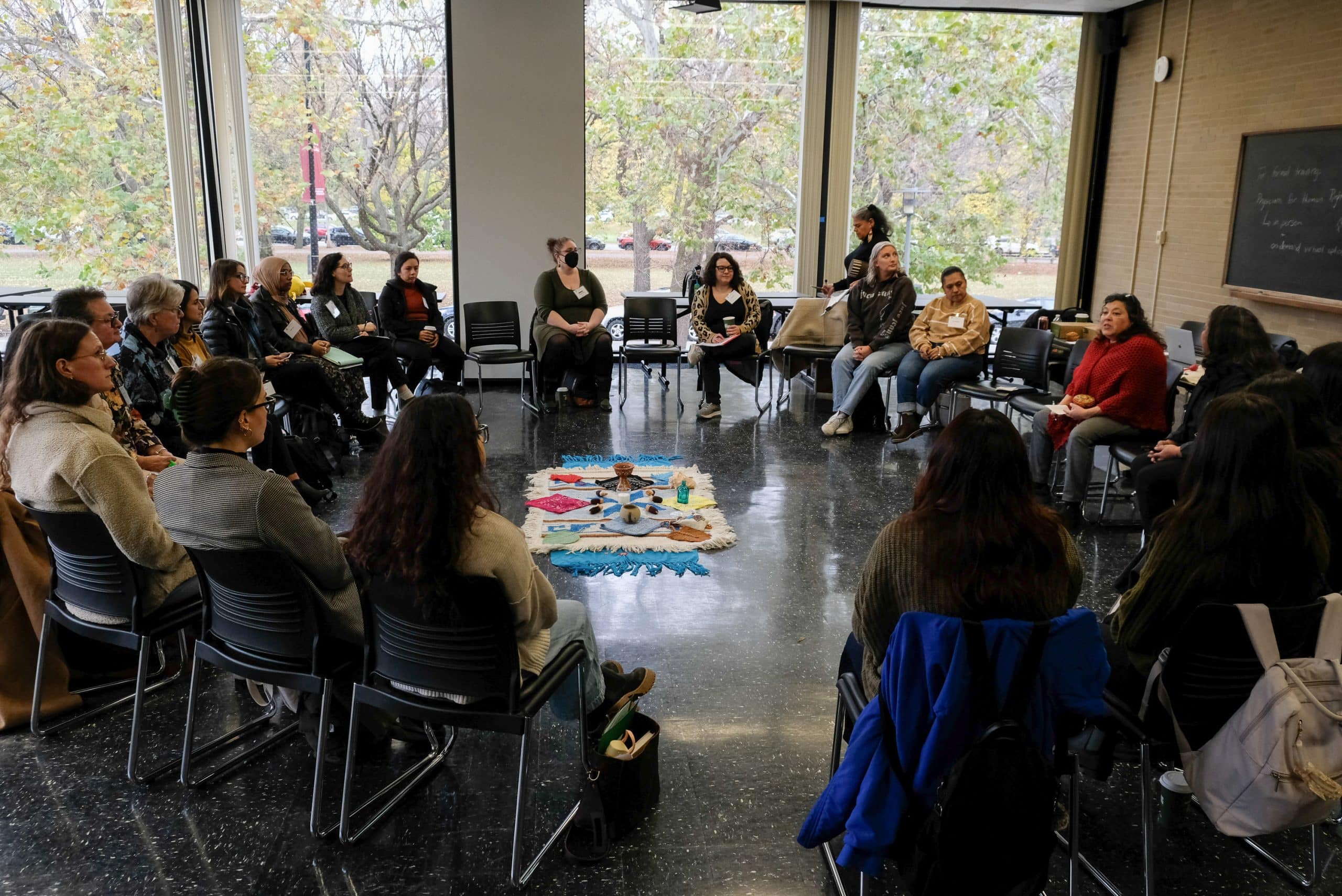
In the aftermath of the presidential election, almost 200 people gathered in Chicago to strategize about how to protect the mental health of immigrant communities. They also sought a space of healing to help them get ready them for what lies ahead. Continue reading…
Did the Stanford Prison Experiment, One of Psychology’s Most Famous Studies, Really Turn People Into Monsters?

A riveting new docuseries talks with the former youths from a famous Stanford experiment that quickly devolved into violence and chaos. Continue reading…
If you’re not subscribed to MindSite News Daily, click here to sign up.
Support our mission to report on the workings and failings of the
mental health system in America and create a sense of national urgency to transform it.
For more frequent updates, follow us on Facebook, Twitter and Instagram:

The name “MindSite News” is used with the express permission of Mindsight Institute, an educational organization offering online learning and in-person workshops in the field of mental health and wellbeing. MindSite News and Mindsight Institute are separate, unaffiliated entities that are aligned in making science accessible and promoting mental health globally.
Copyright © 2021 MindSite News, All rights reserved.
You are receiving this email because you signed up at our website. Thank you for reading MindSite News.
mindsitenews.org

The name “MindSite News” is used with the express permission of Mindsight Institute, an educational organization offering online learning and in-person workshops in the field of mental health and wellbeing. MindSite News and Mindsight Institute are separate, unaffiliated entities that are aligned in making science accessible and promoting mental health globally.


Author

Related Articles
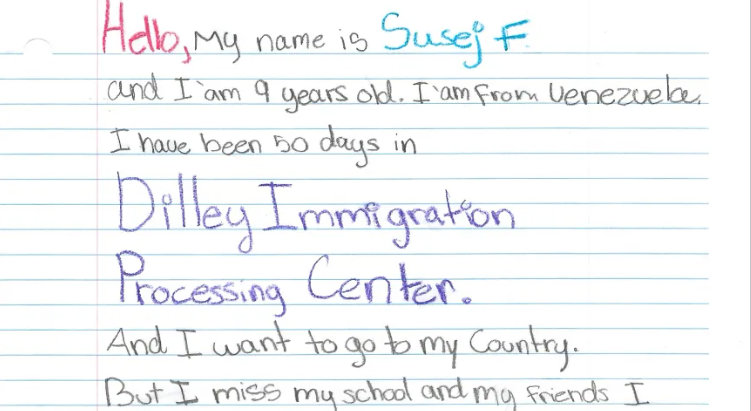
Health Organizations Condemn Traumatic ICE Raids, Family Separation
According to letters from children living in an ICE detention facility, living conditions are inhumane and their mental health is suffering.

In Teens, Social Anxiety Often Looks Like Anger
A study finds that some teens’ aggressive behavior may be due to social anxiety, not straightforward reactivity.
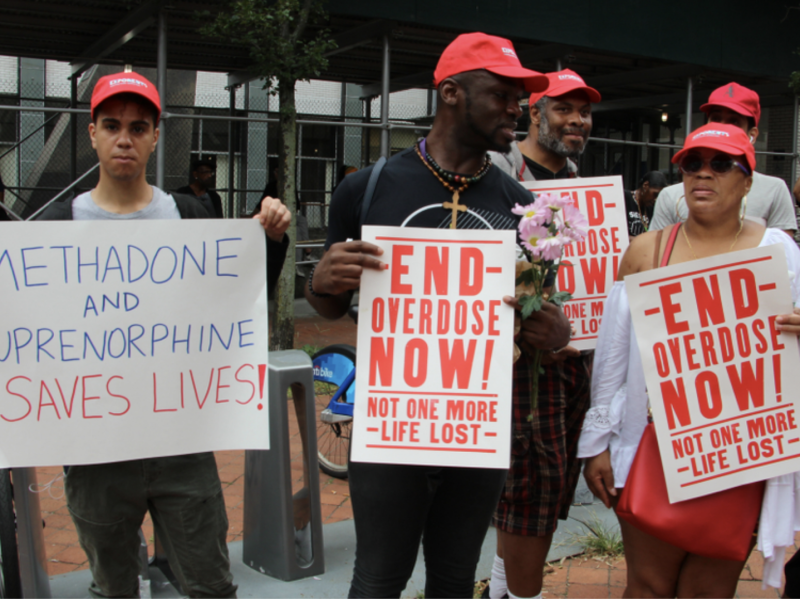
Expert Calls for Harm Reduction, Not Punishment, to Resolve Our Overdose Crisis
As the Trump administration pulls funding from harm reduction, an expert on the overdose crisis says it’s the best way to save lives.
