
The Massive Mental Health Harms of Leaded Gas
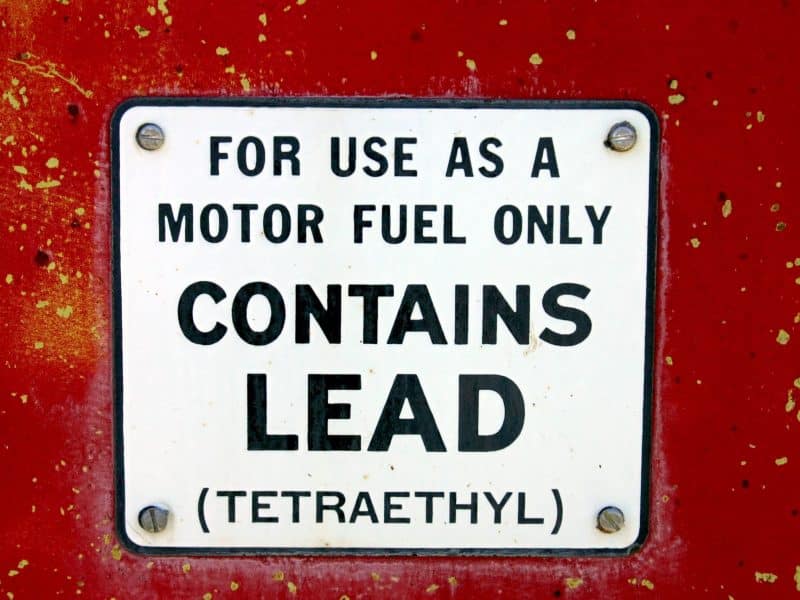
Lead in gasoline is linked to more than 150 million cases of mental health conditions that would otherwise not have occurred.

Tuesday, Dec. 10, 2024
By Don Sapatkin
Correction: This story has been updated to note in the 4th paragraph that the roundtable discussion on youth mental health will be held on Wednesday Dec. 11.

Good Tuesday morning! In today’s jam-packed Daily: Accumulated lead from gasoline is linked to more than 150 million cases (and counting) of mental health conditions that would otherwise not have occurred.
A physician shares her experience of depression, her surreal admission to an inpatient psych unit, and why the increasingly popular term “resilience” is a misnomer. Plus: A news investigation alleges fraud and unsafe practices at the nation’s largest chain of methadone clinics, a profitable for-profit company. And the VA is sponsoring research on psychedelics.
But first, two upcoming events: MindSite News will host a live virtual event, The Return of Trump: What Does it Mean for Mental Health Policy and Advocacy? on Thursday Dec. 19. Register for the event here.
And tomorrow, Wednesday, Dec. 11, you can join a roundtable conversation on the state of youth mental health, from 11 a.m. to noon. Sign up here for a high-altitude discussion about the barriers to treatment that young people face, systemic gaps in care, and how to move toward a more equitable system.

Leaded gasoline linked to 151 million extra mental health disorders, with Gen X hit the hardest
Millions of young children were exposed for many years to accumulated lead in the atmosphere from tailpipe emissions, a new study estimates, resulting in more than 150 million more cases of mental health disorders than would otherwise have occurred. The exposure made generations of Americans more depressed, anxious, inattentive or hyperactive, according to the study.
“It also changed personalities,” University of Virginia clinical neuropsychologist Aaron Reuben told CNN. Reuben, a study coauthor, said he and his colleagues believe lead exposure “makes people a little less conscientious – so less well organized, less detail-oriented, less likely to be able to pursue their goals in an organized way, and more neurotic.”
Lead was added to gas in 1927 to improve engine performance and eliminate knocking, and the amount increased over time. As cars burned fuel, emissions spread into the atmosphere. Unleaded gasoline was introduced in the 1970s but lead wasn’t completely eliminated in U.S. gasoline until 1996 and accumulated for decades in dust, soil, and the lungs of hundreds of millions of people worldwide. Research over the years showed that ever-smaller amounts of lead had neurotoxic effects, damaging the developing brains of young children. No level of lead in the blood is now considered safe; most pediatricians screen for it.
Reuben and his colleagues assumed that the association between lead and psychopathology documented in previous published research was causal and not purely correlational. They used that research to estimate how many Americans born during five-year periods developed diagnosable mental health problems as a result of leaded gas. Those born between 1966 and 1980 – in other words, Gen X – had the highest exposure to lead from gasoline, and therefore the most mental illness.
The new study, published in the Journal of Childhood Psychology and Psychiatry, did not consider sources of lead other than gasoline – lead paint, for instance. For that reason, the researchers believe the findings underestimate how many people were damaged.
Join MindSite News and a team of mental health policy advocates and experts as we explore where a second Trump presidency may go.
‘Not her first rodeo with depression.’ A depressed doctor on her treatment and recovery
In the months leading up to her psychiatric admission, Dallas-based infectious diseases physician Julie B. Trivedi says, she “endured a painful separation and divorce and was trying to raise two young girls on her own.” She continued to work, but found she couldn’t keep up with her clinical notes and watched her patient satisfaction scores drop. She stopped socializing. She stopped eating. She could barely get herself out of bed. When she saw her primary care physician for a routine follow-up visit, she knew. Her physician knew. “It was time,” Trivedi writes in an essay in JAMA titled “Redefining Resilience.”
Many physicians do indeed need mental healing, but when it comes to depression, “heal thyself” is an impossible command. Doctors have significantly higher rates of depression and suicide than non-physicians, with 300 to 400 dying by suicide every year in the U.S. Yet they are notoriously silent about their mental health struggles, in large part, no doubt, because they fear how disclosure might affect their career.
Trivedi had been depressed in the past, seen therapists, tried antidepressants. She’d also been hospitalized for physical ailments. This was different “To be admitted to the inpatient psychiatry unit is a surreal experience,” she writes. No electronics. No pens. No jewelry. No caffeine. It took time for her to want to eat again. She slept, did artwork, participated in group therapy.
The psychiatrist asked, ‘What is your reason for living?’ To which I replied, ‘My children.’ Her next question still haunts me. She asked, ‘And if your children weren’t in the picture?’ I broke down. There was nothing. I could not think of another enough reason to live aside from my children.
Someone experiencing depression can’t just “snap out of it,” Trivedi writes. Successful treatment requires outside help: therapy, medication, a supportive community. Managing depression for physicians requires a supportive work environment (which she had). But there’s no blood test to determine whether someone has “recovered” from depression, and no tool that provides guidance on what a return to the workplace should look like. “What arrangements are made for someone who is learning what it means to live again?” she asks.
For a long time, she wanted no one to know about her struggle. She feared for her medical license and worried that colleagues would wonder if she could be counted on. Ironically, she writes, being admitted to the hospital more than five years ago was one of the best things that could have happened.
Now, she’s focused on highlighting topics like mental health and burnout in health care workers “that everyone wants to fix but are without an adequate solution,” she writes. “Receiving help does not mean being broken or incapable of meeting future challenges.”
Acadia Healthcare accused of “fraud and fakery” at its chain of methadone clinics
The tens of thousands of people who line up every morning to get their dose of methadone at for-profit Acadia Healthcare’s chain of 165 addiction clinics are also supposed to get something more: The clinics are required by federal law to provide counseling and other services.
But Acadia often fails to provide that counseling, according to five dozen current and former employees, a New York Times investigation has found. Acadia’s clinics have generated over $1.3 billion in revenue since 2022 – a business that’s been built partly on deception, according to the Times.
Employees interviewed by the Times, along with internal emails and complaints to regulators, said the company established productivity goals and encouraged caseloads so excessive that many counselors simply falsified medical records used to bill insurers.
A 40-minute counseling session recorded in a patient’s chart may actually have been a five-minute chat during an encounter in the hallway. And a former clinic director in Indiana said her manager pressured her to boost patient counts by enrolling people who were addicted to cocaine and methamphetamine but not opioids. Methadone cannot treat addictions to cocaine or meth. But it can produce a high, and possibly a dependence, for someone not already using opioids.
Acadia is now angling for a lucrative slice of the $50 billion legal settlements with drug companies accused of fueling the opioid crisis. At the same time, it is lobbying heavily, along with other addiction clinic operators, against a bipartisan bill that would allow patients to pick up their methadone at pharmacies, widening access to the medication.
An Acadia spokesman denied the findings. “We take our responsibility to our patients and the communities we serve extremely seriously and patently reject claims that Acadia places profits over patients,” he said.
In other news…
The VA is funding its first psychedelics study since the 1960s, The Microdose newsletter reports. The $1.5 million study is using MDMA-assisted therapy to treat veterans with both PTSD and alcohol use disorder. Participants will receive a full dose of MDMA or an active placebo (a lower dose of MDMA), during psychotherapy sessions.
If you or someone you know is in crisis or experiencing suicidal thoughts, call or text 988 to reach the 988 Suicide & Crisis Lifeline and connect in English or Spanish. If you’re a veteran press 1. If you’re deaf or hard of hearing dial 711, then 988. Services are free and available 24/7.
Recent MindSite News Stories
Chicago Advocates and Clinicians Come Together to Support Mental Health of Immigrants in Peril

In the aftermath of the presidential election, almost 200 people gathered in Chicago to strategize about how to protect the mental health of immigrant communities. They also sought a space of healing to help them get ready them for what […]
Did the Stanford Prison Experiment, One of Psychology’s Most Famous Studies, Really Turn People Into Monsters?

A riveting new docuseries talks with the former youths from a famous Stanford experiment that quickly devolved into violence and chaos.
If you’re not subscribed to MindSite News Daily, click here to sign up.
Support our mission to report on the workings and failings of the
mental health system in America and create a sense of national urgency to transform it.
For more frequent updates, follow us on Facebook, Twitter and Instagram:

The name “MindSite News” is used with the express permission of Mindsight Institute, an educational organization offering online learning and in-person workshops in the field of mental health and wellbeing. MindSite News and Mindsight Institute are separate, unaffiliated entities that are aligned in making science accessible and promoting mental health globally.
Copyright © 2021 MindSite News, All rights reserved.
You are receiving this email because you signed up at our website. Thank you for reading MindSite News.
mindsitenews.org

The name “MindSite News” is used with the express permission of Mindsight Institute, an educational organization offering online learning and in-person workshops in the field of mental health and wellbeing. MindSite News and Mindsight Institute are separate, unaffiliated entities that are aligned in making science accessible and promoting mental health globally.


Author

Related Articles

In Teens, Social Anxiety Often Looks Like Anger
A study finds that some teens’ aggressive behavior may be due to social anxiety, not straightforward reactivity.
Expert Calls for Harm Reduction, Not Punishment, to Resolve Our Overdose Crisis
As the Trump administration pulls funding from harm reduction, an expert on the overdose crisis says it’s the best way to save lives.

The Trump Administration Continues to Fail Epstein’s Victims
The millions of Epstein files included mentions of Donald Trump as well as identifying information about Epstein’s victims.
