
Trump’s Incoming Border Czar Threatens Chicago
Former ICE chief Tom Homan vows to begin mass deportations in Chicago – and prosecute leaders who stand in his way.


Wednesday, Dec. 11, 2024
By Courtney Wise

Greetings, MindSite News Readers. In today’s Daily, is racism enough to drive people to psychosis? Decades worth of research suggests the answer is yes, and it’s now coming to wider attention. Donald Trump’s incoming “border czar” Tom Homan vows to begin mass deportations in Chicago – and prosecute leaders who stand in his way.
Plus, journaling turns out to be some NFL players’ go-to resource for some mental relief and South Carolina faces a federal lawsuit for its failure to prepare residents of its community residential care facilities to live independently. That virtual roundtable on the state of youth mental health that we mentioned yesterday takes place today from 11 a.m. to noon. You can sign up here.
And finally, farewell to poet, activist, and educator Nikki Giovanni, one of my favorite Earthlings. I’ll have more to say about her tomorrow.
Trump ‘border czar’ vows to begin deportations in Chicago. City leaders and advocates vow to resist

Chicago has been a leader in providing care and support for newly arrived migrants and a sanctuary city for almost 40 years, with five mayors vowing to protect immigrants from federal agents, regardless of their immigration status. So it was hardly surprising that President-elect Trump’s hand-picked “border czar” Tom Homan came to the city to issue a threat: Mass deportation efforts, he told fellow Republicans at a Christmas party for the Law and Order PAC, will “start right here in Chicago,” according to a report from our friends at Block Club Chicago.
As he had said previously about Denver Mayor Mike Johnston, Homan issued threats to prosecute state and local officials who refuse to cooperate with federal Immigration and Customs Enforcement (ICE) officials. Chicago Mayor Brandon Johnson vowed at a press conference last month to uphold the city’s commitment. “We will not bend or break. Our values will remain strong and firm,” Johnson said.
“Do not impede us,” Homan warned. As ICE’s acting director from January 2017 to June 2018, he was an architect of the Trump administration’s “Zero Tolerance” policy that separated more than 5,500 immigrant children from their parents at the U.S.-Mexico border, according to NPR.
“The rhetoric being used against immigrant communities threatens the very safety, security, and sense of belonging of children and families,” said Aimee Hilado, a member of the executive committee of Chicago’s Coalition for Immigrant Mental Health, in an email to MindSite News. “It threatens a fundamental human need for stability and peace of mind.”
Mental health providers and advocates must “be prepared for the widespread mental distress we will see across all immigrant and refugee communities” and be prepared to equip people with accurate information regarding their rights, added Hilado, an assistant professor in the Crown Family School of Social Work, Policy, and Practice at the University of Chicago. “We need to train clinical and nonclinical frontline providers on how to recognize the trauma and stress responses within the community, validate distress, promote coping, and get people to appropriate services as quickly as possible.”
Homan said federal agents would be looking to arrest criminals but “when they go find that bad guy,” he’ll probably be with others who are not criminals. “But guess what?” he said. “They’re going to be arrested, too.”
It is unclear how Homan will carry out his plans, with existing local laws in place. Both the city and state have passed measures to protect immigrants from deportation. ICE agents are not granted access to undocumented detainees inside Cook County Jail, nor are county officials permitted to notify federal authorities when undocumented detainees are in their custody. Illinois state law also blocks ICE from renting jail beds.

Join MindSite News and a team of mental health policy advocates and experts as we explore where a second Trump presidency may go.
The weight of racism and its connection to psychosis
Update: This story has been updated to include the academic affiliation of Deidre Anglin in the fifth paragraph.
Much of the insidiousness of racism lies in the idea that it’s just about the discrimination that you and others can see: Black person wants to eat at a restaurant. Racism prompts white person to refuse the Black person service. Harm occurs. Black person moves on. Except, it’s rarely like that. It’s layered into the unspoken interactions people share; the maneuvers made to keep schools and neighborhoods segregated without segregationists. It’s in the conversations that keep Black people out of the restaurants they’d be unwelcome in before they even enter. And, for Black folks, it’s that awareness, or suspicion, of racism at work, in ways that will never go viral on TikTok, that pushes them to varying levels of crazy. Researchers suspect as much anyway, according to Daniel Bergner’s latest for New York Times Magazine.
In the United States, Black Americans suffer psychosis at a rate nearly twice that of whites; in Europe the racial disparities are even greater. Even after controlling for socioeconomic factors and the issue of misdiagnosis, the gaps remain.
There is “a constant awareness that I have Black skin,” said Richard Williams, a PhD candidate at the University of Buffalo who also suffers from psychosis. His racial awareness colors the way he presents himself to the world, affecting how he wears his hair and walks around his mostly white neighborhood. “I have bushy hair naturally,” Williams said. “On the one hand, it’s a badge of pride. But on the other, it’s like walking around with a big target.” So he flattens it as part of the “the performance I play,” he explained. But “you can’t explain systemic oppression,” he went on, “because people” — “white-bodied” people — “don’t get it, and you’re going to sound psychotic.”
This reality isn’t a recent surprise. A 1932 study suggests a link between psychosis and minority or “outsider” status. The researchers found that Minnesota hospitals admitted Norwegian immigrants for psychosis at twice the rate of native Minnesotans – or even Norwegians in Norway. In the 1970s, Berger reports, researchers began studying the racial differences amidst psychiatric disorders, and as recently as the turn of the millennium, studies in the U.S. and Europe began to demonstrate a clear connection.
Yet these findings have remained relegated to the edges of mainstream psychiatry – though that is starting to shift with help from two researchers in particular. Roberto Lewis-Fernández is a professor of clinical psychiatry at Columbia University. Deidre Anglin is an associate professor of clinical psychology at City College of New York and a leading researcher on the relationship between psychosis and race. Both attribute the murder of George Floyd as a cultural turning point that sparked what Anglin describes as “an exponential increase in attention” to the data showing alarming racial patterns in psychosis.
Though psychiatry has tried to pinpoint physiological or genetic reasons for psychosis, the field has struggled to do so. And experts assert that while genetics can certainly predispose one to psychosis, predisposition is not a guarantee of disease. Rather, Bergner writes, “it is susceptibility, a shifting of the odds that is, researchers assume, equally distributed across races. Triggers are needed to profoundly alter the mind.” Those triggers look a lot like the experiences of racism that promote a state of “social defeat,” heightening the voices of self-rebuke and fear that are hallmarks of psychotic illness.
In other news…
Mental illness group homes in South Carolina under fire: The federal government has sued South Carolina, arguing that the state doesn’t do enough to ensure that people who live in its mental health group homes are able to eventually achieve some independence. In failing to properly prepare people with serious mental illness to return to their communities, the suit alleges, South Carolina violates the Americans with Disability Act. Residents of the state’s homes, called community residential care facilities, are restricted from selecting their own food to eat, picking their own roommate, finding work, or even going to church and other social activities, the Associated Press reports. “There’s no vision of ever getting out. There’s no vision of having a real life…There’s no vision of anything. They just feel stuck. That’s almost like hospitals used to be, 150 years ago,” one state employee said.
Federal investigators spent months investigating community residential care facilities, interviewing residents, administrators and others who provide treatment for those with mental illnesses who are living independently. Many of the roughly 1,000 people living in such homes in South Carolina told federal investigators they want to live on their own, but run into consistent obstacles when attempting to do so. They suggest the state increase its spending and ensure that its Medicaid program is fully funded to adequately support assertive community treatments.
Your favorite NFL players favorite mental health tool? A journal. Several active NFL players told the Washington Post that journaling is one of the best resources they have for quieting a sense of overwhelm. While a precise number of NFL journalers isn’t available, “it’s way more than it seems,” said Buffalo Bills backup quarterback Shane Buechele. If they don’t journal themselves, players know someone who does, used to, or expressed interest in getting started. “Everybody has insecurities or things they may be ashamed of or struggle with sharing or they’re working through,” said Terry McLaurin, wide receiver for the Washington Commanders. “Being football players, it reinforces toughness and strength and not showing any kind of weakness. Journaling is a really positive outlet to show strength and weakness. It’s a way to get your thoughts down. If a lot of guys are similar to me, you have hundreds of thoughts going through your mind every single day. A space where you can unapologetically be free is very beneficial.”
What do say — or not say — to a grieving friend: Grief is exhausting and getting through the holidays under its haze can be tough. It can be especially difficult to know what to say in support of a friend who has just lost someone in this season of revelry and giving. Experts who spoke to NPR’s Life Kit offered some guiding scripts on what to say, making clear that actually talking about the person who died is often very welcome. Marisa Renee Lee, author of Grief is Love, lost her mom 15 years ago and said she appreciates when people share memories of her. “I am never not thinking about her in some regard,” and it feels good for her to know that others think of her mom too. It means that she isn’t forgotten.
If you or someone you know is in crisis or experiencing suicidal thoughts, call or text 988 to reach the 988 Suicide & Crisis Lifeline and connect in English or Spanish. If you’re a veteran press 1. If you’re deaf or hard of hearing dial 711, then 988. Services are free and available 24/7.
Recent MindSite News Stories
The Return of Trump: What Does it Mean for Mental Health Policy and Advocacy? A Live Discussion

Thursday, Dec. 19, 12 pm PT / 2 pm CT / 3 pm ET.
Join MindSite News and a team of mental health policy advocates and experts as we explore where a second Trump presidency may go.
Chicago Advocates and Clinicians Come Together to Support Mental Health of Immigrants in Peril

In the aftermath of the presidential election, almost 200 people gathered in Chicago to strategize about how to protect the mental health of immigrant communities.
Did the Stanford Prison Experiment, One of Psychology’s Most Famous Studies, Really Turn People Into Monsters?

A riveting new docuseries talks with the former youths from a famous Stanford experiment that quickly devolved into violence and chaos.
If you’re not subscribed to MindSite News Daily, click here to sign up.
Support our mission to report on the workings and failings of the
mental health system in America and create a sense of national urgency to transform it.
For more frequent updates, follow us on Facebook, Twitter and Instagram:

The name “MindSite News” is used with the express permission of Mindsight Institute, an educational organization offering online learning and in-person workshops in the field of mental health and wellbeing. MindSite News and Mindsight Institute are separate, unaffiliated entities that are aligned in making science accessible and promoting mental health globally.
Copyright © 2021 MindSite News, All rights reserved.
You are receiving this email because you signed up at our website. Thank you for reading MindSite News.
mindsitenews.org

The name “MindSite News” is used with the express permission of Mindsight Institute, an educational organization offering online learning and in-person workshops in the field of mental health and wellbeing. MindSite News and Mindsight Institute are separate, unaffiliated entities that are aligned in making science accessible and promoting mental health globally.


Author

Related Articles
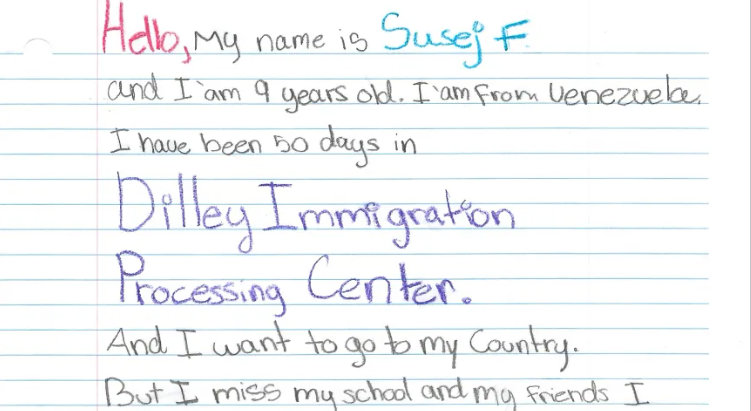
Health Organizations Condemn Traumatic ICE Raids, Family Separation
According to letters from children living in an ICE detention facility, living conditions are inhumane and their mental health is suffering.

In Teens, Social Anxiety Often Looks Like Anger
A study finds that some teens’ aggressive behavior may be due to social anxiety, not straightforward reactivity.
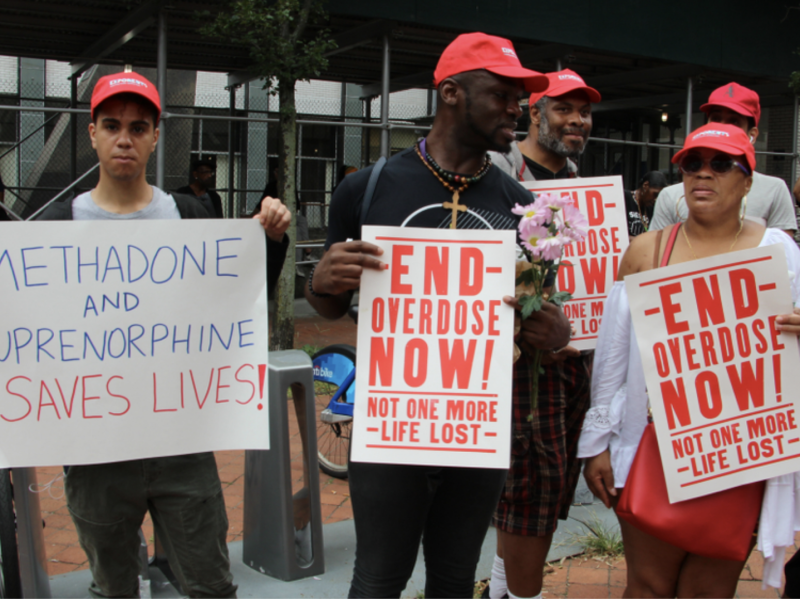
Expert Calls for Harm Reduction, Not Punishment, to Resolve Our Overdose Crisis
As the Trump administration pulls funding from harm reduction, an expert on the overdose crisis says it’s the best way to save lives.
