Will Your Mental Health Treatment Be Covered? Critics Fear Trump Administration Will Make It Harder
The hopeful news is that both Republicans and Democrats have pledged to address mental health coverage.

Recent regulations have strengthened mental health coverage, but will they be enforced?
Trump mental health policies may have significant implications for insurance coverage, potentially affecting what insurance companies pay for and whether some individuals can obtain insurance at all.
Advocates worry that Donald Trump’s return to the White House next month will place policymaking and oversight in the hands of a team whose pro-business, anti-regulation and benefit-slashing priorities may make life harder for anyone seeking help for a mental health condition. A recent Supreme Court decision creates further risk, potentially weakening the enforcement power of regulatory agencies.
On the other hand, mental health and addiction are bipartisan issues that affect both red and blue states, and both parties have pledged to address them. Here’s a look at some of the challenges – and questions – that the changing of the guard in Washington could pose to Americans’ ability to access mental health services.
Will millions of people lose their insurance under Trump policies?
While Trump and most Republican lawmakers have stepped back from threats to rescind the Affordable Care Act (ACA) outright, analysts are warning that budget proposals put forward by Republican Congressional leaders could weaken protections and strip millions of their insurance coverage.
To help more people access health care during the COVID-19 pandemic, Congress, at the start of the Biden administration in 2021, expanded subsidies that helped 5 million additional people obtain insurance on the ACA exchanges. Four million people could become uninsured at the end of 2025 if Congress fails to renew the premium tax credits that funded that expansion. Those affected will be disproportionately Black and Latino and located largely in southern states, according to an analysis by the Urban Institute and its interactive state-by-state tracking tool. Premium rates would likely rise significantly for those who don’t qualify for subsidies but purchase their insurance in the marketplace.
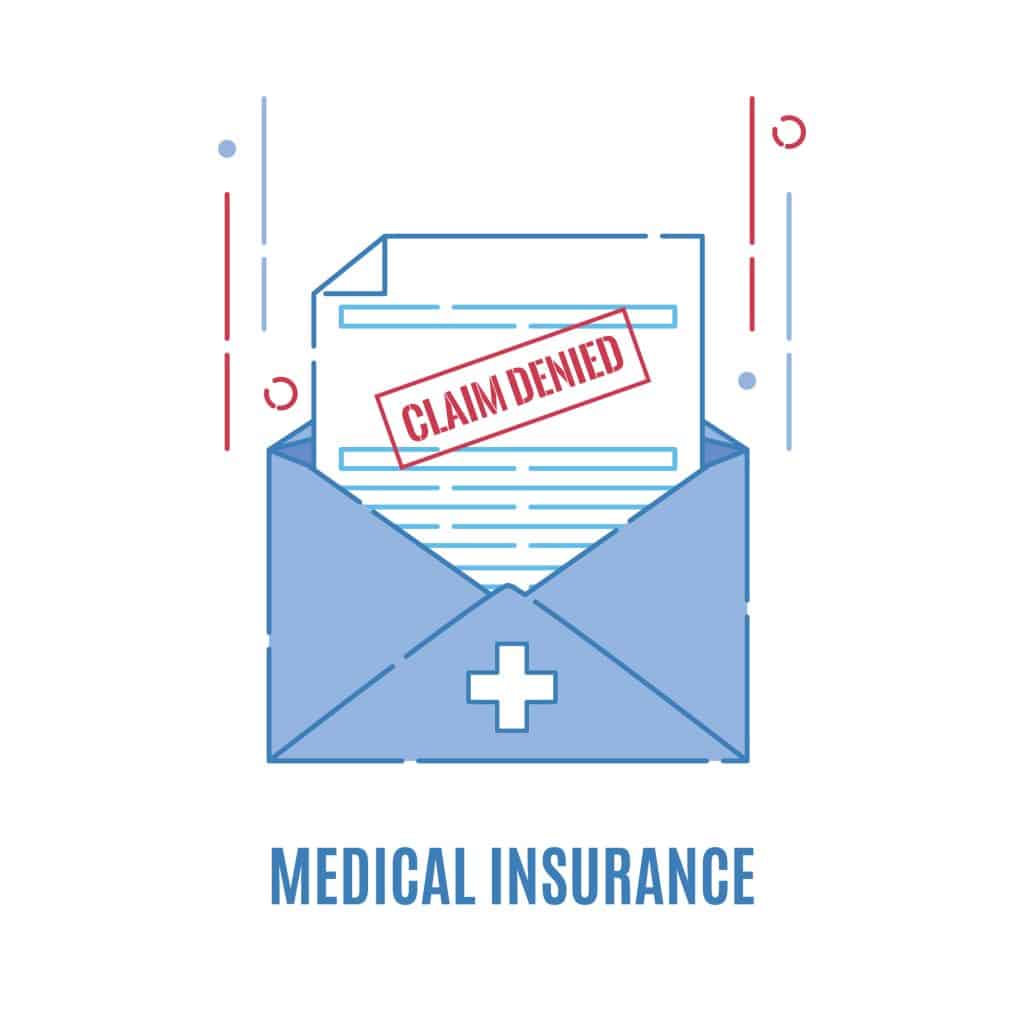
Cuts to Medicaid, the federal health insurance program that is the single largest source of coverage for behavioral health care, could also take a toll. Most urgently, 3.1 million people in nine states who are now insured through Medicaid stand to lose their coverage immediately if Congress reduces federal subsidies that helps those states pay for coverage, according to recent analyses by Georgetown University and the Kaiser Family Foundation. Those states have “trigger laws” that automatically end their participation in the program if the cuts reduce the 90%-share the federal government now pays, with the states picking up the other 10%.
Even more would lose insurance under proposals from Congressional Republicans and the Heritage Foundation that would send Medicaid payments as block grants, or lump sums, to states regardless of the number of people enrolled in the program, according to the Center on Budget and Policy Priorities, a progressive think tank. To make up the deficits likely to result, states would be forced to greatly restrict enrollment.
Finally, the change in administrations is likely to mean that states wishing to impose work requirements as a condition of being insured through Medicaid will be able to do so. Thirteen states were allowed by the Trump administration to impose these requirements, but they were then rescinded under Biden. Nine states have requests now pending before the federal government to institute work requirements that the Trump administration will be able to decide. One state, Georgia, currently requires Medicaid recipients to work after a federal judge blocked the Biden administration’s rejection. For nine months during the first Trump administration, Arkansas required Medicaid recipients ages 18 to 49 to work or volunteer for 80 hours a month; during that time – until a federal court halted the program – 18,000 people lost their Medicaid coverage.
“These are the means by which 90% of Americans who are being treated for addiction and mental illness get their care,” said Patrick Kennedy, founder of the Kennedy Forum and a former congressman from Rhode Island. “So it will really be incumbent upon us to press the case. How in the wake of a mental health and addiction crisis, are you prepared to deal with it if you do this? Like, what’s your answer?” (Kennedy is a member of the MindSite News editorial advisory board.)
Insurance ‘cops’ may be on the chopping block
For those who do have insurance, advocates are bracing for budget cuts to federal agencies charged with enforcing insurance laws and a retreat by the new administration from enforcing the complex rules that govern insurance company practices. Budget cuts would weaken oversight and cut the number of “cops on the beat.” A regulatory pullback could make it easier for insurers to avoid paying for services, including mental health treatment.

“Government enforcement is dictated by two things,” said Sara Rosenbaum, professor emerita of health law and policy at the Milken Institute School of Public Health. “One is the complexity of the enforcement process and the other is money for enforcement. If you don’t give the enforcement agencies any money, then they canʻt enforce the law. And of course, enforcement is particularly hard when it’s a complex law that requires a lot of data collection.”
Others fear changes that could allow insurers to charge more to people who have a mental health condition or simply exclude mental health coverage as a pre-existing condition.
“Not allowing discrimination based on pre-existing conditions has led to so much of the advancement that we’ve made fighting the stigma of mental health,” said Hannah Wesolowski, chief advocacy officer for the National Alliance on Mental Illness (NAMI.) “People are talking about their mental health publicly and openly, but we’re going to take a huge step backwards if that can then be held against them in their insurance coverage.”
Kennedy takes comfort in the hope that Republican lawmakers would see a backlash from constituents if their actions reduced services. “The statistics are jarring everywhere, but in red-state America this is a five-alarm fire,” he said. “If we cut all those services and people end up in emergency rooms and then they end up in jail, is that your solution?
Mental health parity may be under fire
Since 2008, the Mental Health Parity and Addiction Equity Act has required employer-sponsored health plans with more than 50 employees to cover mental health services on par with medical and surgical services. Its passage launched a battle between insurance companies and those seeking mental health coverage thatʻs still playing out almost two decades later.
In theory, the parity act was designed to guarantee that costs – like deductibles, co-pays, and out-of-pocket maximums – as well as limitations on treatment – such as requirements for pre-authorization review and caps on the number of allowed days in the hospital – are no more restrictive than those applied to medical and surgical benefits. In reality, though, the system is riddled with vagaries and loopholes, giving insurers lots of ways to duck payment.
“There isn’t a family in America that thinks the status quo with mental health and addiction is satisfactory.”
patrick kennedy, founder of the kennedy forum
The nation’s largest health insurer, UnitedHealthcare, earned an operating profit of $16.4 billion last year, and, by some estimates, denies a higher percentage of claims than any other insurer. Whatever the company’s actual rate of denials, they have fueled the wave of popular resentment and anger at the insurance industry that exploded after the company’s CEO, Brian Thompson, was murdered in midtown Manhattan on Dec. 4. Some social media posts appeared to celebrate the murder and some 84,000 people reacted with a laugh emoji to a condolence note posted on Facebook by the company.
“There isn’t a family in America that thinks the status quo with mental health and addiction is satisfactory, and they don’t know what to do,” said Kennedy. “But if we say to them, we should at least do what we expect to be done for cancer and cardiovascular disease and diabetes, everybody – I don’t care what political stripe you are – would say that’s fair, that’s right.”
Over the years, mental health advocates have had limited success in their efforts to strengthen rules and regulations and close the gap between coverage of physical health and mental health.
“If you listen to the insurance industry today, they will say the sky is falling, and thatʻs the same message they conveyed back when the parity law was passed in 2008,” said Hannah Wesolowski, chief advocacy officer for the National Alliance on Mental Illness (NAMI.)
“But a lot of the blatant discrimination was ended because of that bill, and the insurance companies are still bringing in a lot of profit, so it wasn’t the end of the world,” Wesolowski said. “What we do know, though, is that people with mental health and substance use conditions still get the short end of the stick. We wait longer, we pay more money, we have less choice for providers.”
The problem is only getting worse. In 2024, three-quarters of health care providers surveyed by Experian Health reported an increase in claim denials in the past two years.
“If you don’t write enough tickets, people start running red lights, and I think it’s the same thing with the way (insurance companies) pay claims. People have got to know that they’re being watched.”
Chris Koller, former insurance commissioner of Rhode Island
While federal agencies set the rules that define parity, much enforcement falls to the states. Mental health patients seeking to overturn denials and fight coverage limits are largely at the mercy of 50 vastly understaffed and underfunded state insurance regulators.
“If you don’t write enough tickets, people start running red lights and not putting quarters in the meter, and I think it’s the same thing with the way (insurance companies) pay claims,” said Chris Koller, president of the Milbank Memorial Fund and former insurance commissioner of Rhode Island. “People have got to know that they’re being watched.”
The battle for coverage has also been fought in the courtroom – again with mixed results. Brian Hufford was the lead attorney in a landmark class-action case, Wit v. United Behavioral Health, brought in 2014 against UnitedHealthcare’s mental health division. It challenged the internal clinical guidelines the company used to deny behavioral health care claims and led to an order by the trial judge that United reevaluate more than 50,000 claims.
Hufford said he’s seen numerous examples of insurers using “improper steps taken to reduce coverage” or deny claims. But he questions “whether or not we’ve got the tools to effectively address them” – a comment reinforced by the fact that the trial court’s decision in the Wit case was largely upended on appeal and is still being litigated ten years after it was filed.
Congress could also repeal new parity rules
In September, the regulatory toolbox appeared to get bigger when the Department of Labor (DOL,) which has authority over employer-sponsored health plans, issued long-awaited final rules for enforcing parity laws. For the first time, they establish clear consequences for insurance companies that erect greater restrictions on access to mental health benefits than to physical health benefits. Rules like these are critical for ensuring that laws passed by Congress are actually enforced.
But because the final regulations were not issued until Sept. 9, they may be subject to repeal by the Congressional Review Act, a “lookback mechanism” that allows Congress to invalidate recently-issued regulations and is most often used when regulations are released near the end of an administration’s term in office. A repeal could be approved by a majority vote in both houses of Congress and can not be filibustered in the Senate.
“They can take down the whole rule with a vote and it would just revert back” to the way things were before the rule was issued, said JoAnn Volk, professor emeritus at Georgetown Universityʻs Center on Health Insurance Reforms.
The rules, slated to go into effect January 1, 2025 for those on group plans and one year later for those with individual insurance tighten one mandate in particular that regulators say insurers have failed to comply with: the requirement that they impose no barriers to treatment, such as prior-authorization requirements or medical-necessity exclusions, that are more onerous for mental health than for physical health. The companies are supposed to conduct comparative analyses of their performance in this area and be ready to provide them to the government upon request. Volk describes this part of the rule succinctly: “We get to ask you to show us your work.”
If they stand, the rules and expanded enforcement powers “definitely will change things,” said Joe Feldman, founder of Cover My Insurance, an advocacy organization that helps consumers fight their health insurers. “It will take time to go into full effect, but where it will have an impact today is in changed expectations for patients and their families, for clinicians, and for employers, knowing thereʻs the power to file enforcement actions.”
Another threat to the parity rules could come from large employers or insurers filing lawsuits in an effort to block them. The ERISA Industry Committee (ERIC), which represents the benefit plans of large employers, lobbied against the new rules and issued comments claiming they overstepped the law.
“If you look back at some of the formal comments that they submitted, they were written structurally like a lawsuit waiting to happen,” said Nathaniel Counts, the Kennedy Forum’s chief policy officer.
Will the Supreme Court neuter federal agencies’ enforcement efforts?
Lawsuits like the potential ERIC challenge could be much easier to bring in the wake of a July 2024 ruling by the Supreme Court that sent shock waves through every federal agency. In Loper Bright Enterprises v. Raimondo, the court overturned the precedent established by the Supreme Court 40 years ago in the so-called Chevron decision that gave deference to federal agencies to interpret laws in their areas of expertise.
“Now that the Chevron doctrine’s been reversed, it’s going to encourage people to bring a lawsuit any time thereʻs a regulation that somebody doesn’t like. And thatʻs going to make it even harder for regulators to be effective.”
Attorney Brian Hufford
It’s not just the parity rule that’s under threat, said Hufford. By undermining the authority of federal agencies in favor of courts, Loper Bright opens the door for legal challenges to any unpopular federal legislation, no matter how longstanding.
“Now that the Chevron doctrineʻs been reversed, it’s going to encourage people to bring a lawsuit any time thereʻs a regulation that somebody doesn’t like,” said Hufford. “And thatʻs going to make it even harder for regulators to be effective.”
In a report issued soon after the Loper Bright decision, the nonprofit Kaiser Family Foundation (KFF) warned that “more regulations will be overturned, placing a real barrier on implementing key health care protections such as prescription drug affordability in Medicare, eligibility rules for Medicaid beneficiaries, infectious disease control and public safety standards, as well as consumer protections for those in self-insured private employer-sponsored plans.”
Loper Bright also forces legislators to make rules as airtight as possible to avoid court intervention. This extra scrutiny was one of the main reasons for the delay in issuing the new DOL rules, according to those involved in the process.
“Everyone I know in the government relations world is really scared of what this is going to mean for how agencies operate in the future, and what past actions will be under threat now,” Wesolowski said.
RFK Jr.’s contraversial vision: wellness farms and drug policy overhaul
There are lots of unknowns about how the incoming administration may affect mental health care. Perhaps the biggest wild card is Trump’s nomination of Robert F. Kennedy Jr to head Health and Human Services. While his anti-vaccine stance has gotten a lot of attention, he also could make it harder to obtain the medications that many rely on to treat depression, anxiety, addiction, ADHD and other conditions – and, perhaps, easier to obtain psychedelics.
Robert F Kennedy Jr.’s personal experience with addiction – and his passion for addressing it – suggests that if he is confirmed the issue will be front and center. He has promised to create “wellness farms” where people “can go to get off of illegal drugs, off of opiates, but also legal drugs, other psychiatric drugs” such as SSRIs, “benzos” and Adderall. Citing the Italian therapy community program San Patrignano as a model, Kennedy promised that people would be able to spend as many as four to five years “to learn to get reparented, to reconnect with communities, to understand how to talk to people.”
That perspective could be shared by Marty Makary, a cancer surgeon and Fox News contributor who is Trump’s pick to head the FDA. Makary has railed against what he believes is the overprescribing of drugs and the undue influence of pharmaceutical companies and government regulators.
Mehmet Oz, the television personality and former cardiac surgeon who Trump has tapped to head the Centers for Medicare and Medicaid Services, has made it a practice to recommend unproven supplements and alternative therapies – even though only a third had evidence to back them up, according to a 2014 study in the British Medical Journal. He also has stated a preference for privatized Medicare Advantage, which has come under fire for limited provider networks and overbilling.
In the end, protecting mental health coverage is going to take determined coalition-building, said Patrick Kennedy, who sees potential in the shared tragedy of the opioid epidemic and in the bipartisan support he sees for mental health policy.
“As toxic and polarized as our public is in terms of our political culture and tribalism, I know from personal experience that the issue that transcends that polarization is the unified passion that everyone I’ve ever met has for the issue of addiction and mental illness,” Kennedy said. “It’s an existential crisis for every family in this country.”
“The question now is how do we not write off our community for the next four years?” he said. “What are we going to do to try to protect people where possible?”
Support for the story was provided by the Commonwealth Fund.
The name “MindSite News” is used with the express permission of Mindsight Institute, an educational organization offering online learning and in-person workshops in the field of mental health and wellbeing. MindSite News and Mindsight Institute are separate, unaffiliated entities that are aligned in making science accessible and promoting mental health globally.


Author

Related Articles

At Moyembrie Farm, Incarceration Means Support and Rehabilitation
Moyembrie farm, a unique French facility without cells or bars, helps inmates successfully transition back into society by focusing on mental health support and life skills.

The US Psychiatric System Could Really Use More Psychologists
An op-ed in JAMA Psychiatry argues that integrating psychologists into inpatient units is essential for improving psychiatric hospital care.
988 Crisis Line Rolls out Georouting Technology, Giving Crisis Counselors a Better Idea of Caller’s Location
The 988 Suicide & Crisis Lifeline will deploy technology that routes calls based on their proximity to cell phone towers, preventing confusion and delays, the Biden administration announced.
