
Grieving a Husband Killed by Police During a Mental Health Crisis
Four years after Walter Wallace was shot by police during a mental health crisis, his widow speaks out.


December 18, 2024
By Courtney Wise

Greetings, MindSite News Readers. In today’s Daily, we’re highlighting some of our original reporting: First, an interview with Dominque Wallace of Philadelphia, four years after police shot and killed her husband in response to a call that he was in the midst of a mental health crisis and needed an ambulance.
We also have a guest essay on how public response to the murder of UnitedHealthcare CEO Brian Thompson reveals our collective rage and anguish over the health insurance industry. Plus, the legacy of Elizabeth Wurtzel’s Prozac Nation and tips from NPR’s Life Kit on adopting the healthiest “wintertime mindset.”

Four Years After Her Husband Was Killed by Police, Dominque Wallace Opens Up About Staying Strong for Her Five Kids
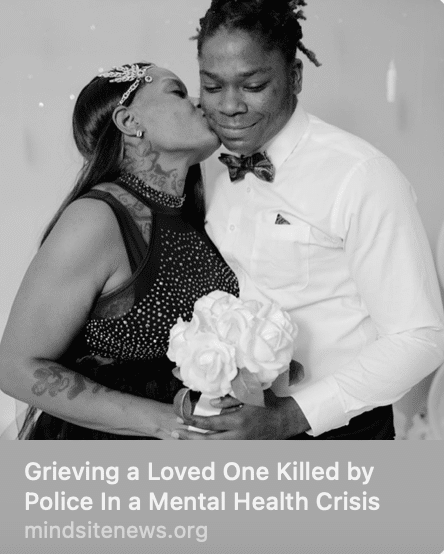
By Zahiya Daniels and Nichole Christian of Youthcast Media Group®
Four years after enduring one of Philadelphia’s most disturbing cases of police violence, Dominque Wallace still finds herself working to overcome trauma for herself and gun violence survivors.
Her ordeal made national headlines in 2020 when her 27-year-old husband, Walter Wallace Jr., was fatally shot by two Philadelphia police officers after she had called 911 to get help for his mental health episode. The incident set off protests across the city and left Dominque to mourn alone as a widow and become a single mother to their five children.
Even now, Wallace’s story continues to exemplify how easily mental health episodes can turn deadly and how difficult it can be to survive the aftermath of violence and access mental health services in the moments you need them most.
In a rare interview granted to Youthcast Media Group, Dominque Wallace recounted the pain of beginning her day with her beloved husband by her side, only to end it without him. After leaving the hospital, she also faced the agonizing task of telling her children, only to find out they had already learned of their father’s death on TV.
Public response to the murder of Brian Thompson by alleged shooter Luigi Mangione reveals depth of rage toward insurance industry
Guest essay by Meg Kissinger
Anyone who has tried to get insurance to cover their mental health bills knows how frustrating and dehumanizing the process can be. For millions of Americans, it’s downright impossible.
More than half of all psychiatrists and most therapists won’t take insurance, much less Medicare or Medicaid. They say there’s too much hassle and the reimbursement rates are too low to make it worth their while. If patients want care, they’ll have to pay for it by themselves.
Those who can’t afford to pay $150 or more an hour are left scrambling to find a provider in a marketplace critically lacking trained clinicians. This is especially true for children with serious mental illness. There is a severe shortage of child psychiatrists, with fewer than 14 psychiatrists for every 100,000 children in America at last count.
Even if you can find a provider who takes your insurance, then you face the hurdle of getting your claim approved. Increasingly, insurance companies are capping the number of therapy visits they will allow or they deny claims altogether as “not medically necessary.” Often, these decisions are made by a panel of so-called “care managers,” most of whom have no mental health training.
The recent murder of UnitedHealthcare CEO Brian Thompson exposed the frustration and outrage of thousands of disgruntled insurance customers whose claims have been rejected. By some estimates, United Healthcare, which last year earned profits of $16.4 billion, has an industry-leading denial rate, nixing almost one-third of all claims – including one for a person with a broken back.
While no rational person would condone murder as the answer to those inequities, the attention has crystallized the issues and emboldened critics to speak up…

In other news…
The lasting legacy of Prozac Nation: In 1994, Elizabeth Wurtzel’s Prozac Nation, landed on the scene, walloping readers with its candor, and illustrating for others what one reviewer called “a powerful portrait of one girl’s journey through the purgatory of depression, and back.” For writer Laura Delano, who penned this essay in the Washington Post, the memoir helped destigmatize the severe mental illness she experiences within herself, highlighting what needs to change about our culture and giving purpose to her pain. “It’s a revolutionary act now to stay present with one’s emotional pain – to listen to it (rather than Prozac), to feel it all,” Delano writes. “To talk about breakdowns and despair and angst and paranoia and madness as indicative of how vital, how alive, how in touch we are with the incredibly dysfunctional social order.”
Adopting a proper “wintertime mindset”: People live in the arctic and actually love it. A college mate of mine moved to Fairbanks, Alaska with his wife and kids, and has shared photos of the children walking outside – sans coat, hat, boots, and gloves – in minus-8 degrees Fahrenheit! I about lost it; my mind annually considers hibernation once the temperatures reach 32 degrees. They’ve even adjusted well to the super short winter days. Health psychologist Kari Leibowitz told NPR’s Life Kit it’s something many of us can train our mind to do. Realizing that every living thing on Earth consistently enters a season of slowing down, shedding, and restoration is the first step. “They are all changing their behavior in winter in some way,” Leibowitz said. “They’re migrating or hibernating, shedding their leaves, storing up their energy for spring. Our modern societies and conveniences have convinced us that it’s a personal or moral failure if we want to slow down in the winter.”
Treating autism with psychedelics: Early research has begun to investigate if certain psychedelics, including psilocybin and MDMA, help people with autism reduce feelings of social anxiety and mental distress. Authors of a study published in the October 2024 edition of Psychopharmacology wrote that psychedelics have long been thought to improve symptoms of disorders like depression, anxiety, substance misuse, and OCD in neurotypical people.
But despite the higher rate of mental health conditions in the autistic community, exploring how psychedelics might benefit them is understudied. Researchers who spoke with Science magazine said their studies will restrict participation to the two-thirds of autistic people who do not have an intellectual disability, to ensure all participants give true informed consent. “People really have to have a good understanding of what they’re agreeing to do,” said William Mandy of University College London. The success of a preliminary study could allow such research to expand. “We need to take steps toward giving more autistic people a chance to thrive,” Mandy said.
If you or someone you know is in crisis or experiencing suicidal thoughts, call or text 988 to reach the 988 Suicide & Crisis Lifeline and connect in English or Spanish. If you’re a veteran press 1. If you’re deaf or hard of hearing dial 711, then 988. Services are free and available 24/7.
Recent MindSite News Stories
Will Your Mental Health Treatment Be Covered? Critics Fear Trump Administration Will Make It Harder

The hopeful news is that both Republicans and Democrats have pledged to address mental health coverage. Continue reading…
Fury mounts over insurance claim denials – including mental health – after killing of UnitedHealthcare CEO

Public response to the murder of health insurance CEO Brian Thompson reveals depth of rage toward insurance industry Continue reading…
Four Years After Her Husband’s Killing by Police, Dominque Wallace Opens Up About Staying Strong for Her Five Kids

Four years after her husband was killed by police during a mental health crisis, Dominque Wallace is working to overcome trauma and help other survivors.
If you’re not subscribed to MindSite News Daily, click here to sign up.
Support our mission to report on the workings and failings of the
mental health system in America and create a sense of national urgency to transform it.
For more frequent updates, follow us on Facebook, Twitter and Instagram:

The name “MindSite News” is used with the express permission of Mindsight Institute, an educational organization offering online learning and in-person workshops in the field of mental health and wellbeing. MindSite News and Mindsight Institute are separate, unaffiliated entities that are aligned in making science accessible and promoting mental health globally.
Copyright © 2021 MindSite News, All rights reserved.
You are receiving this email because you signed up at our website. Thank you for reading MindSite News.
mindsitenews.org

The name “MindSite News” is used with the express permission of Mindsight Institute, an educational organization offering online learning and in-person workshops in the field of mental health and wellbeing. MindSite News and Mindsight Institute are separate, unaffiliated entities that are aligned in making science accessible and promoting mental health globally.


Author

Related Articles
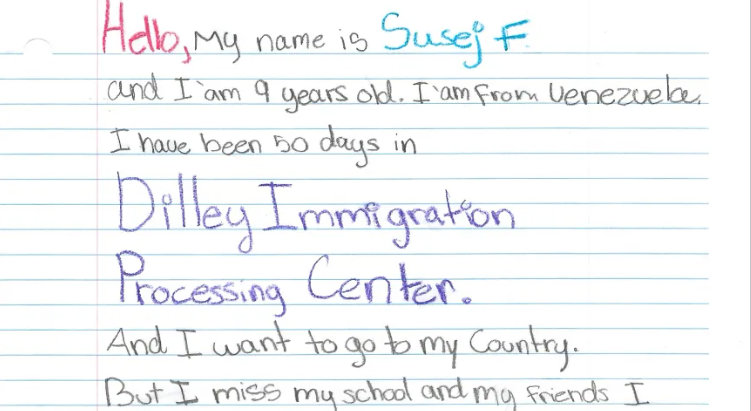
Health Organizations Condemn Traumatic ICE Raids, Family Separation
According to letters from children living in an ICE detention facility, living conditions are inhumane and their mental health is suffering.

In Teens, Social Anxiety Often Looks Like Anger
A study finds that some teens’ aggressive behavior may be due to social anxiety, not straightforward reactivity.
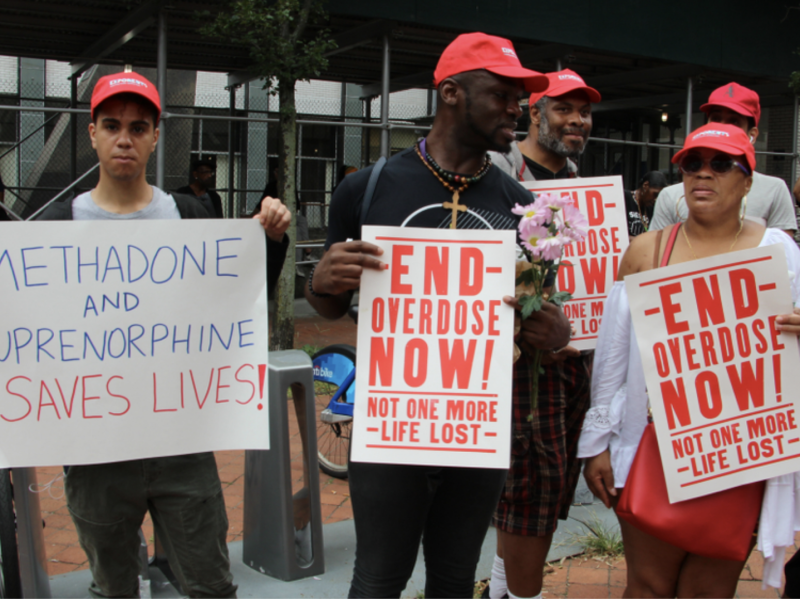
Expert Calls for Harm Reduction, Not Punishment, to Resolve Our Overdose Crisis
As the Trump administration pulls funding from harm reduction, an expert on the overdose crisis says it’s the best way to save lives.
