
Looking Back at the TikTok Mental Health Tsunami in 2024 (and More)
Among our stories I’m looking back on are the TikTok tsunami on dissociative identity disorder, mother-baby units for post-partum psychosis, and more.


December 24, 2024
By Don Sapatkin

Good Tuesday morning! We’re trying something a little different with the Daily over the holidays. Today and again next Tuesday, I’ll be looking back at some of the important, beautifully written and just plain nifty journalism that MindSite News has been excited to publish.
My colleague Courtney will do the same on Thursday and the following Thursday – with a parenting focus, of course. She’ll be off on Christmas and New Year’s Day.
Looking through the archives, I was struck by the breadth of our coverage of mental health and substance use disorders and surprised by some stories that I’d missed the first time around – like Laurie Udesky’s interview with Allen Ginsberg’s biographer, who talks about how his poems about madness helped humanize psychiatry. And Astrid Landon’s deep dive into the dissociative identity disorder TikTok tsunami. Plus, my own discovery of the shockingly sensible British psychiatric treatment centers known as mother-and-baby units.
But first, some new news: In “Rethinking Addiction,” PBS NewsHour offers a you-may-be-surprised-at-what-you-didn’t know look at two important and underused treatments. Naltrexone for alcohol use disorder is barely on the radar. Methadone for opioid addiction gets a bad rap despite its unparalleled success (and the PBS account is one of the best I’ve seen). Watch both 10-minute segments, with transcripts.
And while we’re on the topic: Even many of Robert F. Kennedy Jr.’s harshest critics are intrigued, or at least curious, about his policy views on addiction treatment. Maia Szalavitz, not so much. The New York Times opinion section’s addiction specialist looks at RFK Jr.’s ideas and explains why they could worsen rather than help the current crisis if he’s confirmed as secretary of health and human services.
A Merry Christmas and Happy Chanukah (my little protest against the Americanized Hanukkah) to many, and best wishes to the rest for excellent Chinese takeout.
‘Tiktok i need your help’: Dissecting the dissociative identity disorder tsunami

Dissociative identity disorder (DID, formerly known as multiple personality disorder) exploded on social media during the pandemic. While the horrors of COVID-19 have subsided, however, the DID craze continues with billions of views on TikTok alone. Here, “they” isn’t a gender-neutral pronoun. It refers to the various identities that exist in one person — Neo, Sky, Lux and Liam, among others, exist for Fennic, who first remembers leaving their body nearly a decade ago, at age 11, when they were lying on their bed feeling suicidal, sobbing and contemplating self-harm. Suddenly, they heard a female voice whisper inside their head: “Hey, it’s okay. I’m gonna take over now,” Fennic told reporter Astrid Landon.
Landon had been following the TikTok phenomenon for a while. The young people she interviewed, and the multitude of videos she watched, frequently describe painful, traumatic experiences in vivid detail, although they often don’t quite match diagnostic criteria. The researchers she spoke with wondered whether DID’s portrayal on social media is an atypical clinical presentation, a case of mass contagion or simply an act. Or, perhaps, whether a small number of posters actually have DID, a larger group are convinced they have it, and a few more are exploiting the niche to foster a fertile – and, occasionally, lucrative — terrain for views, likes and follows. (Some anonymous users have confessed that they were “faking” DID for fun, attention or to escape responsibility for something they did.)
Neither Landon nor, as far as I know, anyone else has solved the puzzle, but the pieces she describes are pretty damn interesting. So is her sidebar – the story that originally caught my eye – about the history of what is still better known as multiple personality disorder. First documented in 1584 in a Dominican nun in France, the sufferer’s bizarre behaviors, including attempts to cut and eat her own flesh — and the appearances of alter egos that included a number of destructive demons as well as Mary Magdalene as a protector — led her religious community to conclude that she was possessed.
Today, Landon writes, the medical history of multiple personality disorder is interwoven with its media representation and, of course, the landmark case (later disproven) described in the 1973 book “Sybil: The true story of a woman possessed by 16 separate personalities.”
Read Landon’s brief history here, and her deep dive into the TikTok tsunami here. You may also want to read our older story on TikTok‘s obsession with narcissism.
How beat poet Allen Ginsberg’s writings about severe mental illness, barbaric treatments, and his mother changed the culture

“I saw the best minds of my generation destroyed by madness, starving hysterical naked,” begins Allen Ginsberg’s epic 1956 poem “Howl,” which catapulted the celebrated poet into the public consciousness. And while the counterculture icon was known for many things – his denunciations of capitalism and admiration for communism, anti-Vietnam War activism, gay rights and free speech – his most profound impact may have been on how we think about serious mental illness.
Stevan Weine became enthralled with Ginsberg’s poems in the 8th grade. The boy’s curiosity about his poetry and how it might be connected to his experiences of madness led Weine — by then a psychiatrist in training – to reach out to Ginsberg in April 1986, the first of several conversations over eight years. In “Best Minds: How Allen Ginsberg Made Revolutionary Poems from Madness,” Weine, now a professor of psychiatry at the University of Illinois college of medicine, analyzes his poetry and offers his own interpretations of detailed clinical notes of psychiatric hospitalizations endured by Ginsberg and his mother, Naomi. Psychiatry was often barbaric at that time, relying heavily on lobotomies to treat severe mental illness and believing that homosexuals like Ginsberg were suffering from a sociopathic personality disturbance.
Laurie Udesky interviewed Weine shortly after his book was published. Much of their conversation focused on how Ginsberg was affected by his mother’s severe mental illness – the treatments, including lobotomy, that she received, his guilt over putting her in mental hospitals she would never leave, his desire, Weine said, “to walk in her footsteps, to go into that world, the world of the ‘bughouse,’ as he called it, and to understand what happens there. He was trying to make sense of things.”
Udesky asked about the cultural impact of Ginsberg’s poetry on psychiatry.
“I think that Allen’s poetry changed the culture, and then I think psychiatry had to deal with the changes in the culture. The change was that madness and mental illness should not just be shut away and silenced. There’s a human experience there,” Weine said. He refers to Ginsberg’s poem “Kaddish” – traditionally a Jewish mourning chant — as “really the first ever, first-person family member narrative of serious mental illness. Kaddish valorizes the position of the family caregiver – which was Allen – holding Naomi’s hand, watching her, taking care of her, showing more support and care for her than anybody or any institution ever did,” Weine said.
“I think the idea that confinement and treatments make people worse is embedded in Howl and Kaddish. These ideas were let loose in the culture. And people like me, and those who are coming into psychiatry, have read these poems. They help inform us to be critical of some of the values and practices that were embodied in psychiatry or systems of care,” Weine said.
Read the full story here.
These psych units treat mothers for postpartum psychosis – while the moms care for their babies
Postpartum psychosis is rare and extremely serious mental illness. Besides feeling depressed and anxious, women who suffer from it experience hallucinations and can get violent. Their thoughts often center on their babies. The last thing you’d want would be to put them together, right? That’s certainly the thinking in the United States.
But we did not experience The Blitz. Britain did, and after psychologists noted the negative effects of separating mothers from their children during Germany’s relentless bombing campaign of 1940-41, they started admitting them together to pediatric hospitals before the end of the decade. Same room: mom in a bed and infant in a crib next to it. Mother-and-baby units provide psychiatric care for pregnant women from their third trimester through the year after birth – a period when they are more vulnerable to mental illnesses than at any other point in their lives.
Most mothers with postpartum psychosis actually are not a danger to their children, if – if – they get the right care and protection. That may mean round-the-clock supervision by two staff members – one for the mother and the other for the baby. Mothers and babies typically live and get treated there for months. Sometimes they relapse and return. The condition is extremely serious, and treatment takes a long time – far longer than insurers in the U.S. generally are willing to pay for just about any form of psychiatric treatment.
The short-term goal is to help women recover. In the long term, the programs allow them to build back the confidence to care for their children safely when they go home. (Many are petrified that they will harm their children.)
This story did not run as an article in MindSite News. It was a newsletter item, one that – brought to life through the stories of these women – has stuck with me more than any other I’ve written over the past three years. My reaction, then and now, was this makes so much sense! I wish that I had written the story, seen the relief, gratitude and confidence in these women’s eyes, watched them mothering their children. The New York Times got there first.
Read my full newsletter item here (or jump straight to the Times).
If you or someone you know is in crisis or experiencing suicidal thoughts, call or text 988 to reach the 988 Suicide & Crisis Lifeline and connect in English or Spanish. If you’re a veteran press 1. If you’re deaf or hard of hearing dial 711, then 988. Services are free and available 24/7.
Recent MindSite News Stories
Forgotten Children: The Unseen Victims of Gun Violence Are the Children Left Behind

Parental death has been rising in the U.S. due to COVID-19, the overdose epidemic and gun violence. In this first part of Forgotten Children, we look at efforts to help children grieving from the loss of parents to gun violence. Continue reading…
Is Chicago’s Mental Health Crisis Response Team Ready to Go Copless?
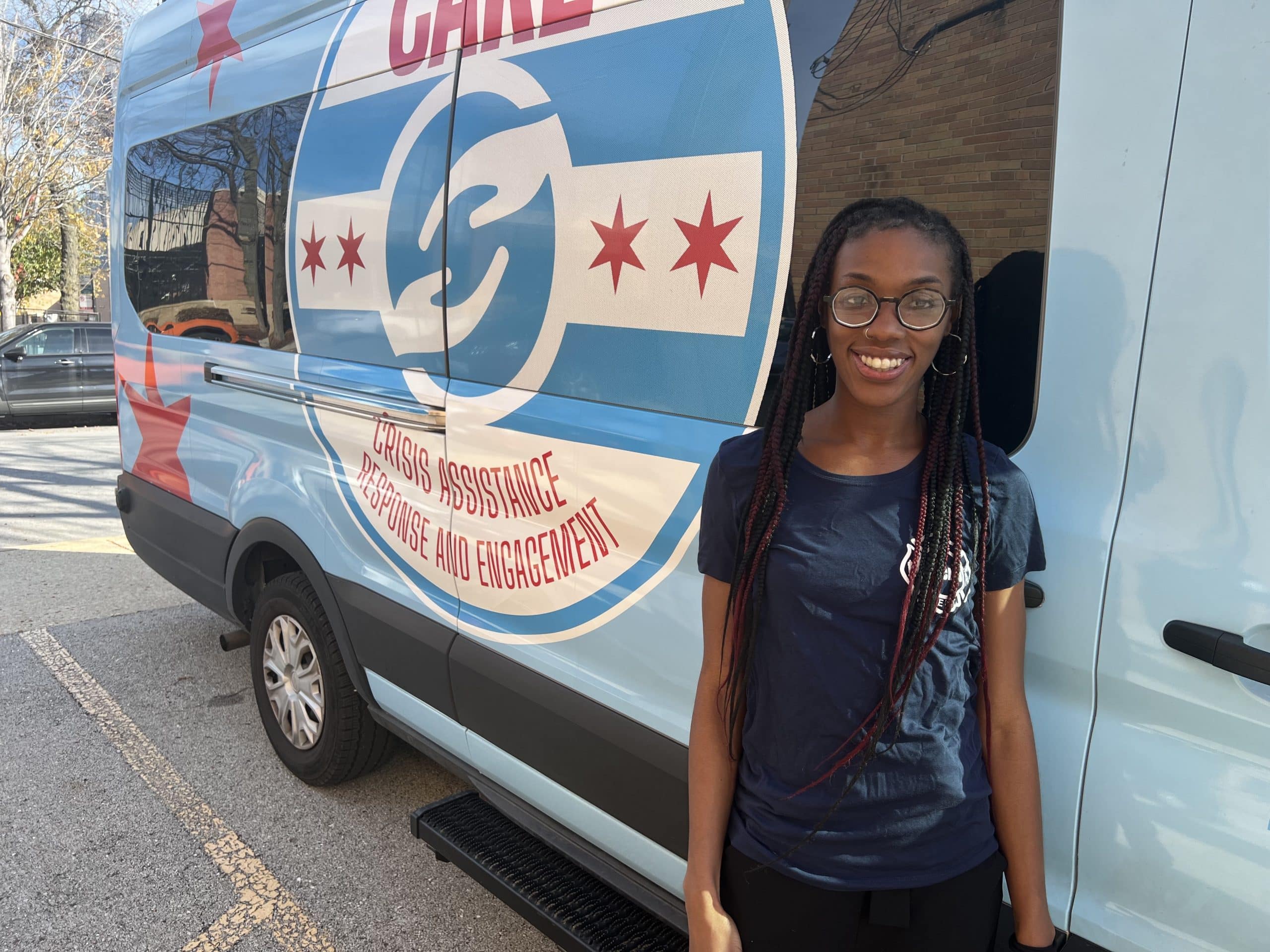
A new evaluation of Chicago’s alternative crisis response team (CARE) finds a low threat of violence and offers insights other cities may find useful. Continue reading…
Migrant children struggle to express themselves in words. Enter art and play
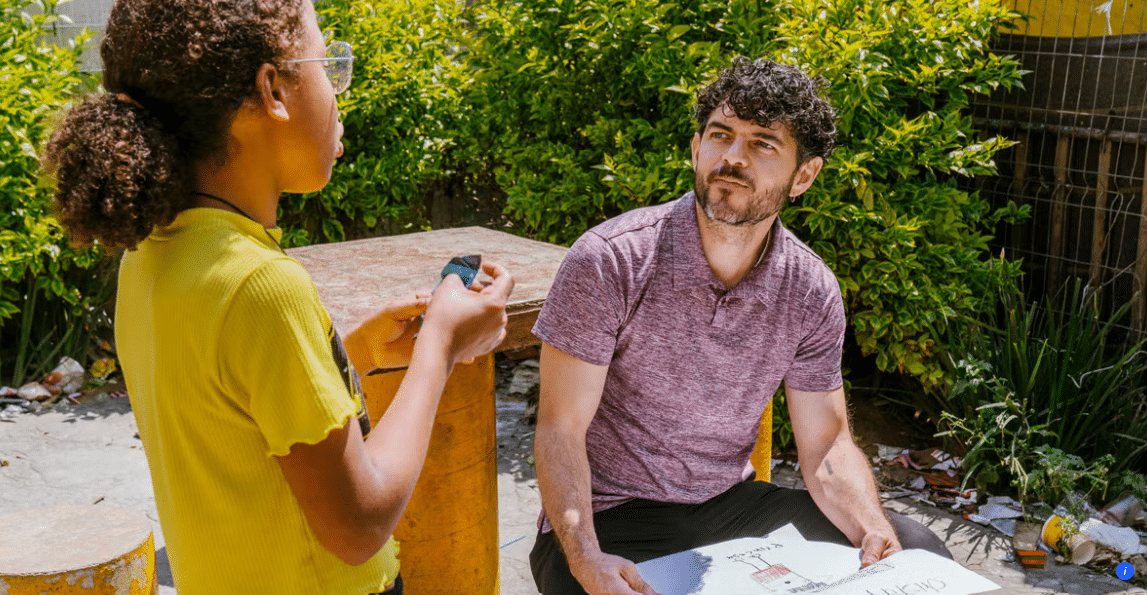
Art and play therapy is helping migrant children in Mexico City process complex trauma.
If you’re not subscribed to MindSite News Daily, click here to sign up.
Support our mission to report on the workings and failings of the
mental health system in America and create a sense of national urgency to transform it.
For more frequent updates, follow us on Facebook, Twitter and Instagram:

The name “MindSite News” is used with the express permission of Mindsight Institute, an educational organization offering online learning and in-person workshops in the field of mental health and wellbeing. MindSite News and Mindsight Institute are separate, unaffiliated entities that are aligned in making science accessible and promoting mental health globally.
Copyright © 2021 MindSite News, All rights reserved.
You are receiving this email because you signed up at our website. Thank you for reading MindSite News.
mindsitenews.org

The name “MindSite News” is used with the express permission of Mindsight Institute, an educational organization offering online learning and in-person workshops in the field of mental health and wellbeing. MindSite News and Mindsight Institute are separate, unaffiliated entities that are aligned in making science accessible and promoting mental health globally.


Author

Related Articles
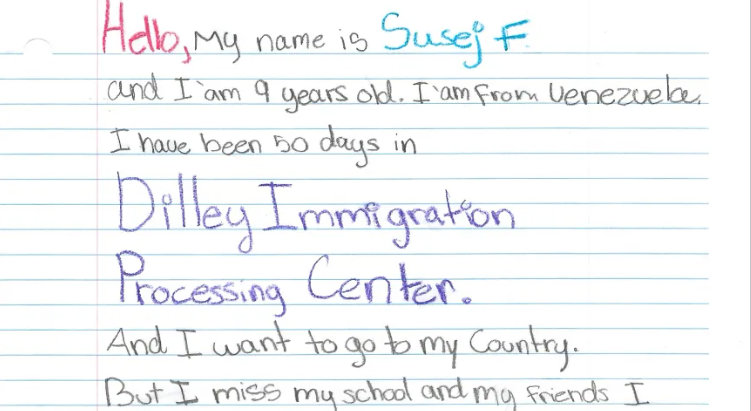
Health Organizations Condemn Traumatic ICE Raids, Family Separation
According to letters from children living in an ICE detention facility, living conditions are inhumane and their mental health is suffering.

In Teens, Social Anxiety Often Looks Like Anger
A study finds that some teens’ aggressive behavior may be due to social anxiety, not straightforward reactivity.
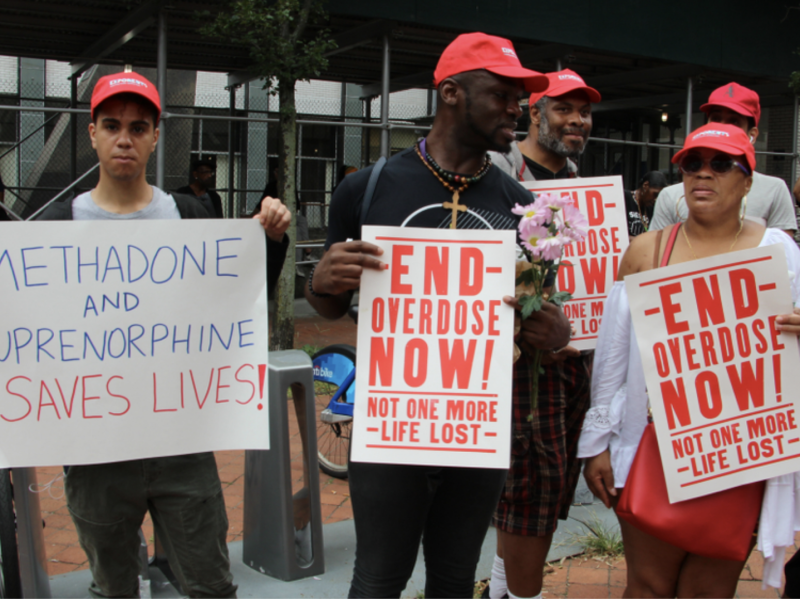
Expert Calls for Harm Reduction, Not Punishment, to Resolve Our Overdose Crisis
As the Trump administration pulls funding from harm reduction, an expert on the overdose crisis says it’s the best way to save lives.
