
Talking with Children About Homelessness
It’s important to talk with kids about the root causes of homelessness to guard against stigma toward people without homes.

January 9, 2025
By Courtney Wise

Greetings, MindSite News Readers. In today’s Daily, you can find support on discussing homelessness with children as well as an unexpected essay on how releasing the need to understand her son’s death gave one mother the ability to remain connected to his everlasting love. Plus, pebbling as a tactic for staying in touch with friends amidst the chaos of parenting. And more.
Explaining homelessness to children

Detroit isn’t a very walkable town—and it’s not because we’re nicknamed “The Motor City,” either. That’s to say, the unhoused are present, but not as readily visible in a region where so many people get around in their own private cars. But in San Francisco, particularly in the Tenderloin and South of Market communities, familiarizing children with the reality of homelessness is required. Tatiana Alabsi and her 11-year-old son, Sami, often experience their Tenderloin neighborhood on foot, traversing tent homes and witnessing people’s upclose struggles with addiction.
“I always explain [to my children] that these people have challenges,” Alabsi told the San Francisco Chronicle. “Something happened to them, and we should always respect them.”
That’s a good starting point, said Jamie Chang, a professor in UC Berkeley’s School of Social Welfare. A native of San Francisco, Chang refers to her own research when having conversations about homelessness with her 5-year-old daughter. It’s important to emphasize the root causes of homelessness, she said, to guard against the stigma of unhoused people. These causes include a lack of affordable housing, not just in San Francisco, but many areas nationwide, and often, insufficient mental health and addiction treatment options.
“When I talk to my daughter about this, she knows that a person is homeless because we do not have enough homes in our society for everyone,” Chang said. “That’s an easy message for her to digest and aligns with the values we teach our children.”
Social worker Mary Kennedy added that telling children that mental illness and addiction are conditions that “change how people act, think and feel,” can help them understand that some people experience circumstances because of issues they didn’t have control over, like trauma, poverty or genetics.
As children age into adolescence, Dominique McDowell encourages personal vulnerability in the conversation, should it be relevant. Sober since 2000, McDowell spent nearly 10 years unhoused and addicted to crack cocaine. He currently assists people through a medication-assisted treatment program in Marin County, and has intentionally been honest with his 15-year-old stepson about his past, after learning the teen was vaping nicotine. Rather than trying to “scare him straight,” McDowell spoke about the nature of addiction, included some of his own experiences, and invited his son to consider why he was using nicotine.
“As parents, I think sometimes we try to shelter kids from things, which can be more dangerous for them,” McDowell said. “Instead, I think we’ve gotta just encourage kids that it’s safe for them to talk to us about these things.”
An unexpected conversation connects a mother to her son, long after he has gone
Parents of healthy children don’t expect to bury them. We anticipate, from the moment they are born, that our children will bury us. That supposition drives us. Well, it drives me. My mission everyday is to reinforce how deeply my daughter is loved and to point to all the ways she can know that love is the force that sustains us. I tell my daughter that I love her, even when I’m mad at her, and that my love is strong enough to reach her, even after I leave my body. I even imagine the ways I will prove this to her after I die. Maybe I will greet her in her dreams, sit with her as a cat in the park, or borrow from Tabitha Brown’s mama and leave dimes along her path, punctuating moments of joy and encouraging her in times of sorrow.
Although viewing their family as neither particularly religious or spiritual, Nikki Mark surprised herself by doing the same with her oldest son, Tommy, one day while driving from LA to San Diego for a weekend soccer match. Her son, surprisingly, mused that it must be hard for a parent to lose a child. He also asked her if someone could just go to sleep and never wake up. She told him lightly that only if someone was really old. She and the 12-year-old then delightedly brainstormed the myriad ways he would always know her love endures. When she died, in her 90s, she told him her vision: She would send him a sign — perhaps a bird — to let him know she would always be with him. They laughed about what kind of bird it might be.
“I expressed how proud I was of him for going after his dreams in ways I didn’t as a child,” Mark writes in an essay in the New York Times. “And I let him know how much I loved him, how much I believed in him, and what an honor it was to be his mother.” Three days later, Tommy died. Doctors think it was a heart condition he had, but the family still isn’t quite sure why; he died in his sleep.
Tommy going first was never in the plan. There’s so much joy in witnessing your children stretch into the fullness of themselves. It’s so fulfilling to see that imagining an existence apart from them – where they leave you – is unfathomable. “In an instant, the person I thought I was, and the story I thought I was living, vanished,” Mark writes. “The pain was beyond words; I saw no way to survive it. For the first time in my life, I understood what it felt like to want to die.”
But Nikki remains here; there are no signs she can leave Tommy. Her love for him continues to evolve and grow, with visitations of birds and fleeting conversations with him in her dreams bringing her some peace and even joy. Having known her vision, she says, he leaves signs of his enduring love everywhere.
Women with ADHD: New research finds your symptoms may shift along with your menstrual cycle
New science suggests your ADHD symptoms shift with the hormonal changes of your menstrual cycle. The research, presented at the latest U.S. Psychiatric and Mental Health Congress, isn’t yet published in a peer-reviewed journal, but it suggests that ADHD symptoms can fluctuate alongside hormonal shifts, reports Scientific American. “It gives us a personalized insight into what is happening for many women with ADHD,” said Dora Wynchank, a psychiatrist and ADHD researcher who was not involved in the study. “Because ADHD historically has been studied in boys and men, we’ve missed out on this very important aspect.”
The study, led by clinical psychologist Michelle Martel of the University of Kentucky, reinforces similar patient testimonies. In it, Martel tracked 97 female college students across their menstrual cycle. Nearly all participants had a formal ADHD diagnosis, and almost half used prescription stimulants to treat it. Using surveys and cognitive tests, Martel’s team measured participants’ hormone levels and their ADHD symptoms every day. They discovered participants had worse ADHD symptoms, including inattention and impulsivity, just before and at the start of their period and, to a lesser extent, around ovulation.
The findings confirm what Martel, and even Wynchank, have heard from clients. It also reinforces results from a preliminary study Martel published in 2018. “‘Something happens to me in the week before my period where all hell breaks loose,’” Wynchank says patients told her. “‘A couple days into my period, I look back and I don’t recognize myself. And this comes back every month.’”
In other news…
Do you pebble? Turns out, I’ve been doing it for years. I imagine you have too, if anyone you care about lives far away, or if it’s a little tough to pin down for a lunch date. It’s defined by Business Insider as the act of sharing small tokens of affection with someone to reinforce a connection. Saw a funny meme on Facebook and texted it out to your crew? Pebbling. Checked your phone and found an unexpected TikTok from a friend? That’s it, too. The term is inspired by the behavior of penguins who, when honed in on a love interest, deliver tiny treasures of pretty rocks or other trinkets to demonstrate affection. While it won’t resolve your need for face-to-face connection with friends and fellow harried parents, it totally sends the message that someone you care about cares back.
Shari Franke believes family vlogging should be banned: As the eldest of infamous mommy vlogger Ruby Franke’s six children, Shari spent years under the lens of her mother’s camera as it documented her life for the pleasure of 2.5 million YouTube followers. 8 Passengers, the channel named for the 6 Franke children, and their parents, Ruby and Kevin, emphasized their life as Mormons and the routines they mastered as a relatively large household, while also sharing upbeat videos of the family discussing their favorite shows, playtimes, and mild life milestones, like the removal of braces. But, it was all a tragic ruse, she told Rolling Stone.
Behind what Shari described as “forced smiles” and “staged perfection,” was years of abuse at the hands of her mother. The act fell apart in 2023, after Shari’s younger brother escaped the home of Jodi Hildebrandt, their mother’s business partner and co-abuser. After the boy appeared at a neighbor’s house malnourished and begging them to call police for help, the incident resulted in Ruby and Hildebrandt’s arrest. Last February, both plead guilty to aggravated child abuse and were sentenced to 4 to 30 years in prison.
Now, Shari is poised to tell her story in a new memoir. The House of My Mother: A Daughter’s Quest for Freedom was released earlier this week. In it, she details her experiences and why she believes family vlogging is child exploitation. “There is no exception,” she said. Besides issues of privacy and consent, “making money off your kids [with] no oversight as to how much the kids are getting paid — there’s no way to do that well for me.”
If you or someone you know is in crisis or experiencing suicidal thoughts, call or text 988 to reach the 988 Suicide & Crisis Lifeline and connect in English or Spanish. If you’re a veteran press 1. If you’re deaf or hard of hearing dial 711, then 988. Services are free and available 24/7.
Recent MindSite News Stories
Thousands of Callers Are Giving Up On Calls to Texas’ 988 Suicide Hotline As It Grapples with a $7 Million Deficit

Thousands of Texans are abandoning the state’s suicide hotline mid-call as call centers struggle under a $7 million funding deficit and a growing suicide rate.
Long-Acting Injection Helps Heal ‘Beautiful Mind’ of Husband with Schizophrenia

A long-acting monthly injection and counseling have helped heal problems linked to a beloved husband’s schizophrenia. Continue reading…
Forgotten Children: The Unseen Victims of Gun Violence Are the Children Left Behind

Parental death has been rising in the U.S. due to COVID-19, the overdose epidemic and gun violence. In this first part of Forgotten Children, we look at efforts to help children grieving from the loss of parents to gun violence. Continue reading…
If you’re not subscribed to MindSite News Daily, click here to sign up.
Support our mission to report on the workings and failings of the
mental health system in America and create a sense of national urgency to transform it.
For more frequent updates, follow us on Facebook, Twitter and Instagram:

The name “MindSite News” is used with the express permission of Mindsight Institute, an educational organization offering online learning and in-person workshops in the field of mental health and wellbeing. MindSite News and Mindsight Institute are separate, unaffiliated entities that are aligned in making science accessible and promoting mental health globally.
Copyright © 2021 MindSite News, All rights reserved.
You are receiving this email because you signed up at our website. Thank you for reading MindSite News.
mindsitenews.org

The name “MindSite News” is used with the express permission of Mindsight Institute, an educational organization offering online learning and in-person workshops in the field of mental health and wellbeing. MindSite News and Mindsight Institute are separate, unaffiliated entities that are aligned in making science accessible and promoting mental health globally.


Author

Related Articles
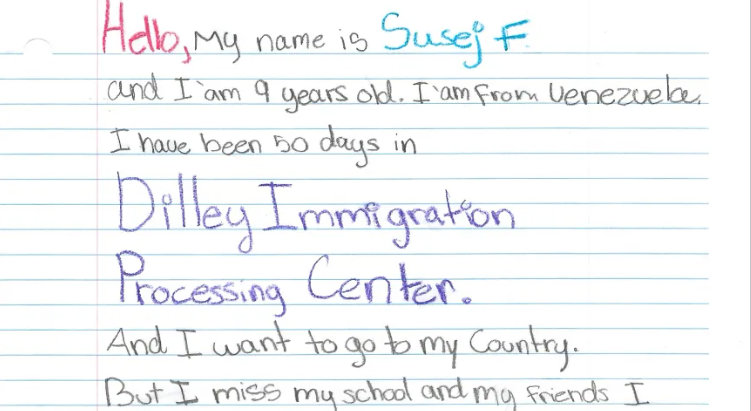
Health Organizations Condemn Traumatic ICE Raids, Family Separation
According to letters from children living in an ICE detention facility, living conditions are inhumane and their mental health is suffering.

In Teens, Social Anxiety Often Looks Like Anger
A study finds that some teens’ aggressive behavior may be due to social anxiety, not straightforward reactivity.

Expert Calls for Harm Reduction, Not Punishment, to Resolve Our Overdose Crisis
As the Trump administration pulls funding from harm reduction, an expert on the overdose crisis says it’s the best way to save lives.
