
A Surge in Parental Deaths Leaves Many Children Grieving Alone
COVID-19 and a steep rise in gun violence and drug overdoses pushed parental deaths up by 46% during the first two years of the pandemic.


January 23, 2025
By Courtney Wise

Greetings, MindSite News Readers, in our upside-down new American era. In today’s Daily, we bring you another story in our Forgotten Children series, one about the surge of parental deaths during COVID and the grieving children left behind – and how grief centers can help them heal. In other news, the construction industry reckons with a mental health crisis among male construction workers.
Plus, Zane Gonzalez, kicker for the NFL’s Washington Commanders, discusses his OCD. Accountability partners may help you keep on track with those New Year’s resolutions. And an emergency room physician whose brother’s experience of schizophrenia fuels her empathy for patients with mental health issues.

Freeing Grieving Children from ‘Bereavement Deserts’
Amanda Joyce Jensen will always remember the night she told her 4-year-old son, Kezman, that his father, Marshall, had died of cancer – and how Kezman said he already knew because “Daddy came to me first.” He cried as he drew a picture of his dad standing at the end of the hallway, wearing a red superhero cape, flying into his thoughts. In the following days, he would burst into tears at unexpected moments, as when someone tried to cut his hair. He didn’t know what to do with so much grief.
Then one day his mother took Kezman to The Sharing Place, a child and family grief center in Salt Lake City, and he jumped into a pile of foam. There, in the Volcano Room, he also threw giant plastic balls against padded walls and climbed on pillows. In a playroom, he built contraptions with Legos, and in the art room he colored with markers. During each visit, he could talk about his dad in a circle with other young kids who’d lost a parent or sibling while Jensen met in a group with bereaved parents who also were struggling to recreate their lives.
The results were transformative.
The death of a parent is one of the most traumatic of the adverse childhood experiences (ACEs) that can derail emotional development and lead to long-term problems, including depression, behavioral issues, or academic problems in school. Child grief support and “resilient parenting” strategies can help protect against those bad outcomes – as evidenced in studies that followed children for as long as 15 years after the sudden loss of a parent.
But even as the combination of COVID-19 and a steep rise in gun violence and drug overdoses pushed parental deaths up by 46% during the first two years of the pandemic, access to grief support failed to match the need. And each year, the toll of childhood bereavement grows: By the time they turn 18, almost one in 13 children – 5.4 million in all – will experience the death of a parent, according to 2024 estimates from the JAG Institute, a research initiative of Judi’s House, a grief center for children and families in Aurora, Colorado.
Some communities are even more severely impacted. One in six American Indian or Alaska Native children and one in nine African American children will experience the death of a parent before they turn 18, the JAG Institute estimates. Yet rural communities and communities of color often lack grief support centers that serve bereaved children and their families.
“There’s a great need, and we could be meeting that need but we’re not,” said Micki Burns, chief executive officer of Judi’s House. “And right now, unfortunately, the resources are hard to find.” Read our story here.
Mental risks can outweigh physical ones for male construction workers
The long-held image of construction workers is one of tough guys and macho men. They lift. They hammer. They lay a mean row of bricks. Every day at work, they grapple with circumstances that could kill them, managing risks that include falling, heavy objects and even electrocution. But the greatest risk male construction workers face has nothing to do with such physical hazards. It is, in fact, their own mental health. A 2024 report from The Center for Construction Research and Training found that, across all American industries, construction workers face the highest rate of overdose death and the second highest rate of death by suicide in a major industry. “To say this is a crisis would be an understatement,” said Frank Wampol, vice president of safety and health at construction company BL Harbert International.
More than 5,000 construction workers die by suicide each year, KFF Health News reports, and mood disorders like anxiety and depression plague the industry. Moreover, less than 5% of workers who reported such challenges last year received professional help for their mental health, compared to around 22% in the general population. This reluctance to seek help doesn’t help the industry’s ongoing substance use crisis. Injured workers “try to tough it out and get back to the job as quickly as possible,” frequently turning to prescription opioids for pain management, said Nazia Shah, director of safety and health services at the Associated General Contractors of America. In turn, some develop an addiction that pushes them to use street drugs. “It’s a vicious cycle,” Shah said.
Stigma around seeking support is part of the problem. Harassment and bullying are common in an industry dominated by macho men. Hoping to avoid signs of weakness, people stifle urges to speak up about mental and emotional hardships. But not speaking up can be catastrophic, said Wampol, a former construction worker who has also been a firefighter and paramedic. The industry must make strong investments in mental wellness and suicide prevention programs, both for workers’ health and the good of businesses, he said. A healthier workforce is, after all, more productive.
Some supportive changes, like paid time off, have been met with pushback in the industry about costs. Still, movement has been made toward solutions. Organizations like the Associated Builders and Contractors have created “toolbox talks,” educating workers on the signs and symptoms of mental health issues, the risks of self-medicating with drugs and alcohol, and the resources available through health insurance and employee assistance programs. A number of chapters distribute physical handouts, like stickers, cards or “hope coins” that help to start conversations with mental health, while also containing information on the 988 crisis helpline in both English and Spanish.
Some contractors have added mental health professionals to their on-site construction staff, giving workers have immediate access to help. They’ve also implemented “stand-downs,” where supervisors halt work at a construction site to provide training around a particular mental health concern. Others have mental health trailers on job sites, giving employees room to decompress. Equipped with lounge chairs, board games, and video consoles, they’re intended to help workers destress. Aware of the ongoing opioid crisis, many contractors have added naloxone — the opioid overdose reversal medication — to on-site medical kits. Some companies, like BL Harbert, where Wampol works, even partner with local health clinics for lunch and learns, in addition to offering health fairs.
Familiarity with your crew is also essential, according to Stanley Wheat, an on-site safety manager at BL Harbert. Knowing folks and their typical behaviors enables coworkers to better recognize the signs of emotional distress. “You start noticing the guy who’s isolating himself, sitting alone at lunch, not talking with anybody,” he told KFF News. “I’ve been there. I skinned my knuckles. I pulled my back. I worked injured.”
Peer-to-peer relationships can make all the difference, said Douglas Trout, an occupational medicine physician and deputy director of the Office of Construction Safety and Health at the National Institute for Occupational Safety and Health. Workers may avoid transparency with management or outsiders, Trout said, “but they usually trust each other.”
In other news…
The benefits of an accountability partner: Hoping to stick to your new year’s resolution in the long term? Consider an accountability partner. Accountability partners nurture our need for social connection while incentivizing us towards achieving our goals, both professional and personal. A partner could be someone you already know, or, as NPR’s Life Kit suggests, one can find online support through apps like Focusmate and Strava.
Helping her brother secure a schizophrenia diagnosis made this ER doc a better physician: For a long time, Jamie Shandro has been an ER doctor who helps educate incoming practitioners through her role as co-director of the medical student clerkship in emergency medicine at the University of Washington. But before all of that, as she writes in this guest column for the New York Times, Shandro was a medical student saddled with the sudden and unexpected responsibility of guiding her brother through his schizophrenia diagnosis. She says that her experience has forever deepened her empathy for the many patients she encounters in the ER with mental illnesses.
“I care for Tim when I care for others suffering from mental illness,” Shandro wrote. “When I bring them a sandwich, a warm blanket or a dry pair of socks, I feel like I’m doing so as a family member. I remind my medical students and residents that our patient, who may say bizarre things that make them want to laugh, cry or run away, is someone’s child, sibling or cousin. This is my way of loving my brother, of expanding our relationship beyond a few minutes on his doorstep. I wish Tim could understand how much better a doctor I am because of him. For him, really.”
One NFL player’s experience of OCD: Last Saturday, the Washington Commanders bested my beloved Detroit Lions, in a stunning upset that kicked the best team in the NFL out of the playoffs. The Commanders went viral Saturday for another reason, though: Zane Gonzalez, the team’s kicker, was captured navigating the rituals that can be hallmarks of obsessive compulsive disorder, or OCD. Fans may have noticed footage of him methodically adjusting his socks or moving his hands through his hair as a part of a pre-kick routine. People with OCD perform such routines compulsively, in an attempt to reduce or eliminate mental distress associated with intrusive thoughts. It’s a rough cycle, Gonzalez told USA Today.
“I just wish more people would understand,” he said, “it’s hard to describe the mindset that’s going on in the OCD. So it’s like, whenever you’re having one of those situations come up, you truly – whatever it may be – you think the worst possible situation is going to come of it. It could be the most unrealistic, crazy, unimaginable thing and people will be like, ‘You’re crazy for thinking that stuff.’ Which, I’m aware I’m crazy to think that stuff. But that tic just constantly is kneading at you. It’s never-ending. It’s always just there. It’s just one of those things you just kind of get used to and you can grow accustomed to.”
If you or someone you know is in crisis or experiencing suicidal thoughts, call or text 988 to reach the 988 Suicide & Crisis Lifeline and connect in English or Spanish. If you’re a veteran press 1. If you’re deaf or hard of hearing dial 711, then 988. Services are free and available 24/7.
Recent MindSite News Stories
Thousands of Callers Are Giving Up On Calls to Texas’ 988 Suicide Hotline As It Grapples with a $7 Million Deficit
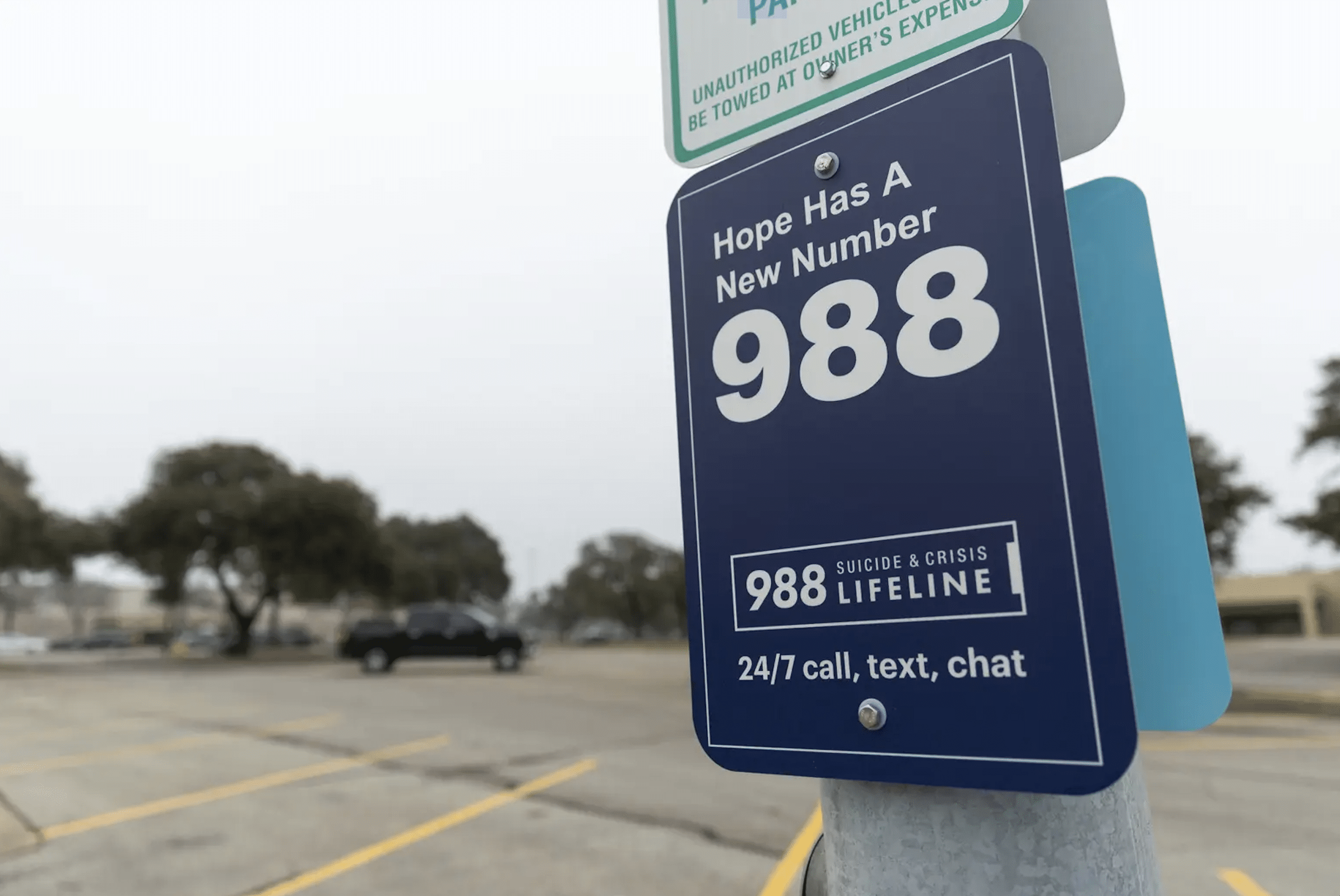
Thousands of Texans are abandoning the state’s suicide hotline mid-call as call centers struggle under a $7 million funding deficit and a growing suicide rate.
Long-Acting Injection Helps Heal ‘Beautiful Mind’ of Husband with Schizophrenia
A long-acting monthly injection and counseling have helped heal problems linked to a beloved husband’s schizophrenia.. Continue reading…
Forgotten Children: The Unseen Victims of Gun Violence Are the Children Left Behind

Parental death has been rising in the U.S. due to COVID-19, the overdose epidemic and gun violence. In this first part of Forgotten Children, we look at efforts to help children grieving from the loss of parents to gun violence. Continue reading…
If you’re not subscribed to MindSite News Daily, click here to sign up.
Support our mission to report on the workings and failings of the
mental health system in America and create a sense of national urgency to transform it.
For more frequent updates, follow us on Facebook, Twitter and Instagram:

The name “MindSite News” is used with the express permission of Mindsight Institute, an educational organization offering online learning and in-person workshops in the field of mental health and wellbeing. MindSite News and Mindsight Institute are separate, unaffiliated entities that are aligned in making science accessible and promoting mental health globally.
Copyright © 2021 MindSite News, All rights reserved.
You are receiving this email because you signed up at our website. Thank you for reading MindSite News.
mindsitenews.org

The name “MindSite News” is used with the express permission of Mindsight Institute, an educational organization offering online learning and in-person workshops in the field of mental health and wellbeing. MindSite News and Mindsight Institute are separate, unaffiliated entities that are aligned in making science accessible and promoting mental health globally.


Author

Related Articles
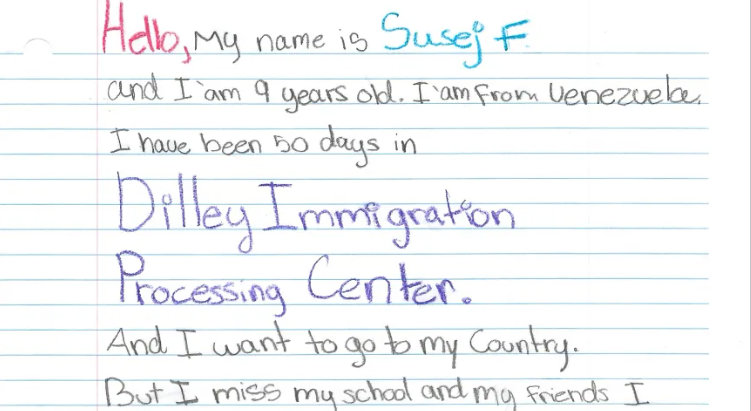
Health Organizations Condemn Traumatic ICE Raids, Family Separation
According to letters from children living in an ICE detention facility, living conditions are inhumane and their mental health is suffering.

In Teens, Social Anxiety Often Looks Like Anger
A study finds that some teens’ aggressive behavior may be due to social anxiety, not straightforward reactivity.
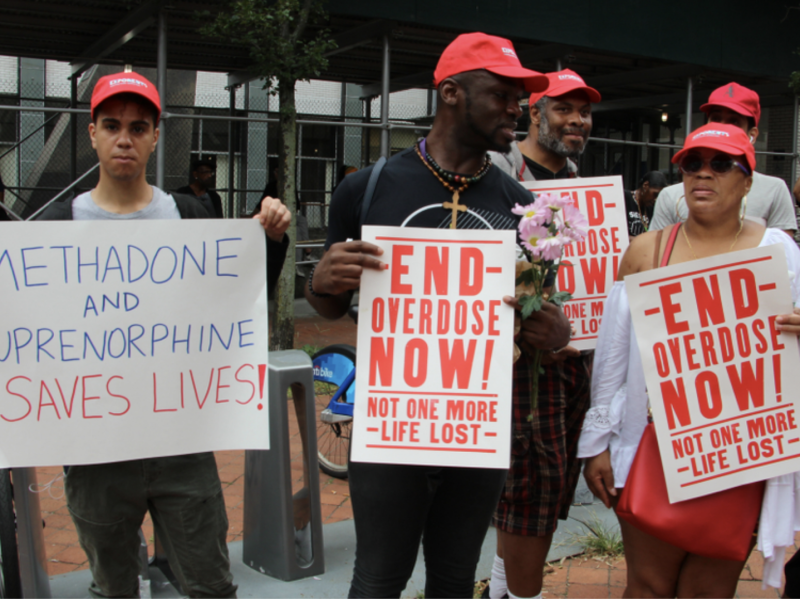
Expert Calls for Harm Reduction, Not Punishment, to Resolve Our Overdose Crisis
As the Trump administration pulls funding from harm reduction, an expert on the overdose crisis says it’s the best way to save lives.
