Four Things You Should Know Before Starting Therapy
How can you make therapy work best for you? And a new study offers more evidence that teens are in trouble.


Tuesday, Jan. 28, 2025
By Don Sapatkin

Good Tuesday morning! In today’s Daily: How to make your own therapy more successful. Adolescents may be more troubled than we thought, and a new report blames smartphone ownership at younger ages.
Plus: People with ADHD may die younger. The online therapy boom has mainly benefited privileged groups. And more.
But first: Alabama has a new optional license plate message, CBS42 in Birmingham reports: Mental Health Matters.
Four things you should know before starting therapy
My first experience with therapy came after I left college in the middle of my junior year – I was miserable, and falling behind academically, for reasons I didn’t understand. We had interesting conversations, but they didn’t help me all that much, and I eventually decided to stop. Five years later, I discovered what the right psychotherapist, using the right kind of therapy for me, could do. For the first time in my life, I knew what it was like to not feel depressed.
Christina Caron, who covers mental health for the New York Times, also had an unsatisfying experience with her first therapist. For the subscriber-only Well newsletter, she recently asked several therapists what they wished clients knew before their first session to make therapy successful.
A strong bond is essential. Make sure you feel comfortable. “It’s not the type of therapy. It’s not the type of therapist,” said Yuxin Sun, a psychologist in Seattle. “It’s the relationship that heals.” Another psychologist compared finding a therapist to dating: “You want to cut your losses early.” Many therapists offer free 10- or 15-minute consultations.
You might feel worse before you feel better. Breaking out of old patterns and beliefs can be uncomfortable at times, the experts said. A therapist should be supportive, but an echo chamber is unlikely to result in effective treatment. Small changes from therapy build up over time – sessions don’t usually come with the dramatic revelations and aha moments we might expect from TV shows and podcasts.
You have agency. Therapy is supposed to be collaborative, not a matter of you doing whatever the therapist says. It’s important to work with your therapist towards goals and successes you’re invested in. Also, make sure you’re consciously choosing to be there. “Getting therapy because someone else prompts you to usually backfires,” said Sherry Cormier, a psychologist in Pittsburgh.
Finally, going to therapy is not a sign of weakness. Seeing a therapist doesn’t mean that you’re fragile; it takes strength and bravery for many people to take that step toward bettering oneself. “Therapy is freaking hard,” Sun said. But the challenges, she said, “are very much needed for healing and growth.”
Adolescents’ wellbeing may be even worse than you thought, suggests a new report
Rising levels of sadness and anxiety in adolescents, especially girls, are by now well documented. But a new report that drills into specifics found that many also are experiencing strange, unwanted thoughts and a sense of detachment from reality. Feelings of aggression toward others, anger and irritability, and hallucinations are increasing fastest, the report found, and “a large part” of the reason is that children are getting smartphones at younger and younger ages.
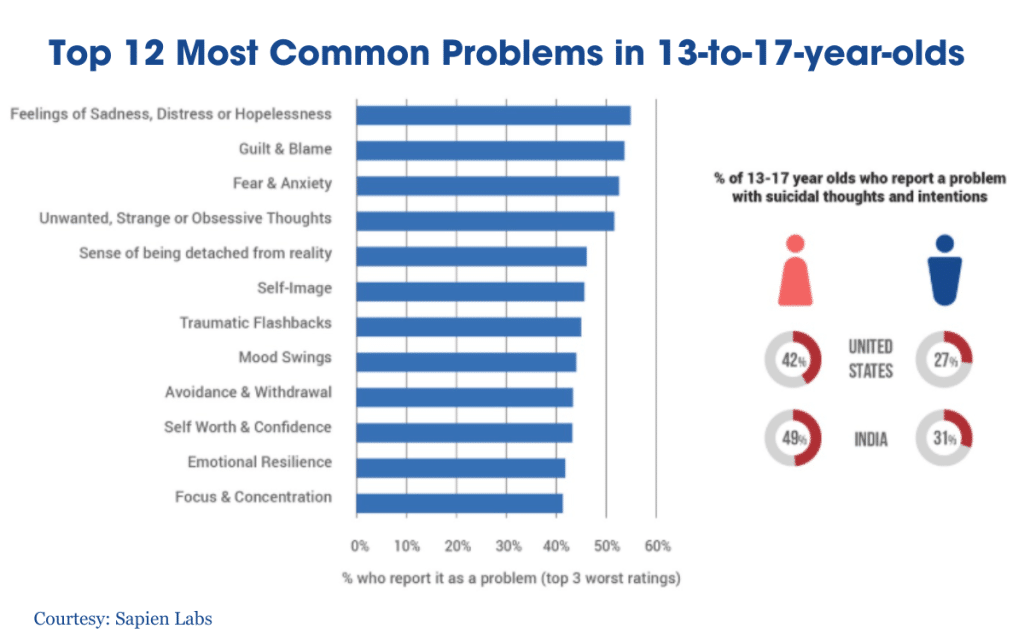
The report from Sapien Labs, a nonprofit research organization that focuses on how the changing environment and technology affects brain function, analyzed data from more than 10,000 13- to 17-year-olds in the United States and India who responded to an online survey by the Global Mind Project between August 2023 and November 2024. The survey aggregated their answers to 47 questions into an overall mental wellbeing score designed to reflect a person’s ability to navigate life’s challenges and function productively. The survey did not include people without internet access, and the report has not been peer-reviewed.
The report found worsening problems at younger ages: 13-to-17-year-olds fared worse than those 18 to 24, who in turn were more troubled than people 25 to 34. Even among the young teens, 13-year-olds fared worse than 14-year-olds, who fared worse than 15-year-olds. Difficulties were particularly pronounced in girls: 65% were distressed or struggling in a way that “substantially impaired their ability to function effectively…and would be of clinical concern.” It found that 42% of adolescent girls in the U.S. cited suicidal thoughts and intentions among their worst problems, compared to 27% of boys.
Among the specific findings (for the U.S. and India combined): More than 45% of adolescents cited a sense of being detached from reality as one of their worst problems. Anger and irritability were cited by 30% of 17-year-olds vs. 40% of 13-year-olds, and hallucinations were cited by 12% of 17-year-olds vs. 20% of 13-year-olds. Among adolescents who said they’d gotten their first smartphone by age 9, almost 40% said aggression toward others was among their worst problems. That compared to 30% of those who reported getting their first smartphone at 14 and older.
The report’s only recommendation is that parents, schools and governments around the world take action to reduce childhood exposure to smartphones by delaying the age when youth receive their first one.
People with ADHD likely to die younger, a new study finds
Women diagnosed with ADHD died seven years earlier and men nine years earlier than people without the condition, according to a study of more than 30,000 British adults with the disorder, the New York Times reported. The study, published in the British Journal of Psychiatry, is believed to be the first to use all-cause mortality data to estimate life expectancy for people with the condition.
The study did not include data on specific causes of death, but earlier research has pointed to multiple risks associated with ADHD including poverty, smoking, abuse of alcohol and illicit drugs and other mental health disorders. For that reason, the study authors wrote, the earlier deaths are “unlikely to be because of ADHD itself” and are probably caused by modifiable factors such as smoking, insufficient mental and physical health support and unmet treatment needs. The findings, they wrote, “illustrate an important inequity that demands urgent attention.”
The study relied on National Health Service data for 9.6 million people aged 18 and above, collected between 2000 and 2019. Each ADHD-diagnosed patient was matched with 10 undiagnosed patients to control for age, sex and primary care provider.
Doctors used to believe that ADHD primarily affected children. But that has shifted in recent years, as clinicians determine that many older people, especially women and people of color, have gone undiagnosed early in life and could still benefit from treatment. The authors cautioned that participants in their study, most of whom had been diagnosed as young adults, might be among the more severely affected.
Only 0.32% of the adults in the sample had an ADHD diagnosis in their medical record, though the study estimates true UK prevalence at closer to 3%. The CDC last fall estimated that 6% of American adults self-reported having a current diagnosis.
One of the study authors told the Times that health care systems mental health and substance abuse treatment providers could improve outcomes by making adjustments, for example, for patients who may have difficulty managing time, a common problem for people with ADHD. Another compared ADHD to diabetes, which must be actively managed throughout a person’s lifetime.
Online options have widened disparities in those accessing therapy
Far more people are receiving therapy than in the past, but recent increases are almost entirely among high-income people, the New York Times reports. Online therapy accounts for much of the increase, and a study in the American Journal of Psychiatry found that the pattern has worsened existing disparities – dampening hopes that the technology would make mental health care more available to populations with acute unmet needs.
The increase was among those who already had access: people in higher income brackets, living in cities, with steady employment and more education. Not benefiting: children from low-income families, Black children and adolescents, and adults with serious psychological distress.
“It does appear to be just exacerbating existing disparities,” said lead author Mark Olfson. “I think there’s a real need to try to address that.”
In other news…
Immigrants recently released from detention had high rates of self-reported poor health, mental illness and PTSD, and those held for six months or longer had significantly higher rates of all three, according to a study in JAMA Network Open. The researchers analyzed data from a phone survey they conducted with 200 immigrants who were detained and then released in the U.S. under a series of pandemic-related court orders in 2020 and 2021. More than 70% had criminal records. President Trump vowed to carry out mass deportations of undocumented immigrants and the government is already building several large migrant detention centers.
Fountain House United expands programs: Fountain House, the New York-based nonprofit that pioneered the clubhouse model of community mental health more than 75 years ago, has added four programs to its Fountain House United partnership operation, according to a press release, bringing the total to 11 organizations and 18 clubhouses around the country. At Fountain House locations like the one in New York, people with serious mental illness spend time together building intentional communities that provide mutual support, to aid each other in their recovery. The new partnership members are: Alliance House in Salt Lake City, Utah; B’More Clubhouse in Baltimore, Md.; Breakthrough Episcopal Social Services in Wichita, Kans., and Independence Center in St. Louis, Mo.
The FDA approved Spravato (esketamine) as a standalone therapy for depression, The Microdose newsletter reports.The agency first approved the Johnson & Johnson nasal spray in 2019 for treatment-resistant depression but required it be used with an antidepressant. Patients must take the drug at a healthcare provider’s office and be monitored for two hours afterward. Esketamine is a variation of the anesthetic ketamine. Typically considered a psychedelic, the drug is proving to be a breakthrough therapy for treatment-resistant depression.
Ketamine is available as a generic, but J&J patented a modified nasal-spray version under the name Spravato. Generic ketamine is administered via infusion in a medical setting and, according to The Microdose costs only a few dollars per treatment, although required medical services can add up to $1,000. Spravato costs $600 to $900, not including medical services, but unlike generic ketamine is often covered by insurance.
If you or someone you know is in crisis or experiencing suicidal thoughts, call or text 988 to reach the 988 Suicide & Crisis Lifeline and connect in English or Spanish. If you’re a veteran press 1. If you’re deaf or hard of hearing dial 711, then 988. Services are free and available 24/7.
Recent MindSite News Stories
‘Bereavement Deserts’: Amid a Rise in Parental Deaths, Grief in Children Is Often Overlooked

‘My son needed something I couldn’t give.’ Surviving parents seek grief support for kids Adds to story to provide updated table […]
Thousands of Callers Are Giving Up On Calls to Texas’ 988 Suicide Hotline
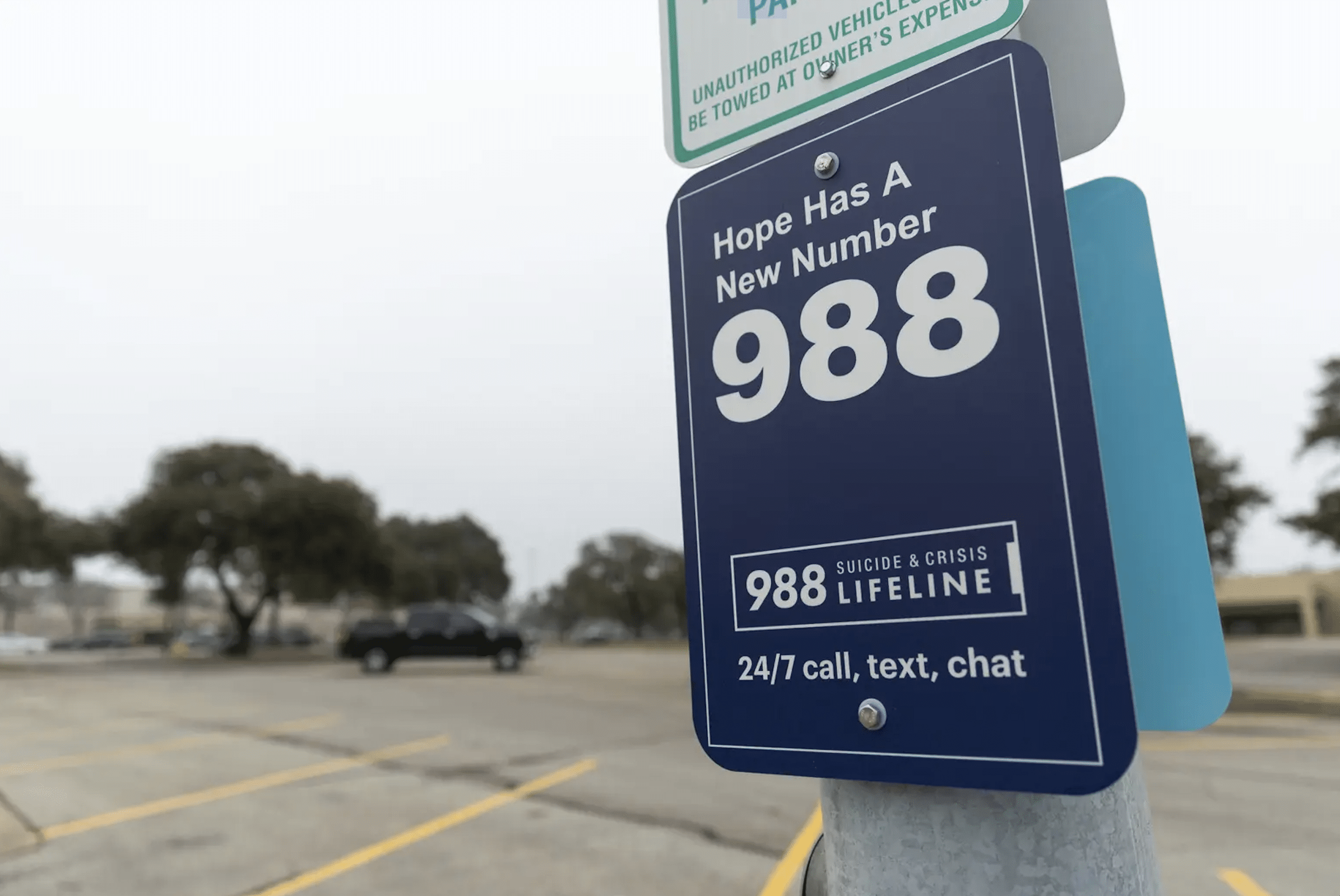
Thousands of Texans are abandoning the state’s suicide hotline mid-call as call centers struggle under a $7 million funding deficit and a growing suicide rate.
Long-Acting Injection Helps Heal ‘Beautiful Mind’ of Husband with Schizophrenia

A long-acting monthly injection and counseling have helped heal problems linked to a beloved husband’s schizophrenia..
If you’re not subscribed to MindSite News Daily, click here to sign up.
Support our mission to report on the workings and failings of the
mental health system in America and create a sense of national urgency to transform it.
For more frequent updates, follow us on Facebook, Twitter and Instagram:

The name “MindSite News” is used with the express permission of Mindsight Institute, an educational organization offering online learning and in-person workshops in the field of mental health and wellbeing. MindSite News and Mindsight Institute are separate, unaffiliated entities that are aligned in making science accessible and promoting mental health globally.
Copyright © 2021 MindSite News, All rights reserved.
You are receiving this email because you signed up at our website. Thank you for reading MindSite News.
mindsitenews.org

The name “MindSite News” is used with the express permission of Mindsight Institute, an educational organization offering online learning and in-person workshops in the field of mental health and wellbeing. MindSite News and Mindsight Institute are separate, unaffiliated entities that are aligned in making science accessible and promoting mental health globally.


Author

Related Articles

He Almost Killed His Father. Now He Helps Others At Risk.
In today’s newsletter, we explore how one man healed after a dangerous psychotic break that nearly led him to murder.
Fallout Over Supreme Court Ruling on Conversion Therapy
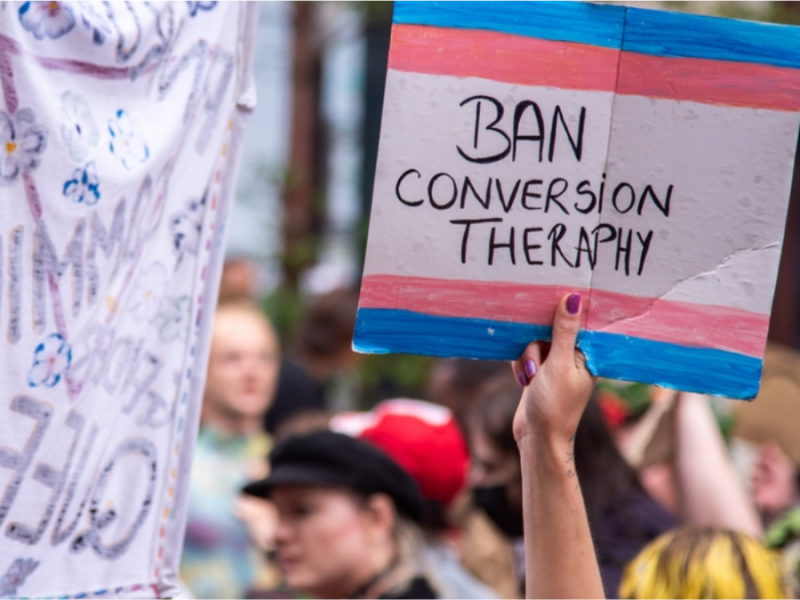
Despite the Supreme Court ruling, conversion therapists can still be sued for a practice the United Nations calls “torture.”

On No Kings Day, Millions Rallied to Denounce Trump and “Epstein War”
Anti-Trump protests took place in all 50 states, Puerto Rico and other US territories and in countries around the world.
