
Miami Community Responders Work to Ease Mental Health Crises
A three-year-old mobile team responds to the needs and crises of community members in Miami’s Liberty City as an alternative to police. We paid a visit.
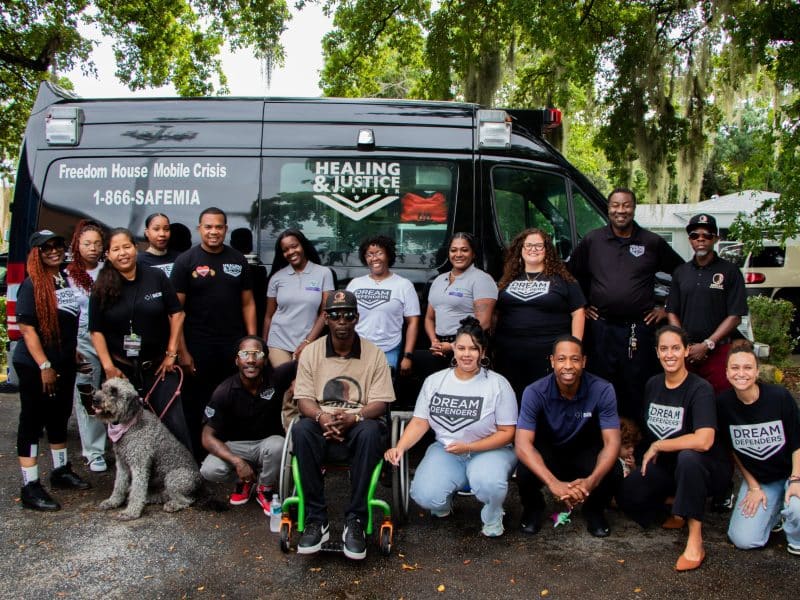
Can Dream Defenders program make a difference for Miami’s Black residents?

This story is the latest installment of Fateful Encounters, an ongoing investigative collaboration between MindSite News, the Medill Investigative Lab-Chicago at Northwestern University and other media outlets exploring police response to mental health crises. This work is generously supported by the Sozosei Foundation.
Donald Armstrong would not likely have been shot and tased if a Miami mobile crisis response team known as Dream Defenders – not Miami police officers – had responded to his mental health crisis.
On March 7, 2023, Denise Armstrong called 911 to seek help for her 47-year-old son. He had just experienced the death of his first child, had been taking the drug Ecstasy and was going through a mental health crisis. Police claim that when they arrived and tried to talk to him, he acted aggressively, didn’t follow orders and had a sharp object in his hand – later revealed to be a screwdriver.
Although he lifted his shirt to show he was unarmed, Armstrong was tased twice and then shot six times on the front porch of his mother’s home, as she pleaded with officers not to kill her son. He was fortunate to survive.
“I did nothing wrong. I didn’t resist, I just was out of my mind,” Armstrong told a television reporter last October, after Miami-Dade prosecutors dropped the final remaining charge they had filed against him.
Answering calls with urgency and empathy
Events would have unfolded very differently if responders from Dream Defenders had reached Armstrong to de-escalate the situation, the group’s mobile team manager, Chettarra Thompson, told a MindSite News reporter.
“We try to focus on answering calls with urgency and make sure that we are responding with care and empathy,” Thompson said, during a reporter’s visit last May.
As scalding heat permeated the city that day, Freedom House crisis responders in a black van drove down Martin Luther King Jr. Blvd., past boarded-up and graffiti-covered buildings. It was a slow day, but the team fielded a few calls and kept busy, visiting an adult school and a community health clinic and delivering requested first-aid supplies to a caller.
At one point, Thompson spotted a homeless man sitting on a milk crate on the sidewalk. He was familiar to her because she had assisted before. She pulled over to connect with him, and they spent a few minutes talking.
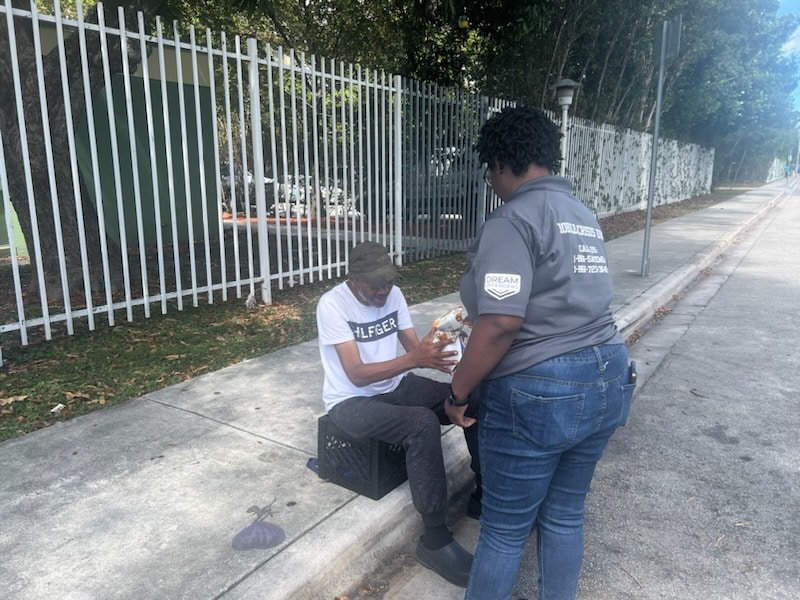
As she drove, Thompson described other interactions the team had that week – with a homeless woman suffering from a mental health crisis, a distressed man refusing police officers’ orders to calm down and leave a gas station, and with a woman whose children needed medical assistance.
One of the calls was similar to Donald Armstrong’s – about a man going through an episode of psychosis who had lost contact with reality. Thompson said Miami police called Dream Defenders asking its team to help the man and informed them he had a “hazardous object” in his hand.
“By the time we got there, he was sitting down and calm, so as soon as I walked up to him, I introduced myself and we sat down and talked for three hours,” Thompson said. “While we talked he was engaged, he was happy and laughing.”
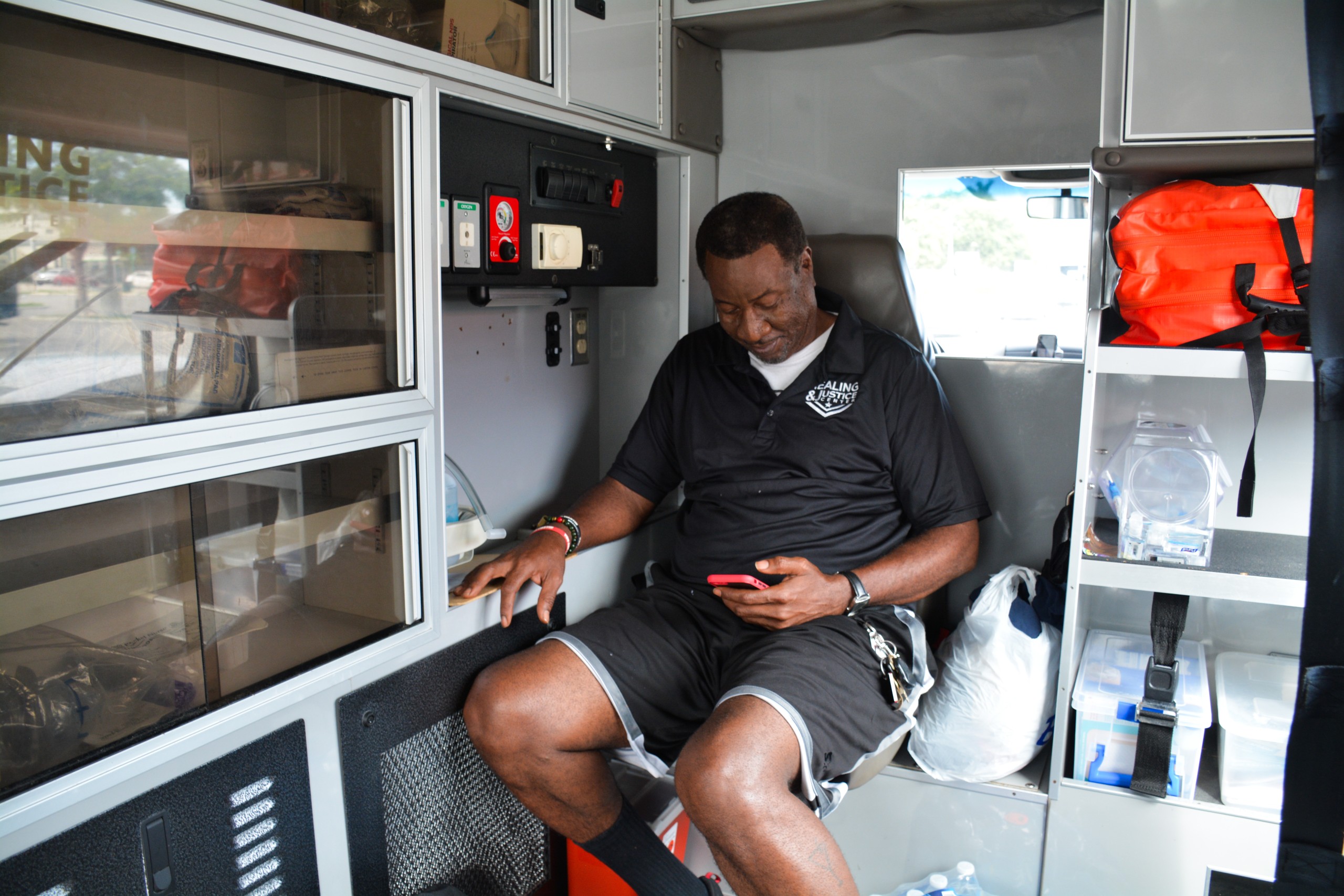
The team functions both as hotline call-takers, with calls coming directly to the van, and outreach workers, providing direct support to the people who call in and those they encounter on the street. Team members conduct assessments to determine how to respond, with medical calls taking precedence over non-medical issues. For people in crisis, they help develop safety plans and provide resources, trying to avoid police involvement and involuntary commitment.
Numerous cities across the country have launched alternate response programs – especially after the 2020 police killing of George Floyd in Minneapolis. These efforts use mental health workers to respond to mental health crises. In some cities, they are accompanied by police officers; in others, the mental health teams respond without police.
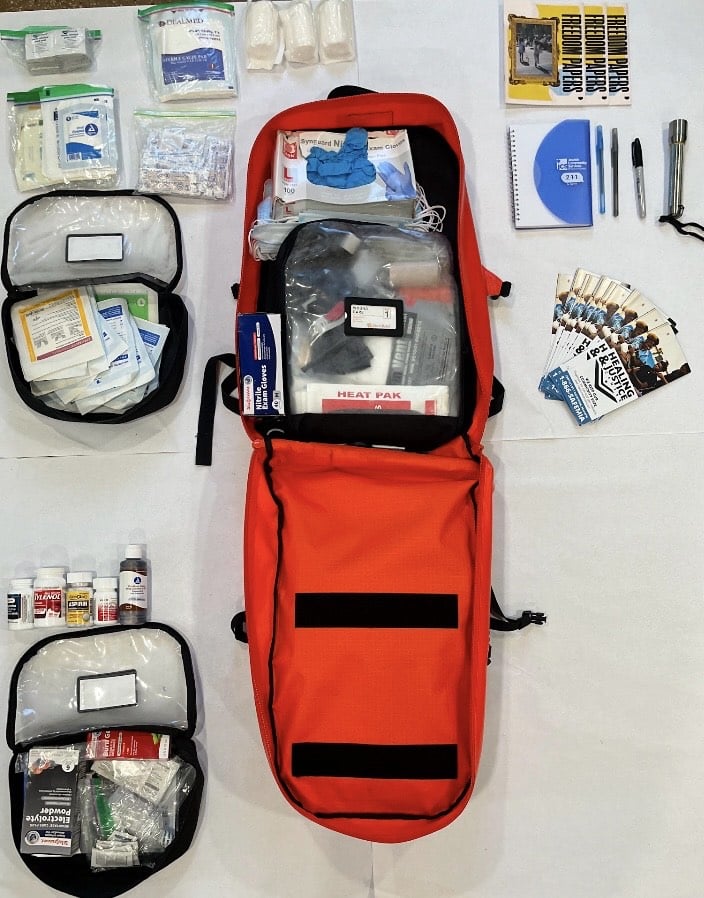
The Dream Defenders effort started the Freedom House Mobile Crisis Unit as a pilot program in 2022 – named for a pioneering Black-led ambulance service that began in Pittsburgh in 1967 – and expanded it last year after seeing an increase in the need for crisis assistance. Calls come in to a 10-digit hotline – 1-866-SAFEMIA – that Dream Defenders publicizes in the community. The group prefers keeping it separate from 911 so people can call in and know police won’t be summoned.
The team of two mental health and medical specialists, as well as an experienced crisis counselor trained in de-escalation tactics. The unit works to address the emotional, physical and social needs of the patient, while reducing police involvement and avoiding involuntary psychiatric evaluation and hospitalization under Florida’s Baker Act. Black children are especially likely to be involuntarily committed under the act, as MindSite News and other media outlets have reported.
In 2023, the Freedom House team intervened 116 times to assist people during a mental health crisis, according to the organization’s annual report. Of those, 35% received counseling and referrals, 20% were transported to the nearest hospital and 15% got medical care from the unit’s medic. Of those served, 83% were Black, 12% were Latino and 61% were male.
Black men especially impacted
In Miami, at least 29 mental health calls made to 911 during a three-year period from from 2020 to 2022 resulted in use of force by police, and 13 – 45% – involved Black men, according to an analysis of public records received by MindSite News and Medill. The same percentage is seen in use of force for other reasons: From Jan. 1, 2018 to April 1, 2024, 627 out of 1,379 use-of-force incidents involved Black individuals, according to records provided by the Miami Police Department. Black people make up about 14% of the city’s population.
This data was gathered as part of a collaborative investigation by MindSite News and the Medill Investigative Lab-Chicago looking at police use of force in response to mental health crises. The investigation found that non-fatal force was frequently deployed against people experiencing mental health crises, especially Black people. Read the results of the investigation here.
Freedom House largely operates in Liberty City, a historically Black Miami neighborhood that has a population that is 53% African American and 42% Hispanic.
“Most of the mobile crisis individuals that we service are Black men, especially those that are unhoused and with mental health problems, so it’s important for us that we care for them because they might receive stronger confrontation from police,” Thompson said.
Police or not?
At least one of the officers who shot Armstrong had received Crisis Intervention Team (CIT) training, according to public records. The 40-hour CIT curriculum is used by departments nationwide to train officers in de-escalation techniques that, theoretically, can better equip them to manage people in mental health crisis.
But advocates say the training is far from adequate. As part of an ongoing investigation, MindSite New and Medill requested rosters of CIT-trained officers from cities. The records revealed that in multiple cities, officers who’d received CIT training were among those using force when they responded to mental health crises. A 2019 review of outcome studies suggests that while CIT training improves police officers’ satisfaction, there was “no measurable difference in the use of force between officers with CIT training and those without it.”
The Miami-Dade Police Department started its own Crisis Response Unit (CRU), in April 2023, made up of 19 officers and two Miami-Dade Fire Rescue Department paramedics.
Habsi Kaba, the leader of Miami Dade’s Crisis Intervention Team, said that his team’s goal is to work towards a “more effective, accessible and least intrusive crisis response system.”
Some advocates say crisis-response programs that don’t include police are more effective, especially for Black communities with a history of traumatic relationships with police. Chicago, for example, has decided to phase out a co-response program in favor of one that uses only mental health workers.
Thompson says that the sight of a police officer or even a police vehicle can make a person who is going through a mental health crisis feel uncomfortable and uneasy.
Funding and Awareness
While many cities run or contract for alternate response programs, the Freedom House team operates without official sanction from the city but is “better equipped to handle mental health crises than police,” Thompson said.
Without a city contract, funding remains a challenge. The Freedom House program was launched with a $900,000 grant from the Open Society Foundation. The group hopes to boost its funding to expand operations from its current hours – Monday through Saturday, noon to 8 p.m. – to a 24/7 model and to hire more staff to expand beyond Liberty City to nearby Overtown.
Though Dream Defenders would like to receive government funding, Thompson and her colleagues don’t want the police to dictate how and when they respond to crisis calls, particularly in Black communities, Thompson said. It’s also important for Freedom House to be visible in the community, she added, informing locals about the group’s services, promoting connection among neighborhoods and helping to change community views about the best approaches to mental health and law enforcement.
“The more awareness we get,” Thompson said, “the more people start to realize that there is an alternative to policing.”
Glendalys Valdes produced this story as part of a collaborative investigation by the Medill Investigative Lab-Chicago at Northwestern University and MindSite News chronicling police response to mental health crises. Support for this investigation was provided by the Sozosei Foundation.
The name “MindSite News” is used with the express permission of Mindsight Institute, an educational organization offering online learning and in-person workshops in the field of mental health and wellbeing. MindSite News and Mindsight Institute are separate, unaffiliated entities that are aligned in making science accessible and promoting mental health globally.


Related Articles
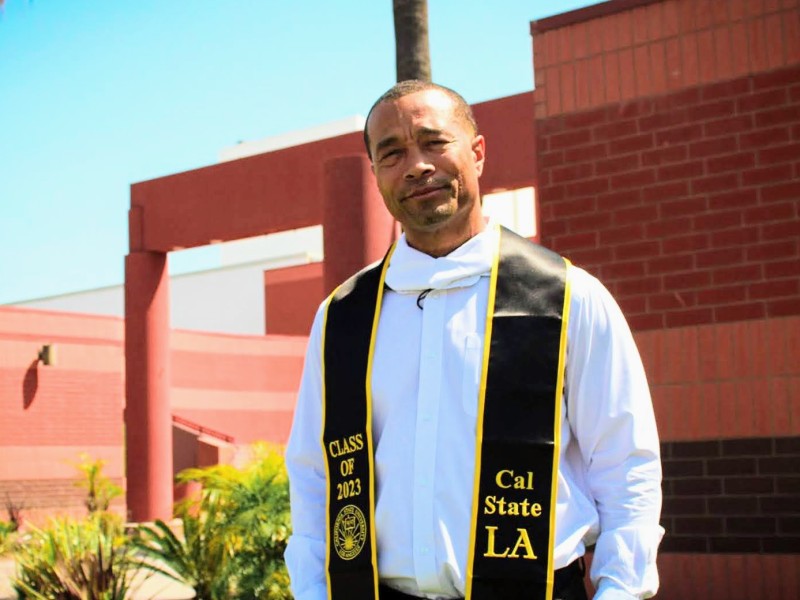
Formerly Incarcerated Mentors Are Changing Lives in California
Peer support specialists provide valuable mentorship and emotional support — grounded in hard-earned personal experience.

At the Young Women’s Freedom Center, Sisters Are Doing It for Themselves: Listen to the Podcast
Congresswoman Lateefah Simon and leaders of the Young Women’s Freedom Center were in conversation with MindSite News at this Commonwealth Club panel.

Hive Mind: The Surprising Mental Health Benefits of Beekeeping
Emerging research shows the healing power of the hive for people grappling with stress and trauma.