
Elon Musk Seizes U.S. Treasury System, Including Mental Health Data
Engineers for Elon Musk gained access to payment systems controlling trillions of dollars in funds, including confidential health information.


Wednesday, February 5, 2025
By Courtney Wise

Greetings, MindSite News Readers. In today’s Daily, Wired magazine came out with a bombshell yesterday that engineers working for Elon Musk gained high-level access to federal payment systems that control trillions of dollars in public funds and confidential data including information on some Americans’ mental health conditions.
Also in this edition: As fake stores and town squares open up in memory care facilities, experts ponder the ethical implications of “therapeutic lying” to patients with dementia. Plus, tips for coping with flight anxiety following last week’s tragedies in Washington DC and Philadelphia, and a story about Minnesota’s People Incorporated, which delivers rapid response mental health treatment to folks wherever they are.
But first, something to make you smile, then think: Lonely Flowers, the latest comedy special from Roy Wood Jr. Released last month on Hulu, the hour-long act muses on our self-selected isolation and its impact on our lives and mental health.
Elon Musk team invades government computer systems, gaining access to American’s private health and mental health information
Elon Musk and a team of young computer engineers have burst into multiple federal agencies over the last few days and gained access to government data systems and records. Wired magazine reported yesterday that “a 25-year-old engineer named Marko Elez, who previously worked for two Elon Musk companies (SpaceX and X) has direct access to Treasury Department systems responsible for nearly all payments made by the U.S. government.”
According to Wired, Elez’s access privileges give him the ability to write code on two of the most sensitive payment systems in the US government that “control, on a granular level, government payments that in their totality amount to more than a fifth of the US economy,” Vittoria Elliott, Dhruv Mehrotra, Leah Feiger and Tim Marchman reported for Wired. These payments would include Medicare payments and disability benefits for people with health and mental health conditions.
“You could do anything with these privileges,” one source with knowledge of the system told Wired. The source added that they cannot conceive of a reason that anyone would need them for purposes of simply hunting down fraudulent payments or analyzing disbursement flow. “Control of those mechanisms could allow someone to choke off money to specific federal agencies or even individuals,” Wired reported.
The Alliance for Retired Americans and two government labor unions – the American Federation of Government Employees, which represents Department of Health and Human Services (HHS) workers, and the Service Employees International Union – have sued the federal government. They allege that Musk and others have improperly gained access to personal and financial information including bank account information, home addresses, Social Security numbers, email addresses and telephone numbers.
The actions by Musk have also prompted a flood of outrage and criticism from political observers and advocates.
In his column on Substack, former U.S. Labor Secretary, U.C. Berkeley professor and political commentator Robert Reich put it succinctly: “An unelected billionaire, with no actual Congressional authority or government experience, now has access to Treasury payment systems and sensitive information about millions of Americans who receive Social Security checks, tax refunds, and other payments. Simply outrageous.”

Musk claims this authority as head of “Department of Government Efficiency” or DOGE, which is not a government department and has no legal authority. He is not a federal employee and has not been appointed by the president or approved by the Senate to have any leadership role in government.
“Even the executive order used quote (marks) around the title,” observed historian Heather Cox Richardson in a recent Substack column.
“Musk is a private citizen taking control of established government offices. That is not efficiency; that is a coup,” University of Denver political scientist Seth Masket recently noted.
In his column, Reich wrote about “at least eight federal laws that have been broken by Musk and his goons over the last few days, and at least two provisions of the U.S. Constitution.” He has called on all Democratic and Republican lawmakers “to immediately seek an injunction from the federal courts to stop this pillage.”
Congressional offices have been reported being deluged by calls. Reich is encouraging the public to apply pressure by calling their Representative or Senator at 202-224-3121.
–Rob Waters
Is therapeutic lying right or wrong in the care of dementia patients?
One difficult truth about dementia is it’s a progressive disease with no known cure. “The choice to restore (patients’) brains to an undamaged state does not exist,” said ethicist and researcher Nancy Berlinger. Knowing this, she told the New York Times, caregivers must “try to meet people where they are and say: ‘What gives comfort? What reduces stress? What brings pleasure?’ We should be thinking about this all the time.”
With that in mind, more and more caregivers are choosing memory care facilities with make-believe stores or nurseries staffed by residential health workers. Generally smaller than the elaborate dementia villages found in Europe, these bespoke spaces are often folded into more traditional dementia care facilities and programs.
It’s typical to discover patients cuddling baby dolls they’re caring for or see them shopping for accessories and fragrances in the town square. The intent is to “give them those life experiences which are familiar, which are comfortable, which are empowering and negate the feeling that they don’t have control over their lives,” said David V. Pomeranz, president and CEO of RiverSpring Living, which boasts such amenities.
But is this sort of “therapeutic lying” wrong? Decades ago, many felt best practice for dementia was “reality orientation,” or reminding patients that the reason Uncle Travis hadn’t visited is because he died years ago, despite the grief it would conjure upon each retelling. “It didn’t work,” said Steven Zarit, emeritus professor at Penn State and a longtime researcher on the subject. “It didn’t help people’s memories, it didn’t help their adjustment, it wasn’t useful.”
Besides, said Andrew Clark, professor and co-editor of the book Dementia and Place, “In dementia, there are all sorts of situations where not telling the truth could be better for people’s well-being.” So what it really boils down to is affordability. Dementia-focused environments are very expensive – RiverSpring’s services cost $15,000 per month. There’s also little evidence that they work.
In other news…
Coping with flight anxiety. Deadly aircraft collisions involving commercial flights are relatively rare in US airspace, but that’s little consolation for the families grieving the loss of loved ones in last week’s deadly crash in Washington DC, and for several other families days later, when a medevac flight crashed moments after takeoff in Philadelphia. The events have sparked flight anxiety in plenty of travelers. Note that such feelings are normal, especially after coverage of a crash, said Tracie Goodness, a psychologist at UMass Memorial Health. “Be compassionate to yourself, knowing that this is a normal reaction, and that with the passage of time and continued processing it continues to get better,” she told the Boston Globe.
People with mild anxiety may find relief in basic grounding practices, like deep breathing or even talking about the fear with loved ones. But people feeling more severe anxiety might be better helped by visualizing and walking through each step of the flying process, from walking to the gate to sitting in the plane seat. Professional mental health support is also always a good option.
As Los Angeles moves to rebuild from unprecedented wildfires, frontline responders implement mental health first aid. Developed and refined after horrors like the Oklahoma City bombing and 9/11, practitioners of “CPR for mental health” told NPR that the best part of the evidence-based approach is that anyone – not just mental health professionals – can learn to do it. “Part of what we do in the training is help people not to look at the long term…so that we can help them begin that journey towards healing,” said Melissa Brymer, a director at UCLA’s National Center for Child Traumatic Stress. “ The unimaginable just happened to them. And it’s so overwhelming that people don’t even know what should be their first step.”
People Incorporated provides urgent mental health services to the unhoused and folks struggling with substance abuse, right where they are. That often means serving people in spaces like homeless encampments, shelters, and even public libraries. The key to the Twin Cities organization’s success is its genuine relationships with the people it serves; People Incorporated is trusted by the community it seeks to help. “It’s about meeting people where they are, not waiting for them to call our contact center or even walk into the library,” said Veronika E. Mix, People Incorporated’s vice president of community engagement. “It’s about riding on those trains, riding on the buses, being present in those gathering spots so individuals can really have access to us,” she told the MinnPost. “A huge barrier for individuals wanting help is access, not knowing where to go, so we go to them.”
If you or someone you know is in crisis or experiencing suicidal thoughts, call or text 988 to reach the 988 Suicide & Crisis Lifeline and connect in English or Spanish. If you’re a veteran press 1. If you’re deaf or hard of hearing dial 711, then 988. Services are free and available 24/7.
Recent MindSite News Stories
A New Sense of Urgency for Mental Health in the Workplace

The divisive times we live in can impact our ability to work as cohesive teams. Finding ways to work well together, with respect and inclusivity is an important step forward. Continue reading…
Losing My Vision Has Been a Blow to My Mental Health. I Cope by Seeking Help and Having a Sense of Humor

Twenty-seven years ago I went to my eye doctor for what I thought was a routine post-cataract-surgery visit. After some additional tests, I learned I had macular degeneration. Continue reading…
California Psychiatrist Says Black Kids Overdiagnosed with ‘Oppositional Defiant Disorder’

Black children are too often diagnosed with oppositional defiant disorder, labeling them as “bad kids” and perpetuating systemic racism, says a California psychiatrist.
If you’re not subscribed to MindSite News Daily, click here to sign up.
Support our mission to report on the workings and failings of the
mental health system in America and create a sense of national urgency to transform it.
For more frequent updates, follow us on Facebook, Twitter and Instagram:

The name “MindSite News” is used with the express permission of Mindsight Institute, an educational organization offering online learning and in-person workshops in the field of mental health and wellbeing. MindSite News and Mindsight Institute are separate, unaffiliated entities that are aligned in making science accessible and promoting mental health globally.
Copyright © 2021 MindSite News, All rights reserved.
You are receiving this email because you signed up at our website. Thank you for reading MindSite News.
mindsitenews.org

The name “MindSite News” is used with the express permission of Mindsight Institute, an educational organization offering online learning and in-person workshops in the field of mental health and wellbeing. MindSite News and Mindsight Institute are separate, unaffiliated entities that are aligned in making science accessible and promoting mental health globally.


Author

Related Articles

Health Organizations Condemn Traumatic ICE Raids, Family Separation
According to letters from children living in an ICE detention facility, living conditions are inhumane and their mental health is suffering.

In Teens, Social Anxiety Often Looks Like Anger
A study finds that some teens’ aggressive behavior may be due to social anxiety, not straightforward reactivity.
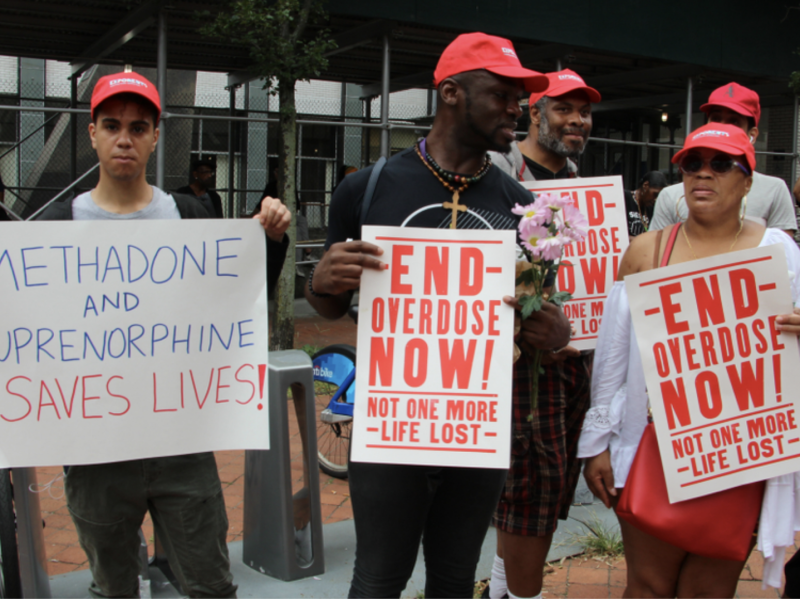
Expert Calls for Harm Reduction, Not Punishment, to Resolve Our Overdose Crisis
As the Trump administration pulls funding from harm reduction, an expert on the overdose crisis says it’s the best way to save lives.
