
Medicaid Fails Many Postpartum Moms in Distress in Alabama
In Alabama, struggling new moms find it hard to get Medicaid to cover mental health services.

February 6, 2025
By Courtney Wise

Greetings, MindSite News Readers. In today’s Daily, maternal health advocates in Alabama note that many moms struggle getting Medicaid to cover mental health services, despite assurances that it will cover them through the first year postpartum. Also, a consideration of the ways in which technology has pushed us to choose solitude, changing our culture and helping pave the path to our current political climate.
Plus, the distorted self-image of bigorexia in boys and young men. An excerpt from Bill Gates’ new memoir about the impact childhood therapy has had on his adult life. And there’s plenty of science on the benefits of unstructured play for children — and why similar hang time is vital for us adults.
On paper, Alabama Medicaid covers postpartum mental healthcare for one year after birth. In practice, it’s not that simple.

Last fall, Patricia’s son was coming up to his first birthday. The 29-year-old Alabama mom had been seeing a mental health counselor since he was born, since Alabama Medicaid covers mental health treatment for moms with low incomes for up to one year after birth. As the birthday approached, Patricia, was terrified that the sessions, which had helped her survive a serious bout of postpartum depression, were about to go away. “It’s helped a lot,” Patricia told the Alabama Reflector, asking to be identified only by her first name. “I still have bad days, but they’re less frequent. I don’t feel like I’m constantly in a dark hole. It’s given me an outlet to process my emotions, to feel validated, and to learn coping techniques to get through panic attacks.”
Terrified over the prospect of losing that support, she called her therapist about what to do. That’s when Liane Freels, Patricia’s counselor, revealed that her sessions had never been covered by Medicaid: Freels had been providing them pro bono the entire time. Despite what Alabama Medicaid claims it offers for struggling new moms,, practitioners and advocates say it simply doesn’t happen. Severe underfunding and structural barriers bar many new moms from treatment until their conditions become full-blown mental health crises.
“The majority of moms in our state are not screened, not educated, are not provided direct access to maternal mental health care from pregnancy through postpartum,” said Sarah Parkhurst, founder of Previa Alliance, an Alabama-based organization that connects new moms to mental health services. Parkhurst once struggled to secure help herself, during an episode of postpartum depression and suicidal ideation. “Moms are dying,” she said. “And babies are suffering.”
The thing is, it’s extremely difficult to qualify for Medicaid in Alabama. Able-bodied, childless adults are strictly ineligible, the Reflector reports, and the income limits for households with children are among the lowest of the 10 states that still have not expanded Medicaid coverage. The income threshold for a single parent of one Medicaid-eligible child in Alabama, for example, is $3,684 per year. For a family of three, the limit is $4,797.
Two years ago, state lawmakers approved expansion for pregnant women, in an effort to improve outcomes for birthing moms and babies, making pregnancy Medicaid coverage available from 60 days to one year after a birth. But in practice, that rarely makes critical mental health services for moms any more accessible.
Medicaid recipients under age 21 are eligible for mental health treatment from any provider who accepts Medicaid. But moms over 21 are directed to the state’s mental health crisis line or to a community health center that contracts with Medicaid, one Alabama Medicaid representative told the Reflector.
Freels, a former pediatrician, shifted her practice to counseling a few years ago after seeing many of her pediatric patients’ parents struggle with depression and anxiety. According to the CDC, mental health conditions, including suicide and overdose, are the leading cause of pregnancy-related deaths. Untreated, they raise the risk of serious health complications for women during or after childbirth by 50%.
Freels said that she and her clinic partner are committed to serving moms with low incomes, and hope to secure grant funding that allows them to continue to do so, as Medicaid reimbursement isn’t enough to cover their costs. “That’s a big reason why [private therapists] don’t want to take Medicaid,” she said. “If it’s not the reimbursement, it’s the headaches. We have to spend a lot of time on the phone to find a person [our patient] can access who can give them a referral.”
Parkhurst would like the state to increase reimbursement rates, make telehealth more available for moms, and expand eligibility for Alabama Medicaid’s Nurse-Family Partnership program, which provides home visits and more to families from pregnancy through two years postpartum. Mental health services, including telehealth sessions, are covered.
“We have to reimburse well so providers can actually serve these moms,” Parkhurst said. “We have to allocate the appropriate funding. We have to have an even playing field so all moms can be served.”
Alone more than ever, even when we’re together
In 2023, then US Surgeon General Vivek Murthy declared an epidemic of loneliness among Americans. More than feeling a little sad for lack of company, loneliness comes with a greater risk of dementia, depression, anxiety, and early death. The collective trauma we experienced from the COVID-19 pandemic won’t have helped, but isn’t all to blame, argues journalist Derek Thompson in his latest for The Atlantic.
Over time, he asserts, changes in technology have prompted us to abandon rituals of togetherness — dining out, going to the movies, gathering for conversation in the living room — and choose solitude instead. Even the opioid crisis is a symptom. They aren’t party drugs, he writes. They’re solitary in nature.
Technology’s latest casualty is the mundane interactions we’ve long shared as highly social creatures in social spaces, like small talk on public transportation or in the grocery store, Thompson continues. Smartphones reduce even the most crowded parties to solo experiences in the palm of our hands. Similar to an observation Roy Wood Jr. makes in his special, Thompson told Fresh Air’s Tonya Mosley that self-checkouts make lonely people feel even less seen.
“People, even introverts, are made much happier by these brief encounters in their lives with people on a train or the clerks in the store that we’re visiting…these little social experiments that we do, these little bits of socializing that we experience, they can be really beautiful [and]…transform our experience that day and people around us.”
He goes on to say that opting out of those interactions, or shifting them onto screens, is stunting our social-emotional development. Some scientists believe our extended childhoods evolved as a way of providing humans with the opportunity to learn, through play, to survive and thrive. Outdoor free play amongst peers is where growth catapults, as children practice problem solving and settling conflict on their own. Excessive screen time takes that away. And despite the 24/7 buzz of our online social networks, we face greater social disconnection, by only hearing and engaging the views of our highly-curated echo chambers. It’s all led us to this moment in American history.
“Practicing politics alone, on the internet, rather than in community isn’t only making us more likely to demonize and alienate our opponents,” Thompson wrote. “It may also be encouraging deep nihilism…For many socially isolated men in particular, for whom reality consists primarily of glowing screens in empty rooms, a vote for destruction is a politics of last resort — a way to leave one’s mark on a world where collective progress, or collective support of any kind, feels impossible.”
In other news…
Bigorexia on the rise in boys and young men: Like anorexia, bigorexia is a psychological condition involving a distorted self-image. But in contrast to the former, bigorexia focuses on increased muscle size and prominence. Sufferers obsess over becoming more muscular and shredded, feeling insufficiently burly even if they have the physique of a bodybuilder. While trauma and bullying are risk factors for the disorder, experts believe social media is responsible for its recent proliferation.
As young men absorb countless polished physiques from celebrities and influencers on their Instagram and TikTok feeds, they do not see the extreme regimens those same people implement – with the support of entire teams – to look a certain way. They also may not realize the role of filters, angles, poses, makeup, and editing in what they see.
Concerned parents should focus on nurturing strong relationships with their children, encouraging open conversation and modeling healthy attitudes toward their own bodies, experts say. “Early intervention and treatment are vital to stopping the progression of muscle dysmorphia,” clinical psychologist Amy Gooding told HuffPost. “If a parent recognizes behavior that may cause concern for the child, parents should engage in conversation with their child about the thought process surrounding their exercise behavior.”
Bill Gates on how therapy in childhood changed his trajectory: The Independent published an excerpt from recent memoir, Source Code, in which Gates writes about the therapy his parents sent him to around age 10, when their relationship was so strained he’d convinced himself he was at war with them.
“Through our talks, I started to see that [my therapist] was right: I was destined to win my imagined war with my parents. With each year my independence would grow. In time I would be on my own. All the while – then and into the future – my mother and father would love me. How great was that? Win the war and never lose their love. Without being prescriptive, Dr. Cressey helped me see that: A, my parents loved me; B, I wouldn’t be under their roof forever; C, they were actually my allies in terms of what really counted; D, it was absurd to think that they had done anything wrong. Rather than wasting energy fighting my parents, I should focus my energies on gaining the skills I would need out in the world.”
If you or someone you know is in crisis or experiencing suicidal thoughts, call or text 988 to reach the 988 Suicide & Crisis Lifeline and connect in English or Spanish. If you’re a veteran press 1. If you’re deaf or hard of hearing dial 711, then 988. Services are free and available 24/7.
Recent MindSite News Stories

A Developmental Disability Diagnosis Can Hit Hard – But it Isn’t a Knockout
Across the country, the number of people diagnosed with developmental disabilities is rising, with implications for those individuals and the economy. This story looks at the experience of a family – and an editor – in Pittsburgh.
A New Sense of Urgency for Mental Health in the Workplace

The divisive times we live in can impact our ability to work as cohesive teams. Finding ways to work well together, with respect and inclusivity is an important step forward. Continue reading…
Losing My Vision Has Been a Blow to My Mental Health. I Cope by Seeking Help and Having a Sense of Humor

Twenty-seven years ago I went to my eye doctor for what I thought was a routine post-cataract-surgery visit. After some additional tests, I learned I had macular degeneration.
If you’re not subscribed to MindSite News Daily, click here to sign up.
Support our mission to report on the workings and failings of the
mental health system in America and create a sense of national urgency to transform it.
For more frequent updates, follow us on Facebook, Twitter and Instagram:

The name “MindSite News” is used with the express permission of Mindsight Institute, an educational organization offering online learning and in-person workshops in the field of mental health and wellbeing. MindSite News and Mindsight Institute are separate, unaffiliated entities that are aligned in making science accessible and promoting mental health globally.
Copyright © 2021 MindSite News, All rights reserved.
You are receiving this email because you signed up at our website. Thank you for reading MindSite News.
mindsitenews.org

The name “MindSite News” is used with the express permission of Mindsight Institute, an educational organization offering online learning and in-person workshops in the field of mental health and wellbeing. MindSite News and Mindsight Institute are separate, unaffiliated entities that are aligned in making science accessible and promoting mental health globally.


Author

Related Articles
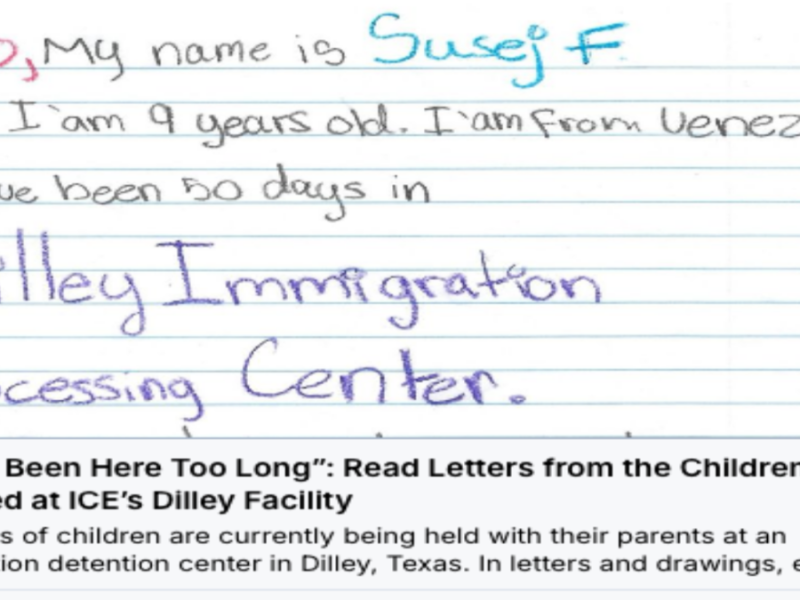
Health Organizations Condemn Traumatic ICE Raids, Family Separation
According to letters from children living in an ICE detention facility, living conditions are inhumane and their mental health is suffering.

In Teens, Social Anxiety Often Looks Like Anger
A study finds that some teens’ aggressive behavior may be due to social anxiety, not straightforward reactivity.
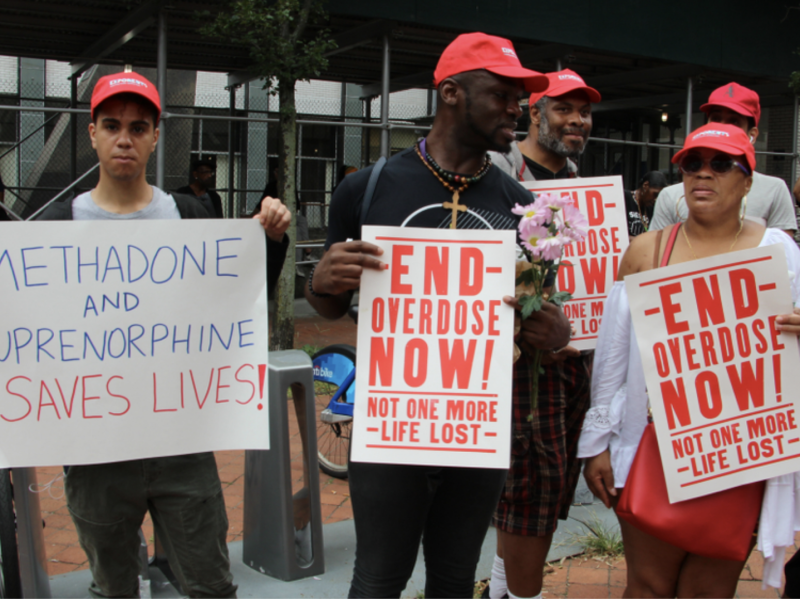
Expert Calls for Harm Reduction, Not Punishment, to Resolve Our Overdose Crisis
As the Trump administration pulls funding from harm reduction, an expert on the overdose crisis says it’s the best way to save lives.
