Photoshopped Images, Scientific Fraud Derail Quest for Alzheimer’s Treatments
A reporter uncovers evidence that research fraud on a massive scale has hyped the potential benefit of expensive drugs aimed at slowing or reversing the mental decline of patients with Alzheimer’s disease.
‘It’s stunning how widespread it was.’ Q&A with journalist Charles Piller, who exposed fakery
Almost 7 million people in the US today have Alzheimer’s disease and some 11 million family members and friends provide unpaid care for people with dementia. Not surprisingly, both groups suffer from extremely high rates of depression and anxiety – as many as 50% of people with Alzheimer’s suffer from clinical depression, a rate about seven times greater than the incidence of depression in the general population.
Both groups are also looking desperately for treatments and services that could ease their plight. Thousands have entered clinical trials, placing their faith and their future on the hope that scientists are on the path of developing drugs that can make a real difference in their lives. But what if this faith and hope has been misplaced and even preyed upon?

For more than three decades, Alzheimer’s disease has been the focus of intensive research and investment and is a top recipient of government research funding and private investment. A huge amount of that money has been directed at what researchers call the amyloid hypothesis: the idea that the key factor in the progression of the disease is the accumulation of sticky deposits of a protein called amyloid beta in the brains of people with Alzheimer’s.
But in the last two years, evidence has emerged that research fraud on a massive scale has hyped the potential benefit of expensive drugs that aim to remove amyloid proteins from the brains of Alzheimer’s sufferers and ensured that the vast majority of clinical research funding in Alzheimer’s went in this single but flawed direction.
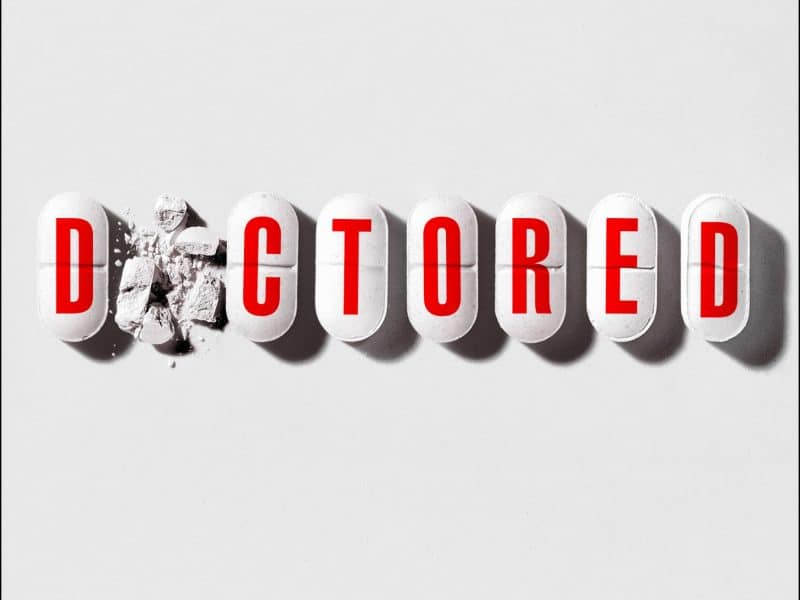
The evidence of this fraud has been uncovered primarily by investigative reporter Charles Piller. Piller has been breaking stories about the failures and fraud in the scientific world for years and for the past seven he’s been doing that for the news section of the journal Science. His new book detailing his investigation into Alzheimer’s research is Doctored: Fraud, Arrogance, and Tragedy in the Quest to Cure Alzheimer’s.
Piller recently sat for an interview with MindSite News Founding Editor Rob Waters. It has been edited for length and clarity.
Rob Waters: Charlie, let’s start with the basic theory behind this research. What is the amyloid hypothesis and what is it based upon?
Charles Piller: Let’s go back more than 100 years to the discovery of Alzheimer’s disease by Alois Alzheimer, a German scientist in the early 1900s. He was a clinician and pathologist so he did autopsies. He was caring for a patient who had symptoms of dementia, and when she died, the autopsy he conducted showed two classic characteristics of Alzheimer’s disease.
One is these sticky plaques – deposits of protein in the brain. The other, inside nerve cells, is called tangles after their tangled, string shape. We now call these tau proteins. This combination of plaques, tangles and dementia became the definition of Alzheimer’s.
For decades, there wasn’t a lot of attention to Alzheimer’s disease for a simple reason: Not many people were growing old enough to get symptoms. It wasn’t until other medical advances extended lifespans that suddenly you had this vast increase in the number of people with late-life dementia.
In the 80s and 90s, an idea took hold that these so-called amyloid beta proteins, which accumulate as plaques, lead to a cascade of biochemical effects that ultimately cause the death of brain cells and dementia symptoms. It was logical. When people who had Alzheimer’s died and their brains were examined, pathologists found these plaques and tangles in their brains.
The amyloid hypothesis gradually became accepted almost universally within the scientific and medical communities as the key cause of Alzheimer’s, but there were also contradictions and warning signs. One is that a lot of people who did not have symptoms of cognitive decline had a lot of amyloid protein in their brain when they died. This was a befuddling and strange development.
The second is that some drugs and even a vaccine were very successful at removing these amyloid proteins from the brain – but they were not successful in getting a great benefit for patients. So doubts and concerns about the hypothesis were raised by some. To be clear, it’s still the dominant way of thinking about the disease – but there are a lot of cracks in that way of thinking that have led to a kind of a backlash among many scientists.
Reliance on this theory led to billions of dollars being spent to develop drugs. Two were approved by the FDA in the last two years – Leqembi from Biogen and Esai, and Kisunla from Eli Lily. A third, Aduhelm, also from Biogen and Esai, was recently withdrawn from the market. The companies claim they are “disease-modifying drugs” able to change patients’ cognitive outcomes rather than just treat symptoms. What do these drugs do? Are they effective? And what are their side effects?
Our immune system creates antibodies to fight off viruses or bacteria when we become infected. These antibody drugs were created in the lab rather than by our own immune systems and are infused into people through a vein. They essentially attack these amyloid proteins and are very successful at removing the amyloid proteins from the brains. Normally they’re used for patients with early signs of Alzheimer’s.
But their benefit in clinical experiments conducted by the companies are very small. No patients are getting better on these drugs. They’re not becoming less cognitively impaired. No patients are having their symptoms arrested. No patients are being cured. What happens is that they very minutely slow the rate of cognitive decline to a degree that neurologists say is not perceptible to patients or families.
But if these drugs are so successful at removing amyloid beta plaques, why don’t they have an impact on their symptoms and progression of the disease?
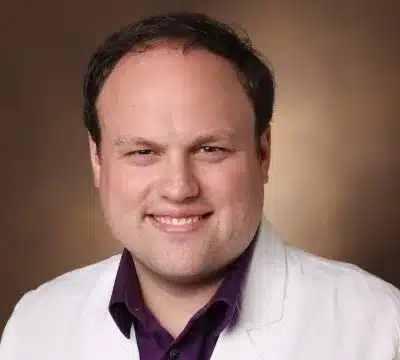
Part of the answer is that the disease is more complex than just removing amyloid proteins. Matthew Schrag is an important character in my book – he’s a professor at Vanderbilt University. He makes this analogy: If you go into an emergency room with a knife stuck in you and the doctors remove the knife, that doesn’t mean that you don’t still have your wound. It’s similar with amyloid plaques: If you remove amyloid from the brain, you’re not curing the disease. That is abundantly clear.
The problem with these drugs is they are potentially dangerous. They can cause brain swelling and bleeding. Not in every person who takes them, but in many. And in a minority of cases they cause such severe brain swelling or bleeding it can cause brain damage or even death. As a result, the FDA required a black-box warning, which denotes a risk of death. Many people feel such fear and concern about an Alzheimer’s diagnosis that they roll the dice on getting some small improvement from these drugs even at the risk of dying. This is a very personal decision, but they have to be aware of the risk-benefit ratio.
Let’s get into the science. In 2006, a study by Karen Ashe and Sylvain Lesné at the University of Minnesota was published in the journal Nature. What did it show and how did it influence the field?
At the time – the early 2000s – some drugs trying to remove these amyloid proteins had been failures. There was a lot of discouragement about the truthfulness, viability and efficacy of this amyloid hypothesis. Enormous sums of money had been spent on it to the exclusion of other ideas about how to approach the disease. Because of the failures, skepticism was rising. So in come Ashe and Lesné and some collaborators who examine this problem in a creative and interesting way.

They took a genetically engineered mouse and extracted a type of amyloid protein that they named amyloid beta star 56 (Aβ*56), their star protein – a catchy name that helped them gain a little mind share. The star 56 protein was then purified out of their sample – or so they said – and injected into rats. The rats then showed symptoms they described as memory loss similar to the memory loss of Alzheimer’s.
Working as a kind of forensic image sleuth, Schrag found this study was riddled with apparently doctored images.
charles piller
So you had for the first time a specific subtype of amyloid protein causing dementia symptoms in animals – as a model for human beings and drug development. It was a revelation, and it injected into the scientific community a new belief that the amyloid hypothesis was the way to make gigantic progress on the disease.
Did it get a lot of attention?
It was published in Nature, one of the most important journals in the world and received a lot of play in the scientific community. From 2006 until 2022, it was the fourth most cited article about laboratory work in Alzheimer’s. Leading scholars in the field said this experiment was important to their understanding of the amyloid hypothesis.
So it reinfused energy and money into this hypothesis – but what was wrong with this paper?
This is where Matthew Schrag from Vanderbilt comes in. He’s a neuroscientist and neurologist who treats Alzheimer’s patients himself. He has a lab where he studies the disease. Schrag examined this experiment as part of work he had done discovering possibly doctored images in important Alzheimer’s research. There were images of mouse brain tissue and also images from a kind of experiment called the western blot, which defines the amount and type of proteins in a tissue sample. It displays as a series of stacked bands. It’s a very common test, done thousands of times a day – and an important test to validate that this experiment had actually found this very specific amyloid beta star 56.

Schrag – working as a kind of forensic image sleuth – found this study was riddled with apparently doctored images. The investigators seem to have used a program like Photoshop to move things around within the image, to change the intensity of evidence of certain proteins in a way that seemed to validate the experimental hypothesis. If Schrag’s findings were correct, they had basically faked a lot of their results which would have invalidated the entire premise of the experiment. He found this in 2022, 16 years after the original experiment had caused enormous investment and reinforcement of the amyloid hypothesis.
Articles published in peer-reviewed scientific publications are supposed to be reviewed by other scientists to make sure they’re accurate. How did doctored images get past eagle-eyed journal editors and peer reviewers and past the University of Minnesota? Is anybody overseeing this enterprise?
It’s a great question and one I’ve looked at with great intensity for a long time. The answer is a bit complicated. Peer review is a wonderfully important thing in the scientific world, a way of doing quality control that is central to the scientific enterprise. But in this case, we have a real weakness because peer reviewers by and large are never trained to even think about the possibility of image doctoring in the work they’re examining for possible publication. They don’t look for it. They don’t see it.
That’s one weakness. Until fairly recently the journals themselves also had a complacent attitude about whether images submitted for publication might have been doctored, might have been improperly changed. In general, universities don’t monitor these things. There were no good checks and balances in place.
Sometimes there is evidence of apparent manipulation. Sometimes that evidence is so strong and so apparent it seems obvious that some bad things were done.
Charles piller
There’s also complacency among people in the labs. This was a lab of an illustrious scientist, Karen Ashe, who had made many contributions to neuroscience. This guy Silvain Lesné, a postdoc in her lab, is the one who created these images. He was a rising star. Although these images were created in Karen Ashe’s lab, she didn’t personally construct the images and she apparently didn’t very closely examine them with an eye towards the possibility they might have been faked. Lesné has not commented publicly but there’s an ongoing investigation at his university.
Nature eventually retracted the paper in 2024, saying that the edited images showed “excessive manipulation, including splicing, duplication and the use of an eraser tool.”
That was two years after these problems were brought to their attention. So you also have an incredibly slow process for assessing whether image doctoring or misconduct took place. You end up with a lot of bad things getting into the scientific record that can pollute the thinking of scientists, even those who are determined to do only important work of great integrity.
This discovery was the tip-off that led you to start questioning whether other Alzheimer’s papers had similar problems. What did you do and what did you find?
This led to a series of stories I did for Science that examined a number of drugs under development for Alzheimer’s disease, including Leqembi. I broke stories about how its possible dangers could lead to death in certain cases. It was a wake-up call for a lot of people in the medical community who weren’t aware of how potentially dangerous they might be. I also wrote about other important scientists in Alzheimer’s who were implicated in studies for which there was ample evidence of doctored images or other misconduct. One example is Berislav Zlokovic at the University of Southern California, one of the leading scholars in Alzheimer’s disease and stroke, one of the leading scholars of the blood-brain barrier.
Schrag and other forensic image analysts were involved in these analyses. They were very generous with their time. As a journalist, it’s up to me to validate concerns – not just accept the findings of people like Schrag but to try to understand whether his analysis was well-founded. I vetted it with other people who were experts in finding doctored images and by experts in the Alzheimer’s field.
At a broad level, what did you find about the extent of doctored images and fraud in papers concerning the amyloid hypothesis?
It was pretty shocking. But before I explain, I want to make it clear that in my view, the vast majority of Alzheimer’s researchers and scientists are people of great integrity who have the interests of patients and of furthering scientific understanding at heart. Only a small percentage of people cheat or do dishonest things or commit fraud. It happens in every walk of life, not just Alzheimer’s.
There are multiple reasons some people commit research fraud, right? The imperative to publish new findings that people haven’t previously published. The financial incentive of building your reputation so as to get funded by the NIH and to gain a stake in drug development.
Sometimes even very unsuccessful drug development can make a person very rich. So, if you have an idea that is based on false premises, but it is sufficiently convincing for investors to put money into it, you can make a lot of money.
A lot of biotech companies that have never brought a product to market have investors and founders that make a lot of money.
No doubt about it. It’s a discouraging part of the process. Back to your question about what I found. It’s impossible to do a thorough check of all Alzheimer’s researchers. There’s thousands of them. So I began with an analysis of data on a website called PubPeer where a small army of independent scientists and people with computer skills analyze scientific images and post them there to ask questions: “There’s something that looks wrong about this. Can the author please examine it and see if we found an error?”
So these are sort of nerdy gadflies who put stuff on an open source website to watchdog science?
That’s exactly right. I got a download of everything on PubPeer pertaining to Alzheimer’s to see which scientists had been flagged and to understand who among them were influential. I asked this question: How common is this problem of image manipulation? Finding absolute proof that someone deliberately changed images is a very difficult process. Sometimes there is evidence of apparent manipulation. Sometimes that evidence is so strong and so apparent it seems obvious that some bad things were done. But there can be artifacts that come into an image during the publication process that can look like fraud when in reality they were innocent errors or artifacts.
So with that caveat, we looked at a lot of scientists and ultimately I had 46 scientists with hundreds of collaborators in many hundreds of papers for which problems were found – often multiple images within the same paper where there were signs of image manipulation.
So what you found was widespread apparent doctoring of images in hundreds of research papers that were cited tens of thousands of times – magnifying the impact with every citation.
That’s exactly right. And it’s stunning how widespread it was. In the book, I try to focus on the most important scholars in the field who have these sorts of problems in their work. Let me give you one example: a scientist by the name of Eliezer Masliah. He used to be at UC San Diego and he was an illustrious and prolific scientist – one of the most influential people in the field. Because of his fame and contributions, he was chosen by the National Institute on Aging in 2016 to head their neuroscience division. That’s the biggest funder of Alzheimer’s research in the world, and the neuroscience division is where most of the money comes from.

He was at the pinnacle of influence and power, steering Alzheimer’s and Parkinson’s research. Over the course of many months the team of image sleuths including Mu Yang at Colombia created a dossier that was 300 pages long comprising 132 of Masliah’s 800 papers going back 25 years. These 132 papers were riddled with apparent doctored image after improper image, or reuse of the same image as if new in subsequent papers. So a different kind of apparent error or misconduct.

This 300-page dossier constituted a stunning range of work that had influenced thinking in Alzheimer’s disease and Parkinson’s disease and influenced big companies in drug development that’s still underway today. I went to Masliah, I went to the National Institutes of Health, his employer, and I went to his boss at the National Institute on Aging and I went to the head of NIH, and tried to get them to respond in detail to the questions. They did not give me anything other than a perfunctory response.

Mazliah never responded at all. But the day my story came out last fall, NIH announced that he had been moved away from his job as head of that division. And the reason was that they had discovered scientific misconduct in two of his papers. Of course, the dossier that I presented them with involved 132 examples. So what do you learn from this example?
Someone at the pinnacle of the field, not just scientifically but bureaucratically as a leader in influencing decisions about what to fund was found to have been flagrantly associated with an enormous amount of apparently doctored images for many years. It’s sobering to think how important a finding that is.
If it were a one-off, if it were just this guy. It would be terrible. But it’s widespread throughout the field. This exposes weaknesses in NIH and their hiring process and more generally throughout the field. I want to emphasize again that most scientists are honest. They may have been misled at times by scientists who engaged in image doctoring in their own research.
But it would be a terrible mistake if people who are anti-science – and I think we’re seeing more and more of that now in the new administration – use these problems as an excuse to really harm these important scientific institutions like NIH, or regulators like FDA. The FDA has made many mistakes and in my opinion needs to get more serious about examining misconduct or fraud in the stuff that they’re responsible for. But I think we also should support them as vital to both scientific research and the safety and quality of our drug supply.
What you’re saying is that institutions that we trust to produce good science, the universities where the studies are produced, the NIH and organizations like the Alzheimer’s Association that fund research, the journals that publish the research and the FDA that is supposed to apply rigorous standards for drug approval – all of those institutions essentially failed to detect this and failed to protect the public.
I would agree with all of that. I think the lesson here is to remember that even though we have important institutions of scientific enterprise in our country that have been very successful in helping to increase our lifespans as people and come up with cures for diseases, they have weaknesses. And these problems were shown so vividly in Alzheimer’s. Unlike cancer, heart disease, stroke and other terrible diseases, Alzheimer’s doesn’t have a good solution. This creates an additional incentive to try to stretch the truth in order to gain fame and fortune in a field that’s struggling. Also, the dominance of the amyloid hypothesis has created a kind of group-think that makes complacency more likely to occur. If you’re submitting papers that have doctored images or serious mistakes but are supportive of the conventional wisdom, it becomes less likely that there will be vigilance to vet them and catch these problems before they become influential.
It reinforces the orthodoxy associated with the field when you have a majority of the really big money underwriting these multi-million dollar clinical experiments going in one direction.
charles piller
And the pharmaceutical companies that market these drugs after supposedly rigorous clinical trials stand to benefit by selling drugs that have remarkably little actual impact on patients. So the incentives for pharmaceutical companies are not to necessarily do the most rigorous science.
I would put it a little bit differently. Drug companies, of course, want a return on their substantial investment. It’s very expensive to bring these drugs to market. And they’re determined to play out this set of ideas in a way that’s profitable. I think they also care about patients and want to improve patients’ lives. But there are corporations that exist to make as much money as possible for their shareholders.
So they want to stay the course to try to realize a benefit from their enormous investments into this singular idea of the amyloid hypothesis and to make it work. That is a problem because it reinforces the orthodoxy associated with the field when you have a majority of the really big money underwriting these multi-million dollar clinical experiments going in one direction.
Organizations like the Alzheimer’s Association raise lots of money from incredibly well-meaning people who donate to ease the plight of people with Alzheimer’s. But when so much of that funding goes into the push to develop a biological cure that has fraud at its core, it also pulls funding away from supporting caregiving and easing the burden of caregivers, addressing the symptoms of Alzheimer’s. What are your thoughts about that?
Let me answer it in two parts. I think everyone who is concerned they might eventually get Alzheimer’s disease – because of a family history or because you’re beginning to experience signs and symptoms of memory loss – should understand that we have agency. We’re not completely powerless in thinking about how to live our lives in a way that could potentially forestall the worst effects of the disease. There is no cure for Alzheimer’s. There is no magic bullet. There’s no nutritional supplement or brain exercise that is going to prevent a person from getting Alzheimer’s. But living a healthy lifestyle, exercising, eating well, watching your blood pressure and cholesterol, managing the risk factors for dementia is a way that we can try to help ourselves going forward.
The other vitally important aspect is how best to manage the burden of Alzheimer’s disease, for patients and for family caregivers. It’s staggering to me that in the U.S. we devote an estimated $350 billion a year worth of unpaid labor and expenses for people who are caring for loved ones with Alzheimer’s. That’s roughly comparable to all the money spent from every other source, including Medicare. So a lot of the burden of the disease is on family members. It can cause literal impoverishment. It can cause families to have their last years in life be distorted and sometimes destroyed.
Care should not be the victim of an emphasis on cure. There should be many more resources devoted to helping people manage this disease and also the legitimate ways that some degree of prevention can help forestall the disease’s worst effects. If we could change the emphasis a bit, I think the long-term outlook for many families would improve dramatically.
Today as we speak, Robert F. Kennedy Jr. is testifying before Congress in his confirmation hearings to be Health and Human Services Secretary. He has made numerous disproven claims about vaccine risks, promoting the idea they are a key cause of autism. He and Trump have promoted views that are enormously discrediting to science. Kennedy is also highly critical of big pharma companies for manipulating data, overselling drugs and buying influence over the FDA. In that area, he has a point. We know that when people leave the FDA, they often go to work for pharma companies.
So you have this confluence of factors from different directions that serve to discredit people’s belief in the scientific process. Where does that lead and what can be done about it?
Obviously, there’s a lot of really valid worries and concerns about what Kennedy might do should he be approved. There is also some good that a guy like that could possibly do. Of course, I’m very worried that the agenda might be to tear down these important institutions. Even though they do have some problems, they’re still really important – the work they do, the funding they provide, the way they monitor our drug and food supply, etc. These are things we can’t do without and they must be reinvigorated and improved, not torn down. That said, the FDA as an agency has a lot of challenges and problems.
One is this so-called revolving door that you alluded to where people who are regulators can go into industry and then work for the companies that they previously did drug evaluations for – and triple or quadruple their salaries overnight. These kinds of incentives certainly don’t bode well for the regulatory process. The agency also has a fundamental problem which is that drug approvals are based on evaluations that are underwritten by the companies themselves, not by Congress. That creates an inherent conflict for the drug evaluators knowing that all the money that’s going into their evaluation comes from the very companies whose drugs they’re looking at.
FDA commissioners are often people who go back and forth between industry and federal government and they go out and make millions of dollars being high-level people within the industry and then they come back and act as a regulator. Those are warning signs that people who can’t properly rein in the excesses of industry. So if Kennedy is a legitimate reformer and wants to improve FDA’s performance, there are things that could be done that could be beneficial. Whether he’ll actually do those things remains to be seen because he’s got some very strange ideas that could be quite harmful to public health.
I’m also thinking about the public’s own belief in science. We have a problem with climate change. We have fires that are raging. We have all kinds of symptoms of a badly damaged planet. Then, from one side, we have bad actors within the field of science discrediting science and from the other side, people like Trump pursuing an anti-science agenda. As a society, how do we tackle these existential problems if there is such undermining of science?
I’ve thought about this a lot. I believe deeply in supporting scientific institutions, universities, journals, regulators, and funders. Those entities are so important to public health, to the development of scientific remedies, to drug development, etc. If we don’t insist that they do their jobs better, then they will fall victim to people who are not sympathetic to their overall goals, who may want to tear them down instead of build them up. I hope that Doctored is an opportunity for this field to take a good hard look in the mirror and say: What can we do better to earn the trust of the public?
The name “MindSite News” is used with the express permission of Mindsight Institute, an educational organization offering online learning and in-person workshops in the field of mental health and wellbeing. MindSite News and Mindsight Institute are separate, unaffiliated entities that are aligned in making science accessible and promoting mental health globally.


Author

Related Articles

Can ChatGPT Be Your Therapist? This Therapist Found Out for Herself
Can ChatGPT offer a viable alternative to traditional therapy? In this first-person essay, a licensed therapist explores that question.

What Was I Made For? Identity, Meaning, and the Emotional Cost of AI
Machines can now write, analyze, diagnose, and simulate emotional presence, triggering not just a technological disruption but one that strikes at who we think we are.
Brown University Shooting Again Reveals Why Trauma Care Must Begin Before People Seek It
A former Brown student and longtime mental health journalist says that how institutions respond after traumatic events can shape mental health outcomes for years to come.
