
DOGE: Where Cruelty Is The Point
Federal workers say mass firings are destroying their mental well-being. A Trump official said that was the goal.


February 26, 2025
By Courtney Wise

Greetings, MindSite News Readers. In today’s Daily, federal workers say mass firings are eroding their mental well-being. Also, two items around dementia: In one, despite the legality of medically-assisted death in the Netherlands, patients aren’t able to choose the deaths they’d want. In another, dementia-inclusive design is helping people navigate their neighborhoods and retain their independence.
“We want to put them in trauma”: Discussing mass firings, Trump official admitted cruelty is the name of the game

Trump and Musk
As federal employees lose their jobs, some told NPR they’re also losing their mental health. One federal employee, Joe, who asked that his last name be withheld to prevent retaliation, said he’s experienced [emotional] spiraling, anxiety, heart palpitations, headaches, and trouble breathing. “I had such an anxiety panic attack, I called the suicide hotline,” he added.
Worse yet, Trump administration officials suggest that’s the point. “We want them to not want to go to work because they are increasingly viewed as the villains,” said Russell Vought, current director of the Office of Management and Budget, at a private gathering for Trump supporters in 2023. “We want to put them in trauma.”
The plan seems to be working, especially because countless firings by Musk’s so-called Department of Government Efficiency (DOGE) – a group not elected or approved by Congress – are based on a shameless lie: that the dismissal is due to performance concerns. Many employees interviewed – including some who are planning to file lawsuits – say they had excellent performance reviews.
“Opening up LinkedIn and literally all you see is everyone with the same message,” said Nadia Shadravan, a contractor recently fired from her job with USAID. She said she has no idea what she will do next. “Everyone you’ve ever worked with, everyone you’ve ever connected with professionally is in the exact same situation as you and is out of a job.”
The stress is affecting Shadravan’s family too,who have spent the past three years with her in Senegal. “I can see the worry in their faces,” she said, of her two children, aged 14 and 12. Her husband remains employed as a teacher, but she worries how long they can depend on that income – many of his students are American children whose parents also depend, directly or indirectly, on USAID funding.
The psychological shock is to be expected, said Amy Edmondson, a researcher in organizational psychology at Harvard Business School. As sweeping cuts are made across federal agencies, many without cause, team psychological safety is under threat. Discussing the cuts, Edmondson concluded, “I have never seen anything that from the outside looks so random, sloppy — the impact is intimidation and fear.”
Meanwhile, federal technology experts in DOGE resigned en masse, saying that they would not use their technical expertise to “dismantle critical public services,” the Associated Press reported. Millions of federal workers did get a temporary reprieve from DOGE harassment after the Office of Personnel Management sent an email telling them they did not have to answer an email from Musk’s team demanding they list “5 things” they accomplished last week or be fired.

In the meantime, readers who love the Beatles may appreciate this social media post, one of the parody replies to Musk’s demand that workers that they list their 5 accomplishments last week — one that was shared by Trump critic Jeff Tiedrich on his Substack account “Everyone Is Entitled To My Own Opinion:”

In the Netherlands, patients with dementia face a struggle to die on their own terms

Last July, four months after being diagnosed with Alzheimer’s, Irene Mekel lost her best friend, Jean, 87, to dementia. Jean spent her last 8 years in a nursing home, slowly declining until she was completely dependent on others, no longer able to carry on a conversation. It was bearing witness to her friend’s decline that prompted Mekel, 82, to pursue a medically-assisted death sooner than she might have wanted. She’s said she’d like to go when she’s no longer able to live independently at home, hold a conversation, or recognise her family. The procedure is legal in the Netherlands, where she lives, but Mekel is learning there may not be a doctor willing to help her do it at the time she’d want to. “It’s a tragedy,” she told the New York Times.
Even with an advanced directive, written now, when Mekel is aware and able to approve its content, most doctors will not euthanize a patient without the capacity to consent at the time of the procedure. Despite knowing her for years, not even Mekel’s primary care doctor will do it. The advanced directive implies incapacity to consent, the doctor said.
The position of Mekel’s physician is reflective of most. Of the 9,000 physician-assisted deaths in the Netherlands each year, fewer than 10 are granted to people without mental capacity. Most are for people dying of cancer or other terminal illnesses. Mekel’s doctor directed her to the Euthanasia Expertise Center, which not only trains physicians and nurses on how to legally and humanely provide assisted death, but also investigates and sometimes offers euthanasia to patients whose own doctors won’t. She’s been assigned to Dr. Bert Keizer, “an assisted-dying celebrity” who often comments on high-profile euthanasia cases. He is prepared to aid Ms. Mekel’s request to end her life, but only as long as she is fully aware of what she is asking. For now, he’ll monitor her cognition until they feel they’re close to the last moment she can reasonably consent. If they miss that point, assisted death will no longer be an option for Mekel.
Though medically-assisted death has wide support in the Netherlands, no doctor wants to risk becoming the next “coffee case,” professionals in assisted death told the Times. The term refers to when, in 2016, a doctor was charged with violating the euthanasia law after aiding in the death of a 74-year-old woman with dementia. The woman had a 4-year old advanced directive on file, indicating her desire to die rather than enter a nursing home. Upon her family’s instruction, the doctor provided the woman a sedative in coffee, and then injected another stronger dose. But during administration of the medicine to stop her heart, she awoke and resisted. Her family held her down so that the doctor could finish the procedure. The doctor was eventually acquitted, but public outcry has been enough to dissuade Dutch physicians.
Despite this, Mekel is vexed by the process. There is no scenario in which, for her, living in a nursing home would be okay. It would be too great a loss to her dignity. She also cannot imagine living with any of her children. To her, that leaves medically-assisted death her best option, but it’s the physician who gets to decide which version of Mekel to support: current Irene, who views loss of independence as intolerable, or future Irene, with advanced dementia, who may be unable to convey her unhappiness or understand what’s happening. “When you lose your own will, and you are no longer independent — for me, that’s my nightmare,” Mekel said. “I would kill myself, I think.”
In other news…
Dementia-inclusive design in Singapore: Though many of us can picture end-stage dementia, far fewer have a sense of the earlier stages of the disease, when people are able to socialize, keep working, and even live independently. Early on, though, dementia can diminish spatial cognition, the ability to accurately orient ourselves in physical spaces, making moving through even the most familiar places more challenging.
Jim Mann, a researcher at the University of British Columbia who was diagnosed with Alzheimer’s in 2007, remembers leaving a meeting in downtown Vancouver and suddenly not understanding where he was or what he was doing. Though he was able to gain clarity after a few minutes, Mann told Reasons to Be Cheerful that experiences like his can chip away the confidence of dementia patients, forcing them inside out of fear.
The homogeneity of urban design in parts of dense cities can add to that confusion, and Dementia Singapore is leading a street arts effort to change that. Bold painted murals add beauty to the landscape, while also serving as navigational markers for those who need them. Residents near their first set of murals said they’ve been helpful — as guides for those with dementia and for raising awareness about the disease.
Park planners in western Canada have taken note. “For so long, we’ve thought about designing spaces for kids,” said Sheila Taylor, CEO of the Parks Foundation Calgary, who are opening a new, inclusive park next year. “I think we need to think about public spaces for everyone, people of different ages, different abilities.” The new park’s features – like wide, level walkways and handrails, color-coded wayfinding , sculptures and quiet spaces – hope to do just that.
Grammy award winning singer and actress Michelle Williams is eligible for a Tony Award for her role in the Broadway production of Death Becomes Her, People reports. Playing Viola Van Horn, Williams is originating her first role, and told Good Morning America she feels grateful. After exiting another Broadway show 7 years ago due to depression, she thought she’d never be invited back. “I thought that door was closed for me to return…I thought I’d be seen as a liability.” Since 2018, Williams has become an advocate for mental health awareness, publishing the book Checking In: How Getting Real about Depression Saved My Life—and Can Save Yours in 2021.
If you or someone you know is in crisis or experiencing suicidal thoughts, call or text 988 to reach the 988 Suicide & Crisis Lifeline and connect in English or Spanish. If you’re a veteran press 1. If you’re deaf or hard of hearing dial 711, then 988. Services are free and available 24/7.
Recent MindSite News Stories
‘What if one day you leave and don’t come back?’

Guadalupe Ortíz was diagnosed with anxiety at 10. Since Donald Trump’s inauguration and news of ICE raids, she has refused to attend school – and she is not alone. Absenteeism has surged in Chicago Public Schools.
Photoshopped Images, Scientific Fraud Derail Quest for Alzheimer’s Treatments
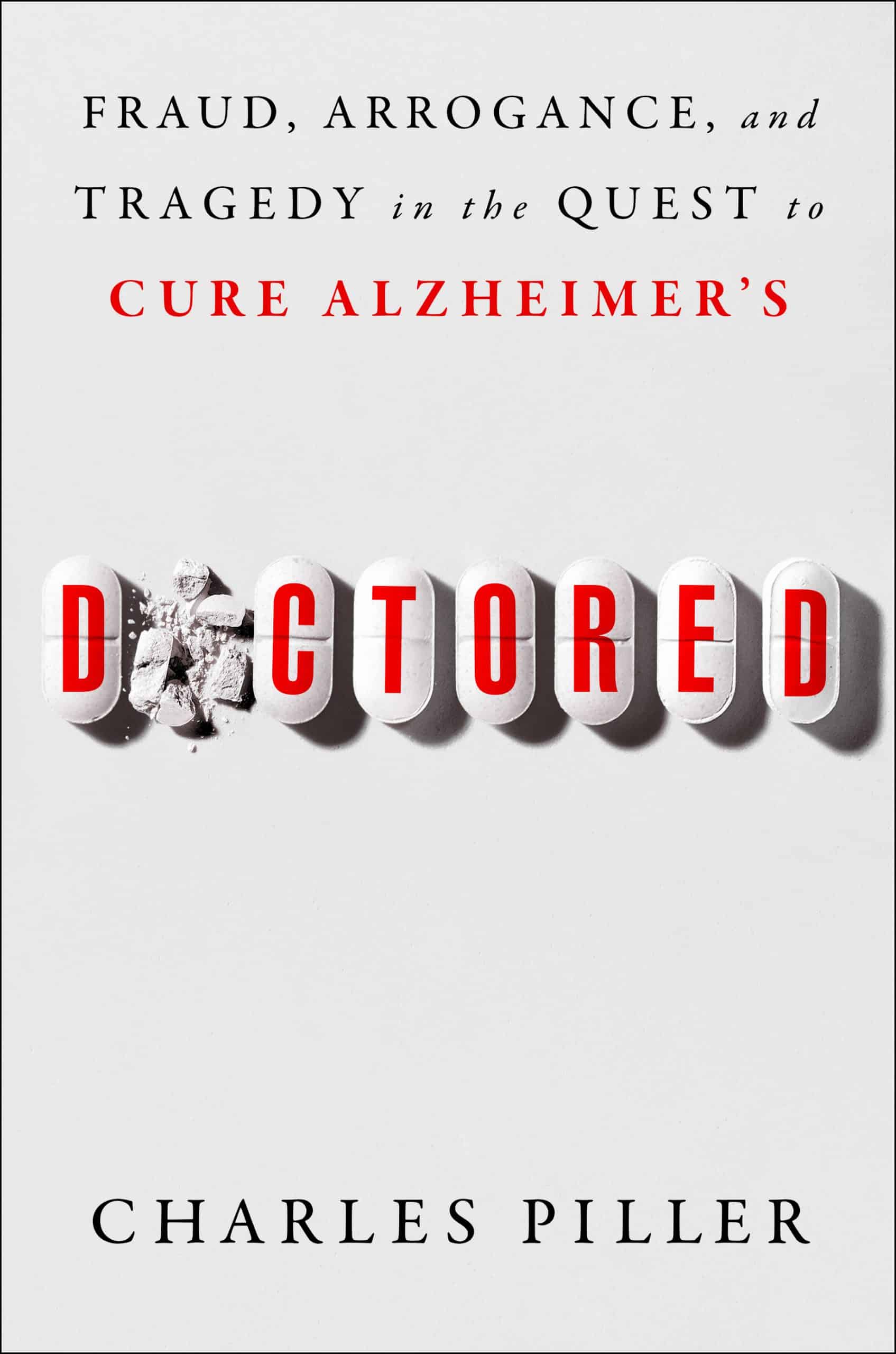
A reporter uncovers evidence that research fraud on a massive scale has hyped the potential benefit of expensive drugs aimed at slowing or reversing the mental decline of patients with Alzheimer’s disease.
A Developmental Disability Diagnosis Can Hit Hard – But It Isn’t a Knockout

Across the country, the number of people diagnosed with developmental disabilities is rising, with implications for those individuals and the economy. This story looks at the experience of a family – and an editor – in Pittsburgh.
If you’re not subscribed to MindSite News Daily, click here to sign up.
Support our mission to report on the workings and failings of the
mental health system in America and create a sense of national urgency to transform it.
For more frequent updates, follow us on Facebook, Twitter and Instagram:

The name “MindSite News” is used with the express permission of Mindsight Institute, an educational organization offering online learning and in-person workshops in the field of mental health and wellbeing. MindSite News and Mindsight Institute are separate, unaffiliated entities that are aligned in making science accessible and promoting mental health globally.
Copyright © 2021 MindSite News, All rights reserved.
You are receiving this email because you signed up at our website. Thank you for reading MindSite News.
mindsitenews.org

The name “MindSite News” is used with the express permission of Mindsight Institute, an educational organization offering online learning and in-person workshops in the field of mental health and wellbeing. MindSite News and Mindsight Institute are separate, unaffiliated entities that are aligned in making science accessible and promoting mental health globally.


Author

Related Articles

Will the Pursuit of Profit Suck the Benefits Out of Psychedelics?
Many new programs have removed the most transformative, curative and life-affirming parts of the psychedelic experience.

New Mexico to Probe Allegation that Epstein Ordered the Burial of Teen Girls Near His Ranch
New Mexico has announced it is probing into an allegation that Epstein ordered the bodies of two girls to be buried on Zorro Ranch.
A Better Way to Treat Addiction in Seniors
As overdose deaths rise among older adults, Baltimore’s REACH Health Services offers groundbreaking addiction care for seniors that combines medication with intensive peer support. Plus a look back at a historic fight against solitary confinement. And more.
