Families Are Joining the Stand Up For Science March This Friday
Families are among those marching on March 7 to defend diversity, restore federal funding and end censorship and political interference in science.

March 6, 2025
By Courtney Wise

Greetings, MindSite News Readers. In today’s Daily, PBS Kids offers up new programming geared at prepping young children for the workforce. To my progressive sensibilities, that sentence reads like the start of a capitalist horror story, but it turns out, that’s not what’s scary. This is the scary part:
Our children will one day become adults who have to support themselves, and data shows that the US is short on working-age people qualified to do the jobs that already exist, let alone the ones that will drive the economy our kids will someday grow into.
If your kids are interested in science — or even if they’re not — MindSite News invites you to take your children to a March 7 march with Stand Up For Science, which is officially supporting rallies in Washington DC and 31 other cities around the country to end censorship and political interference in science, restore federal funding and defend diversity and equity in research. This means that a confirmed site leader—backed by the group’s core team—is actively organizing a public event with SUFS volunteers. “If your city isn’t listed as a site of an official SUFS rally,” the organizers add, “you can still make your voice heard by joining the nationwide campus and workplace walkout at 12:00 PM local time on March 7th.” In the meantime, enjoy this interview with the organizers that appeared in Scientific American.
Plus, mental health professionals engage hip-hop therapy for the benefit of Black and Brown youth in New York City and Cleveland. Check out our new MindSite News originals and repubs on a mental health community helping save each other during the LA fires, urban teens talking about the awful toll that gun violence has taken on their mental health and a prison in Philadelphia modeled after the world’s most humane and effective prisons –those in Scandinavia. And to all you millennial parents out there: The pediatrician says we can — and should — flood our kids’ screens with all of our favorite childhood animated programs from the ‘90s and 2000s. It’s our time.
With Skillsville, PBS Kids aims to prepare kids for a fun, fulfilling life, at home and at work
One of the hardest things about adulting, to me, is sustaining gainful employment. It’s a wonder, really, when I think about how often the grown ups around me asked, “What do you wanna be when you grow up?” Looking back, I realize I learned to be dishonest with them and myself. My skills and interests didn’t align with the respectable stock responses I offered: doctor, lawyer, high-powered politician. I wanted the approval of my adults, and they wanted to hear me shout out a career that would pay me enough money to say they raised me right. With hindsight, it’s clear, none of us understood how critical examining my abilities and desires would be.
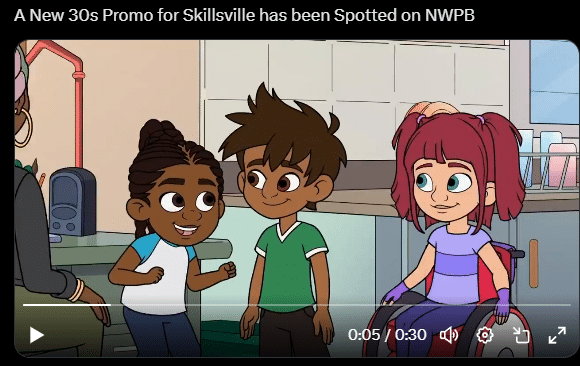
That’s where Skillsville steps in to help a new generation. The animated series created by Twin Cities PBS premiered nationwide this week on PBS Kids. Developed for children aged 4 to 8, the show features a trio of BFFs. One of them, Cora, has a video game designer as a mom, so the three of them test out their evolving skills and interests in a gamified virtual version of their home city.
Each adventure builds up each of the trio’s executive function. In one episode, Cora and her friends explore being paper plane air traffic controllers to help keep the city running smoothly. In another, they practice writing code. And in another, they’re lemonade stand entrepreneurs. Whenever they encounter a problem, they refer to five essential life skills — feel, focus, organize, remember, and think differently — to come up with a resolution.
Gamifying the characters’ practice of these skills, while giving them a chance to experience new careers each episode, was a strategic decision, according to show co-creator and executive producer Carol-Lynn Parente. Parents, educators, and child development experts were all engaged in research and development for the show — so were young children themselves. Show creators heard children regurgitating the same answers I gave 30 years ago, sometimes in the same quest for approval, but also because first graders are limited in their knowledge of which jobs actually exist and what skills are necessary to do them.
“That ‘see it, be it’ phenomenon is really real,” Parente said, adding that “the gaming genre is such a natural fit for this [Skillsville] curriculum, because it’s where you practice those executive function skills, but in a fun way.” In gaming, failure can be appreciated, because it’s one of the only places where failure is natural, Parente explained. We expect a winner to emerge, but if it’s not us, we also know that gaming is practice, allowing us to apply many different strategies to the same problem. Even if we fail, we had fun playing.
Casting a child with a noticeable disability was intentional, too. Main character Rae was born with spina bifida and uses a wheelchair. Show creators are particularly excited about how the gaming premise not only levels the playing field, but also challenges stereotypes about what disabled people can do. “From a career perspective,” Parente said, “lots of times people assume there are limits to what they can do, and that’s not necessarily the case. It depends on how you think about things. It depends on what adaptations are made. And at this age for kids, we just want them to increase their possibilities of what they think about. And I think having a character with different abilities is a way to do that.”
As a soft-hearted creative who has struggled with executive function her entire life — including time management, impulsivity, and telling everyone at work and home “NO” — I was delighted to walk into the living room and see my first grader checking out Skillsville on the PBS Kids app. There are just some areas where I’m still growing as a parent, (read: ill-equipped), and it’s nice to know there’s some research-backed support she can dive into, right on her tablet, without my prompting.
As a family, we’re in the thick of encouraging Nova to learn for curiosity’s sake, because it’s cool to expand your intelligence, and to know things. She’s awesome at visual art and design, loves all things natural science, and is super into movement. She’s also extremely impulsive, easily frustrated, and often checking back to see if it’s okay to enjoy something — especially if I, as her parent, don’t. While Skillsville isn’t a magic potion, I appreciate its expansion of the social-emotional and academic resources PBS Kids already offers to kids in grades K through 2. Instead of finding more phonics and math practice , I noticed games helping young people practice budgeting, decision making, and even journaling to work through feelings. According to my kid, “this Skillsville stuff is just fun.”
To Diondra Brown, a former child and family therapist, who now works with PBS to create content and curriculum for young viewers, there’s no better endorsement. Skillsville is “like a child’s dream world,” Brown said. “They get to exist in a world where they’re celebrated for their differences and that’s what makes them stronger as a group. Their team efforts and problem-solving skills work because they all have different perspectives and strengths, and I think that’s really beautiful to see,” she continued. “I think that’s a big takeaway …and I hope [that’s what] viewers get from the Skillsville show and programming holistically.”
Move + Thrive, a free, accessible movement program for teens of all sizes and abilities
Picture it: Spring 2020. Earthlings are forced inside, hoping to dodge a deadly virus. While I was googling “how long ought I leave my groceries outside,” Sarah Kaja, a research professor in child and adolescent health at the University of Minnesota, figured it was as good a time as any to create an at-home mental and physical wellness program for teens. So she did. In 2022, Move + Thrive, built in partnership with colleagues from Children’s Minnesota and the University of Indiana debuted as a series of free exercise videos, especially for teens. In development, youth forced out of sports activities remained front of mind, Kaja told the MinnPost, but their focus was really on every teen, because of exercise’s ability to positively impact mental health.
“When we’re talking about teens who are struggling with their mental health and aren’t ready to go out and put themselves in the world at a gym or on a team, exercise can be a pretty intimidating social setting,” she explained. “We did hear from young people in our focus groups that they are more comfortable exercising online. They say they feel like no one can judge them there.”
The videos, which remain free and accessible to anyone on YouTube, are all intentionally led by trained and experienced instructors. What viewers will notice, however, is the instructors are diverse in body size and dressed in more relaxed workout attire. That’s on purpose, Kaja said. “It’s subtle, but our instructors, if they were working at a corporate gym, might be expected to show up to teach in a sports bra or a tank top and tight leggings. But we heard from teens that participated in our focus groups that having an instructor dressed like that makes them feel more self-conscious about their own bodies. So our instructors all wear comfortable, not too tight or exposing athletic gear.”
The nudge toward movement, after all, isn’t about what teens’ bodies will look like when they’re done, but rather, the sound function of their bodies and good mental health. For that reason, language is also slightly adjusted from what’s used in more traditional exercise programs. No movement is described as “easy,” and rather than say abs, which might spark discomfort in some, Move +Thrive instructors say “middle.” They also avoid statements like, “This exercise is great for appearing more “lean” or “toned,” in an effort to drive the focus away from body weight.
“I am encouraged about the things we’ve heard from young people who’ve tried some of our videos,” said Kaja. “Our views keep ticking up. We are sharing our information with adolescent medicine clinics and keeping an eye on our stats every day.”
In other news…
Hip-Hop Therapy: Among those for whom hip-hop is a way of life, there are five key elements: DJing, the art of producing beats and music; MCing or rapping, arguably the most visible element, in which lyrics are spoken over a beat; Breaking, hip-hop’s earliest dance form; Graffiti, the highly stylized murals added to public surfaces, and the least conspicuous of all, Knowledge, that is, knowing one’s self and the social realities that prompted hip hop into being. In the spirit of that last one, hip-hop therapy is emerging as a powerful mental health tool for Black and Brown teens who have struggled with more traditional therapy, participants told NBC News.
Kryst Jackson, 17, said he tried talk therapy but never felt like his therapist really understood his life or experiences. Joining the Hip-Hop Therapy Studio program at Mott Haven Community High School in the Bronx changed everything. “This is really just being able to express yourself in a fun way,” Jackson said. “What I learned about music is more than just lyrics on the beat. It’s what it could bring out of you.” For J.C. Hall, a clinical social worker who runs the program, the effort is just as personal. “Hip-hop, being like therapy, is what literally saved my life. It kept me going for a long time,” Hall said. “I have no doubt this is gonna help a lot of people.”
Old-timey screen time: Millennials, the time has come for us to accept that our childhood faves are definitely old school. They’re such a throwback, in fact, that pediatricians have taken to recommending we direct our children to the hit programs we watched in the 1990s and 2000s, like Rugrats, Rescue Rangers, and Recess. I’d done this years ago, for nostalgia’s sake, but now the practice is being encouraged by and for the TikTok masses. Why? Those shows tell stories with fewer scene changes, at a lower volume. They’re “slower” or less stimulating, and thus better for the brain, Child and Adolescent Psychiatrist Zabina Bhasin told Good Morning America. “Such programming fosters a sense of safety and stability, which is crucial for emotional development and self-regulation,” she explained. Contemporary shows that might fit the bill? Bluey, Franklin, your fave nature shows on Animal Planet, and any programming created by PBS Kids.
After two Detroit children died of hypothermia early last month while sleeping with their siblings, mother, and grandmother in the family’s van, Mayor Mike Duggan unveiled plans to fill gaps in the city’s homelessness safety net to prevent another such tragedy. The 7-point plan includes expanding the existing housing help line to 24 hours a day, 7 days per week, and treating all calls that involve children like an emergency, even if they are still housed. “We have a tragic situation in that this city set up an immediate shelter system on December 16th and that the family never learned the new service was available and we did not learn of their status living in the van,” Duggan told the Detroit Free Press. “This cannot ever happen again.” In addition to expanding the hotline, the mayor’s office committed to the following:
- Amplifying attention by outreach workers and police on parking lots and structures to identify families living in vehicles;
- Requiring outreach workers to visit families with children who are facing loss of shelter;
- Expanding night outreach teams for more coverage;
- Doubling the number of drop-in beds for people seeking immediate shelter from 110 to 220 by the end of May 2025 with $2.4 million from the city’s general fund, though approval of Detroit City Council is needed first;
- Making use of police precincts for people in need of emergency help; and
- Ramping up efforts to spread awareness about homeless resources throughout the city’s bus stops and gas stations.
If they haven’t already done so, other cities should follow suit.
If you or someone you know is in crisis or experiencing suicidal thoughts, call or text 988 to reach the 988 Suicide & Crisis Lifeline and connect in English or Spanish. If you’re a veteran press 1. If you’re deaf or hard of hearing dial 711, then 988. Services are free and available 24/7.
Recent MindSite News Stories
Gun violence undermines the mental health of big city teens

“The ongoing school shootings are constant reminders that teens might not ever feel truly safe.” Continue reading…
Homegrown Trips: Desperate for PTSD Relief, Veterans Turn to Each Other for DIY Psychedelic Treatments

When the sedatives and antidepressants prescribed for PTSD don’t work, some veterans have found peace through psychedelics. Continue reading…
How a Mental Health Community Saved Lives in LA Fire

The most urgent question was, would callers from the Hollywood clubhouse be able to reach all their members in time? Continue reading…
If you’re not subscribed to MindSite News Daily, click here to sign up.
Support our mission to report on the workings and failings of the
mental health system in America and create a sense of national urgency to transform it.
For more frequent updates, follow us on Facebook, Twitter and Instagram:

The name “MindSite News” is used with the express permission of Mindsight Institute, an educational organization offering online learning and in-person workshops in the field of mental health and wellbeing. MindSite News and Mindsight Institute are separate, unaffiliated entities that are aligned in making science accessible and promoting mental health globally.
Copyright © 2021 MindSite News, All rights reserved.
You are receiving this email because you signed up at our website. Thank you for reading MindSite News.
mindsitenews.org

The name “MindSite News” is used with the express permission of Mindsight Institute, an educational organization offering online learning and in-person workshops in the field of mental health and wellbeing. MindSite News and Mindsight Institute are separate, unaffiliated entities that are aligned in making science accessible and promoting mental health globally.


Author

Related Articles
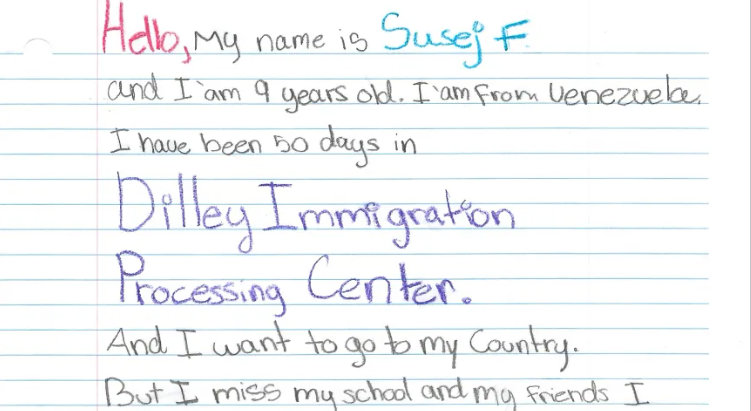
Health Organizations Condemn Traumatic ICE Raids, Family Separation
According to letters from children living in an ICE detention facility, living conditions are inhumane and their mental health is suffering.

In Teens, Social Anxiety Often Looks Like Anger
A study finds that some teens’ aggressive behavior may be due to social anxiety, not straightforward reactivity.
Expert Calls for Harm Reduction, Not Punishment, to Resolve Our Overdose Crisis
As the Trump administration pulls funding from harm reduction, an expert on the overdose crisis says it’s the best way to save lives.
