
Thousands Take a Stand for Science
Nobel laureates, students and cancer patients Stood Up for Science last Friday. And a California nonprofit warns that federal healthcare cuts will have devastating consequences.


Tuesday, March 11, 2025
By Don Sapatkin

Good Tuesday morning! A spirited group of Nobel laureates, students and cancer patients Stood Up for Science last Friday. Mental health workers at the VA say Elon Musk’s emails are basically PSYOPS. A California nonprofit warns that federal healthcare cuts will have devastating consequences.
Plus: Many of those suffering with chronic pain are also struggling with depression and anxiety. About 7% of adults have witnessed a mass shooting. Most people with opioid dependence – and many without it – report carrying naloxone.
But first: Click on your state in a new Trevor Project report to find out how LGBTQ+ young people are doing.
‘I just want to do my research’: Thousands stand up for science
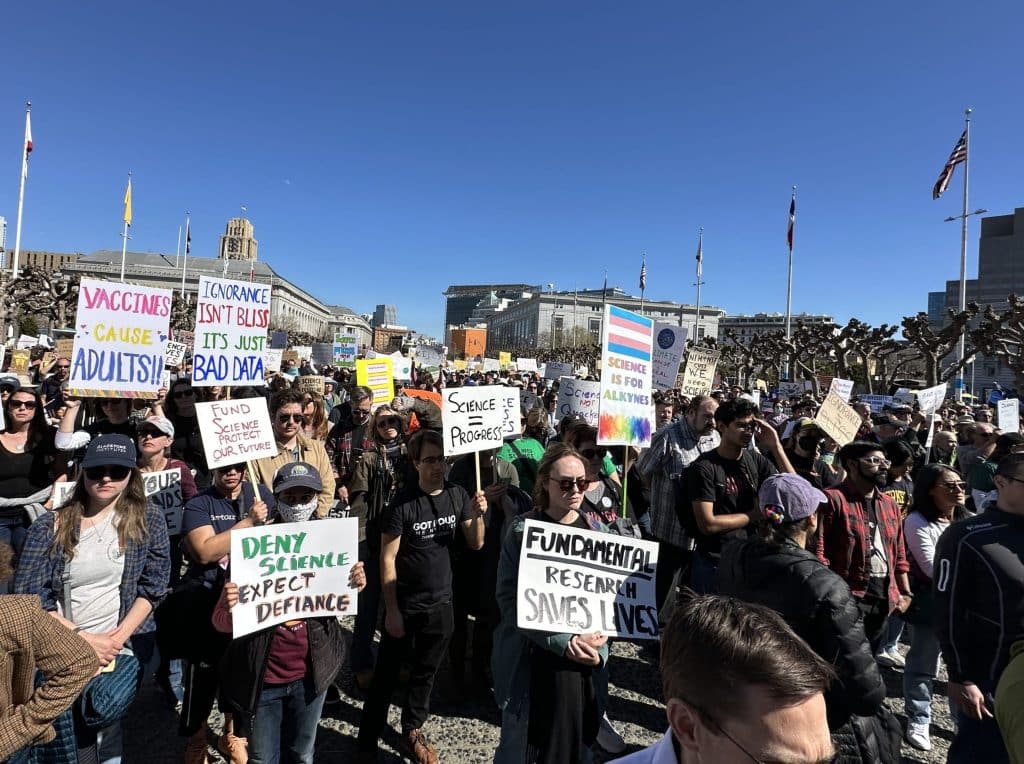
The homemade signs gave away the mood: “Science Makes America Great,” “Make America Think Again,” and “Girls Just Wanna Have Fun-ding for Science.”
Thousands of researchers, doctors, teachers, patients and science-lovers turned out Friday in rallies across the country to promote science and protest federal employee firings and funding cuts by the Trump administration. The crowds were largely festive: Francis Collins, the longtime NIH director who abruptly retired 10 days ago, brought his acoustic guitar and led a singalong at the largest gathering, in Washington, D.C.
Collins urged the crowd “to celebrate the achievements of science over decades in bettering the human condition, and to advocate for strong public support at a time when serious threats of harm are occurring,” the New York Times reports.
The Washington “Stand Up for Science” rally drew an estimated 5,000 protesters, with thousands more attending 32 other official rallies nationwide. The protests were the brainchild of Colette Delawalla, a PhD candidate in clinical psychology at Emory University, who quickly recruited other young scientists to join the effort. Delawalla studies addiction, but had to put a grant application on hold after federal agencies started flagging proposals that included key words like “women,” “diversity,” “female” and “gender,” Science News reports.
When she announced her plan on social media site Bluesky, it took off. “I just want to do my research,” said Delawalla, who never thought of herself as an activist. Many of Friday’s protesters said the same thing.
One attendee described herself only as a federally funded researcher in planetary science. Her sign: “Good luck getting to Mars without science.”
‘You’re going to see more people on the street’
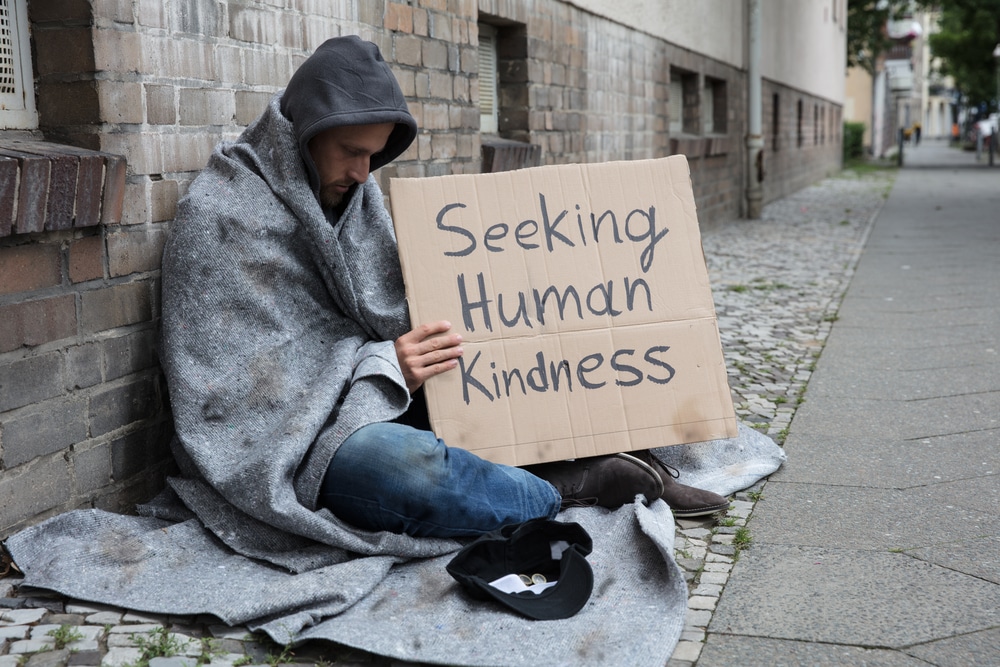
As California continues to grapple with a massive, visible crisis of mental illness, addiction and homelessness, a California mental health policy group, the Steinberg Institute, has issued a dire warning.
Massive budget cuts and firings being implemented or proposed by the Trump administration and Congress threaten to cripple the state’s Medicaid program and dismantle efforts to help the state’s most vulnerable people.
Around 40% of Californians rely on Medi-Cal, the state’s version of Medicaid – and the federal government covers more than half of its cost. Recent expansions, begun with federal support, aim to provide new forms of care to those who need it most. But now the new administration’s cuts threaten care across the board.
A new policy paper from the Steinberg Institute outlines the impact they’re likely to have, and were explained by Senior Research Associate Corey Hashida in an interview with MindSite News:
“To put it simply, it would be devastating to California. These big initiatives that we’re trying to roll out, they target the people that are in most need of help and the people that are on the streets. If these cuts were to be enacted and we saw massive reductions in Medicaid spending in our state, it’s not an exaggeration to say that Californians would be gearing up to see more people on the street, more people struggling with substance abuse, more people showing up in the hospitals and emergency departments across the state. The rug is going to be pulled out from under folks. People are going to be harmed.”
VA mental health workers say Musk emails are psychological warfare
Elon Musk claims his weekly emails are simply trying to weed out workers who are “dead” or “fictional individuals.” Employees say they’re taking a toll.
The weekend emailing “is meant to psychologically upset federal workers” one VA psychiatrist told NPR, drawing on her expertise. It’s working – she said her workplace is increasingly paranoid. She was with her family, resting on a Saturday, when she saw Musk’s first “What did you do last week?” email, and she’s now “anxious and irritable” there, too. The stress brought on by the email campaign comes on top of all the other disruptions hitting the federal workforce – the Department of Veterans Affairs last week sent a memo stating an initial goal of cutting more than 80,000 positions across the agency, and has said employees can’t ignore the emails. Every employee interviewed by NPR asked to remain anonymous, worried that speaking up might put them at risk.
The time and energy spent on those emails – placating the senders to prevent termination – is distracting from their important work. One psychologist pointed out that she could be working with “easier” patients in the private sector, but chooses to work with veterans because of her “call to duty.” Now, “Instead of being able to do good work to address their depression, PTSD, sexual trauma, combat trauma, etc,” she’s having to reassure them she’ll still be there next week, or next month.
She pointed out the disingenuousness of emails aggressively demanding information that’s a fraction of what is already in the records. The VA, she said, has long tracked how many clients she sees, how many phone calls she makes, what time her appointments start and end, what topics they discuss – even what handouts or homework she provides. “I truly believe this is a nefarious process,” she said.
In other news…
The following three research papers were published last week in JAMA Network Open:
About 40% of adults with chronic pain had symptoms of depression and anxiety, according to a meta-analysis that pooled data from over 300 studies, covering more than 347,000 people. People with fibromyalgia were most likely to report clinical symptoms of depression and anxiety, as were women and younger people, while those with arthritis were least likely. The study findings could not determine whether pain caused the mental health symptoms or vice-versa. The authors note that most chronic pain treatments do not address co-occurring depression and anxiety, and suggest that patients should at least be screened.
An astonishing 7% of adults have been present at a mass shooting, according to a representative survey of 10,000 Americans, and 2% said they sustained physical injuries such as being shot or trampled at the mass shootings, most of which (76%) were in their local communities. Analysis determined that Blacks were almost twice as likely to report being present at a mass shooting (defined as events where four or more people were shot) during their lifetime as whites, but there were no racial or ethnic differences in injury rates. Males and younger people also were more likely to say they were present at a shooting.
How many people carry naloxone? The opioid overdose reversal drug has by now saved thousands of lives. Researchers asking the question analyzed data from a June 2024 national survey and included findings for a subset who reported opioid dependence. Nearly 11% of the national sample and 61% of the opioid-dependent group reported carrying the drug, best known as the nasal spray Narcan. Among those who say they know someone very likely to overdose, 25% and 70%, respectively, said they carry it. As for use: 8% and 48% said they’d administered naloxone to someone else (it cannot be self-administered during an overdose), while 6% and 39% said it had been administered to them. Most naloxone carried had been provide for free, suggesting surveys like this one may be more relevant than estimating use from pharmacy sales.
If you or someone you know is in crisis or experiencing suicidal thoughts, call or text 988 to reach the 988 Suicide & Crisis Lifeline and connect in English or Spanish. If you’re a veteran press 1. If you’re deaf or hard of hearing dial 711, then 988. Services are free and available 24/7.
Recent MindSite News Stories
Gun violence undermines the mental health of big city teens

“The ongoing school shootings are constant reminders that teens might not ever feel truly safe.”

Homegrown Trips: Seeking PTSD Relief, Veterans Turn to Each Other for DIY Psychedelic Treatments
When the sedatives and antidepressants prescribed for PTSD don’t work, some veterans have found peace through psychedelics.
How a Mental Health Community Saved Lives in LA Fire

The most urgent question was, would callers from the Hollywood clubhouse be able to reach all their members in time?
The name “MindSite News” is used with the express permission of Mindsight Institute, an educational organization offering online learning and in-person workshops in the field of mental health and wellbeing. MindSite News and Mindsight Institute are separate, unaffiliated entities that are aligned in making science accessible and promoting mental health globally.


Author

Related Articles
Generation Cancer: Millennials Struggle With Death at an Early Age
More young adults are being diagnosed with cancer. Even for those who survive, the experience can be destabilizing and isolating.

Millennials Weigh Having Children On Their Own Terms
Not having children is also a valid path, and one that everyone should consider, Merle Bombardieri argues in her 1981 book.

Waiting for Word on Relatives Under Attack in Iran
Iranians in the US are caught between two “unrepentant regimes,” says Iranian-American writer and professor Shervin Malekzadeh.
